Alan Oberman – Author Interview, and Hay Writers’ Live Program at Hay Festival 2025

An interview with Alan Oberman – exclusive for Hay Writers’ Website


Alan is writing an account of British Prime Minister, Neville Chamberlain’s life between September 1938 and September 1939. In an exclusive for the Hay Writers’ Website, Alan Oberman is interviewed by himself on the progress of his book.

Oberman: Is your book a work of fiction or non-fiction?

Alan: There are over a hundred non-fiction history books examining Chamberlain’s actions in the year prior to the Second World War. Historians tend to join one of two contentious camps that can crudely be labelled by two questions: if Chamberlain had stood firm against Hitler in 1938 could the Second World War have been prevented? Alternatively, by appeasing Hitler and delaying the outbreak of war by a year, did Chamberlain ensure an allied victory?

I have no desire to jump into this historiographical bear pit. My intent is to bring to life the quandaries Chamberlain faced in his day-to-day decision-making. I imagine him living in Number Ten, I imagine his conversations with his wife, I imagine his dialogue with colleagues and adversaries. So, to the extent I’m surmising the words that might have been said, my writing is fiction. I endeavour, however, to keep as close as possible to the primary historical records.

Oberman: So are you writing him in the first person?

Alan: I did consider that, but I wanted the freedom to express his thoughts, and this is more easily achieved in the third person. The historian will tell you of a meeting between Chamberlain and Hitler. I do that, keeping as close to the historic record as possible, but then go beyond that, building on my understanding of Chamberlain, to imagine what he’s feeling at the receiving end of a Hitler tirade. I hope thereby to deepen the reader’s engagement.

Oberman: Chamberlain was elderly, white, traditionally-conservative with an unexceptional private life. Seemingly, a rather colourless politician. Not, one would think, an immediate choice for your protagonist.

Alan: I was led to Chamberlain indirectly. I was intrigued by how, in five months, British public opinion could swing round 180°. In September 1938, opinion was almost universally against becoming involved in another European war. By March 1939, the British people accepted that a stand had to be made even if it were to lead to war. My interest is the process by which that sea-change in opinion came about. Chamberlain was no populist politician, slavishly pandering to public opinion. To the contrary, he was rigid in the certainty of his opinions, but he too, in parallel with public opinion, was blown by the events of winter ’38 into a new direction for foreign policy. We can see the process of this change most clearly through his eyes.

It’s true his personality lacked the colour of, say, Winston Churchill, but the vision of a kindly, non-belligerent man battling with all his might to prevent a war which he believes would kill and maim millions, is, I think, compelling.

Oberman: If you tie yourself strictly to the biographical details of chamberlain’s life, are you not foregoing a narrative arc? You could end up with narrating one thing after another, saying this happened and then that happened, and so relinquishing a satisfying plot with its sense of beginning, middle and conclusion. Or, to ask the question in a different way, are you not tempted to bend, reshape the facts, to make for a more satisfying story?

Alan: When I first began writing this novel, I thought I had a built-in narrative arc – a person’s fall from the height of success to the deepest failure. In September 1938, Chamberlain was universally acclaimed as the man who had single-handedly saved the world from a devastating war. The declaration of war on the 3rd September 1939, proved to many that he had seemingly failed the pragmatic test. As the author of a policy that did lead to war, he was widely lambasted.

However, that was not how Chamberlain himself saw it. He believed, to the end of his life, that at each twist and turn of fate, he took the only sensible course available to him. To him, his story is not one of failure but tenacity – holding to his course of peace until there was no alternative but war. It’s the plot of many films – The Magnificent Seven to name but one – the farmers appeasing the bandits until there’s no other way but to pick up the gun. Aware of his increasingly belligerent detractors, Chamberlain believed that history would vindicate him. That to me is a satisfying narrative arc.

Oberman: And what is your conclusion? Do you vindicate him?

Alan: I do not wish to judge Chamberlain. I would rather the reader view the world through his eyes and come to their own conclusion. I will have succeeded if I divide my readers, some thinking him dangerously naive while others praising him for his wisdom and sound judgement.

Oberman: Does Chamberlain’s story have any relevance for us in today’s world? I’m particularly thinking of the war in Ukraine.

Alan: It would be most imprudent to attempt a forecast of the outcome of dealing with Putin based upon what happened in 1938/39, our world is so very different. But what is striking is the similarity in discourse today with that of 1938. How do you deal with a powerful aggressive dictator? Should we accept reality and make a deal with Putin to end a tragic war and save lives? Or will offering him territories of Eastern Ukraine serve to increase his appetite for further military adventures? This mirrors the dilemma faced by those in 1938 in how to deal with Hitler.

Oberman: I imagine writing such a novel as yours must involve a lot of research.

Alan: Research provides the materials from which to construct the novel, decorate it, and fill it with the furnishings of the period as well as peer into the minds of the people who inhabited it. Research is the pleasant downhill part of the writing journey before turning uphill to actually write the story. One is looking for the details of colour that historians leave out. Literally in my case. Historian Robert Self achieved remarkable success in publishing the hundreds of letters Chamberlain wrote to his sisters. He must have spent an excruciating number of hours transcribing Chamberlain’s illegible handwriting into print. However, Self left out what he called ephemera – family gossip of little interest to the historian. But it’s precisely this ephemera that’s important to me. So I spent a week in the Chamberlain Archive, housed in Birmingham University, examining Chamberlain’s letters to make notes of the bits that Self left out.

Oberman: And when do you think you will put the final full stop to your novel? Does it have a title?

Alan: It has taken me a year to move two weeks forward in Chamberlain’s year. Hopefully, my pace will speed up in this coming year.

As to the title, at the moment I’m toying with a choice of:

  • Neville Chamberlain: striving for peace
  • Neville and Anne Chamberlain: the year before war
  • Neville Chamberlain: dear God let there not be another war.
  • Chamberlain – Facing Hitler

Oberman: Thank you so much for this interview and best wishes for the completion of your novel.

Alan: Thank you. It’s been a pleasure.

Program: Hay Writers Live! at Hay Festival 2025

It’s full steam ahead for rehearsals for our Hay Writers Live! event at Hay Festival 2025. As we continue to hone our performance, we are delighted to release the full program of readers and pieces. All are new works enjoying their first public airing. We will be showcasing a variety of pieces including competition winners, novel extracts, poetry, short stories and more!

We are extremely grateful to Hay Festival for their enormous support of writers.
Thank you.

**At time of posting – tickets are limited with just a handful remaining.**
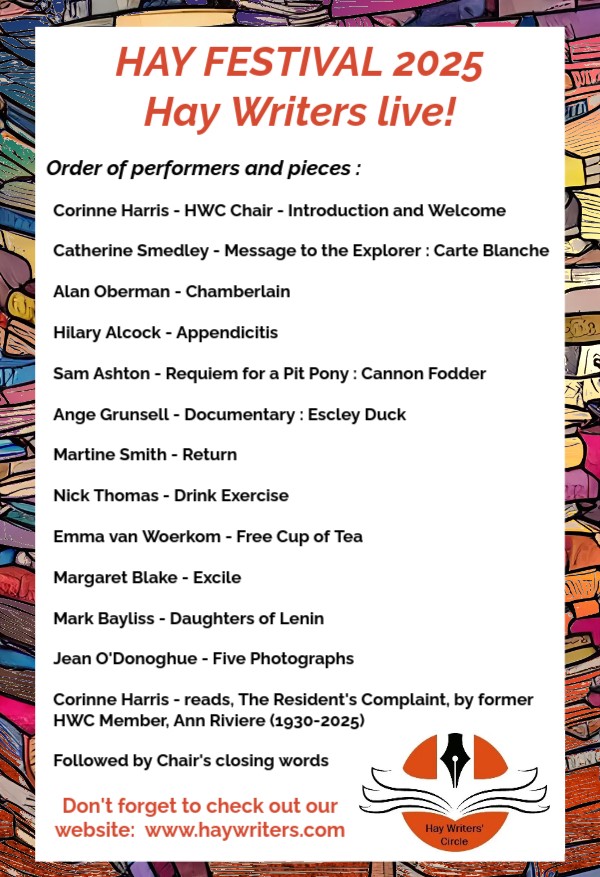
The Hay Writers Live! – Event 71

Date – Saturday 24 May 2025 Time – 7pm   
Location – Writers at Work Hub – Hwb Awduron wrth eu Gwaith

Come and hear the writers share and discuss some of their recent work. The Hay Writers’ Circle is a dynamic group, active in Hay for more than 40 years. It offers three competitions annually for poetry, fiction and non-fiction, each of which is open to both members and non-members. There is an active work in progress group for those working on longer projects. The Circle has an ongoing, productive relationship with a local primary school.

Price: £5.00 – CLICK HERE for tickets

We hope to see you there!
Posted in Uncategorized | Tagged , , , , , , , , , , , , , , , , , , , , , , , , , , | Leave a comment

Count Down to Hay Festival, a New Fiction Workshop & a Prize Winning Short Story.

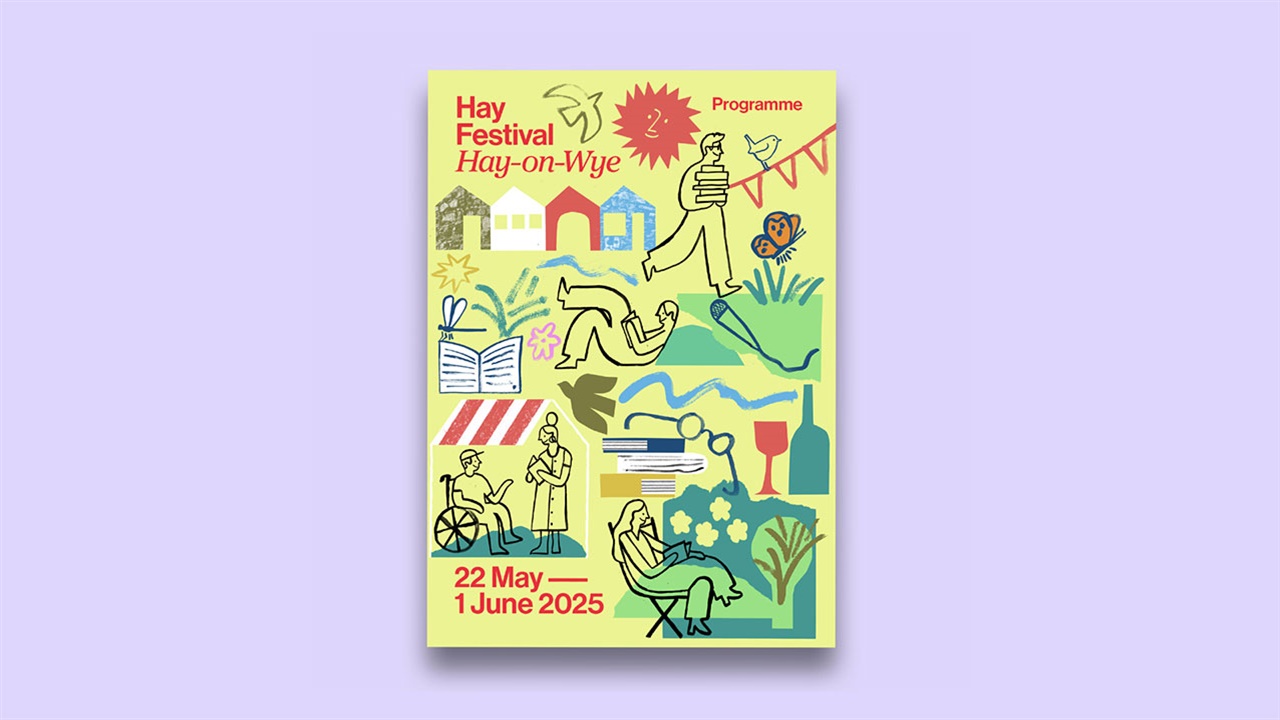
Hay Festival – 22nd May – 1st June, 2025
Tickets Now Available – CLICK HERE

Come and hear the writers share and discuss some of their recent work. The Hay Writers’ Circle is a dynamic group, active in Hay for more than 40 years. It offers three competitions annually for poetry, fiction and non-fiction, each of which is open to both members and non-members. There is an active work in progress group for those working on longer projects. The Circle has an ongoing, productive relationship with a local primary school.

The Hay Writers Live! – Event 71

Date – Saturday 24 May 2025  Time – 7pm   
Location – Writers at Work Hub – Hwb Awduron wrth eu Gwaith

Price: £5.00 – CLICK HERE for tickets
We hope to see you there!

New Fiction Workshop

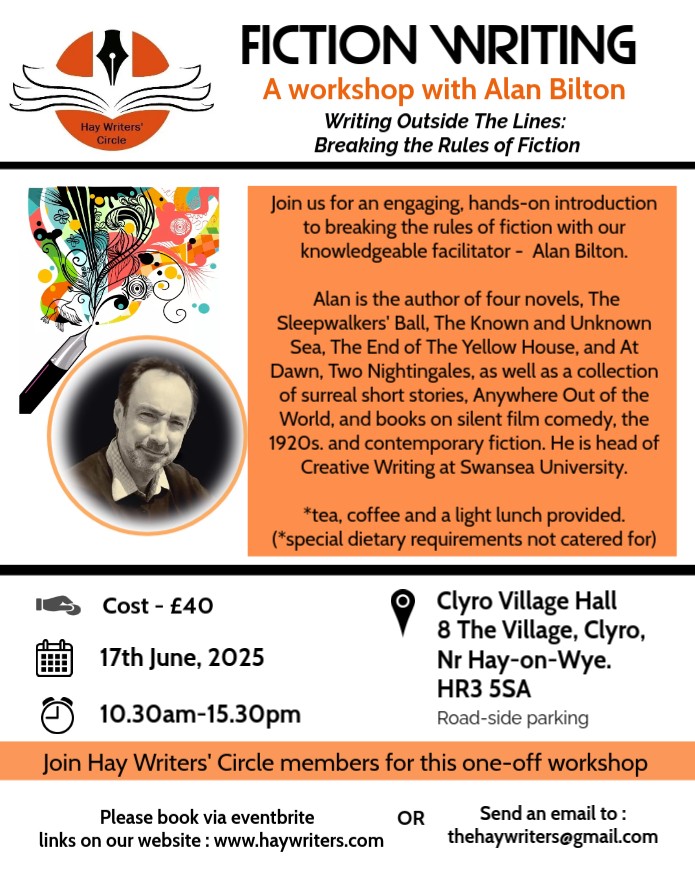
We are delighted to announce the details of a new Fiction workshop with the popular, Alan Bilton. Open to everyone

Writing Outside The Lines: Breaking the Rules of Fiction

What happens if the usual rules of realism don’t apply, gravity is suspended, and you allow your imagination to float free? Join us for an engaging, hands on introduction to breaking the rules of fiction.

From metafiction to anti-fiction, dream fiction to parody and the absurd, participants will find something to inspire, animate, embolden and disturb.

Tickets available via Eventbrite – CLICK HERE

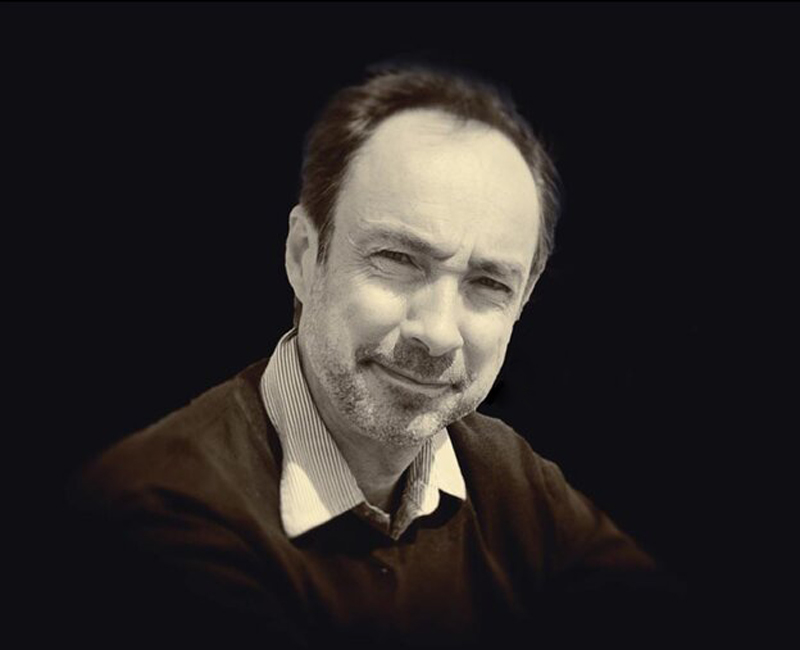
Alan Bilton is the author of four novels, The Sleepwalkers’ Ball, The Known and Unknown Sea, The End of The Yellow House, and At Dawn, Two Nightingales, as well as a collection of surreal short stories, Anywhere Out of the World, and books on silent film comedy, the 1920s. and contemporary fiction. He is head of Creative Writing at Swansea University.

Short Story

2nd Place in our recent Frances Copping Prize for Fiction 2025 is Corinne Harris’ piece.

Our judge, Adele Evershed wrote, “This is a rich and compelling story. It captured both the magic of a safari holiday and the internal conflict of a troubled marriage… “

Well done Corinne!


African Nights’ by Corinne Harris

An African night: the foam of the Milky Way bisecting the sky, the newly risen moon not diminishing the glory of the stars but adding its own mystery.  They had been summoned with the news that a leopard had made a kill.  Roaring and jolting in the open topped Land Rover they reached a tree with a carcass abandoned in the fork of its branches.

‘She’s been chased away poor thing, what will she do?’  Jane felt like a boorish intruder into this silent world.  

Martin was impatient, ‘it’s nature’.

‘No, It’s not, it’s us.’

Now, with the hard moonlight transforming the rock and bushes into shadowy indigo, they tracked her, the harsh spotlight picking up the intricate whorls of her coat in the blue night. She moved smoothly, pregnant belly swaying, ears back. Jane was seized by compunction: ‘Leave her, turn off the light.’  Martin huffed, but the others murmured agreement and the guide turned off the light and veered away.

Later in the camp bar, Martin recounted the event, with much ensuing hilarity at her squeamishness.  He boasted about their forthcoming trip to the Kalahari. 

‘Have to take everything in – water, food, fuel – the lot. Camping in the wild, no mod cons – the real Africa.’ 

The Americans were impressed, ‘In a tent?’

‘Yes, just a sheet of nylon between us and the wilderness’. 

She hated the bar, with its red-faced customers, the ‘Big Five’ scoreboard, its unsubtle tourist rivalries.

Yet Jane was in love with Africa.  She loved the sunsets, watching the great orb of the sun falling through the sky, streaking the turquoise with pinks and yellows, seeming to accelerate as it neared the horizon.  Cicadas, the gentle splash of the river, heat still rising from the earth, and then, tentatively, the first few stars emerging.  Getting up at night to the toilet, which was open to the sky, she had marvelled at the lavish unfamiliar stars. She had heard the distant roar of a lion and the scampering of night creatures and had gone back to bed enchanted. 

She had hoped it would be a holiday to heal a marriage scarred by long held resentments.  Three weeks in Botswana: a week of luxury in a safari hotel, a few days glamping, then wild camping in the Kalahari, with a hotel stay in Gaberone to recover.  ‘The holiday of a lifetime’ – and it had certainly been expensive enough.  Predictably, Martin had drunk too much and been surly in the mornings, but up until now it had been a qualified success. Now, she found she was dreading the next stage when it would be just the two of them; a long drive and wild camping in a two-man tent.

As it happened, they both enjoyed the drive, but the Kalahari campsite was a surprise.  It was a stretch of sandy soil, with the yellow haze of dry scrubby grass in the distance, and a nearby group of thorn trees tortured into right angles. There was V -shaped wooden canopy on a concrete base and a large fire pit   A hundred yards away curved mud walls enclosed a long drop toilet.  It was deserted, and the dusty silence of the afternoon felt oppressive.  ‘Where is everyone else?’ she wondered as they began to set up camp.  It was with mutual relief that they heard an approaching car.  Four cheerful khaki-clad South Africans appeared.  They laughed at the notion that they would be camping anywhere near them: 

‘No, it’s all yours, we are a mile down the road’

They stayed for a beer and were pleasant companions, although Jane suspected that some of their more hair-raising stories about the local wildlife were exaggerated.

It was late when they left and there was just enough light left to set up the tent under the thorn trees.  Whilst Martin lit a fire, she hastily prepared a meal.  The flames brought welcome light and warmth but also winged insects astounding in their size and variety.  Martin had lost his earlier bonhomie and slumped in a camp chair drinking his way steadily through a wine box.  The moon had not yet risen, and she felt the darkness as a physical presence, that would enfold and engulf her with its black wings if she moved out of the fire’s light.  She asked Martin to come to the tent with her.  This led to a sudden squall of an argument.

‘I’m so fed up with this holiday,’ he snarled.

‘You wanted to come.’

‘I did want to visit Africa but not with you.   I hate being with you. It’s bad enough sharing a bedroom with you lumbering around, but a tent is insupportable.’

‘I suppose you think you’ve been a great companion this holiday – drunk every night, sulking every morning.’

His anger, fuelled by red wine, reached a crescendo, ‘I’m leaving you.’

‘I suppose you’re planning to go off with your latest floozy, she’s only after your money, she’ll leave you when she discovers you don’t have any’

 ‘I’ll have plenty when I divorce you and sell the house.’

She was appalled ‘That house was given to me by my parents, you have no moral claim to it. 

‘It’s in my name as well’

I did that to protect you and the kids if I died. Why should you have anything from me?’

‘Why should you have more just because you’re a doctor?’ he demanded.

‘Something to do with going through the training and doing the work’ she suggested mildly.

‘You couldn’t have done it without me, all the support I gave you, you couldn’t have managed with the children.’

This outrageous claim had the effect of silencing Jane. She reflected bitterly on the procession of nannies and au pairs she had desperately tried to placate in the face of Martin’s failure to let them leave on time.  She remembered his angry refusals when, exhausted by being called out at night, she had begged him to get up for the baby in the morning.

Anger had conquered her fear – she walked off to the tent and got into her sleeping bag.  She remained resolutely on her side and unresponsive when Martin crawled in later.

‘Jane, Jane, look, I’m sorry, I didn’t mean it.  I love you.’ 

She was unmoved.  He must have remembered that all the property was tied up in a deed of trust which divided it according to how much each had contributed to the joint account.  Martin, confident of his future earning power, had insisted it be drawn up before they were married.  He had made no contribution to their finances for years, but she had kept the joint account as insurance.

Waking later to a cold bright light she thought at first, drowsily, that it was headlights.  Unzipping the tent, she saw that the moon had risen.  Suddenly a memory of Martin, his head bent tenderly over a sleeping baby, assailed her. She wept silently – for lost love, for a wasted life, for the marriage she should have had.  Then an unexpected sound reached her – lapping?  She peered out of the tent door.  A hyena, slope- backed, brindled with moon shadows, was drinking from their water bowl.   She licked the bowl clean, picked it up by the rim and trotted purposefully away.  Jane was reminded of their collie who would present them with her food bowl at supper time.  Smiling, she slept.

She awoke early, before the sun’s rays had had time to warm the land.  When she came out of the toilet enclosure the hyena was sitting peacefully a few yards away, head lifted, teated belly drooping.  She was self-contained, dignified.   Jane felt no fear, ‘Good morning.  Where are your babies?’  The eyes that gazed on her were she felt, rather disdainful. ‘I bet your husband wouldn’t dare to talk to you like that.’  How silly she was being.  The hyena clearly agreed and left without a backward glance. 

The resolve which had been building up over a night spent in unwelcome proximity to Martin, crystallised.   When he emerged, blinking bloodshot eyes, she told him briskly to get packed.

 ‘We’re leaving now.’

‘We can’t, we’ve paid for it.’

‘I paid for it and I will spend no more time with you.  You can catch a bus from Francistown.  I’ve had it with this marriage.’

Unaffected by his tearful apologies and promises, she found herself faltering when these were replaced by uncertainty and fear.  ‘Think hyena,’ she told herself. 

‘You can leave with me or you’ll be stranded here.’  By the time they reached Francistown his abject mood had changed to rage. As he stormed out of the car he shouted, ‘You ball-breaking cow.  You will never get another man.  You will live on your own and die on your own.’  It sounded like a biblical curse and for a moment she was shaken.  But, as he walked off, she felt the first tendrils of optimism. She was free!  She was on the holiday of a lifetime.

To keep up to date with all our news why not subscribe with your email address in the box below.

Posted in Uncategorized | Tagged , , , , , , , , , , , , , , , , , , , , | Leave a comment

Frances Copping Memorial Prize – Winner Announced!

We are excited to announce the results of our 2025 Frances Copping Memorial Prize for Fiction Competition, named in fond remembrance of our Lifetime President who sadly passed away in 2020.

This popular competition again received a good number of entries from both inside and outside Hay Writers’ Circle and we very much welcome external interest in all our writing competitions.

We were honoured that our judge this year was Welsh writer, Adele Evershed. Apart from several published books and Adele is one of the editors for a new lit mag, Thin Skin, which looks to give older writers an opportunity to be published. 

We are extremely grateful to Adele for all her work judging this competition, including the written comments – going forward, such useful comments can hone writing skills for the future. Thank you Adele.

Without further delay, here are Adele’s comments and the Results!

Adele writes:
“I was thrilled to be asked and excited to read all the wonderful stories. When Katherine first asked me, I was equally honored and apprehensive as I know from judging other writing competitions that the sheer scope of the subjects tackled and the number of different genres can be vast. The entries for the Francis Copping Prize did not disappoint. I was blown away by the quality of the writing and the diversity of subjects, from a reimagining of the Arabian Nights to long-held family secrets, from ruminations on a dysfunctional family to murder. I found an engaging nugget in each story each time I reread them. So, I’d like to state the obvious: judging writing is subjective; a different judge would most certainly have chosen a different winner. That said, I’m now going to jump right.”

Highly Commended:

Beckett’s Wood

“In Beckett’s Wood, I loved how the writer conjured up a feeling of nostalgia and melancholy. I was rooting for Maureen, and I found her yearning for a life that might have been so relatable. I also appreciated that the ending was not wrapped in a fairytale-like bow.”

Fast Food

“In Fast Food, I thought the writer did a great job creating Catherine’s character, dropping in details about her concern with her outward appearance while giving the reader privy to her internal conflict during her working day. Her real hunger mirrors her hunger for success at work and creates a great tension that propels the reader along with Catherine as she goes about her day. By the end, I was itching to make the poor girl a sandwich.”

Third Place

Business Jargon

“This story was quirky, funny, and very clever. The way the writer used surreal imagery to critique modern corporate culture is so inventive. I love how words and letters are described as physical, living things—creeping, skittering, and attaching themselves to people. The descriptions were so visceral they made me want to scratch, such as, “I’d be spending the next hour under the hot flow of the office shower, combing them, teasing them, out from where hair met scalp, picking them from their hiding places under armpits, between thighs.”

This was a unique story that I enjoyed reading for its clever use of metaphor and inventiveness—my favorite phrases were, ‘past the word salad at the foot of the coffee machine,’ and ‘the draught excluder of small talk.’ I’d also like to give a shout-out to the title—short but effective.”

Second Place

African Nights

“This is a rich and compelling story. It captured both the magic of a safari holiday and the internal conflict of a troubled marriage. The setting is vividly described, and the writer uses the landscape and the animals as metaphors for the emotional journey of the protagonist, Jane. The African setting is beautifully illustrated from the ‘foam of the Milky Way bisecting the sky’ to ‘the shadowy indigo’ of the bushes in the moonlight. It also sets up a contrast between what Jane is seeing and what she is feeling about her husband. How the natural world intertwines with Jane’s emotional state adds extra layers; her interaction with the hyaena highlights her own ambivalence about her marriage and was skillfully done. The way this encounter firms up her resolve to leave her unhappy marriage is a cathartic moment. “She was free! She was on the holiday of a lifetime.” I almost cheered.”

First Place

The Dance

“I was hooked from the first paragraph. The writer skillfully takes us from a day full of sunshine and warmth to the sudden dark presence of Papi, whose whole demeanor casts a dark shadow over the family. The voice of the narrator, a twelve-year-old girl, is vulnerable and illustrates her naivety about a situation she is struggling to understand, making it very effective at packing an emotional punch.

The powerful symbolism of the family dynamic described as a dance where each member knows their place and moves around in a certain way to avoid confrontation works so well. The repetition of this dance—dodging Papi’s anger, calming his moods—gives a sense of a tragic routine. One of the things that makes a story successful is pacing, and in The Dance, the pacing is strong. The flip from a lovely, gentle day to the gathering darkness brought about by Papi’s appearance through to the violence creates a buildup of tension, which is why the thrown potato feels so cathartic, shocking the characters and the reader out of the pattern of the dance. Then, the ending is haunting and heartbreaking as the narrator realizes her mother will not support her in reporting the father’. The writer did an excellent job of capturing the struggle of a child caught in the cycle of abuse in a world that is difficult for most people to understand and even more challenging to confront. Bravo!”

Many congratulations to the following :

1st Place: ‘The Dance’ by Diane Williams

2nd Place: ‘African Nights’ by Corinne Harris

3rd Place: ‘Business Jargon’ By Helen Smith

Highly Commended – ‘Becketts Wood’ by Alan Oberman, and ‘Fast Food’ by Jean O’Donoghue.

2025 Frances Copping Memorial Prize for Fiction Winner – Diane Williams

Special congratulations to our worthy winner Diane Williams.

“Writing has always been an important part of Diane Williams’ life. She considers it a good friend. Diane comes originally from the South Wales Valleys but relocated twenty years ago to the Hay on Wye area. Most of her career was spent in Nursing and Education and she now works part time in an art gallery in Hay on Wye.

This is Diane’s first prize for fiction, though she has been writing for many years, covering a range of styles and genres. She feels that the prize is a welcome validation of her work and a step in the right direction towards publication for a wider audience.”

The Dance

By Diane Williams

It had been a beautiful Spring day. Mama and I had opened all the windows and let the outside in. We spent the whole time in the sunshine, moving between garden, woods and house, collecting odds and ends to create a fun, natural sculpture. We hung some bird feeders on it and sat on the door step, drinking tea and watching the birds. Mama and I glowed with the feeling of this shared day and lightness filled the cottage. Later, as dusk gathered, we settled ourselves in the kitchen preparing our supper. I was peeling potatoes and Mama was drying a pile of dishes.

   
We were chatting about the music we loved and laughing, as we tried to sing some of our favourites. So, we missed the car’s lights, as it drove up to the house and didn’t hear Papi walking up to the back door. That must have been when we were choosing a Kate Bush CD from the living room. There was some discussion, as Mama wanted The Dreaming, I wanted Ariel. I won of course! We were back in the kitchen, fiddling with the CD player when Papi arrived, dragging a lead cloak of misery behind him. I watched Mama quietly put down the CD. She stiffened and all the light left her. She was extinguished. I felt the muscles across my upper back tighten. We all stood facing each other in the now cold, still kitchen and with a heavy heart, I thought “Let the dance begin.”

  
A smile and Hi! from Mama, silence from Papi. He lowers his looming bulk solidly onto the kitchen chair. I watch Mama relax. She thinks it’s going to be ok. She starts talking about the CDs we’ve chosen and the casserole she’s got out of the freezer and could I peel a few extra potatoes please? Papi sighs and gets up, walks to the sink, fills the kettle, switches it on and returns to the sink. Still no words from him. He steps closer to Mama, so close that she can’t put her arm down, she’s stuck there holding a white bowl, now leaning slightly back against the draining board. Papi looks down at Mama’s head and says quietly, slowly, something like it’s not enough to rub his nose in her recent success. Now she feels the need to show her abilities in his field of work too.

  
I laugh out loud! Does he mean our bird feeder? Was that such a good sculpture that it matched his work?! On it’s way to the Tate any day!! Is he mad?! They’re so engrossed in the dance that I am ignored. Mama steps away, making light of it and busying herself. I don’t think I’ve ever seen Papi so angry, fizzing like a firework before it launches. I try to calm things and ask him, in as normal a way as possible, how his day has been. He still ignores me and again moves closer to Mama. I am the silent observer. I am well practiced. In this moment, nothing else exists, other than Mama and Papi and what happens next. This time he grabs her arm and starts asking her questions about some man she’s supposed to know. Mama is shaking her head, trying to move away. He wants her to look at him but she’s trying really hard not to. Frozen to the spot, I look at my parents and feel sorry for them. Mama is gripping that cotton tea towel she bought on our visit to the Eden Project, two years ago, like some floral shield.  I see that Papi still bites his nails. How many times has he tried to stop?

  
But this bad stuff, the way he behaves, is old ground. Mama and I have seen it all before and manage to dance around it quite frequently, calming him, dodging him, staying invisible. Amazingly, we’ve never done this together before. Caught in this moment, I vaguely realise how liberating it is! No more avoiding the issue, no more pretending. It feels to me like we’ve been three separate people playing at being a family. Just dancing around this issue. Not anymore. I watch his hand move slowly from her arm to her throat, the potato and knife still in my hand, though I’ve forgotten about the peeling.  A strange sound comes from Mama’s throat and I’m suddenly back in the room. She’s struggling for breath! Her knees are buckling and I notice a faint smirk form on Papi’s face. His power is once again absolute. Breathe in, arm swings back, aim, breathe out as I throw. So simple. The large potato rockets through the kitchen and explodes across his forehead. Papi’s face is pasted in potato. I’m impressed with myself. What an aim! Two things happen quickly: He drops Mama like a rag doll, her body folding onto the floor as she gasps for air and Papi covers the length of the kitchen in a millisecond. He pins me to the wall and punches me in the head. That’s all I remember for a while.

 
The following morning, I heard Papi singing in the shower as usual. I go to find Mama. I wanted to speak to her about the night before. She was in her studio, chatting and laughing on her mobile to her friend. I took the opportunity to look at the beginnings of bruises on her throat, arms and cheek. She ended the call and I told her I was going to ring the police about charging Papi with assault. Mama sat down and just looked at me, like she was shocked, then she started shaking her head, saying No a lot. These are the reasons she gave for me not to ring the police: 1. He didn’t mean it. 2. The family wouldn’t like it, they’d see you as a trouble maker. 3. Papi is stressed at the moment with his new exhibition coming up. We don’t  want to upset him. 4. Do you want to break up the family? What would happen to you? 5. You shouldn’t have provoked him. And 6. I won’t support you. You’re on your own.


That sort of broke my heart.

   
As with all good dancers, Papi’s timing was excellent because he then appeared, all smiles, saying he’d made coffee and was hoping we’d join him, his two best women. But the thing is, you see, I’m not a woman. I’m only twelve. A twelve -year- old who dances alone.

Poetry Competition – Deadline Looms.

Just a couple more days left to enter our 2025 Poetry Competition with £100 first Prize! Anyone can enter a poem on any theme – maximum limit of 40 lines – for full details go to our Competitions page.

Good Luck!

And finally, Wishing Everyone a very Happy Easter Holiday.

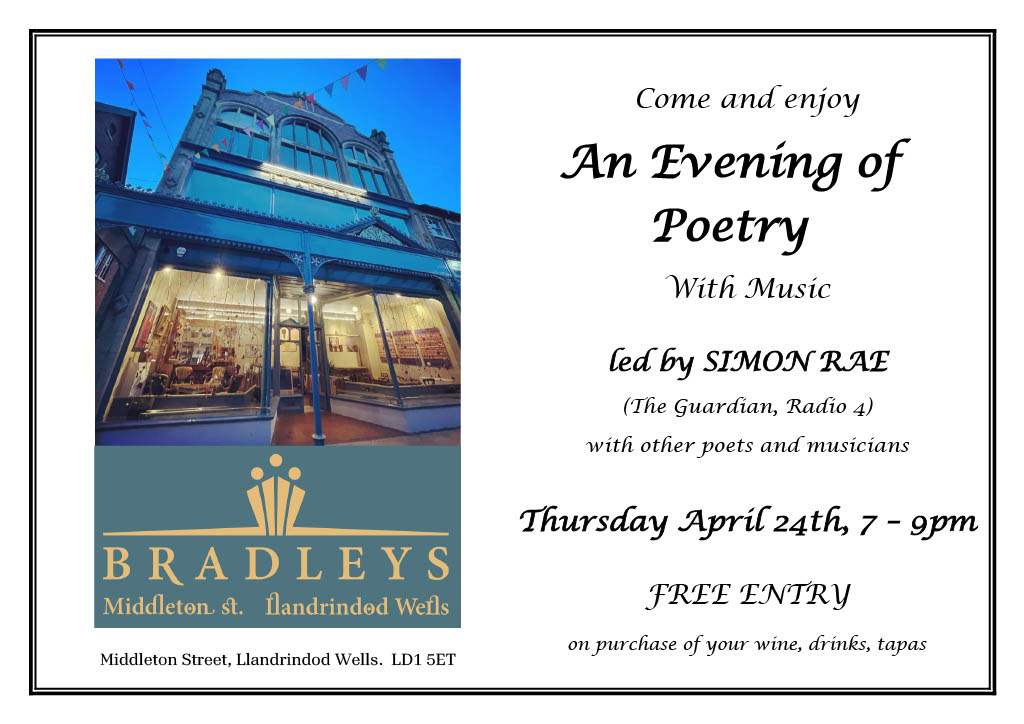
If you are in the neighbourhood this week don’t miss out on this
stunning event in Llandrindod!

An Evening of Poetry with Music – Thursday 24th April

To keep up to date with all our news why not subscribe with your email address in the box below.

Posted in Uncategorized | Tagged , , , , , , , , , , , , , , , , , , , , , , , , , | Leave a comment

Competition, Poems and Hay Festival 2025.

While we await a few confirmations before announcing the winners of our recent Fiction Competition, there’s still time to enter our 2025 Poetry Competition. The judge this year is a talented Gareth Writer-Davies and the closing date for poems up to 40 lines long on any theme is midnight, Tuesday 22nd April. Anyone can submit poems and we look forward to reading your exciting creations.

For full competition details and to download your entry form, please head over to our Competitions page.

To inspire and keep the poetical theme going here’s a couple of poems by HWC members, Jean O’Donoghue and Emma van Woerkom. We sincerely hope you enjoy them.

CIRCUS 
By Jean O’Donoghue

Stretching out, the high wire is like my nerves
Alert and vulnerable
My eyes look out for the limit of the stretch
A wobble comes. It gets bigger until its shaky parabola
Signals to me that I had better get down.

Next are the garish gaudy unfunny stupid clowns
One of them looks a lot like me.
And then the poor dumb huge beasts
Their eyes vacant with defeat.

And the ringmaster! Looking a little like my father
A little like my absent husband. He
Fruitlessly twitches his impotent whip.
I hope that the lions revolt and eat him
And that the sea lions refuse to clap

I mount the rope ladder again and face
My partner on the flying trapeze.
Can you trust a man wearing a spangled cod piece
And spray on tights?
We start slow – just a few innocuous passes.
The tension mounts as we fake a stumbled catch
But then it’s the major play
Shall I? Can I? Will I?
The safety of the net is almost irresistible ….

Photo by Gabriel Mendes on Pexels.com

April by the Wye
by Emma van Woerkom

Ever seen the green leaves shimmer?
Water cascade all a -glimmer?
Twisting, arcing feathered gambol
Swallow swoop on darting damsel.

Ever viewed hill clouds grow fatter?
Spots on slabs slap, pitter-patter.
A fine bronze rainbow rise to bite
The Iron Blue in maiden flight.

Soft stirring in bright brindled beds
Vestal violets raise their heads.
The changing tune of Winter’s King
Now just a wren at end of Spring.

Cold chimney with it’s feathered guest
Mad lambs all leaping four abreast,
Blue-black flies sill-spinning for sun
Sly spider silk on blossom spun.

Skyward wheeling sleet-winged hawks
Circling squalls on thermal’d torques.
Ever seen this land un-wasting?
Thirsty, greedy for the tasting.

I do not think this month so cruel,
Less I am judged an April Fool.

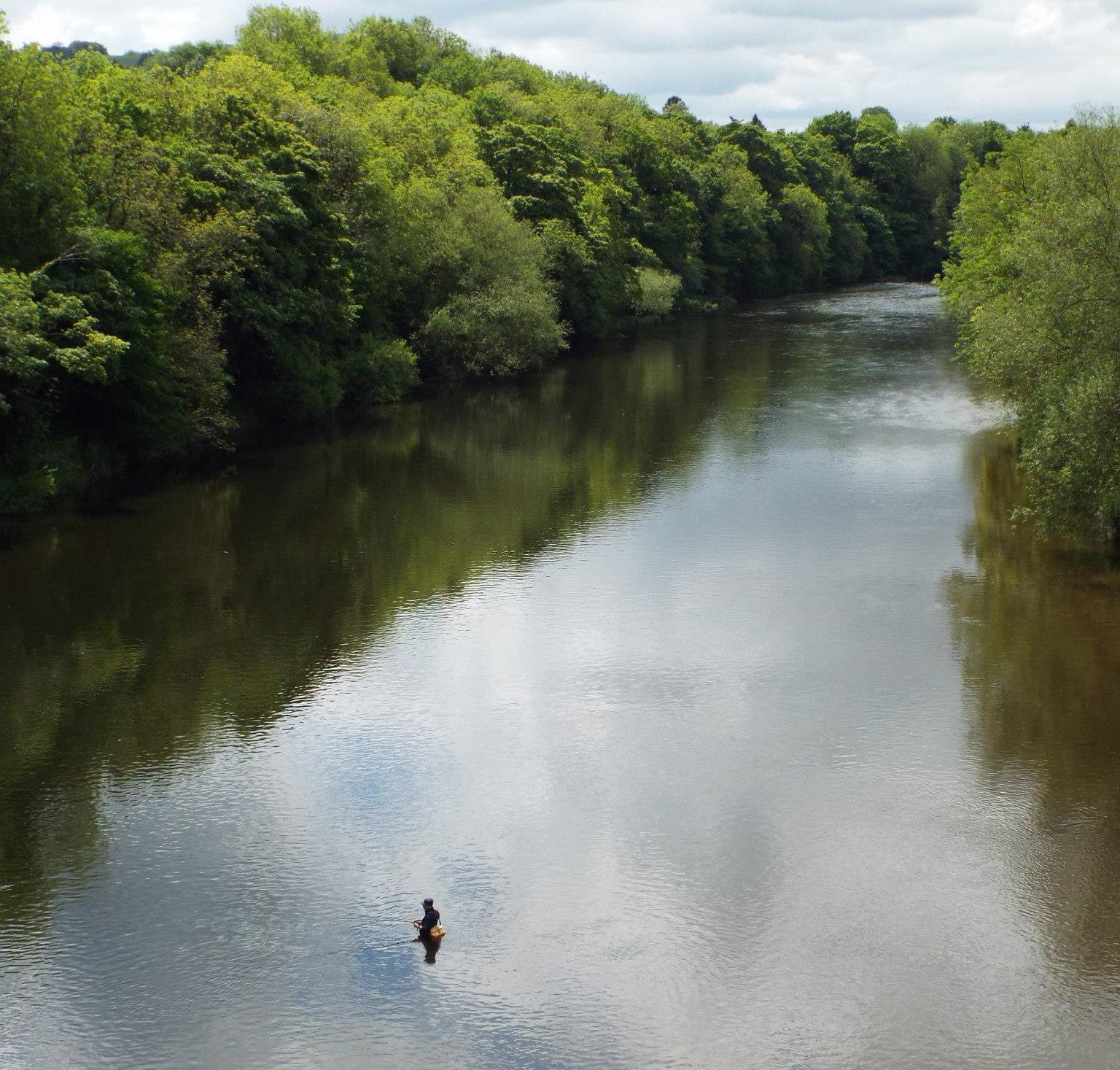
(NB – an Iron Blue is a fishing fly used for catching brown trout.)

Photo credit – Fly Fishing the Wye – by Emma van Woerkom ©2025

Reminder – Hay Festival
22nd May – 1st June, 2025
Tickets Now Available – CLICK HERE

The Hay Writers Live! – Event 71

Date – Saturday 24 May 2025 Time – 7pm   
Location – Writers at Work Hub – Hwb Awduron wrth eu Gwaith

Come and hear the writers share and discuss some of their recent work. The Hay Writers’ Circle is a dynamic group, active in Hay for more than 40 years. It offers three competitions annually for poetry, fiction and non-fiction, each of which is open to both members and non-members. There is an active work in progress group for those working on longer projects. The Circle has an ongoing, productive relationship with a local primary school.

Price: £5.00 – CLICK HERE for tickets

We hope to see you there!
To keep up to date with all our news why not subscribe with your email address in the box below.

Posted in Uncategorized | Tagged , , , , , , , , , , , , , , , , , , | Leave a comment

**STOP PRESS** 2025 HWC Poetry Competition now OPEN and Judge Announced

Submissions are now invited for the annual Hay Writers’ Circle Poetry Competition, and we are delighted to announce the judge for 2025 is the remarkable, Gareth Writer-Davies. The theme this year is entirely open and we hope to receive a wide variety of poems and poetry styles for this competition.

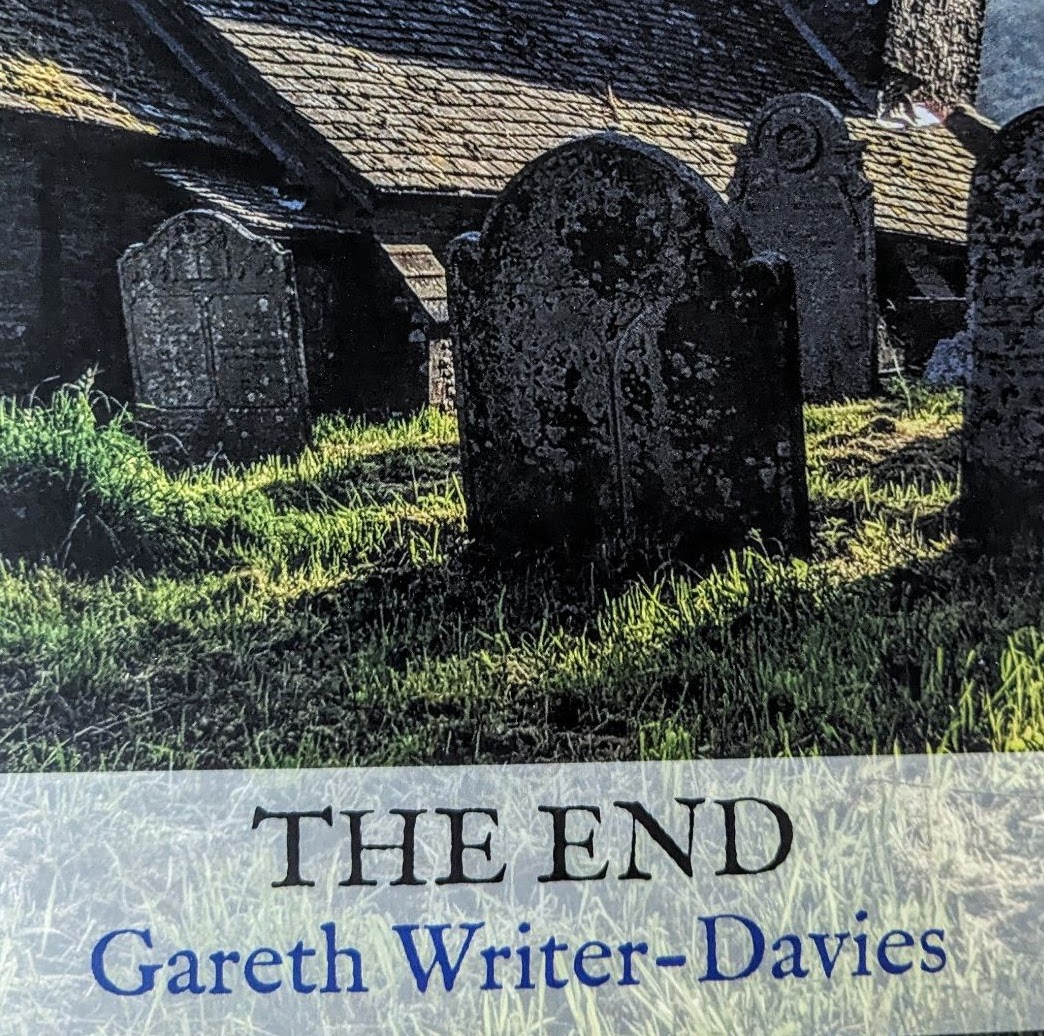
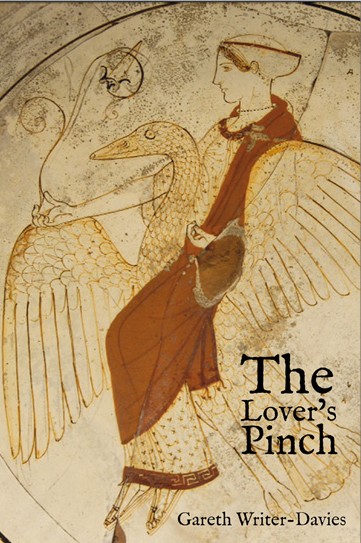
Gareth Writer-Davies lives near the Brecon Beacons (Bannau Brycheiniog) and takes his writing inspiration from the beautiful Welsh mountains and rivers of his home. His notable achievements include – Shortlisted Bridport Prize (2014, 2017, 2024), Commended Prole Laureate Competition (2015 & 2021) Prole Laureate (2017) , Welsh Poetry Competition Highly Commended (2017), Winner, Wirral Festival Poetry Competition (2023), Runner Up, Spelt Poetry Competition (2023). His publications are: “Cry Baby” (2017), “Bodies” (2015) , “Wysg” (2022) “The End” (2019) “The Lover’s Pinch” (2018). He was a Hawthornden Fellow (2019)

Gareth has written 5 collections, Bodies (2015), and Cry Baby (2017), published by Indigo Dreams.

Featured above, The Lover’s Pinch (2018), and The End (2019), published by Arenig Press.

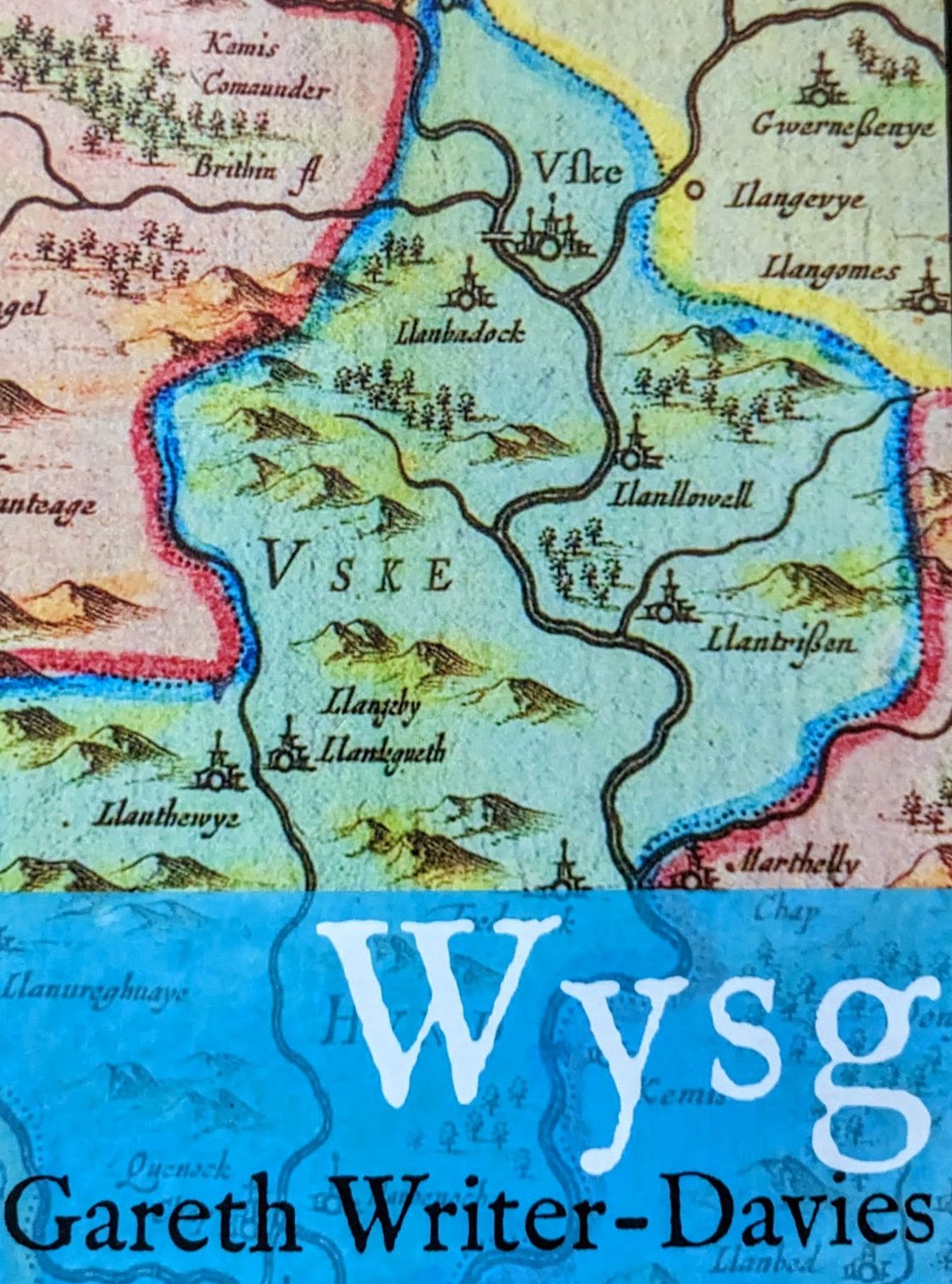
His latest book, WYSG (2022) is also published by Arenig Press.

In WYSG Gareth Writer-Davies is instantly recognisable, as he navigates the borderlands of Wales, seeking to bridge the new and the familiar; the streaming of our lives, our conflicts with nature, getting older and always, where we have been and where we are going?

“In these sharply-worked, elegant poems, Gareth Writer-Davies takes the reader on a voyage of mid Wales which invites us to see this landscape in a vivid light.” – Katherine Stansfield

– HWC POETRY COMPETITION –
FIRST PRIZE £100

The Hay Writer’s Circle Poetry Competition 2025 is open to everyone.

The first prize of £100 with additional cash prizes for 2nd and 3rd placed poems.

The closing date for entries is midnight Tuesday 22nd April, 2025
Results will be announced mid May.

Original, unpublished poems of up to 40 lines maximum on any theme.

At our discretion, the winning poems will be published on the Hay Writer’s website. Publication may prevent eligibility for future competitions. All rights remain with the author.

For full competition guide lines and entry form please download the file below :


… or head on over to our Competitions page and read it there too.

Remember, anyone can enter this poetry competition and we can’t wait to read your amazing poems.

Good luck!

To keep up to date with all our news why not subscribe with your email address in the box below.

Posted in Uncategorized | Tagged , , , , , , , , , , , , , , , , , , | Leave a comment

Hay Writers’ Circle Remembers Ann Riviere

Ann Riviere @ Hay Festival

It was with great sadness that we recently learned Ann Riviere, a Hay Writers’ Circle alumni and stalwart supporter of the group had passed away.

Ann was a highly valued member for almost 2 decades and served as HWC Treasurer for many of them. In an era when the Circle sold a yearly magazine to generate funs, Ann would be out and about the town of Hay, selling magazine advertising space to many of the local businesses, (“on the streets plying her trade” as she often joked!). In her role as Treasurer she also wrote annually to Literature Wales in the hope that the group might get support, and although we never received any funding, she never gave up hoping.

Ann’s writing speciality was short stories. Her well observed people and places, dialogue and plot twists coupled with superb timing, pace and snippy interjections could only be matched by her Hay Festival performances; it was then Ann’s writing truly came alive and she delighted audiences over the years with both comic vignettes and atmospheric thrillers.

When asked where she found the ideas for her work, Anne replied that, “staring at a blank sheet of A4 and praying for inspiration usually did the trick.” Her A4 paper was always set ready for use in an aged electronic typewriter. In her mid eighties and under great duress, it was finally superseded by a laptop when failing eyesight got the better of her.

By her mid nineties, physically frail but still independent, with a mind as keen as ever, Ann enjoyed being kept up to date with all HWC news. She could often be lured down the road to former HWC Chair, Lynn Trowbridge’s House when any of the writers called. She would laugh, reminisce and generally put the world to rights!

Thank you to Emma van Woerkom for the above tribute to Ann.

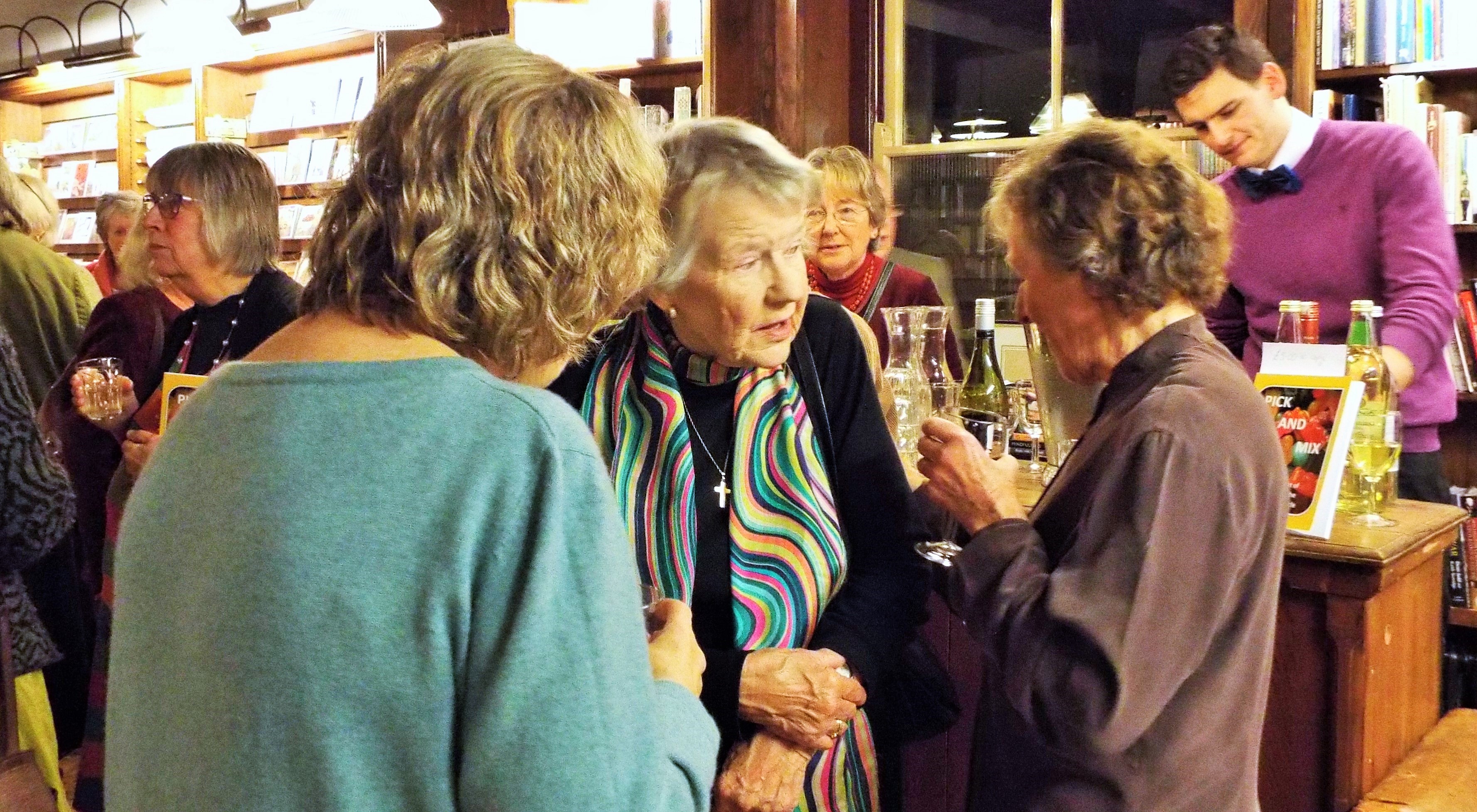
Ann Riviere – 2015 Book Launch for Pick and Mix Anthology at Booth’s Books, Hay-on-Wye.

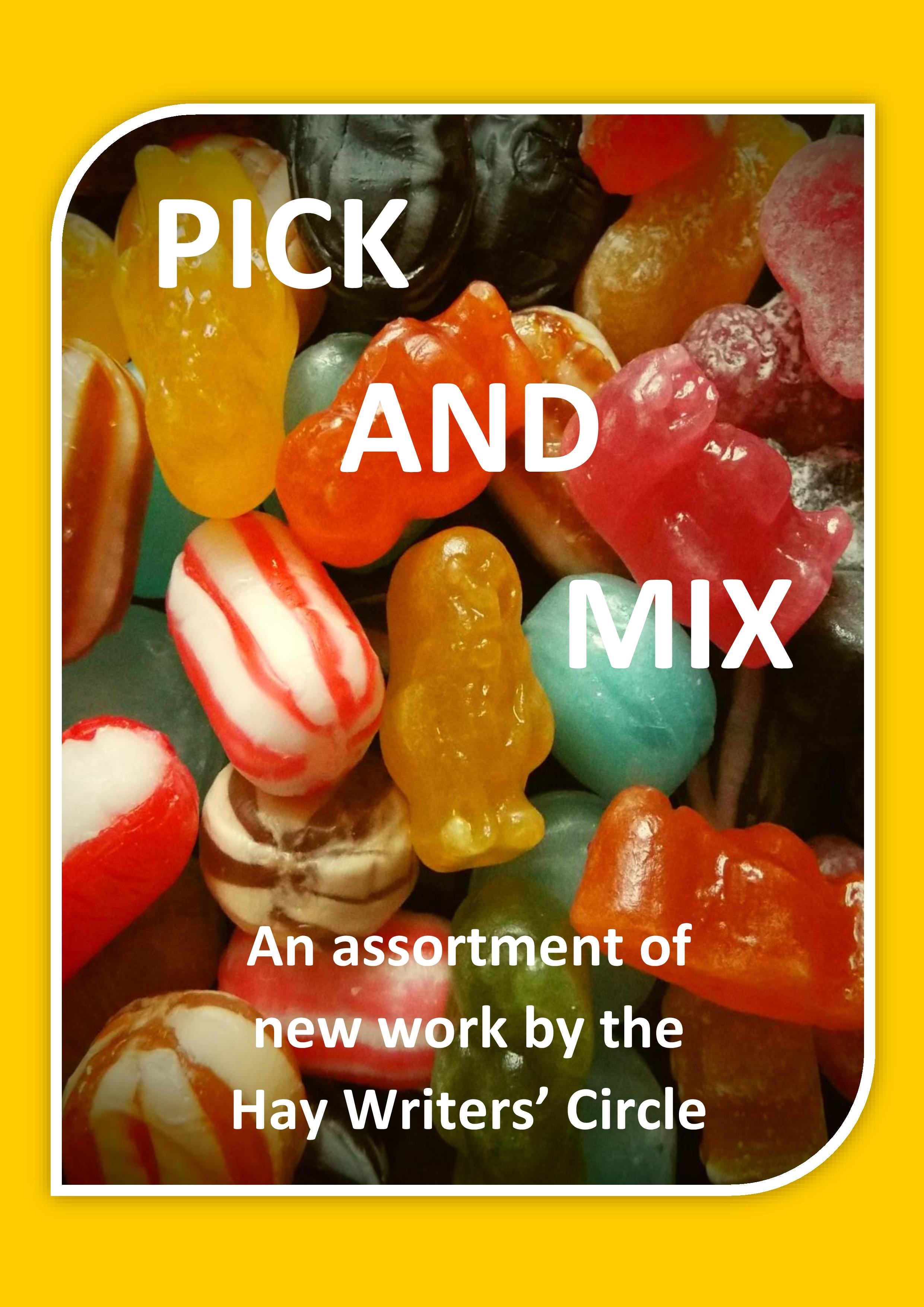
Below is one of Ann’s short stories which appeared in the 2015 anthology, Pick and Mix: An assortment of new work by the Hay Writers’ Circle.

THE ANNIVERSARY
by Ann Riviere

Ursula had known for years of Robert’s infidelities. She never knew if there
were a number of women or just one. His attractive Personal Assistant was
a likely candidate. Hurtful though it was, apart from his philandering, he
was a generous, thoughtful husband and a loving, caring father. As far as
the girls were concerned, however busy he was at work, he always found
time to attend school plays, sports and parents’ days. During annual
holidays, when they were small, he was the perfect Daddy, making sand
castles, and as they grew up, driving them to and from parties and dances.
He would also sit in the freezing cold on Saturday mornings at the riding
school, watching with pride as they showed off how well they could control
their ponies.


Oh yes, she had been fortunate in her marriage, but he had spoilt it
for her. Hard as she had tried, she could not help the stabs of jealousy each
time she suspected him of being unfaithful. It would have to end. She had
thought hard and long of how and when she would tell him of her decision.
The time had to be right. Their 21st wedding anniversary was soon. Janie
was already twenty and Georgia would be nineteen in a couple of weeks and
would be off to join her sister at university. They would be two independent
young women no longer needing to be mothered.


Never having forgotten their anniversaries, Robert would certainly not
forget their 21st. He would bring home a huge bunch of peach-coloured
roses, her favourite, and then, probably, they would go out to dinner. She
would tell him then. In the meantime, she would give some thought as to
what she might do after the separation. Take a cruise to some sunny spot,
lie in the warmth and consider her options.


On the morning of the anniversary, as he left for the office, Robert said
‘As it’s such a special day, I’ve reserved seats for the Oscar Wilde play and
booked a table at The Savoy for dinner.’


Returning home on the dot of six, armed with the roses, he was
smiling happily. For a moment she wondered if she was doing the right
thing.


The Importance of Being Earnest was a favourite play and the dinner
afterwards was superb. Ursula drew her breath, but before she could say a
word, Robert took a small box from his breast pocket. Inside was a ring of
diamonds and sapphires. It was quite beautiful.


‘This is for putting up with me for all these years and for never having
reproached me about anything. Whatever you may think, I want you to
know that I love you more than I can say and pray you will never leave me.’


Ursula sat staring at him. You are good-looking, charming and clever.
Isn’t that enough? Why do you have to be so nice as well? He slipped the
ring onto her finger.


In the car on the way home, she thought as she twisted the ring
round, gazing at it. Not this year. Perhaps our next anniversary would be a
better time.

Posted in Uncategorized | Tagged , , , , , , , , , , , , , , , , , | Leave a comment

Flash Fiction Writing Workshop – Book your place now!

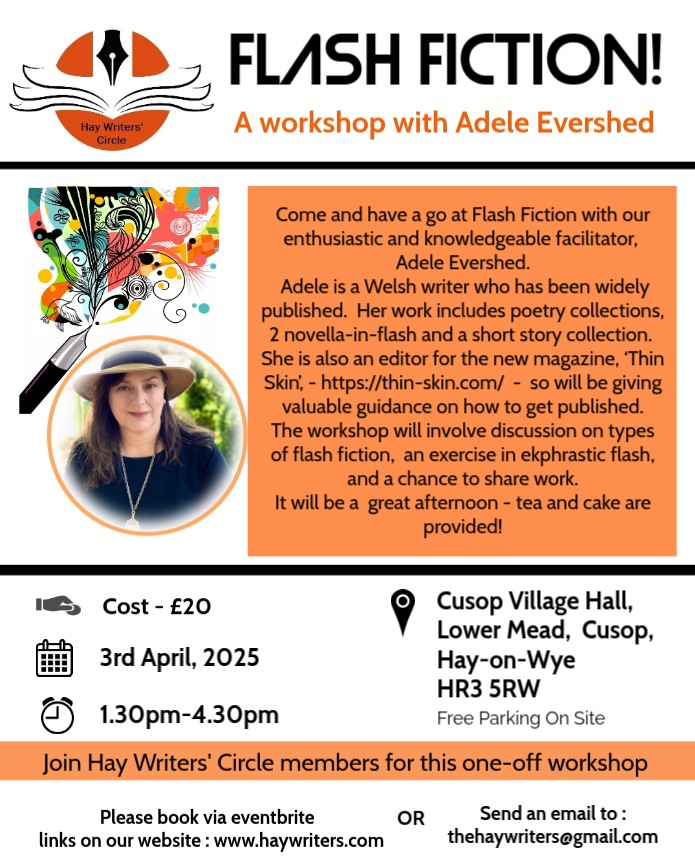
We are delighted to announce details of our forthcoming Flash Fiction workshop with author and educator, Adele Evershed. It will be an in-person event. Anyone over 18 years of age can attend on Thursday 3rd of April, at Cusop Village Hall. Please arrive at 1pm, the workshop runs from 1.30pm-4.30pm (free parking, tea and cake provided).

Book your ticket via the eventbrite website – CLICK HERE
or email HWC Secretary – thehaywriters@gmail.com

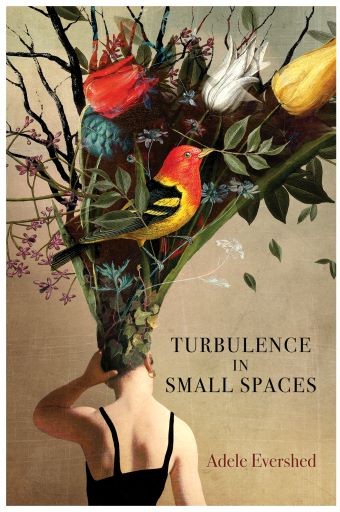
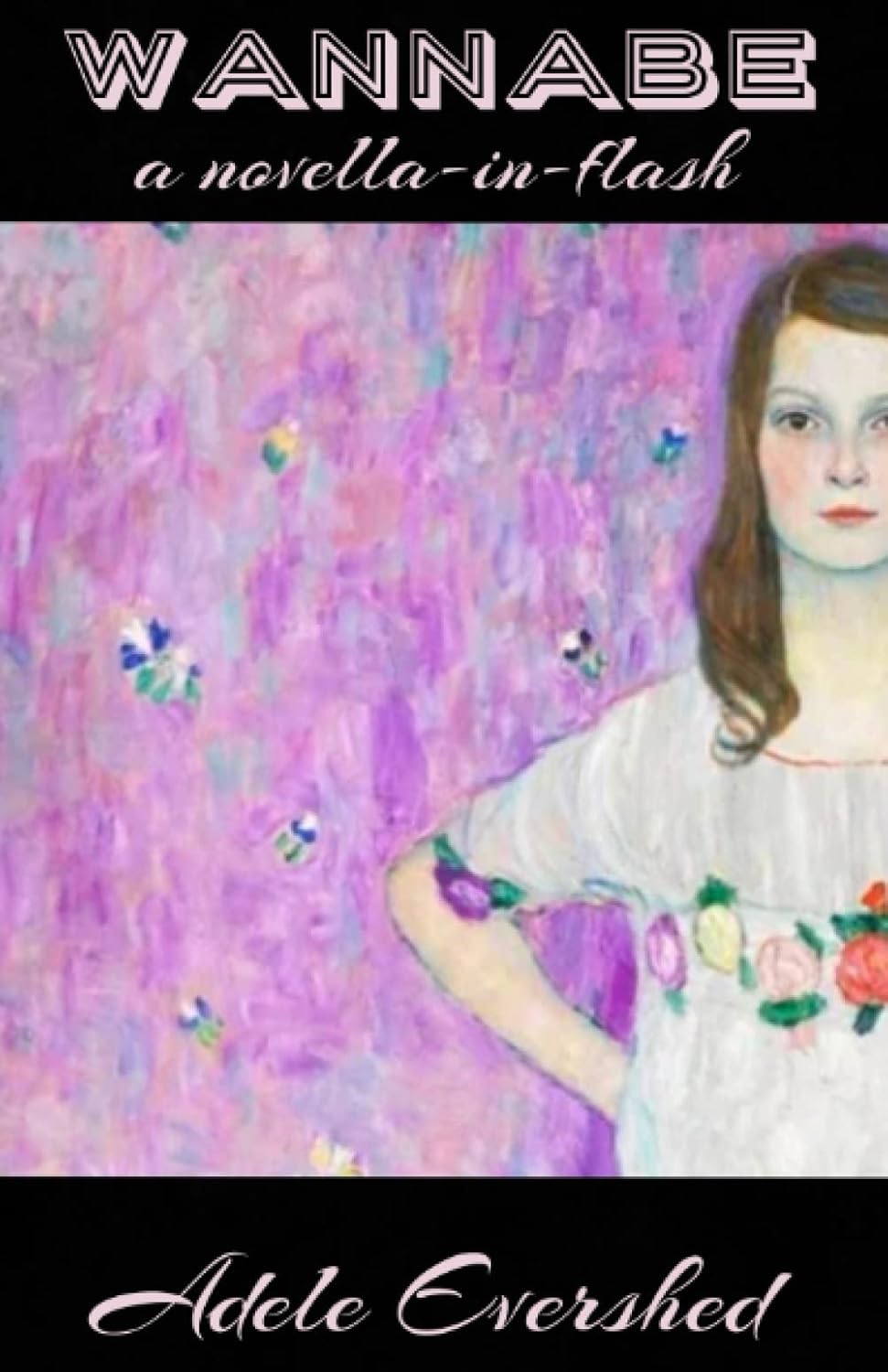
“Adele Evershed is a Welsh writer. Her work has been widely published in journals and anthologies such as Full House Literary, Grey Sparrow Journal, Free Flash Fiction, Bath Flash Fiction, Anti Heroin Chic, Gyroscope, and Janus Lit. Adele has been nominated for the Best of the Net for poetry and the Pushcart Prize for poetry and short fiction. Adele has two poetry collections, Turbulence in Small Spaces (Finishing Line Press) and The Brink of Silence (Bottlecap Press). She has two novella-in-flash published by Alien Buddha Press, Wannabe and Schooled, and her short story collection, Suffer/Rage, is available from Dark Myth Press.”

Adele is also one of the editors for a new lit mag, Thin Skin, which looks to give older writers an opportunity to be published. 

To keep up to date with HWC news and events why not subscribe.
Enter your email address in the box below.

Posted in Uncategorized | Tagged , , , , , , , , , , , , , , , | Leave a comment

Jo Jones Remembered

Jo Jones Remembered By The Writers’ Circle.

We recently learned of the passing of former HWC Secretary – Jo Jones.

Jo Jones was a member of the Writers Circle in Hay for many years, between 2014-2017 she was the group’s Secretary. She was much valued by all the members of the Circle.

She had been a warden of a mountainside hostel in an earlier incarnation. We rated her as tough and fearless, whilst always seeing the funny side of things, compassionately.

We so much appreciated her humorous and perceptive writing. Her characterization was vivid and we felt that we knew the people and the parties taking place in the stories.

Here are two examples – In her “School Nativity Play” we appreciated her Joyce Grenfell like gentle humour. In “Jane” we heard about her part in her aunt’s do-it-yourself alternative funeral. It was both hilarious and touching. Both pieces are in the Writers’ Circle publication “Pick and Mix” along with others by Jo.

In person, she had an inimitable way of presenting the stories. Her comic timing was wonderful and her delivery was both droll and moving, and we loved it. As did the audience at the Hay Festival events in which she took part.

Last of all, no-one will forget her marvellous scones, baked at her lovely cottage in Winforton where she hosted the Circle on many occasions.

Thank you to Ange Grunsell and Jean O’Donoghue for the above tribute to Jo.

Below is one of Jo’s short stories which appeared in HWC anthology, “Pick n’ Mix”.

JANE
by Jo Jones


A question that is rarely heard in an undertaker’s office is ‘Have you
anything cheaper?’ We have to be seen to be giving the dearly departed the
best that money can buy. Clients are shown glossy catalogues displaying
various coffins, ranging from basic pine to superb, ornate, glass topped,
luxuriously lined specimens. The better the coffin, the better the package.
Bewildered clients may be thinking how horrendously expensive it all looks
but never feel able to voice their opinion.

There are a few exceptions to this rule and my aunt Jane was a
shining example of someone who thought funerals were a complete rip-off.
She did not just think it; she voiced her opinion frequently and even wrote a
book about it.

Her lately departed husband, who was a conservation fanatic, made it
known that when he died he wanted to be thrown on the compost heap.
This is not a legal option. However, having him cremated and then his
ashes consigned to the compost could be arranged.

Although Jane’s husband, Nigel, was terminally ill, he and Jane
discussed how a Do-It-Yourself, inexpensive funeral could be accomplished.
Transporting the body to the crematorium some thirty miles away could be
done using their battered old Volvo. The coffin was a little more difficult.
Where do you go to buy a coffin?

Jane managed to acquire one from a small independent undertaker by
pretending she needed it for a play. They decided to use the old fashioned
custom of keeping the deceased in the parlour with the curtains closed until
the day of the funeral. If he died in hospital he could be left in the
mortuary.

It did not quite go to plan because he managed to die at home, on a
very warm bank holiday Saturday, so he was kept in cold storage at the Bala
police station for a few days. The route from Bala to Ruthin crematorium is
over a winding mountain road, which caused the coffin to slide about in the
Volvo. They had to stop and collect several large rocks from the roadside to
wedge the coffin in place.

Having successfully planned and executed such a funeral, Jane
started planning her own (as it happens, well in advance). With much
difficulty she eventually found someone to make her a chipboard coffin.
Apparently undertakers are not allowed to sell coffins to Jack Public. Most
undertakers are no longer small family businesses; they have been taken
over by large companies (although they keep the old family name so that
people think it is a small independent firm). The last thing undertakers
want is a rash of people doing their own funerals. They therefore endeavour
to make it almost impossible for anyone to even contemplate such a plan.

Having bought her coffin, Jane had it put up in her loft and there it
remained for the next twelve years. She then wrote a book about arranging
a funeral without the services of an undertaker (which made her very
unpopular with certain elements of the population). She appeared on many
radio and television programmes talking about her book Undertaken With
Love.

The result of all this publicity meant that when Jane eventually died I,
as her next of kin and executor, would simply have to give her a Do-It
Yourself job.

In March 2000 Jane had a stroke. It soon became obvious that she
would not be able to cope at home any longer so had to be moved to a care
home. Rather than leave her house unoccupied I put it up for sale. I now
had to find a new storage place for her coffin. The piggery in my daughter’s
garden became its new home. My daughter’s two young sons would bring
school friends home to play and one of their favourite games was hide and
seek. A much used hiding place would be inside the coffin. It also served as
a temporary home for several hamsters, a resting place for an assortment of
injured or dead birds and a container for windfall apples. By the time it was
needed it looked pretty shabby.

Sadly, my aunt Jane died in April 2002. She was in the top bedroom
on the fourth floor of an old Victorian mansion. The plan was to bring her
down to the ground floor standing up wedged between two carers as the lift
was only tiny. We would then manoeuvre her into my VW Campervan where
she would be taken to the local hospital mortuary. We needed a couple of
‘lookouts’ to make sure no other staff or patients tried to use the lift while
this descent was taking place. The management did not want several more
deaths due to patients having heart failure after seeing a corpse descending
to the ground floor via the lift.

When we reached the van we had to somehow post her into a dry
cleaner’s garment bag which was being used as a body bag. My next hurdle
was to drive through town to the local hospital. I dreaded stalling the van at
the many sets of traffic lights which littered our route from the care home to
the mortuary. The mere thought of some well-meaning policeman coming to
my assistance and discovering a body lying on the bed area filled me with
horror.

I need not have worried, the van performed wonderfully and we made
it to the mortuary without incident. However, the mortician was a real
jobsworth. Nothing had been done correctly; no identification label attached
to her toe, no paperwork and no proper body bag. It was amazing what a
couple of crisp twenty pound notes managed to put right.
It was not difficult to arrange two post mortems or to book the
crematorium. I had placed the obituaries (written in advance by Jane
herself) in the Telegraph and Observer and notified all her friends. Her
funeral was to be a very small affair since, at her request, I was to organise a
celebration of her life, in London, a couple of months after her death.

Since Jane was an atheist, the committal was to be along Humanist
lines. For the handful of people who were able to attend I told them her life
story; how she had been given away at birth, how she eventually traced her
real parents when she was in her forties, her life as an actress and, in later
years, a writer. She had chosen two pieces of music to be played during the
proceedings; one was Is That All There Is? sung by Peggy Lee and the other
(to be played as the coffin slid into the warm room) was The Best of Times is
Now.

A couple of months later, some friends and I bought a lilac tree, dug a
deep hole in my garden and attempted to tip her ashes into the hole before
planting the tree. Unfortunately a sudden gust of wind caught the ashes
and blew them all over us. Since our jackets were soaking wet due to out
digging in the pouring rain (well, we were in Wales) she stuck to us. We can
never forget her.

Thanks in no small part to Jane’s campaigning, things have now
improved. There is a large store, rather like a garden centre, where you can
buy everything you need for a burial. There are woven willow, cardboard,
and hand-decorated coffins – all easily found on internet sites.

The end.

R.I.P Jo xxx

Photo by eberhard grossgasteiger on Pexels.com
Posted in Uncategorized | Tagged , , , , , , , , , , , , , , , , , , | Leave a comment

Writing Goals 2025 – Still Time to Enter Our Fiction Competition, and A Fireside Tale by Michael Eisele.

Photo by Susanne Jutzeler, suju-foto on Pexels.com

Suddenly we are 5 days into 2025, and perhaps considering our New Year Writing Resolutions. One of them should be entering a short story to the Frances Copping Prize Fiction Competition.

The competition is open to everyone, members of Hay Writers’ Circle and non-members too. Pieces of 500-1500 words on any fiction theme are accepted. Closing date for entries is Tuesday 7th January 2025. Prizes are awarded for first, second and third place.

This year we are delighted that Adele Evershed is our judge.

The entry form and full competition details can be found on our Competitions page – CLICK HERE.

Let it Snow …

With a seasonal turn in the weather, what better way to feel inspired than to read “A Fireside Tale” by Hay Writers’ Circle member, Michael Eisele.

Thank you to Michael for sharing this piece for everyone to enjoy here.

A Fireside Tale
By Michael Eisele

I wouldn’t blame you for not believin’ me. Maybe my clothes come out of a dumpster and I ain’t been washing too regular, what’s that to you? Lots of other fellas is on the bum. Living like this, sleeping rough like we do, it probably don’t seem like much of a life, but there’s boooze when you can get it and even in the Winter a bunch of us huddle together around an old oil barrel and burn stuff to keep from freezing to death.

So it was that kinda night, snow coming down heavy and all you know. It was me, Joey, Davey and old Mark, and we was around the can arguing about whose turn it was to scrape up some more wood, when this guy come out of the night with this big dog. I’m talking Big! A couple of us, Joey and Davey, had dogs for company, like, but them mutts took one look at this one and whined and hid behind us. Which was funny ’cause this guy was no giant, maybe some shorter than me even.

‘Name’s Luke,’ he says without waitin’ to be asked. ‘Could we maybe join you fellas for a bit? ‘

‘You wouldn’t have a load of firewood, would you, ‘ says old Mark, not the friendliest guy at the best of times, ‘I prefers oak but I’ll take anything, night like this.’ Sacastic like, you know?

That got a laugh and right in the middle of it this guy Luke says, ‘Got something better.’ He made like throwin’ an’ I swear there was nothing in his hand but that ol’ fire burned up hotter than I ever seen it before, I mean it like lit up the whole lot and that oil can turned cherry red. Talk about warm!’

So we made him some room, and that big dog just hunkered down next to him in the snow and went to sleep. After a bit Luke looks around and says, like to himself, ‘Yep, this is the place.’

‘Place for what?’ I says, ’cause it was just some old abandoned railroad yard.

‘You’ll see,’ says Luke.

Then old Mark says, ‘Well Mr. Luke,’ sarcastic like always, ‘we thanks you for the fire, could it be you got some booze on you as well?’

Luke he didn’t turn a hair. ‘Got something better.’ he says, and reaches into his pocket and pulls out this funny lookin’ bottle.’ Try some of this, boys.’ he says and hands it to me ’cause I was nearest.

Well, booze is booze, no matter what it come out of, so I tipped back my head and took a swig. Next minute my eyes was waterin’ and I was near choked. Seemed like the world was spinnin’ for a minute and then like this wonderful feeling come over me, an’ I weren’t cold no more.

We passed that little bottle around, an’ ever one had a taste, an’ here’s the thing. It was like no one could drink it dry. Allus seemed to be more, and when it come round again, Luke put the stopper in and put it away. Then he looks down and says, ‘Looks like your firewood is getting’ all wet,’ and picks up some sticks from beside the can, which I swear wasn’t there before. ‘Here, fellas,’ he says, each of you take one to keep it dry.’ Which made a sort of sense so we done that.

Just then I seen something moving way back in the snow and before I could say anything three of the biggest guys I ever seen in my life come out of that snowstorm. I mean to say they was huge, and all covered with frost, beards and all. One of them grins kinda nasty and says in a voice like it come out of the ground, ‘Well, well, if it ain’t the great Lukey himself. What you doin here?’

Way he talked sounded foreign but somehow I could understand him. It was kinda

like my old Grandpa used to talk, him that come over from Iceland originally.

‘Come to stop you. ,’ Luke says, in the same way. Well them three guys acted like that was a funniest joke in the world. Haw haw haw they went.

Then the first one points to us and says,” I suppose these is your heroes? You come down in the world since Assgard, Lukey.’ Dunno what he meant by that.

Anyway, Luke he didn’t seem bothered, just snaps his fingers like a pistol goin’ off.

‘Stand up, men, and show who you are.’ he says, or something like that. I looks around at the bunch of us and they was lookin’ back like what the hell is this? But I got to my feet anyway and all the rest did the same.

Then Luke, he looks around at us four bums and he says, ‘Now show what swords you bear.’

I went first ’cause I was nearest, and I didn’t know what else to do but I held up my stick and so help me I was holdin’ this big old sword, shinin’ in the light from the fire! ‘This is Scofnung,’ Luke says,, pointing at me, ‘ He who is cut by it can never heal. ‘

The three big guys went sort of bug eyed and went back a step. Then Luke pointed at Joey, and as soon as he done that Joey had a big old sword also. ‘This is Damsjiel, blade of heroes,’ he said, and then he went round to all of us and we all had swords in our hands, and he named each one in turn. ‘Gram, bane of evil’, he says pointing at Davey, and then he points at old Mark who’s standin’ there holding this sword like he can’t believe what he’s doin’, ‘This is Angurvahel, who bears it can never fall in battle.’

S’pose you’re thinkin’, how can he be rememberin’ all this? Let me tell you, mister, if you’da been there you wouldn’t have never forgot it either.

Now them three big guys by now is all huddled together, lookin’ worried and talkin’ amongst themselves. Finally the biggest one says, ‘This was just a friendly visit, Lukey, we didn’t mean no harm. ‘ Or somthin’ like that.

Then Luke he says, ‘And I suppose Fenrir, Aegir and the rest ain’t waitin’ back yonder till you calls them?’

The big guy sort of puffed himself up and says, ‘Well and if they was, do you think your guys can handle them, no matter what swords they bears?’

Luke looks around at us standing there like dumbells with our swords in the air, and he sorta purses his mouth like he’s thinkin’ it over. I dunno about the rest but I was startin’ to feel a little nervous. I mean those three guys was huge, and they had swords too and big sharp lookin’ axes in their belts. Then Luke says, kinda casual like, ‘I forgot to mention, I didn’t come alone. My dog come with me.’

Then the three guys all went ‘haw haw haw’ again, and one of ’em says, ‘ You really expect us to worry about some Dog? Bring him on!’

Now, all this time that big dog of Luke’s was just laying there sleepin’ in the snow and the way it was comin’ down, by then all you could see was this mound with his ears stickin’ out. The biggest of the guys says, ‘You was allus all talk, Lukey. ‘ And he pulls this big axe out of his belt and takes a step forward, and the two others done the same.

Luke he didn’t budge an inch, just lookin’ around casual like he forgot somethin’. Then he nods like he suddenly remembers what it is, and snaps his fingers again. ‘Fenris’ he says, quiet like. And this big dog a’ his gets up and shakes off the snow, an’ by God if I ‘da thought he was a size before that wasn’t nothin’ to how he looked in front of those three frosty guys.

Suddenly they didn’t look so big any more, and the first one says, ‘Aw come on, Lukey, no need to get all het up, we was just fooliin’, wasn’t we boys?’ An’ the other two nodded sort of nervous and said ‘Sure, we didn’t mean nothin”

Then this Fenris rumbles deep in his chest like thunder an’ his eyes light up with the firelight an the fur on his neck stands up till he looks half again as big. Luke says, ‘Go back where you come from, Hrunnir, and take your boys with you. Don’t ever set foot in this world again.’ Fenris takes a step forward, growling , I mean you could feel it shake the ground.

The three frosty guys step back then, step by careful step, all the time their eyes was on Fenris and I swear they was lookin’ smaller and smaller the whole time. The one Luke called Hrunnir shoves his axe back in his belt and then they all turn and go back the way they come, an’ the snow was comin’ down thick an’ fast and they just seemed to melt into it an’ fade away.

Next minute all three was gone, and call me a liar but we no more than turned around but Luke and that dog a’ his was gone as well. Maybe back to that Assgard place for all I know. We looked around, the four of us, and there we were standin’ like donkeys with nothin’ in our hands but some old sticks., and the fire was burning low so we throws them in.

Well that was what happened, true as I’m sitting here. Say, you couldn’t spare a couple of bucks for a fella down on his luck, could you?

The End

And Finally

Happy New Year from Hay Writers’ Circle.

May the year ahead be filled with writing dreams fulfilled.

Happy New Year 2025!
Posted in Uncategorized | Tagged , , , , , , , , , , , , , , , , , | Leave a comment

***STOP PRESS*** Judge Announced for The Frances Copping Prize for Fiction 2024, Competition Details and Happy 101st Birthday Lynn!

The Frances Copping Prize 2024

Submissions are now invited for our annual Fiction Competition, The Frances Copping Memorial Prize 2024, named in fond remembrance of our Lifetime President who sadly passed away in 2020.

The competition is open to everyone, members of Hay Writers’ Circle and non-members too. Pieces of 500-1500 words on any fiction theme are accepted. Closing date for entries is Tuesday 7th January 2025. Prizes are awarded for first, second and third place.

This year we are delighted to announce that our judge is the wonderful Adele Evershed.

Adele Evershed is a Welsh writer. Her work has been widely published in journals and anthologies such as Full House Literary, Grey Sparrow Journal, Free Flash Fiction, Bath Flash Fiction, Anti Heroin Chic, Gyroscope, and Janus Lit. Adele has been nominated for the Best of the Net for poetry and the Pushcart Prize for poetry and short fiction. Adele has two poetry collections, Turbulence in Small Spaces (Finishing Line Press) and The Brink of Silence (Bottlecap Press). She has two novella-in-flash published by Alien Buddha Press, Wannabe and Schooled, and her short story collection, Suffer/Rage, is available from Dark Myth Press.

Adele is also one of the editors for a new lit mag, Thin Skin, which looks to give older writers an opportunity to be published. 

Please follow the guidelines listed on our COMPETITIONS page if you would like to enter.

You can contact writers4haycomp@gmail.com if you have any questions or queries. 

Click of the following highlighted link to download the entry form :

GOOD LUCK!

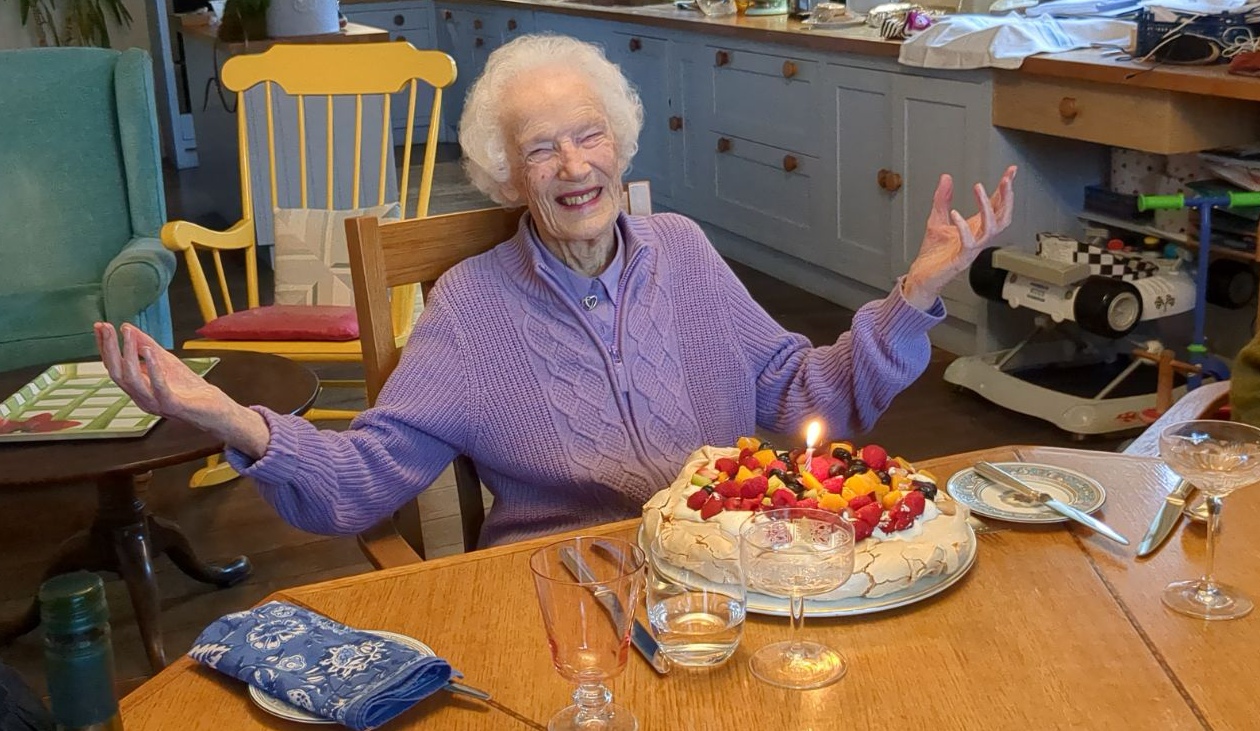
Happy 101st Birthday Lynn

This week would not be compete without celebrating the 101st birthday of former HWC Chairperson, Lynn Trowbridge.

A remarkable and inspirational person in every sense of the word, Lynn, looking lovely in lilac, continues to enjoy life to the full.

Lynn Trowbridge at 101 years – Photo Credit Catherine Hughes 2024

Emma writes, “She was our HWC Chairperson for well over a decade, keeping the group writing and moving forward under her guidance. Of course, a decade ago Hay & District Writers’ Circle was very different; much smaller in number, meeting at member’s homes, publishing yearly magazines which were sold locally and just dipping our tentative online toe in the waters of the world wide web.

Our immense gratitude to Lynn and all those who shaped the HWC in the past cannot be overstated and we thank them for all their incredible efforts. “

The Hay Writers’ Circle journey certainly continues – onwards and upwards!

Don’t forget to subscribe with your email address in the box below.

Posted in Uncategorized | Tagged , , , , , , , , , , , , , , , , , , | Leave a comment