How quickly our writing year is up and running again! Our Annual General Meeting enjoyed not only many positive reports from its Committee, but also a number of exciting plans and adaptations for the coming year ahead. All thanks to everyone who brainstormed ideas during our summer blue-sky-meeting.
We are delighted that the following Committee Members have been re-appointed.
Chairperson – Corinne Harris
Treasurer – Nick Thomas
Competition Secretary – Margaret Blake
Social Media & Website Manager – Emma van Woerkom
Corinne Harris ChairpersonNick Thomas TreasurerMargaret Blake Competitions SecretaryEmma van Woerkom Social Media & Website Manager
A new appointment this year for the position of Secretary. We are happy to confirm that Michelle Pearce has kindly accepted this busy undertaking. Welcome aboard Michelle!
Michelle Pearce Secretary
Bon Voyage!
It’s never goodbye from the Hay Writers’ Circle, just a “bon voyage” for the continuing journey of life. We understand that as writers develop and move away from Hay, they cannot always stay with our group, and so this year the following members have left our intimate circle for pastures further afield. We thank them for their many years with us, plus the words and publications they have shared and we have loved. We all wish them the very best for the future, with resounding chants of good luck – ádh mór – guid luck! May their wonderful writings find large happy audiences, and willing rich publishers!
Alan ObermanHelen SmithMichael Eisele
Richard Booth Prize 2025 – 3rd Place – Val Ormod
We are delighted to showcase the 3rd place entry of our most recent competition, The Richard Booth Prize for Non Fiction 2025. Val Ormrod is no stranger to this competition attaining 2nd place in 2024. She is back on the podium this year with her entry, “Knives”, achieving a well deserved third place.
Many congratulations Val for another stand-out piece of writing.
Val Ormrod 3rd Place – Richard Booth Prize 2025
Knives
The morning shrieks awake. My body is the centre of the shrieking. I try a small movement and pain stabs my spine like a hot skewer. I need to empty my bladder and attempt to climb out of bed. Pain reclaims me, spins me in its jaws. A cry escapes my mouth, unbidden, refusing to be controlled. Defeated, I fall back to bed. I lie still, commanding my brain to bypass the pain. The ache in my bladder increases. I drift in and out of razor-lined sleep.
A slight breeze fidgets the curtains; a knife edge of sunlight chinks through the fabric, stabbing me into consciousness. The bladder keeps insisting too. Now it is impossible to ignore. I force myself to move. I ease one leg out of bed, force the scream back down my throat as I slide my body towards the edge, lower myself onto hands and knees. Each small movement is punctuated by gasps. Scorpions travel my leg. The cries leak out involuntarily.
I begin the marathon journey to the bathroom. From this close-up focus I observe every black speck on the carpet, every hair showing itself against the cream pile. I make myself concentrate, count every imperfection as I crawl with tortuous slowness, then study every tiny mark on the bathroom tiles until the white base of the loo looms in front of me. I grasp the side of the bath to pull myself up until I hover over the seat. Sitting is impossible but I manage to aim in the right direction. The relief is temporary: one pain quickly replaced by the other pain – the fireworks sparking in every nerve ending. I reverse the journey, my yelps piercing the room like the high-pitched cry of birds. What seems a lifetime later, I have hauled myself back into bed and lie exhausted.
I resign myself to another day inhabited by pain. It drags me down, any movement piercing my body like daggers. I struggle to do anything, move anywhere beyond this room. Seconds are leached from my minutes, minutes from my hours, and hours from my days. Life carries on around me while my own wasted days drain to despair. I vow to get through them somehow and get back to living.
At last, the day I have been waiting for arrives. I am wheeled on a trolley to a room of knives. I study the scalpels, the steel instruments that glint with menace, the syringes and tubes, the masks, the smell of chlorine and antiseptic. The deliverance man sharpens his weapons. Upside down faces hover above me. Mouths stretch taut over white teeth, my arm is stroked, soft as a cat. The one with the needle smiles and smiles and I silently urge him to hurry. The poison leaks into my blood. Smiles blur, voices recede, Picasso faces dissolve into mist. The tongues of fire grow quiet as I race to the end of the rainbow where there is no more pain.
I wake in a morphine maze of morning, my face drained and pale as chalk. The day hobbles by in grey flashes. Cocooned by night I surf the hours till dawn. This time a new morning light swallows the grey; the paintbox returns, colour unfurls. Blood red streaks melt to amber, to gold. Bright sun fills my world.
In that room of knives, a modern miracle has been performed. I pick up my bed and walk.
There are still a few places left at our Poetry Workshop on 21st October with Gareth Writer-Davies.
We are delighted to begin this week with the results of our annual non-fiction competition.
This popular competition again received a good number of entries from both inside and outside Hay Writers’ Circle and we very much welcome external interest in all our writing competitions.
Our memorial prize, named in tribute to Richard Booth, the self-proclaimed “King of Hay”, who among many literary interests, was a keen supporter of the Hay Writers’ Circle. He sadly passed away in 2019, still in love with books, writers and his beautiful kingdom of Hay-on-Wye.
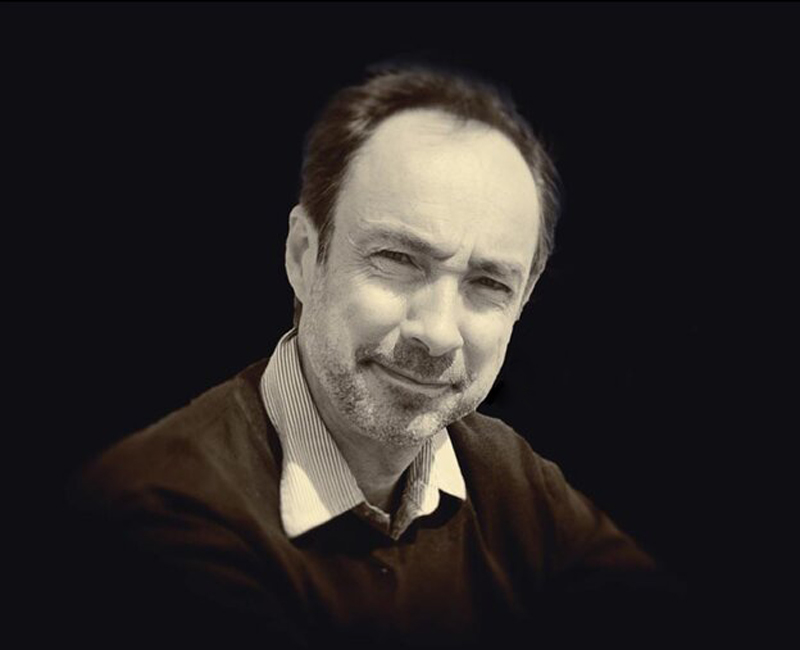
Richard Booth MBE2025 Judge -Dr Alan Bilton
We are extremely grateful to our judge, Dr Alan Bilton for his incredible efforts reading all the entries.
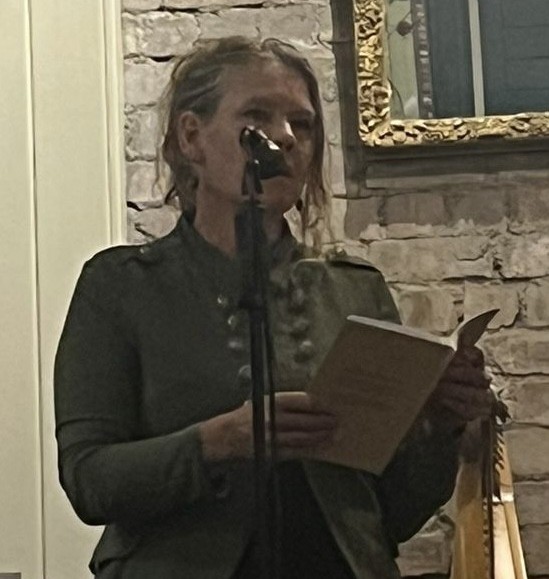
Dr Alan Bilton, “received his undergraduate degree in Literature and Film from Stirling University in 1991, and his PhD (for a study of Don DeLillo, an author with whom he has absolutely nothing in common in any way) from Manchester University in 1995. He then taught American Studies at Liverpool and Manchester, before taking up a post teaching literature, film and creative writing at Swansea University in 1996.
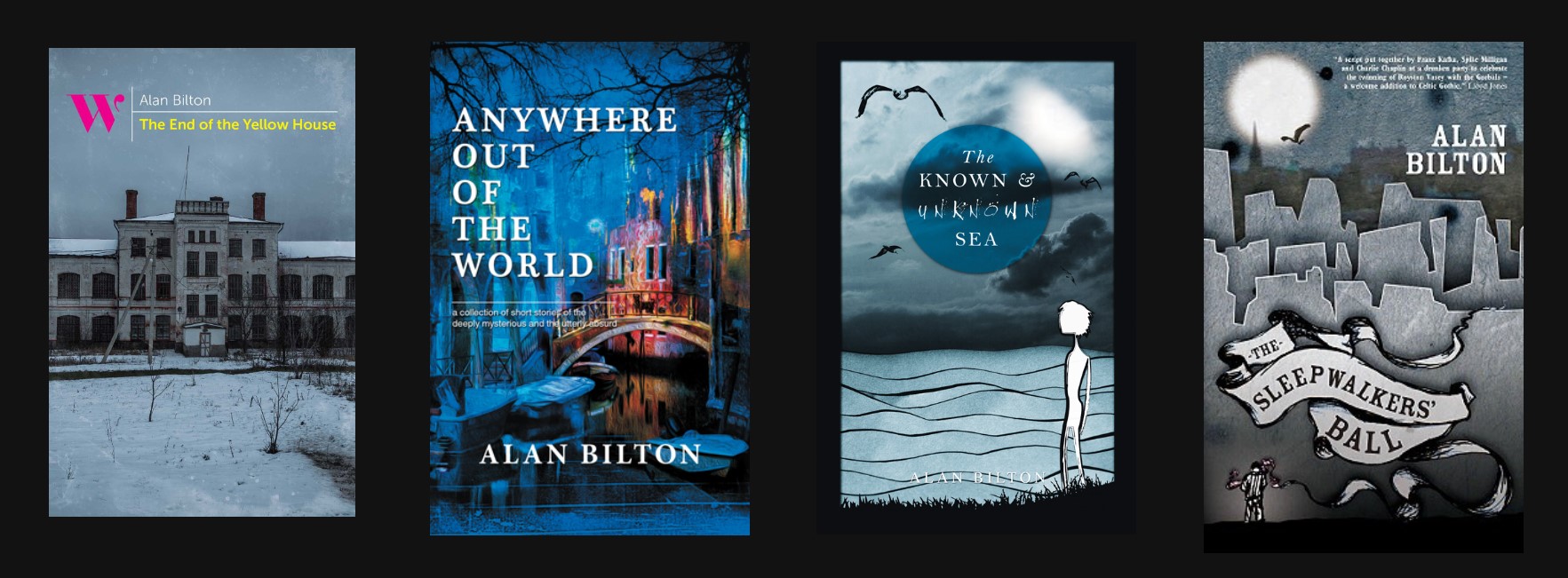
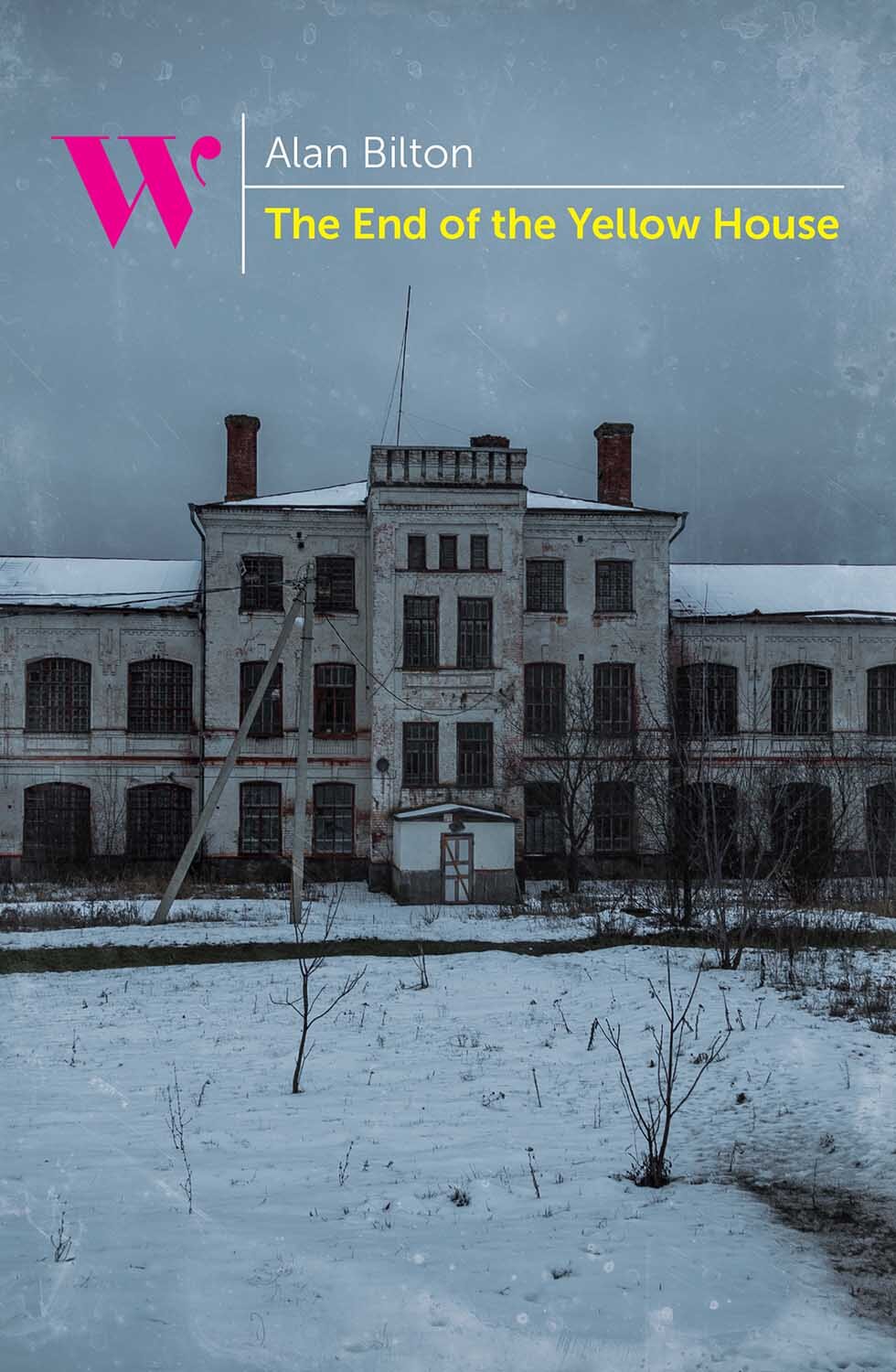
He is the author of three novels, his latest The End of the Yellow House(Watermark Press 2020), The Known and Unknown Sea (Cillian Press 2014), variously compared to Charlie and the Chocolate Factory, the 1902 movie, A Trip to the Moon, and Dante’s Inferno, and The Sleepwalkers’ Ball (Alcemi, 2009) which one critic described as “Franz Kafka meets Mary Poppins”. In Bilton’s Anywhere Out of the World (Cillian Press 2016), he dares us into a fantastical and strange alternative reality through a collection of short stories, into a labyrinth, a world of nocturnal cities, hapless slapstick and misadventures, lost souls and lost travellers.
As a writer, he is obviously a hard man to pin down. He is also the author of books on Silent Film Comedy (Silent Film Comedy and American Culture, Macmillan, 2013) Contemporary Fiction, (An Introduction to Contemporary American Fiction, Edinburgh University Press, 2002) and co-editor of America in the 1920s (Helm, 2004). His essays, reviews and fiction have appeared in the New Welsh Review, Planet, The Lonely Crowd, The Journal of American Studies, The F. Scott Fitzgerald Review and elsewhere, as well as the anthologies, Sing Sorrow Sorrow (Seren, 2010) and A Flock of Shadows (Parthian, 2013).”
Dr. Alan Bilton, offered the following comments which are applicable to all entries.
“Each of these very well crafted pieces seems to capture something vitally true and important about the authors’ lives – whether in thoughts, memories, or images. These short pieces managed to compress whole lives into a few hundred words – who am I to say which one is the most meaningful?
Nevertheless, the best, if I can put it like that, I think allow the reader to emotionally share in these moments by grounding events in specific images, sensations and scenes, moments when concrete things become meaningful symbols, feelings and moods are captured in tactile places and objects, and ideas seem indistinguishable from stories.
Many of these pieces seem to me to capture the uncanny strangeness of memory, the mystery of why some things persist, clear as day, whilst others vanish, mist-like into the void. The pieces are also blessed with unique, distinctive voices, giving the impression that the author is present in the room, swapping confidences, sharing their stories: ‘voice’ is nearly always the reason why we love one author more than another, and the work here is wonderfully idiosyncratic and individual.
Otherwise, what I took away from the exercise was a sense of honesty, authenticity, and truth – these pieces talk about important things (most specifically, life, death and the passing of time) in a sincere and emotionally direct way, and I was deeply impressed and moved by the candid way in which they explore the things that seem most important to the author – and then invite us, as readers, to find truth and meaning in them too.”
The Richard Booth Prize for Non-Fiction Competition 2025
RESULTS
1st Prize – Michelle Pearce with ‘My Textile Self.”
2nd Prize – Katy Stones with “The Shore I didn’t Choose.”
The judge’s comment on the winning piece reads as follows;
‘My Textile Self ‘ – the idea of framing life via an idiosyncratic history of the things we feel closest to our skin is a brilliantly off-kilter and original one, and the lyrical, poetic prose and steam of consciousness is wonderfully inventive, surprising and playful.
Michelle replied on hearing that she had won The Richard Booth Prize, 2025.
“I am particularly delighted to have won this prize – non-fiction is so dear to my heart – there is so much richness in what is true – ‘ you couldn’t make it up’ as they say – yes, delighted – thanks to the judge and special thanks to Hay Writers Circle for – well, for everything.” Michelle October 2025.
The nurse wraps me in a white cotton towel and hands me to my mother.
My mother is propped in a black metal bed, on starched hospital pillows, between starched hospital sheets, tightly tucked in with a thick woollen blanket. Cotton. Wool. Cotton wool.
The nurse tuts. To have a second daughter within two years is, in Hong Kong, February, 1969, bad luck. Very bad luck indeed. I should, of course, have been a boy.
The nurse marches off. My mother is alone with me for the very first time. She peels back my layers with her lovely hands. The towel, the cotton smock, the tiny woollen vest with its satin ties and then the great bolus of my nappy – a genius of folded cotton, stabbed with a pin, poppered plastic pants. The legs are so thin! The arms! The chest heaving with screams, those tiny fists reaching into the sudden emptiness of the world – ssshhhh little one – there there – I’ll be as quick as I can – ssshhhh – Cotton. Wool. Cotton wool.
Cotton. Wool. Cotton wool. Dresses (home)made bigger by the year – flimsy cotton shifts to be thrown aside – stripped down to nylon knickers for days and sweltering days on end, swimming the wet patio, drinking it, the gushing relief of the hose. Dresses, velvet with matching ribbons, for brief sub-tropical winter; deep red, royal blue, perhaps a little lace, knee-length socks, patent shoes with buckles, smiling crookedly at the camera – knock-kneed, freckled, a little awkward – good girl.
Cotton. Wool. Cotton wool. Leather – a new pair of sandals every year, bought from Clarkes on long-leave in England; rubber-soled, thick-strapped and lovely – running them in on the parquet floors, the tiled kitchen, the playroom’s bright lino – slap, slap, slap – so proud to wear them with my new yellow satchel, to school in the morning – cotton gingham sailor dress – blue or brown – zip up the front, so light, like wearing nothing at all, cooled overnight in front of the air conditioner, sliding in like a letter.
Getting older, here comes the miracle of flowery, worn-every-day, nylon shorts, long brown legs football-socked, and on the feet the wonder of longed-for adidas. Wrangler jeans with three lines of stitching up the thighs (important), high-waisted, flared, t-shirts with pictures – Coca-Cola, 7-UP, South China Morning Post.
Cotton. Wool. Cotton wool. New wool uniform – now there’s a way to scratch back the cold of my first English winter – chaffed by a green sweater – now there’s a way to subsume sub-tropical divorce – those socks crawling up my legs and that heavy duffle coat hiding my most urgent pupation. By spring I emerge, double-breasted, lipstick-ed, bleached, waistband of my skirt perfectly rolled up, socks perfectly rolled down and I shun those boys’ shoes (yes, Clarkes) and cripple myself in courts. I cut off my hair, blacken my eyes and when I am quite alone, I wipe it away all again – thank you, cotton wool. Cotton.
Wool. Cotton wool – maybe not. Ditch the wool, way too itchy. Cotton is strictly for pants, t-shirts and jeans. Now we have leather, lace, nylon, rayon, LYCRA, polyester, FLEECE – bring on the ‘80s – drain-pipes, crop-tops, leg warmers, stilettos, bat-winged jackets, pencil skirts, t-shirt dresses, sweatshirts – one eye in the mirror, one 1 Words: 924 eye on the high-street’s cheap parade – Is this OK? Does my bum look big in it? Will I fit in? Will it go? Will he fancy me? I’m not sure but I’m wearing it anyway.
Cotton. Wool. Cotton wool – the wedding dress is in a vintage shop hanging there all gauzy and gorgeous, and although he hasn’t asked, I slip it on, give him a twirl and the shop keeper says it’s perfect. Thirty quid it’s worth a whirl, and although my boobs are too small and my boots poke out beneath the hem like hard boiled eggs, the sequined straps cross my back perfectly, and the morning comes when I cross my heart and there they are, there those suited, booted, waist-coated folk smiling amongst the barley and the flowers dancing us to the marital bed.
Cotton. Wool. Cotton wool – it’s baby time again. Real nappies, organic cotton, baby-grows – so cute. Real lamb’s fleece to lie you on, pure wool blanket I made myself when you were inside me and even though I couldn’t knit when I started, I finished it and wrapped you in it and kissed your dearest skull and loved you.
But this is not all, this cotton. Wool. Cotton wool. Now we have man-made fibres, micro-plastics, child labour, sweatshops, pollution, cheap out-let stores, more clothes than any of us can wear – PRIMARK. It’s all getting complicated – piles of waste, give it away, upcycle, recycle, reduce, reuse, second-hand, car-boot, I’m finding it hard to BREATHE –
Ai yah!
Cotton. Wool. Cotton wool. I can deal with the itch, knit my own, meditate on colour, balance form, dream of crafting my whole wardrobe, and his, and theirs, sitting fire-side, blanketed, eating soup, writing books, walking for hours sheep-clad.
Yes, I have come full-circle – cotton, wool, cotton wool, a little leather, perhaps for the feet – cotton, wool, cotton wool – the very first fresh-from-the-womb touch of it, the primal itch of it, the memory is etched in my skin. And those hands, those lovely hands, my green-eyed mother – the touch of them too. Always the touch of them too.
And looking forwards? Perhaps, as the skin withers and wrinkles and becomes thinner than the paper I write upon, the as yet undiscovered mystery of silk.
Congratulations once again to our worthy winners. Thank you to everyone who entered work into this popular competition, and our wonderful judge, Dr Alan Bilton.
There are still a few places left at our Poetry Workshop on 21st October with Gareth Writer-Davies.
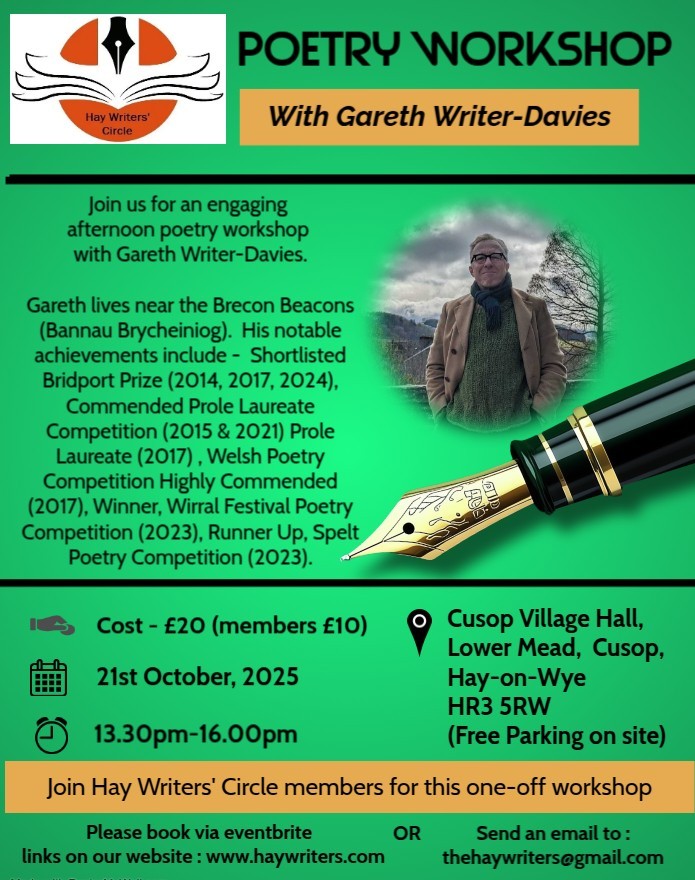
We are delighted to announce details of a one-off Poetry Workshop with Gareth Writer-Davies.
Date – Tuesday 21st October 13.30pm-16.00pm Venue – Cusop Village Hall – HR3 5RW (free on-site parking, facilities etc) Cost – £20.00 non members, £10.00 members Booking – Tickets via Eventbrite – CLICK HERE Or email thehaywriters@gmail.com
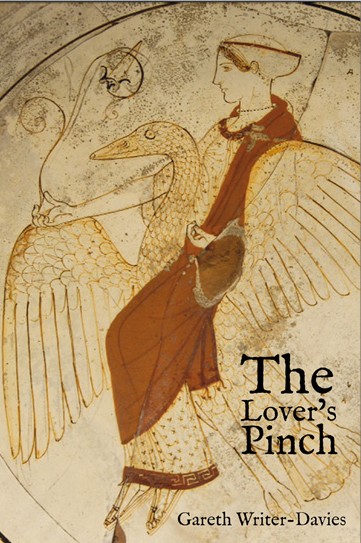
Gareth has written 5 collections, Bodies (2015), and Cry Baby (2017), published byIndigo Dreams.
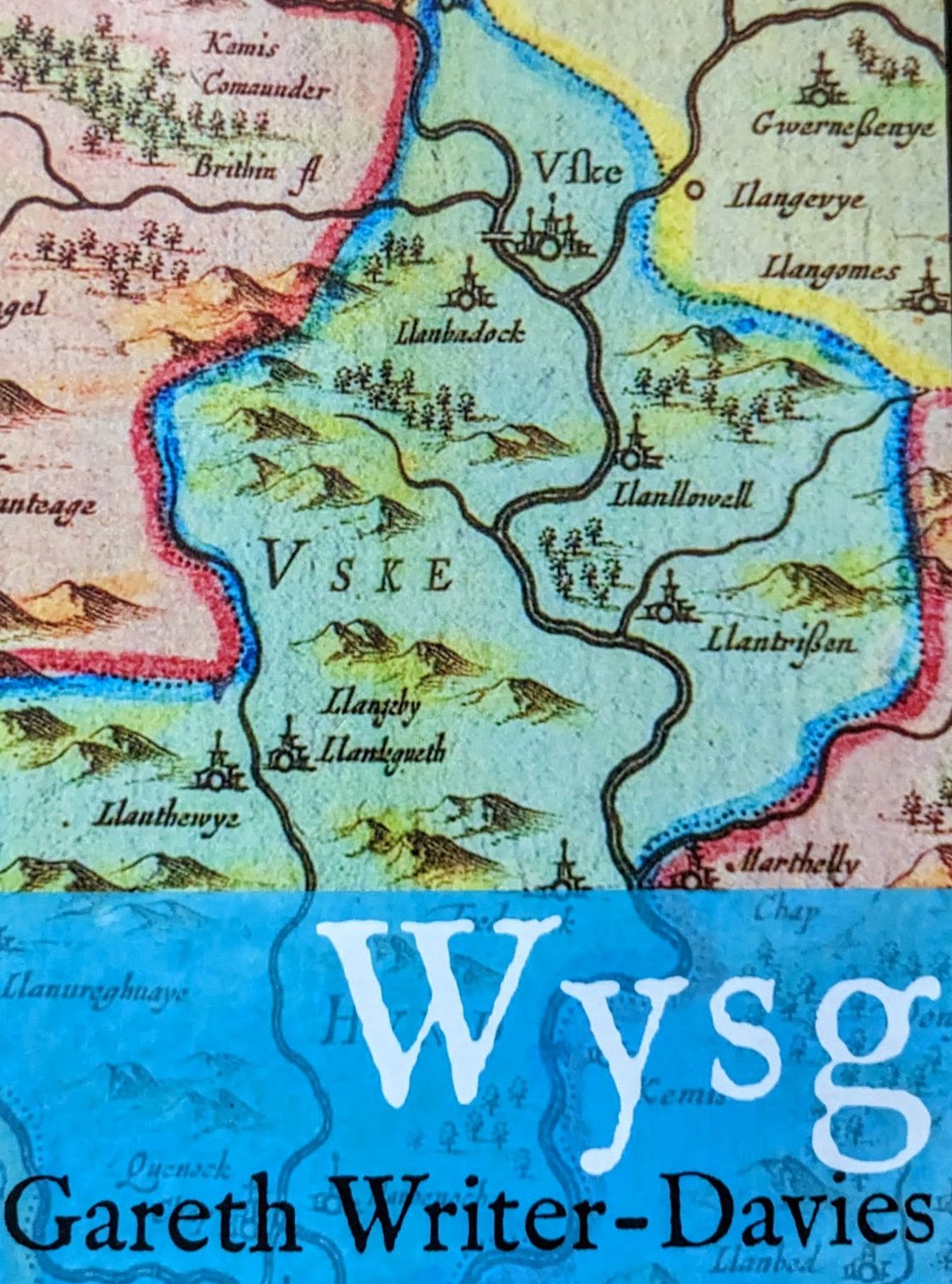
His latest book, WYSG (2022) is also published by Arenig Press.
In WYSG Gareth Writer-Davies is instantly recognisable, as he navigates the borderlands of Wales, seeking to bridge the new and the familiar; the streaming of our lives, our conflicts with nature, getting older and always, where we have been and where we are going?
“In these sharply-worked, elegant poems, Gareth Writer-Davies takes the reader on a voyage of mid Wales which invites us to see this landscape in a vivid light.” – Katherine Stansfield
NB. Workshop – Doors open at 1.15pm. Please bring a notebook, pen and your imagination, tea and cake provided.
We look forward to seeing your there.
Don’t forget to subscribe with your email address in the box below.
As the fourth heatwave of the summer looks to arrive tomorrow, and every flavour of ice cream has already been selected, tasted, and speedily devoured. We’ve also mulled the latest hosepipe restrictions, watched our runner beans shrivel in the sunshine plus, all the strawberries have gone and there are literally wasps everywhere! There are, of course, some of us who are looking hopefully for a cooling autumnal breeze on the horizon. Perhaps next week? Next month? Who can tell?
We do hope you’ve enjoyed the Summer though, storing up a wealth of warm images and creative experiences to use in your writing during the darker months when both sunshine and ice cream seem like a dream of a far away land.
Non-Fiction Competition Now Closed
Thank you to everyone who submitted an entry to our Non-Fiction competition this year. All the entries are with our judge, Dr Alan Bilton and the results will be announced in October.
As a small note of housekeeping for future competitions, we would like to remind everyone that with each of our competitions the rules may vary slightly. We urge all entrants to make sure they read and follow the rules before submitting.
Our non-fiction competition asked for one entry per person. Sending additional entries means an increase in email correspondence and arranging refunds. Our lovely and busy Competition Secretary, Margaret, does a wonderful job and your consideration is always greatly appreciated.
A Short Story by Michael Eisele
Peter
Sleep having eluded me, I sat in the darkened living room of my daughter’s home, staring sightlessly at the curtained rectangles of the open windows, dimly lit by the moonlight. Occasionally an errant breeze would disturb the lightweight fabric but for the most part the night was still enough to hear the lonely cry of some nocturnal bird from the nearby woods.
The day before had been clear, the trees rich with the subtle yellows and russet browns of an English Autumn, but today’s dawn was still some hours off. I had heard that the authorities always tried to schedule removing children from their homes in the early hours so that they and their parents would be too fogged with sleep to make trouble.
To distract myself from such thoughts I was remembering another such night on the Greek island of Thassos, where I had taken my daughter Daphne to recover from her most recent miscarriage. Her last three pregnancies had terminated after only a few weeks and Daphne was, I thought, near to the breaking point emotionally.
The sun had been just coming over the horizon when I saw my daughter coming back from the sacred grove, the sleeping bag draped over one shoulder. Thassos is a beautiful and peaceful island in the Aegean group and our cottage is in the hills overlooking the sea on the western side, far enough away from the public beaches to give a measure of solitude and an unobstructed view over the Aegean below. It is a place where one can sense the spirit of the past and almost smell the burnt offerings to the old gods. I had thought it just the setting for Daphne to come to terms with the loss of yet another child.
As she came nearer I was struck by the quiet happiness on her face. The lines of strain and worry seemed to have smoothed out and although part of the effect might have been due to the early morning sunlight, I was hopeful that this trip had had indeed been a good idea.
I turned around at the sound of clinking china to see old Melania approaching with the breakfast things. As she set down the teapot I saw she was watching Daphne closely as she approached. She turned to me, her deep set black eyes gleaming. Melania had been with us as long as my late wife and I had been coming here. Her family managed some large olive groves on Thassos and she looked after our small cottage as well as helping out when we were here on holiday. Now she smiled in satisfaction, and indicated my daughter with a lift of her chin.
‘You see, her sleep in the grove has been good for her.’
I had been a bit taken aback earlier when Melania had suggested the idea. Ever since Daphne had arrived she had taken my daughter under her wing and in short order had wormed out of her what had occurred. A woman who could not have children? Adianóitos!
Near the cottage was a grove of Mountain Pines which looked to be ancient. All of the trees were twisted and bent into fantastic shapes and in their centre was an open space with a plain flat stone in the middle. ‘Time out of mind,’ Melania had said to me once, ‘a woman whose womb would not bear would sleep for a night there, and wait upon the god.’
‘Which god is that?’ I had asked, because most of the islands had some shrine dedicated to one of the Greek gods.
Melania smiled and put a finger to her lips. ‘Ah, sir, it is one whose name it is best not to say.’
She must have been very persuasive in her conversations with my daughter, for Daphne came to me one evening as I was watching the colours of the sky reflected in the flat sheen of the sea below and announced her intention to sleep that night in the grove among the pines. I was surprised at first but remembering that she had been an avid camper before her marriage I thought it could do her no harm. And who knew? The unconscious is a curious thing. I found her an old sleeping bag left by some previous guest and off she went, carrying a tiny LED torch to light her way.
That night sleep eluded me. Like any father I worried about my daughter’s safety but it was more than that. I found myself staring out the window at the hunched silhouettes of the pines and imagining that they were moving, although the night was still and there was no wind. Then a little breeze did begin and softly into the silence I seemed to hear the notes of a flute, like the music the young goat herders play at night on their primitive instruments to calm the herd. The melody rose and fell and gradually my apprehension stilled and I found my eyes getting heavy and presently I must have dropped off because I was awakened by the first rays of the sunrise.
In days that followed I found to my relief that Daphne had recovered something of her normal high spirits and seemed to have put her grief aside. Instead of brooding indoors as she had done in the beginning she spent the rest of the holiday sunbathing and walking the hills. She ate voraciously the meals Melania provided and by the end of our stay seemed to have actually put on a little weight.
At the end of the month we set out for home. Well, my daughter went back to her husband of course, and I on an inspection trip to the new oil pipelines. I had meant to retire that year, but for some reason management still seemed to value my opinion.
The weeks went by and one day I received a call from Daphne to say that she was pregnant. She seemed totally optimistic and positive and I congratulated her while mentally crossing my fingers, remembering that she had miscarried her first three pregnancies within weeks. After a two months had gone by, however, I began to feel more confident. Daphne would call and merrily relate how the pregnancy was progressing. ‘Really, Dad, everything’s going great! I’m even starting to have cravings.’
‘What sort of cravings?’ I asked mildly curious.
‘Well, raw vegetables, for one thing, and lately it’s been, well, grass! Imagine!’
That did sound a bit odd, but I knew that during pregnancy women could want all kinds of things and everything else did seem to be going well.
The months passed with frequent updates, and the news that my daughter was planning on a home birth. That surprised me, I have to say. I couldn’t imagine George, her husband, agreeing to such a thing. He was an eminent barrister and had always struck me as too rigid and controlling, but this time Daphne’s determination seemed to have won out. When I mentioned it, though, Daphne informed me that he had left. Just packed his bags and moved out. ‘He seems to have gotten the idea that it isn’t his baby, of all the silly things.’ She didn’t sound very upset about it and to be truthful I had never liked the fellow much anyway. I promised Daphne I would cover all expenses until he came to his senses, if ever.
I was in Ecuador when I heard the news. The baby had been born, nearly a month early. I was aghast, but Daphne didn’t sound at all concerned. ‘He’s a beautiful boy,’ she said, ‘and thank God he doesn’t look a bit like George. I’m calling him Peter.’
The project I was overseeing meant that I couldn’t get away for several months but I kept in touch and everything seemed fine. Two months passed without incident. Daphne was, I supposed, like all new mothers, devoted to little Peter who in spite of being premature seemed to be developing rapidly. I was shocked, however, when in mid June my daughter called with the news that he was walking. Walking after two months, when a baby of that age shouldn’t even be able to crawl? Something was seriously wrong and I called the head office and told them to send a replacement ASAP, citing a family emergency.
In the event it was almost another three weeks before I could get away, and I worried every minute it took to book a flight out of that godforsaken country. As soon as I arrived at the airport I got on the first train to Woking and telephoned Daphne to tell her I was on my way to see her. She sounded fine, as though she didn’t have a care in the world. ‘We’re in that park down the road from the house, why don’t you meet us there?’
It didn’t take long to find her. She was sitting on a bench overlooking the play area where a group of children were milling around. After the usual hugs and greetings, she shaded her eyes and said, ‘And there’s Peter, over there. Isn’t he beautiful?’
I agreed, not knowing what else to say, while my mind was racing trying to make sense of what I was seeing. There was a little fellow not much bigger than a toddler, dressed in baggy white trousers and wearing an incongruous sun hat. He was not only walking but skipping around a group of older children who were playing some sort of game. At that moment two of the boys in the group came up behind Peter and pulled his trousers down to the accompaniment of loud laughter. Peter seemed not at all discomfited and in fact leaped out of the baggy trousers and butted one of the boys in the stomach. This dislodged the floppy hat and then I saw for the first time what my daughter had given birth to. His legs were hairy and jointed like a sheep or a goat’s, ending in tiny black hooves. On his head as he danced around his fallen victim I could see two conical bumps like emerging horns. In shock I turned to Daphne who was watching the scene with amusement untouched by the least concern. She shook her head. ‘Those boys,’ she said, ‘I’ll have to have a word with their mothers, picking on Peter like that.’
Meanwhile the boy on the ground was crying and other adults were running forward and I saw two of them holding phones aloft obviously filming the scene. I looked a my daughter’s face, which was concerned but not in the least upset and all I could think was, For the love of heaven, she doesn’t know.
What followed had the quality of nightmare. I managed to get Daphne and Peter home, Peter dressed once more in his concealing outfit. Seen close to he looked even less like a toddler. His hair was brown and curly and his ears slightly pointed and the two bumps on his forehead looked even more like emerging horns on close inspection. His complexion was swarthy and his eyes were large and liquid and nearly all iris with a colour like pale amber. He looked up at me calmly and silently, the small mouth set in a gentle smile.
My daughter seemed amused by my evident concern. ‘Dad, it was only some children playing. You know how they are.’ Further questioning revealed that she thought Peter was perhaps a little advanced for his age but what was wrong with that?
The answer was not long in coming. The videos taken by the other parents were posted on social media and caused an immediate sensation. Few it seemed had connected what had seemed to be a badly deformed child with Daphne but her estranged husband was predictably enraged. One morning two representatives of Social Services appeared on the doorstep enquiring if they could ask my daughter ‘a few questions’. It seemed that George had used his connections to push through a court ruling that Daphne was an unfit mother and that Peter should be taken away and put into his care.
The two social workers departed with much shaking of heads and were succeeded by an order for my daughter to be examined by a court appointed psychiatrist. At this point I phoned George on his private line and demanded to know what he was thought he was doing. He coldly informed me that he had no intention of having his reputation besmirched by his wife’s having given birth to such a monstrosity. I asked him how he could be so certain that the child was not his. ‘I never went near her after that last failure to conceive,’ he responded acidly. Then what, I asked baffled, could he possibly want with a child which was not his and deformed to boot?’
‘I’m going to have him surgically altered to look more normal,’ he said. ‘I know a surgeon who has assured me that it would be possible after a series of operations.’ There was no mistaking the satisfaction in his voice. It was as if by punishing Peter he could at the same time take out his anger at what he must have viewed as my daughter’s infidelity.
Now I waited in the darkness for I knew not what. Early tomorrow morning the representatives of the Social Services would arrive to remove little Peter to the custody of his legal guardian. I had tried by every means to protest but there was nothing I could do against the power of the court; the law was clearly on George’s side. Daphne was deep in a sedated sleep and from Peter’s room there came not a sound.
Then softly as if it had been that same night in Thassos I heard the music of a flute again. I sat entranced, listening, and then his bedroom door opened and Peter came out. He had discarded his concealing clothing and with them any trace of the small boy he should by rights have been. Softly he stepped across the floor, his little hooves making no sound on the deep pile carpet. One glance he gave me, his large amber eyes full of sorrow and a kind of wonder. Then the notes of the flute rose higher, peremptory, and he walked to the back door, opened it and was gone into the surrounding woods.
“There is nothing permanent except change”, Heraclitus.
Every few years we create the opportunity for a group get-together wholly focusing on developing and evaluating the direction of our group. We call it our “Blue Sky” event. We discuss in subgroups topics ranging from meeting agendas and locations, data protection and communication, social media and writing projects, local community events and competitions…..plus everything else that a writer’s circle does in between.
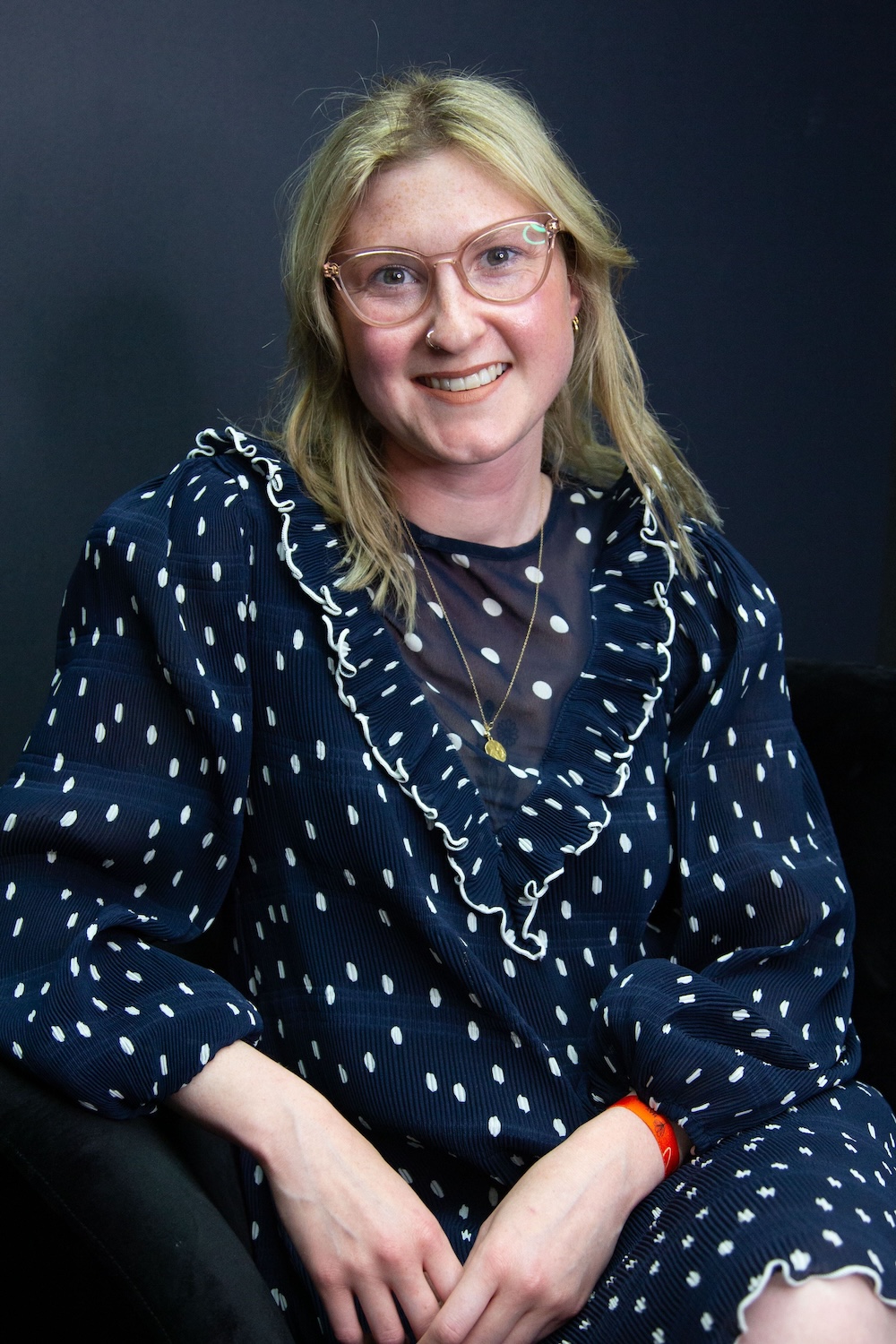
Our President, Ange, ran this special event in Cusop Village Hall, posing interesting questions which got us all thinking and talking. It was a fabulous way to share ideas for the future and adaptations we could make right now, with a measure of evaluating any potential concerns by beginning the process of problem solving them. Lily kindly typed up all the notes from the day (of which there were many!) into a coherent format which the HWC Committee can endeavour to develop.
We all thoroughly enjoyed this meeting, heartened by the many positive expressions of what the group means to it’s members. Onwards with writing we all go!
2025 HWC Summer Lunch
HWC Annual Summer Lunch 2025
“Stop overthinking everything. Just let it be. Relax and go with the flow more. Worry less. And don’t take life so seriously… live a little!” Mandy Hale
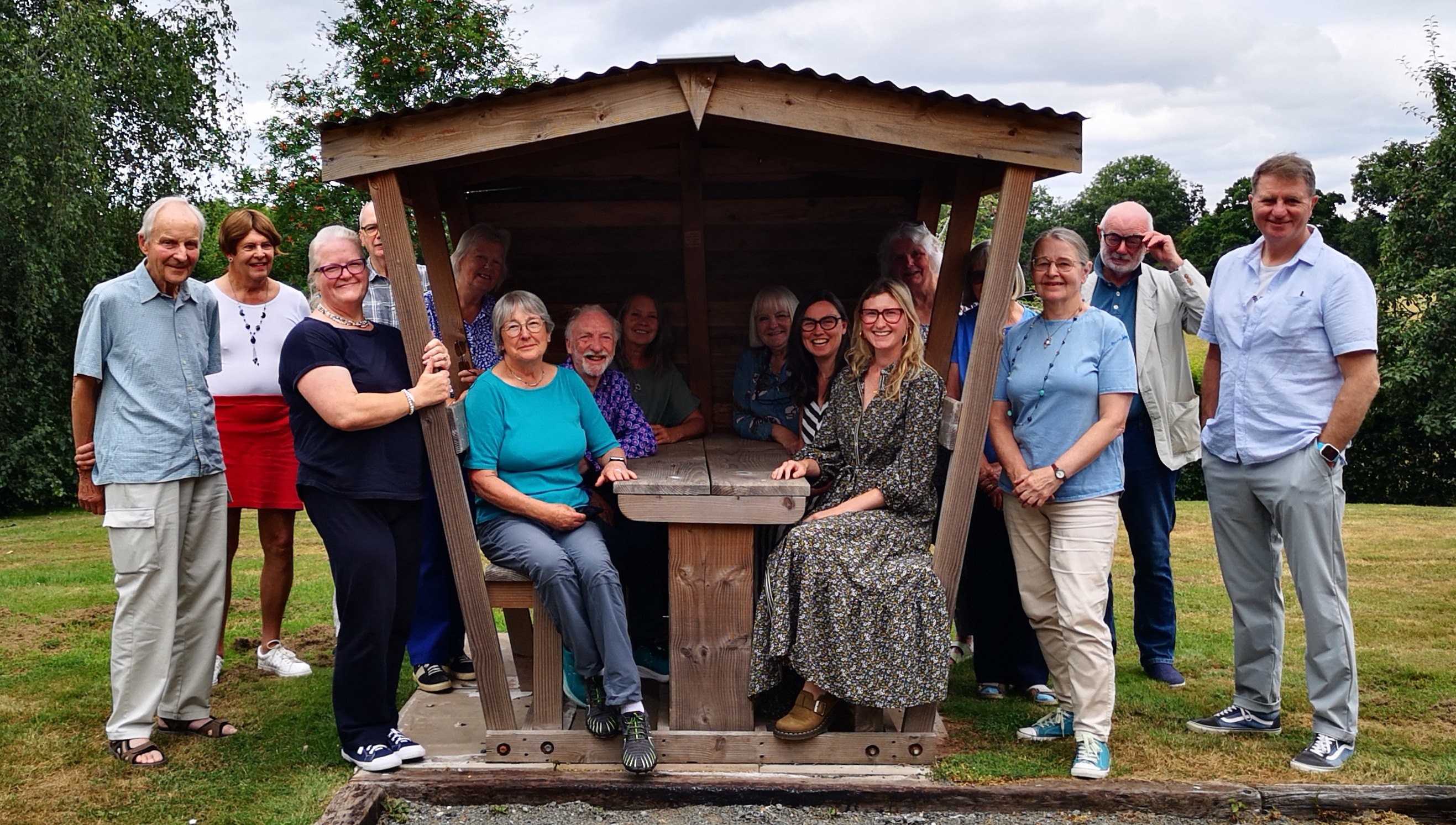
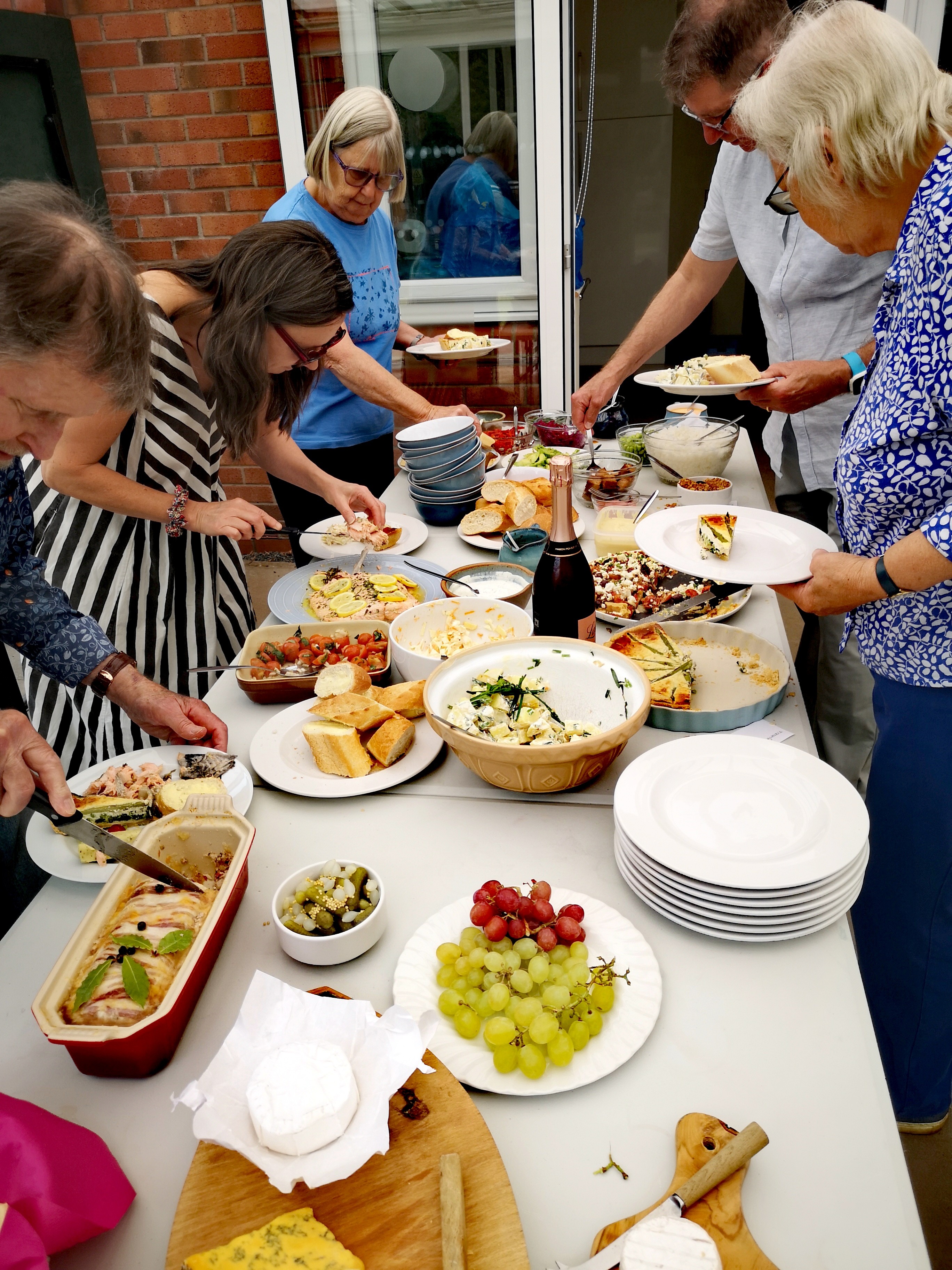
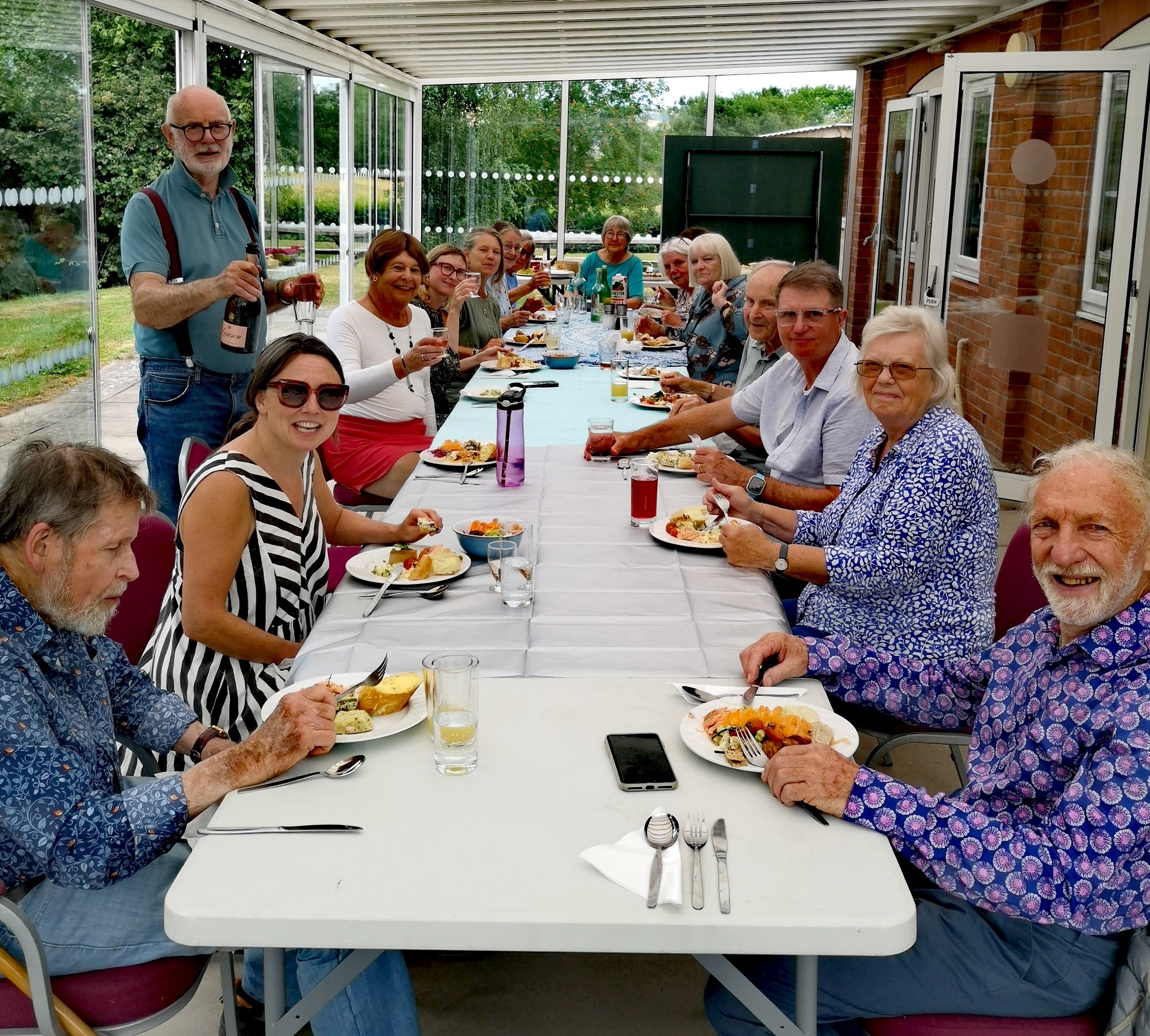
With so much thinking accomplished, at 1pm we finally turned our desks around to make a long banqueting table and celebrated the end of our writing year with the Hay Writers’ Circle Summer Lunch. It was a lovely time to relax, blow off steam, exalt successes, praise endeavours and honour all our hard work. It was also time to tuck into a delicious meal – Hooray!
Cheers to all writers and may your imagination never fail!
2025 HWC Summer Lunch
And finally … The 2025 Non-Fiction Competition
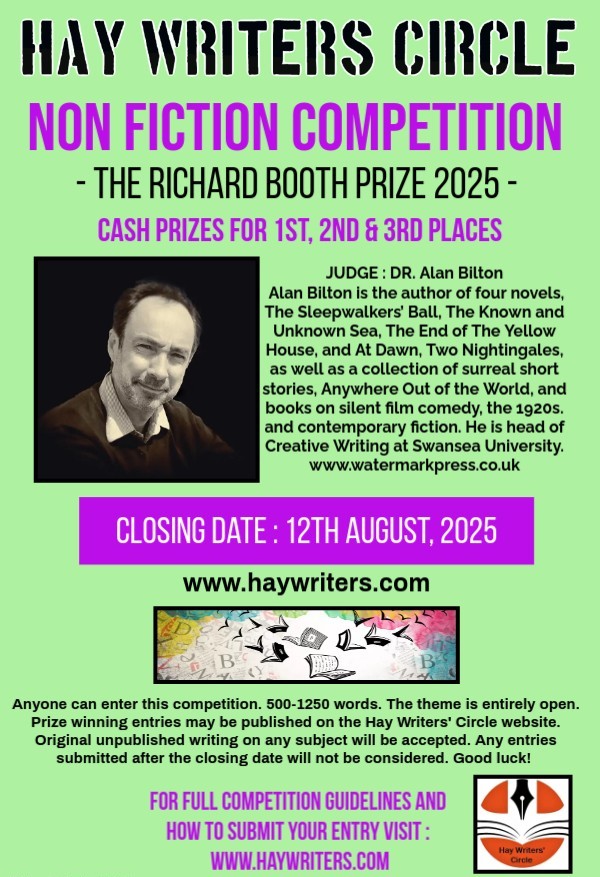
Before we completely rest on our laurels, don’t forget the deadline for the Richard Booth Prize for Non-Fiction is midnight, Tuesday 12th August.
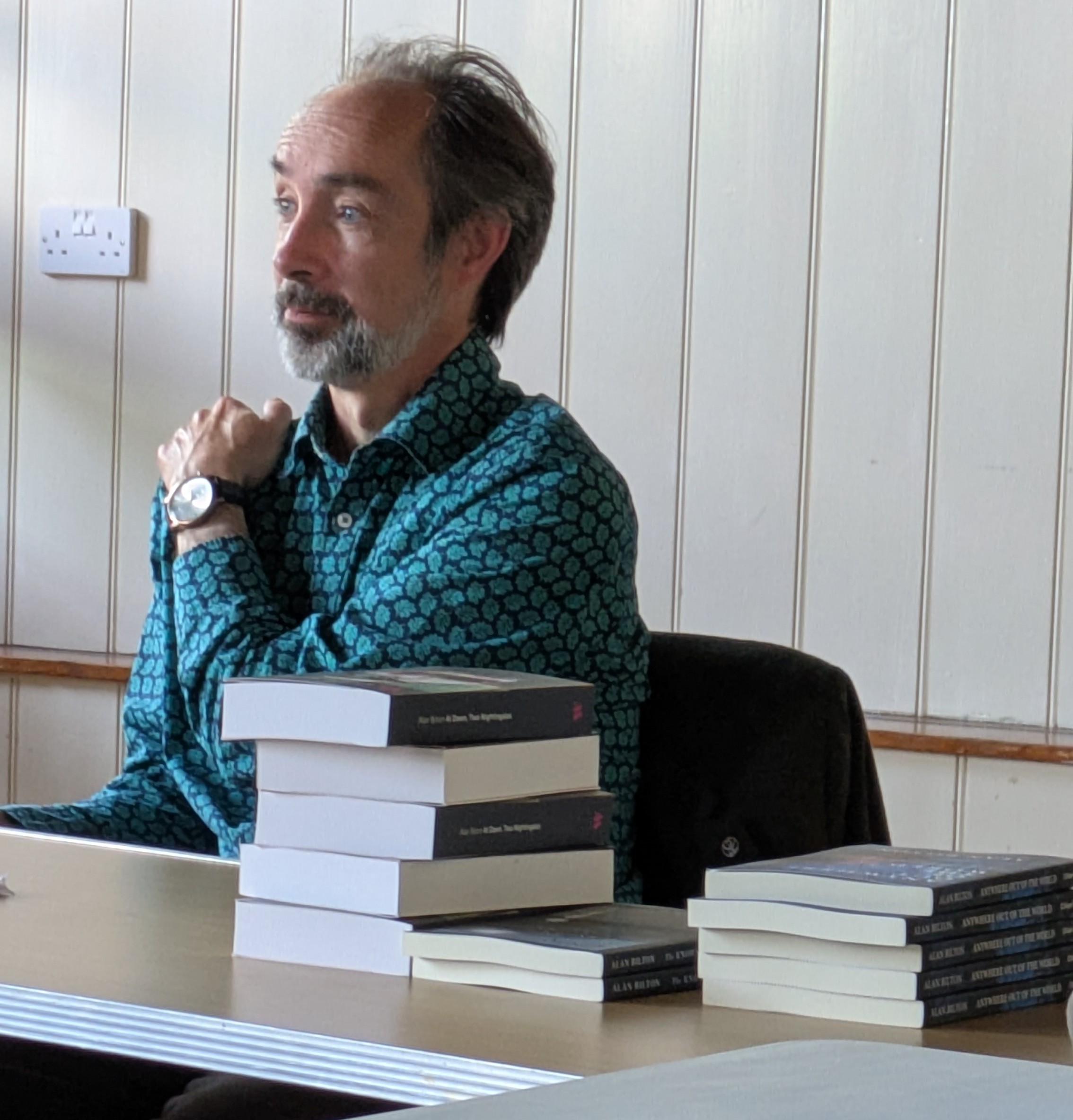
This year we are thrilled to confirm that the judge for our Non-Fiction Competition is Alan Bilton.
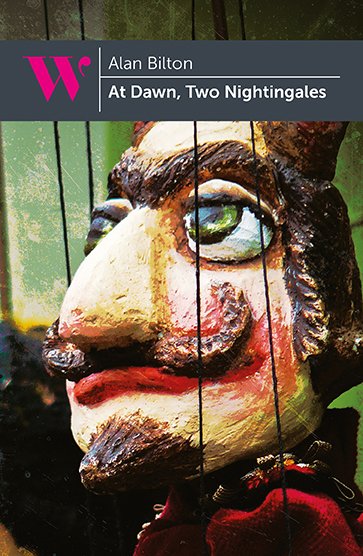
Alan Bilton is the author of four novels, The Sleepwalkers’ Ball, The Known and Unknown Sea, The End of The Yellow House, and At Dawn, Two Nightingales, as well as a collection of surreal short stories, Anywhere Out of the World, and books on silent film comedy, the 1920s. and contemporary fiction. He is head of Creative Writing at Swansea University.
Richard Booth Prize Non-Fiction Competition2025
This is an open competition meaning – ANYONE CAN ENTER
For full competition details, criteria and an entry form, please go to our COMPETITIONS page.
Breaking the rules of fiction – a workshop with Alan Bilton
Article written by HWC Chair, Corinne Harris. Photos by Ange Grunsell
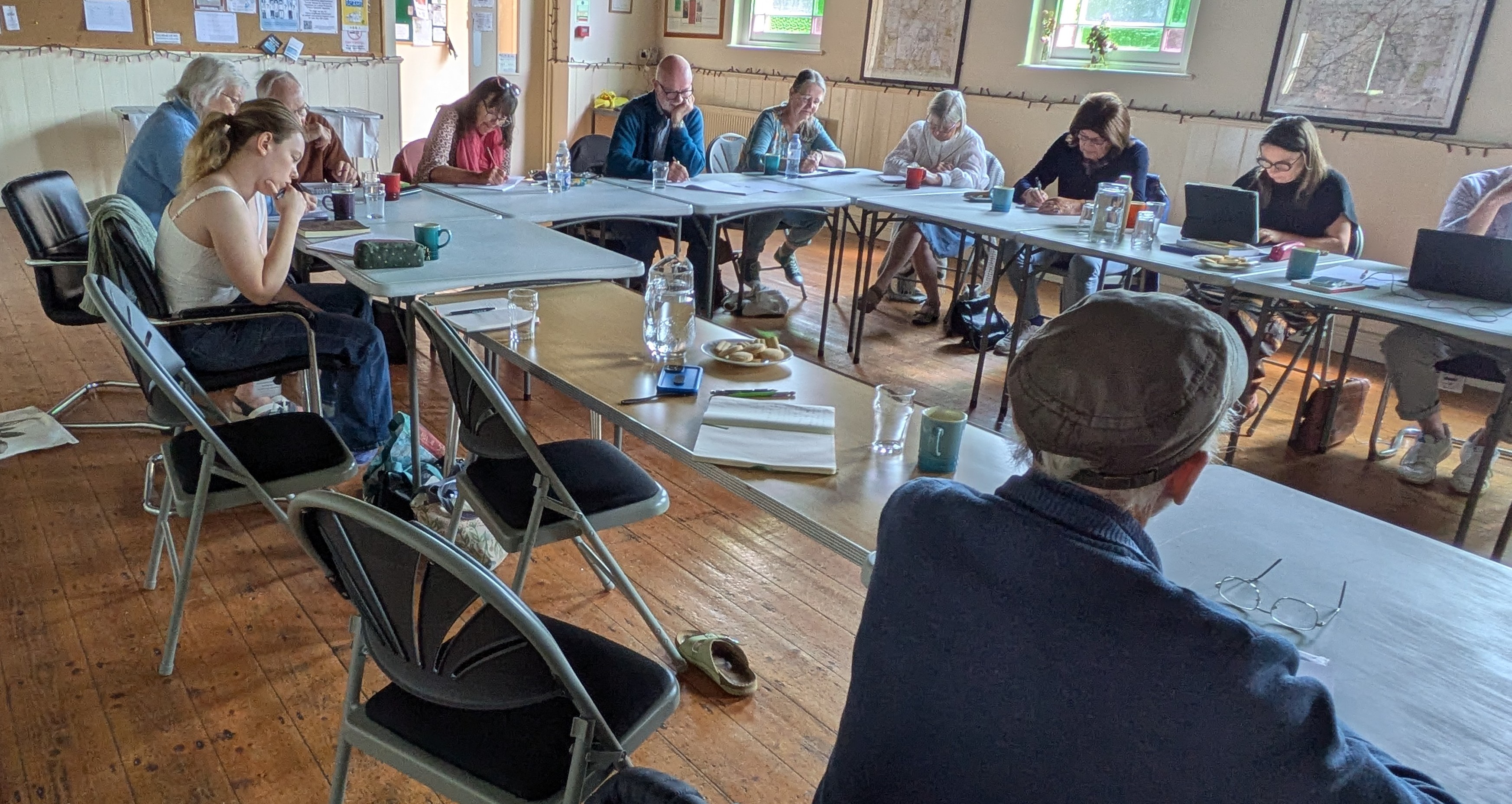
On Tuesday 17th June, fifteen of us met in Clyro Village Hall for this workshop. Alan started with a concise summary of the rules of fiction, and of the expectations readers have of work in a particular genre. He then, with a series of interactive exercises, encouraged us to break the rules he had just outlined.
We started with a realistic piece of writing and experimented with changing genres, time and place, and with introducing the author into the piece. The suggestions came rapidly and changing direction mid piece was challenging. When we came to share our work, the ingenuity displayed was impressive.
Writers hard at work in Clyro Village Hall
After lunch we worked in pairs. The exercise involved taking an anecdote our partner had told us and writing a story, initially following it quite closely. Alan then introduced a various interventions. Examples of these were: introducing a character unrelated to the story, shifting time, and finally shifting place. Again, it was fast-paced and we worked quite hard to integrate all the changes. We then shared with our partners. I was impressed by how my partner had managed to tie everything together so that it made sense. He was probably startled by the frivolity of mine but was too polite to say so. We concluded with a reflective piece on our day’s work, and we were given a free hand with which form this took.
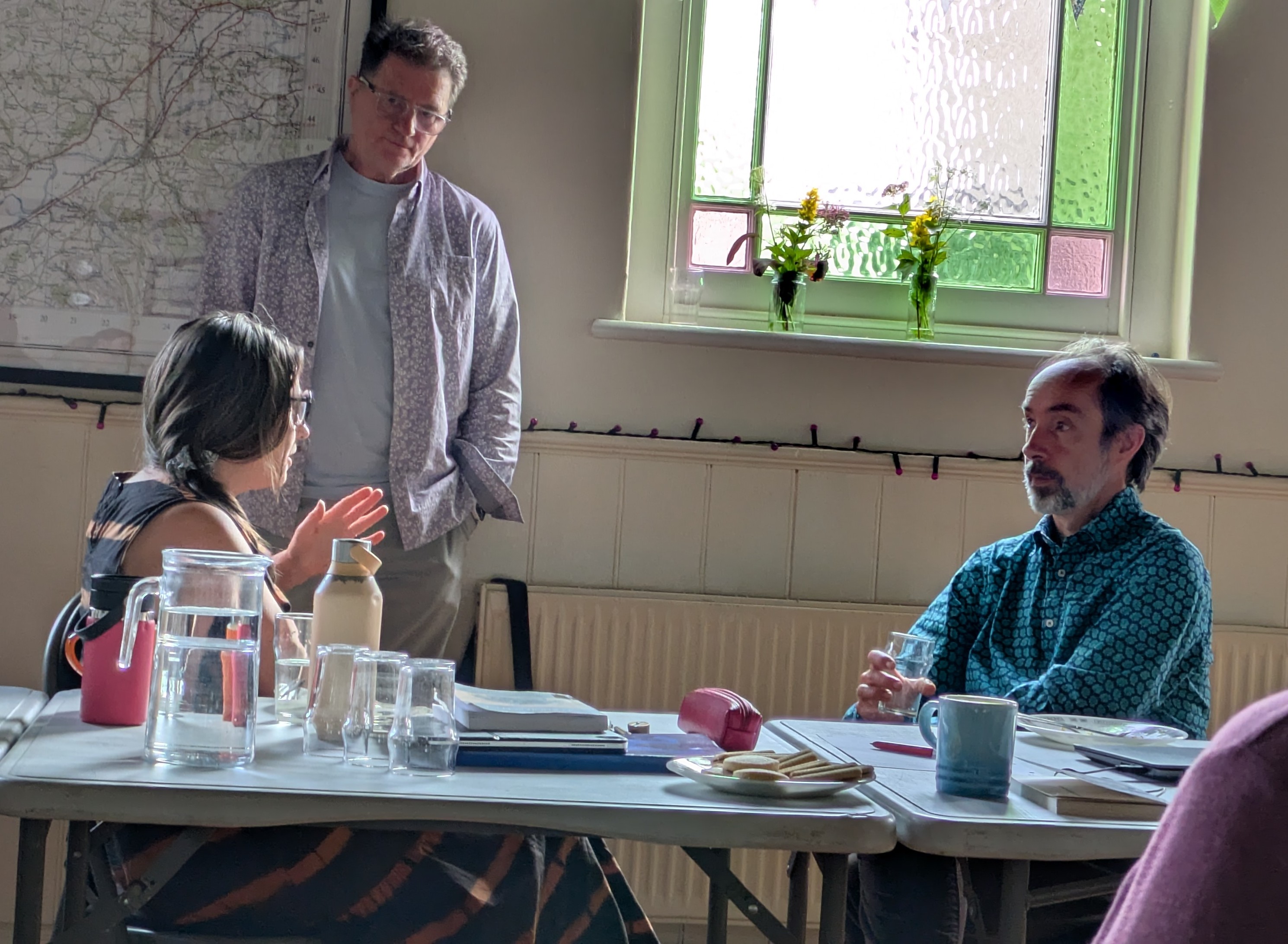
Katy Stones, Mark Bayliss, Alan Bilton
Mark Bayliss, (pictured above, centre) submitted his piece as an example of some of the work completed at the workshop. Each paragraph-brake indicates a change in direction.
In the 1970s, I was a fresh-faced, recently qualified solicitor in Cardiff, and I was going to my first day in court with my boss. I’d never been in a crown court before, and after a break, I came back into the courtroom – but I used a different door. I couldn’t see my boss, but the judge called us to order, so I took a seat immediately. Before the barristers could begin, the judge bellowed across the courtroom and pointed a finger at me – Who is that person? Who me? I thought to myself. It transpired that I had wandered in and sat directly next to the accused.
I forgot to mention that before I took my seat, an elegant woman, who I recall was oozing with far too much Chanel No. 5, approached me and gave me a note to pass to the man I was about to sit next to. “He might need this later,” she said, “don’t worry, it’s OK, but we mustn’t discuss it, court rules, etc, you know. So, mum’s the word.” I passed him the note. He beamed at me.
There’s something I forgot to tell you. My boss was the one who wandered off and told me which door to go back inside the courtroom, “It’ll be good for your development, different perspective on the proceedings,” he said. “I’ll be around, see you inside.” I’m convinced I saw him earlier in the day speaking with the same woman who handed me the note. I could be mistaken, of course.
Moments after the judge gave me his dressing down, there was a massive explosion. Alarms and water sprinklers came to life, and absolute pandemonium ensued. I coughed and spluttered, and made for the fire exit. My nose seemed to follow a distinctive smell. Perfume. As I came to my senses, I realised that the accused had vanished inside an ambulance driven by a woman wearing a paramedic outfit, but strangely for a paramedic, she oozed Chanel No.5.
Eighteen months later, when my court case came to trial, this was the story that my barrister presented to the jury.
This was a very thought-provoking workshop. It was also great fun. Alan is a genial and inclusive facilitator – he is always a Hay Writers’ favourite. The workshop was fully booked which was gratifying. Clyro Village Hall is a pleasant and well-equipped venue. Providing lunch was a new departure for us and proved to be popular.
We plan more workshops in the future. We are hoping to have a poetry workshop with Gareth Writer-Davies in August. All our workshops are advertised on our website and tickets are available through Eventbrite. We welcome people from outside our group and we hope this might inspire you to join us soon.
Non-Fiction Competition 2025 – The Richard Booth Prize
Here is a gentle reminder to all writers that we are now accepting entries into our non-fiction competition 2025. The closing date is 12th August, 2025, so there is still plenty of time to cast your eye over your notebook and edit that story.
This is an open competition meaning – ANYONE CAN ENTER
For full competition guidelines and to download your entry form please head over to our Competitions page – CLICK HERE
Want to keep up to date with all our news? Don’t forget to subscribe with your email address in the box below.
It’s always such a pleasure to begin this recent update with writing from members of Hay Writers’ Circle. This article contains work from both Lily Rose King and Nick Thomas.
On Oxford Street the lights twinkle, illuminating tourists posing on the glistening wet slick of pavement for photos to adorn their Facebook albums, baiting attention from friends and acquaintances collected through the years. Impatient crowds bustle in the midwinter dusk like locusts devastating crops, swarming shops for last-minute gifts, ravaging contents and leaving staff in a constant tidying battle, which they mostly lose. Bright red buses remain locked in conflict with neighbouring black cabs and stubborn cars, fighting for space and reluctantly giving way to the sleuth of pedestrians who display little care for the drivers or passengers they obstruct. The steady fall of cold, grey sleet distorts the scene, almost worthy of a glitter-coated Christmas card, into one of chaos.
Layla is shoved to and fro, eventually giving into the swell of bodies and allowing herself to be carried, like a fish in a stream, until she is spat out into a side alley. With soft-gloved hands, she smooths herself out, tightens her scarf and folds into her faux fur-lined parka a little more, hooks her black purse back over her shoulder, then recalibrates her location in her head. On realising an alternative route to her destination, she begins to pursue her current path, limping slightly on her bad knee.
On passing an intersection back to the main road, a department store strewn ostentatiously with brassy decorations comes into view. Huge, shiny red and gold baubles cascade down the building’s exterior, juxtaposed with garish festive figures looming from the windows – satanic snowmen and rebarbative reindeer. Layla grimaces at a line of children queuing up around the corner to see Santa, wide-eyed with cheeks glowing red from the cold. Turning her face back to the dark pavement Layla inches on, fingers compulsively caressing a small object in the right pocket of her coat.
Eventually, blunt automatic doors open up to the glaring strip lights of the local supermarket. Layla hobbles through and, gently peeling off her gloves, collects a metal basket from the fresh pile stacked by the tobacco counter, mentally recollecting her shopping list. Having long given up on the place stocking genuine traditional foods – she would need to venture further into town for that – she seeks out a bag of giant cous cous and lays it down in the basket, as if tucking a baby into its cot. Hummus, falafel, olive oil, chicken, eggs, dates, are gradually loaded to build a precious cargo of small comforts. As she weaves delicately to the checkout, Layla dreams of how she used to cook from scratch. How she longs to taste the authentic dishes from her homeland. Remembers watching her mother and grandmother moulding maftoul, learning how to make it for her own family, teaching her daughter. How she had hoped to teach her granddaughter, Dalia. How she wishes her arthritis would take a hike.
A bubbly trainee slides the items across the scanner and into a shopping bag, smiling overbearingly and inquiring about Layla’s Christmas plans. When Layla’s stony face remains unchanged and her lips do not part from their solid line, the girl rolls her eyes and starts sharing her own: how she’s going home to her parents’ house in Oxford and can’t wait to play board games and eat copious amounts of cheese with her family, but how she is worried about the drama that might ensue when her sister brings back her inappropriate boyfriend. She pauses only to tell Layla how much money is owed.
After fishing out the right change from her wallet, Layla snaps her handbag shut and tsks. She picks up her load and mutters under her breath as she feels it drag her down towards the ground, like a weight grounding a helium balloon. The worker narrows her eyes and flicks her hair as she turns to serve the next customer, plastering her grin back on and hoping for a more reciprocal conversation.
Heat prickles Layla’s back, both anger and shame swallowing her as she shuffles around on her worn black boots to leave. She doesn’t mean to come across so cruelly, but her patience for ignorance and the ceaselessness of the holiday period has reached its limit.
Nearly half an hour later Layla approaches her flat, her knee on the verge of collapse, her hands red and sore, the burden leaving indentations in her skin. She sighs as the key wobbles in the lock until she manages to slide it in, giving the door a habitual kick so that it springs open and makes way for her to finally step inside.
The plastic grocery bags are dumped on the round, white table and her purse thumps down beside them. Pulling out a chair, she slumps into its weight. Inanimate objects have been the only thing to embrace her for some time now. Her small frame collapses in on itself as her shoulders round forward, palms enclose her leathery face, and she allows her wrinkled eyes to close. She knows no tears will fall today. After seventy-seven days, she has used them all up.
Layla checks her answer machine in case, by some miracle, they have managed to leave her a message. When it beeps stagnantly, she stretches across the table to grasp the television controller, sliding it towards her, succumbing to the desperation of catching a glimpse of them on the news.
After five minutes the red button is pressed wearily to switch the screen off again. Every bombed building resembles her childhood home. Every mangled street could be where they have just walked.
The numbing pain of reality swells from within her chest. Every child she sees on the streets of London reminds her of her beautiful Dalia. Every happy couple, of her beloved son and his wife.
The irony is not beyond her – how the people here are settling down for their cosy, indulgent Christmas. How can they let this happen? How can they sit to eat their turkey dinner with all the trimmings when some people will never see their family again?
When the birthplace of Jesus, who they claim to celebrate, is reduced to nothing but rubble. Where the nativity scene is not one of joy and peace, but fear and destruction.
Layla withdraws from her pocket the small woven bracelet that Dalia had made for her when she last visited. Fondly recalls the child’s toothy grin when she had held it up to her, pointing out the matching one on her wrist. Layla had tried to ask them to move, to get away while they could, but they did not want to leave. Did not want to abandon their home like she had.
Layla groans as she pushes herself to her feet. She eats despite the bulge of nausea in her abdomen that has been gradually growing for the last few weeks. She manages half a falafel before giving up and distributing her purchases into their relevant storage compartments.
When there is nothing left to do but go to bed, Layla drags herself into the bathroom, brushes her teeth and washes her face. She stares into the mirror and, as always, is mildly surprised to see an old woman looking back. Her smooth, blue eyes shine out like beacons, as if to remind her that the feisty, adventurous, tenacious young lady is still in there somewhere.
In the bedroom, she sits on the bed to undress, before tugging on a nightshirt and shuffling under the covers. Her bedside table hosts a framed photograph, a pillbox and a stale glass of water, which she drains to wash down her tablets for the evening. Layla removes her thin black watch and places it on the nightstand, rubbing the slightly lighter strip it reveals amid her freckled olive skin. She brings the picture – a portrait of two couples, one elderly and the other middle-aged, sat with a young girl on the front steps of a house – to her lips and kisses it, then switches off her lamp. The darkness consumes her at last.
Nick ThomasPhoto Credit – M & A Bayliss, 2025
Nick Thomas is one of the newer members of Hay Writers’ Circle, being with us for a little over a year. His current work-in-progress is “Heartbreak“; an exciting collection of work from fellow writers. The aim is to publish an anthology and sell, with the proceeds raising money for a hunger charity. We will keep you posted on further updates.
His poem “The Lark”, is a tribute to a writer friend.
The Lark
Hark,
A lark.
We stop, look up
But don’t always see
Where these sweet sounds arise.
No matter, we hear
Those notes so clear and full of cheer.
Despite lark’s burden.
They always make you smile
And lift our hearts
Every time, over and over.
What do they mean?
Hope for the future, I think.
Composers all have different views,
None of them wrong.
Lark sings on.
Her song borne on the wind
To all who wish to listen.
Richard Booth Prize for Non-Fiction 2025 – Submissions Accepted!
Submissions are now invited for our annual Non-Fiction Competition, The Richard Booth Prize 2025, named after one of Hay-on-Wye’s most notable residents and it’s self proclaimed ‘King of Hay’. Richard was always a great supporter of books, Hay-on-Wye and of course, local writers.
Sadly, Richard passed away in 2019, but his name lives on everywhere in Hay, including this writing prize which he so graciously sponsored during his lifetime and we continue to honour in his memory.
Richard Booth MBEAlan Bilton
This year we are thrilled to confirm that the judge for our Non-Fiction Competition is Alan Bilton.
Alan Bilton is the author of four novels, The Sleepwalkers’ Ball, The Known and Unknown Sea, The End of The Yellow House, and At Dawn, Two Nightingales, as well as a collection of surreal short stories, Anywhere Out of the World, and books on silent film comedy, the 1920s. and contemporary fiction. He is head of Creative Writing at Swansea University.
Richard Booth Prize Non-Fiction Competition2025
This is an open competition meaning – ANYONE CAN ENTER
For full competition details, criteria and an entry form, please go to our COMPETITIONS page.
Closing date for entrees is Tuesday 12th August, 2025.
Time get writing! Good luck!
Don’t forget to subscribe with your email address in the box below.
Showcasing inspiring writing has always been at the heart of Hay Writers’ Circle, so we are delighted to reveal the 2nd and 3rd placed poets and poems from our recent 2025 Poetry Competition.
Thank you to our amazing 2025 Poetry Judge, Gareth Writer-Davies whose comments on the prize winning pieces are printed below. Also, congratulations once again to our 2025 winner, David Shields whose poem, “Old Mortality”, accompanied by the judge’s feedback is featured in our previous online article – HERE. Well done!
“Collector Sahib’s Distractions“, by Pushkar Mankar
Pushkar Mankar is a writer and photographer from India, currently pursuing an MA in Creative Writing at the University of Birmingham. He is primarily prose writer of sci-fi and historical fiction, but recently branched out into poetry. Pushkar is currently working on his first collection, and hopes to publish soon.
Judge’s Comments:COLLECTOR SAHIB’S DISTRACTIONS
An extremely intriguing poem. It has enough tension in it to keep it together even as it risks faltering, which is perhaps a style choice for this tale. Is the collector one of stories or impressions or distracting new technologies that take him from his true purpose? This is not clear but this is part of the poem’s beauty “Not unlike the imprints of sahib’s mother’s hands/ On the gates of the ghat by the river…” shapes of suggestion that will not last beyond the next flood.
Collector Sahib’s Distractions
Collector sahib squaks at the moon In the hopes that it might impress Artie Shaw Even though he does not understand English But understands perfectly the carried subsound Of needle scratching against the vinyl A white noise language of clear thought
The radio static is interrupted by an address From the King, breaking Collector sahib’s sleep Out on the verandah the sweeper curls his lip Sticks a finger on like a mustache and pretends To be a person who pretends to have a point Important enough to talk over natural degradation
A tube and a phosphorescent curved screen Traps the Collector Sahib in a Platonic cave Attempting to project some coherent thought Stitching together moments unstuck in time Not unlike the imprints of sahib’s mother’s hands On the gates of the ghat by the river, whose foam Speaks the same dialect as the fuzz on the TV When the distraction of programming goes away
THIRD PLACE
“Ines“, by Corinne Harris
Corinne Harris is the current Chairperson of Hay Writers’ Circle since October 2024, prior to this she was the group’s Treasurer. Corinne’s pantoum poem, “Golden Rose Synagogue, Lviv” won first prize in our 2018 Poetry Competition as judged by Libby Houston.
Judge’s Comments:INES
A poem of near universal experience, touching in its gradual acceptance of love for a small, defenceless newborn. This is a conversational poem that starts off confined and then undoes itself through small sensory gradations and then sudden visceral episodes of “…startling eructations and vomit on my shoulder” A poem of the ordinary but also of the extraordinary connections which surprise us. This is a well written poem that does not shout but murmurs its message.
Ines
It wasn’t there at first Not in the curtained confines of the ward In its overheated clinical air. I smiled, cooed, posed for photos Holding the small unresponsive bundle. Seeing the marks of labour, Blood rimmed ears, white waxed creases. Breathing in the smell of birth – blood and amnion. I watched my son, his face soft with love and pride And wondered at myself.
No, it wasn’t there at first. It came with baby tasks – Bottles, nappies, texts to her anxious mum. It came as I watched her dark unfocussed eyes, Tiny hand grasping my finger. Feeling her soft skin, her delicate limbs, Breathing in her baby scent – milk, urine, baby hair.
It came with her frantic rooting, her eager sucking, Little grunts and sweet squeaks. Her startling eructations and vomit on my shoulder. Then the sudden warm heaviness As she slept on my chest.
Watching her face, lips pursing with milky dreams, I realised it was there. It had crept in when I wasn’t looking.
If you didn’t get a chance to get to Hay Festival this year then you can relive all the best bits from the comfort of home via Hay Festival Anytime. The 2025 Hay Writers Live! event was recorded and is available to listen to again via Hay Festival Anytime subscription. You can access audio & film from your favourite Hay Festival writers and thinkers for an amazing £20 per year.
CLICK HERE for Hay Writers Live! 2025 audio and enjoy our readings once again. Enjoy!
To keep up to date with all HWC news why not subscribe with your email address in the box below.
We are delighted to announce the results of the Hay Writers Circle Poetry Competition 2025.
This every popular competition received a good number of entries from both inside and outside Hay Writers’ Circle and we very much welcome all external interest in our writing competitions.
We must firstly take a moment to thank our amazing 2025 Poetry Judge, Gareth Writer-Davies who single-handedly read all the poems and whittled them down to our ultimate set of three prize winning poems.
Gareth wrote,
First of all, many thanks to all those who entered: it was a pleasure to read all the entries, which were judged anonymously and read many times.
Competitions are always great opportunities to test out both new and perhaps re-edited work. I always emphasise the usefulness of running one’s eyes several times over material, stepping away for a while and then giving one final polish before submitting.
The winning poems stood out for their undercurrents of meaning that brought nuance to the words, and showed special skills. However, judging is always a careful balance of objectivity and subjectivity, and these three poems spoke to me beyond mere technical facility.
Nature, climate change and politics were subjects that kept coming up, which was perhaps to be expected. To those who did not place this time, “I say take a chance, surprise the judge by taking a risk!“
Thank you Gareth.
Hay Writers’ Circle Poetry Competition 2025 – Winners!
First Prize –Old Mortality by David Shields
Second Prize – Collector Sahib’s Distractions by Pushkar Mankar
Third Prize – Ines by Corinne Harris
David ShieldsPushkar MankarCorinne Harris
The Winner
David Shields works at Brecon Library, where he runs poetry and reading groups and a monthly series of talks and readings.
He has an MA in Writing from Sheffield Hallam University, and has contributed poems, essays and reviews to numerous publications.
He has been commended in the Frogmore Papers Poetry Competition, and is a multiple winner of the Spectator writing competition.
He is the editor of A Good Shift: a Seventieth Birthday Festschrift for Christopher Meredith, and has published two collections of light verse, with a third due shortly.
The Winning Poem
Judge’s comments :
This tightly controlled villanelle stood out not only because this was one of the few poems to take on the challenge of classical form, but also because the form is not heavily worn like a winter overcoat, but capaciously, like a light jacket.
The subject is classic and perhaps Tennysonian, but expressed with freshness; glass blowing, maths and music are striking analogies as “we sail towards the great unknown” and “age ties flesh to a mast of bone” A deserving winner.
–
Old Mortalityby David Shields
–
We sail towards the great unknown
Where life’s an algebraic phrase.
Age ties flesh to a mast of bone.
–
Through thin rods of breath a world is blown,
Milky, marbled with flaw and craze.
We sail towards the great unknown.
–
Or shall we, like the autumn sun, disown
The morning’s heritage of fret and haze,
Age tie flesh to a mast of bone?
–
The middle music strains its thrum and drone,
Counterpointing lamentation, praise,
As on we sail towards the great unknown.
–
Voices fading by the semitone –
Still the echo, still the memory stays.
Age ties flesh to a mast of bone.
–
Gaunt elegy, anathema of stone
Are all against the fall of flesh we raise.
We sail towards the great unknown.
Age ties flesh to a mast of bone.
–
We will be sharing the other placed poems, their judge’s comments and author bio’s later in the week.
In the mean time, huge congratulations to our winner, David, all our placed poets and to everyone who entered our competition. Well done all!
To keep up to date with all HWC news why not subscribe with your email address in the box below.
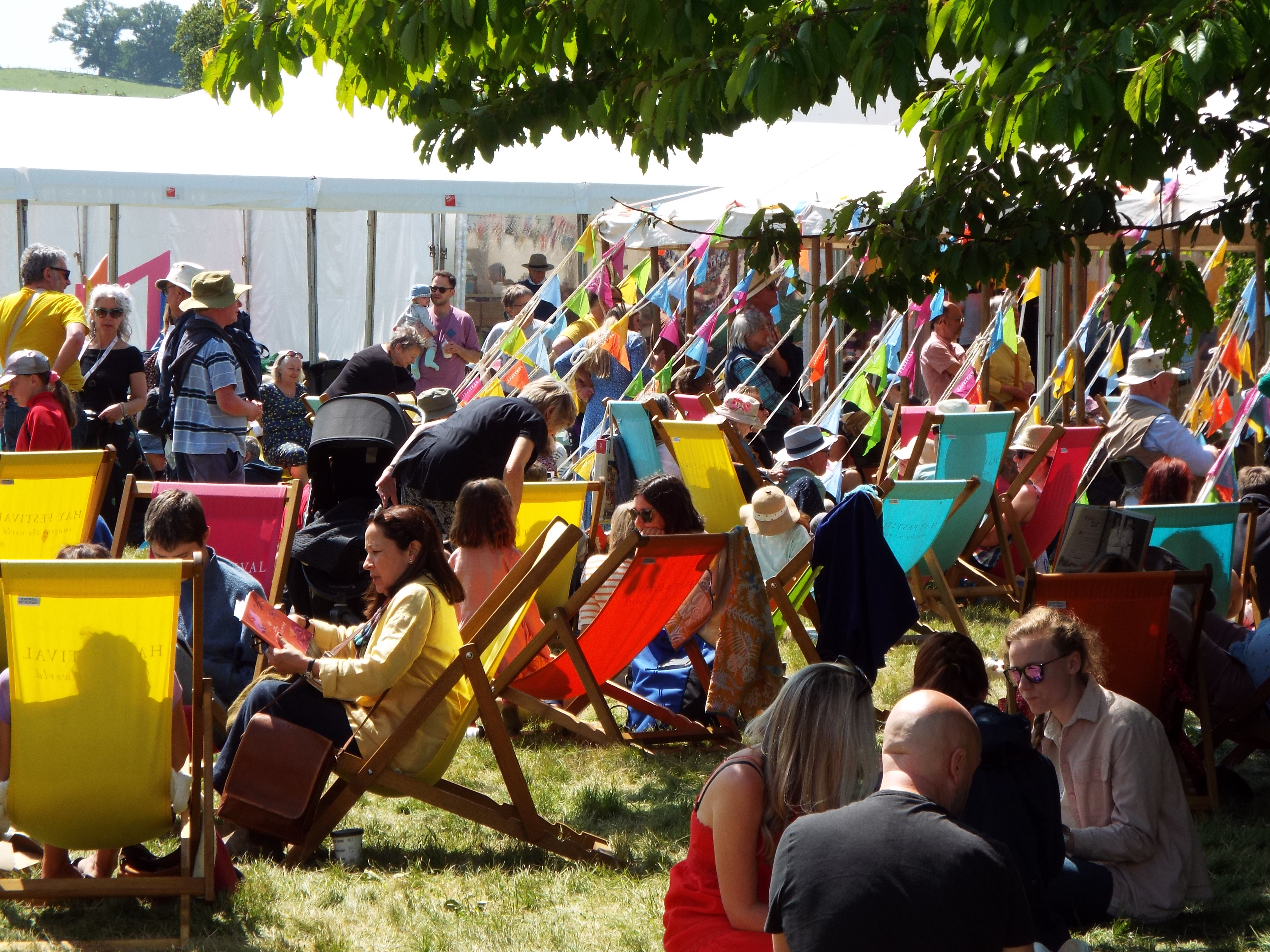
Isn’t it fun! Aren’t we all have the greatest time, seeing loads of interesting events and buying lots, and lots, and lots of books! If, like me, your answer is a resounding YES! then you will already be heading back over to the Hay Festival website to buy more tickets – we’ve got days and days still to enjoy! CLICK HERE for tickets.
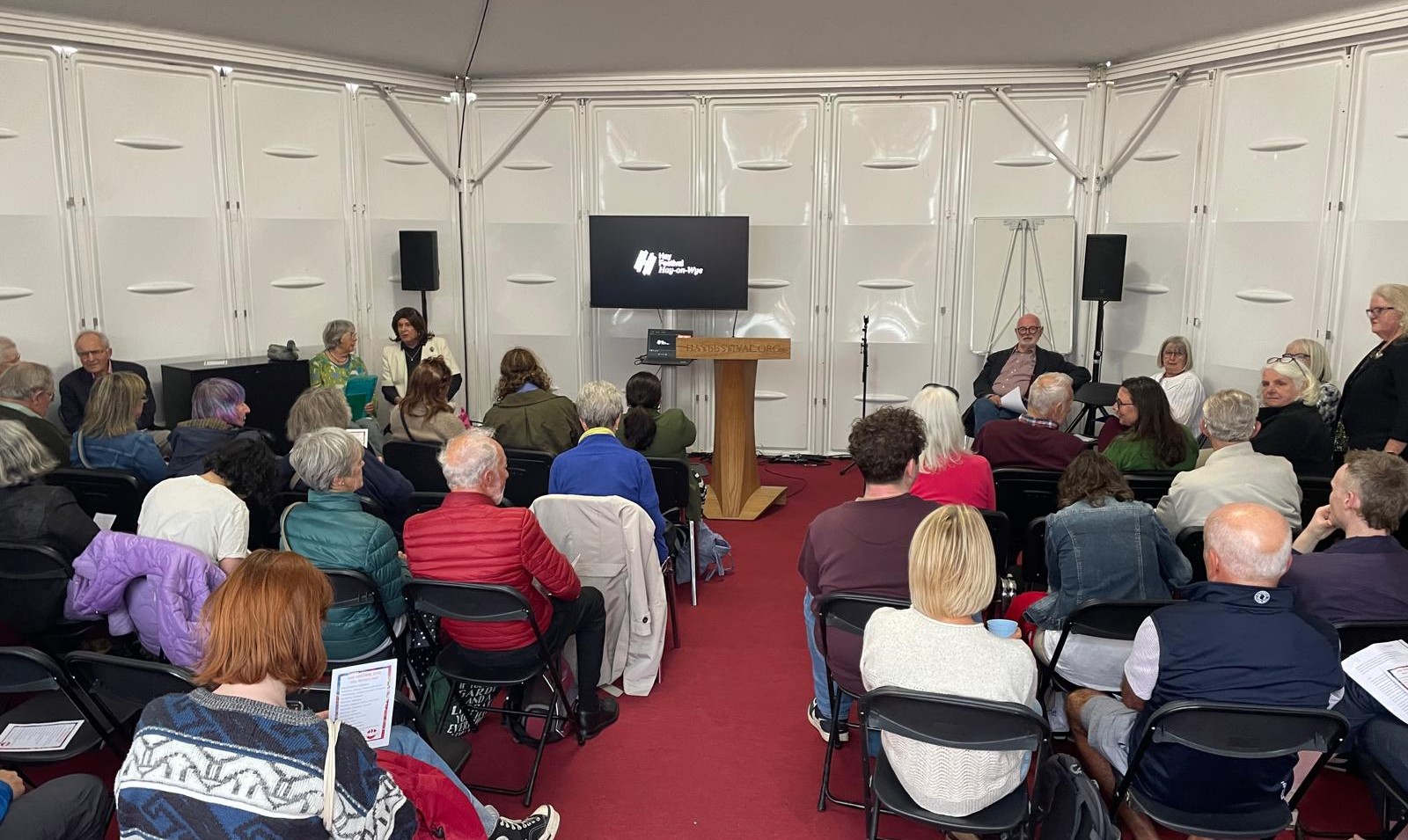
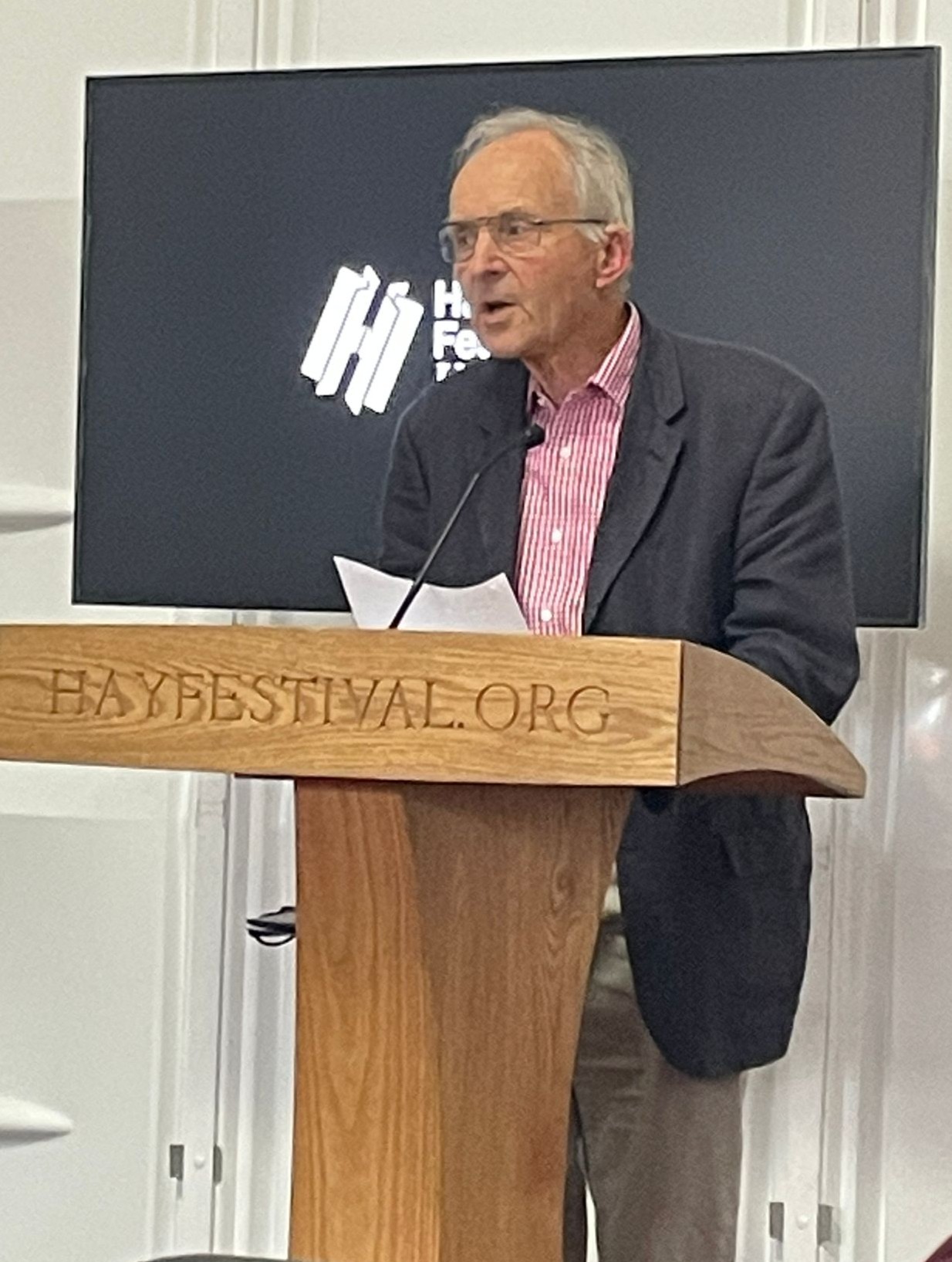
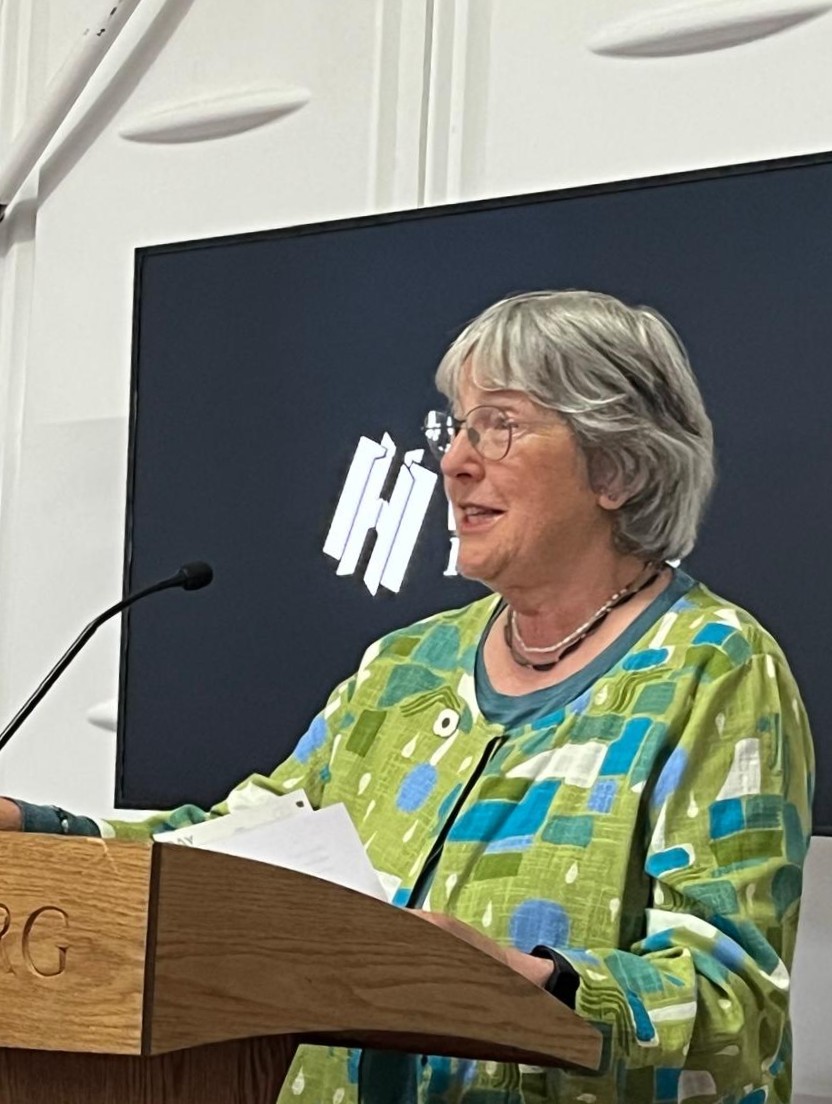
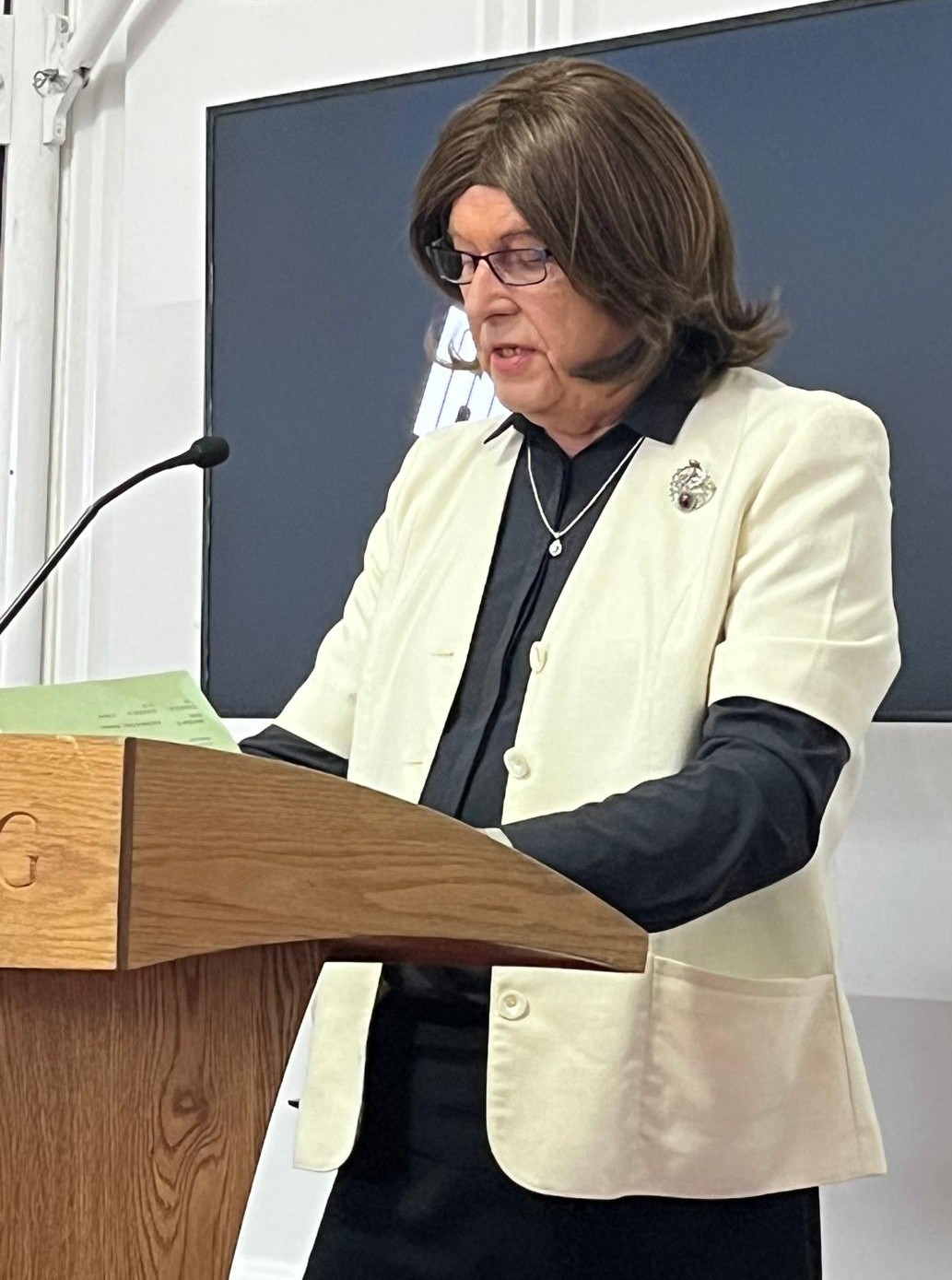
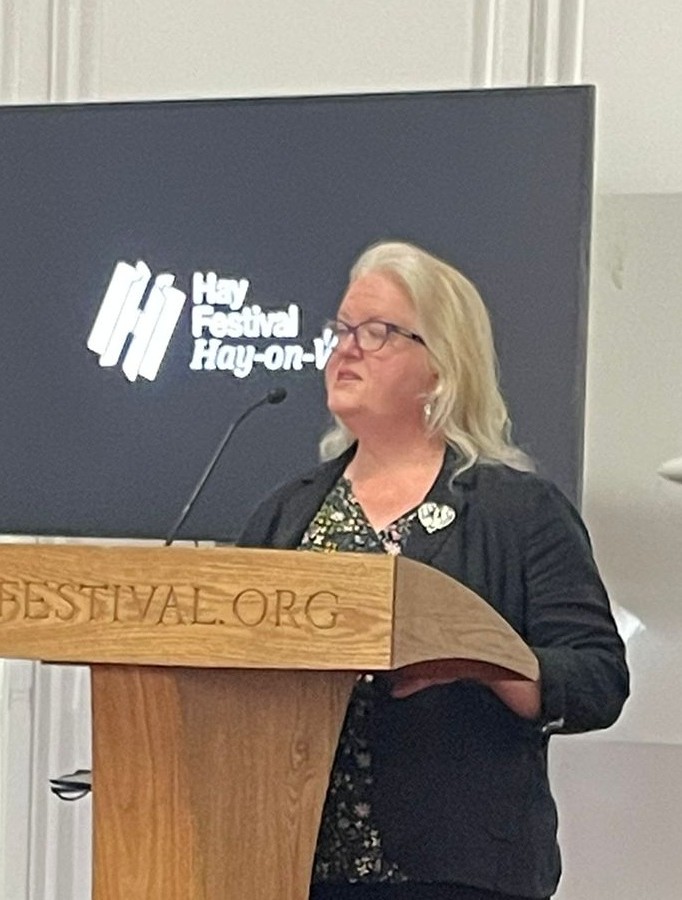
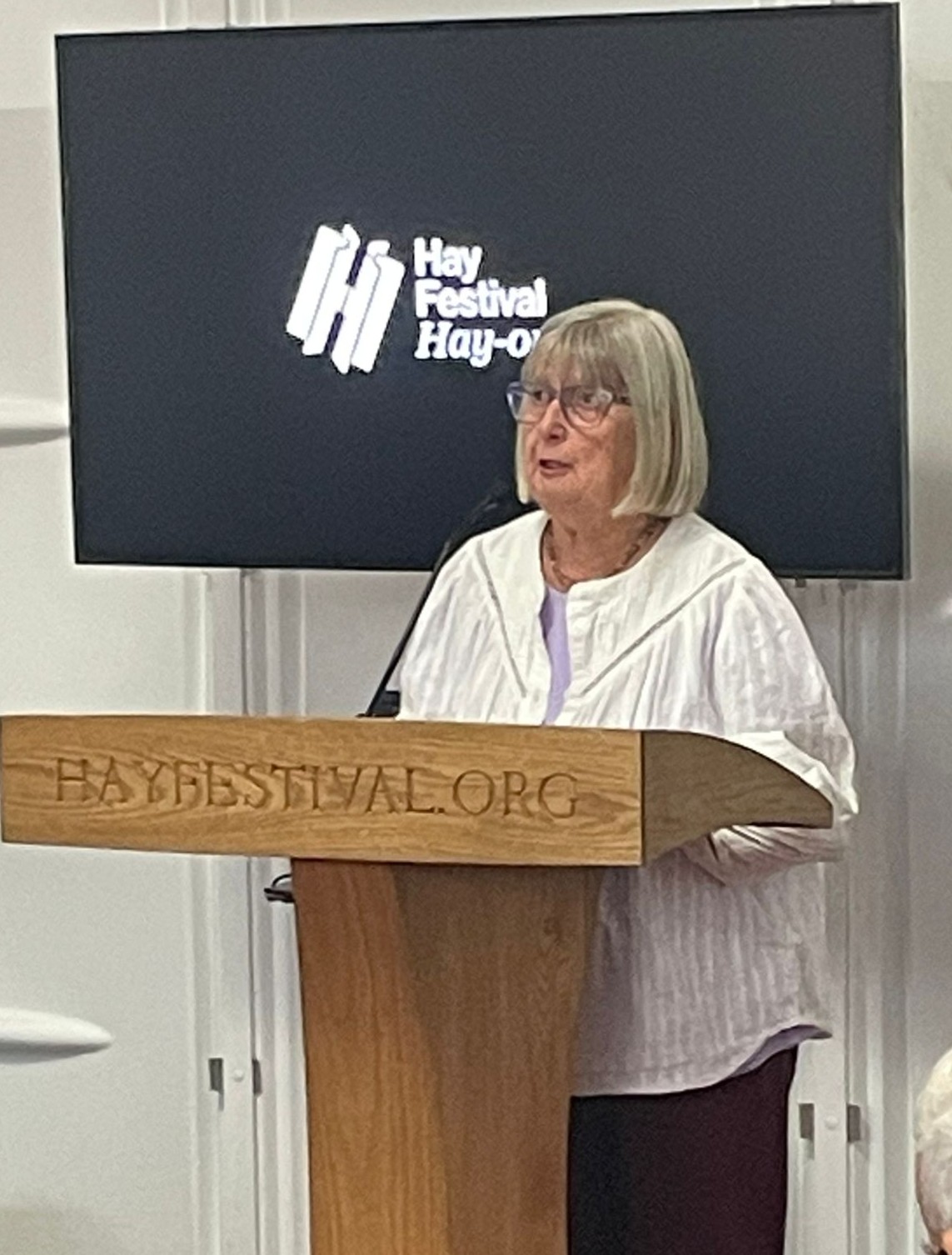
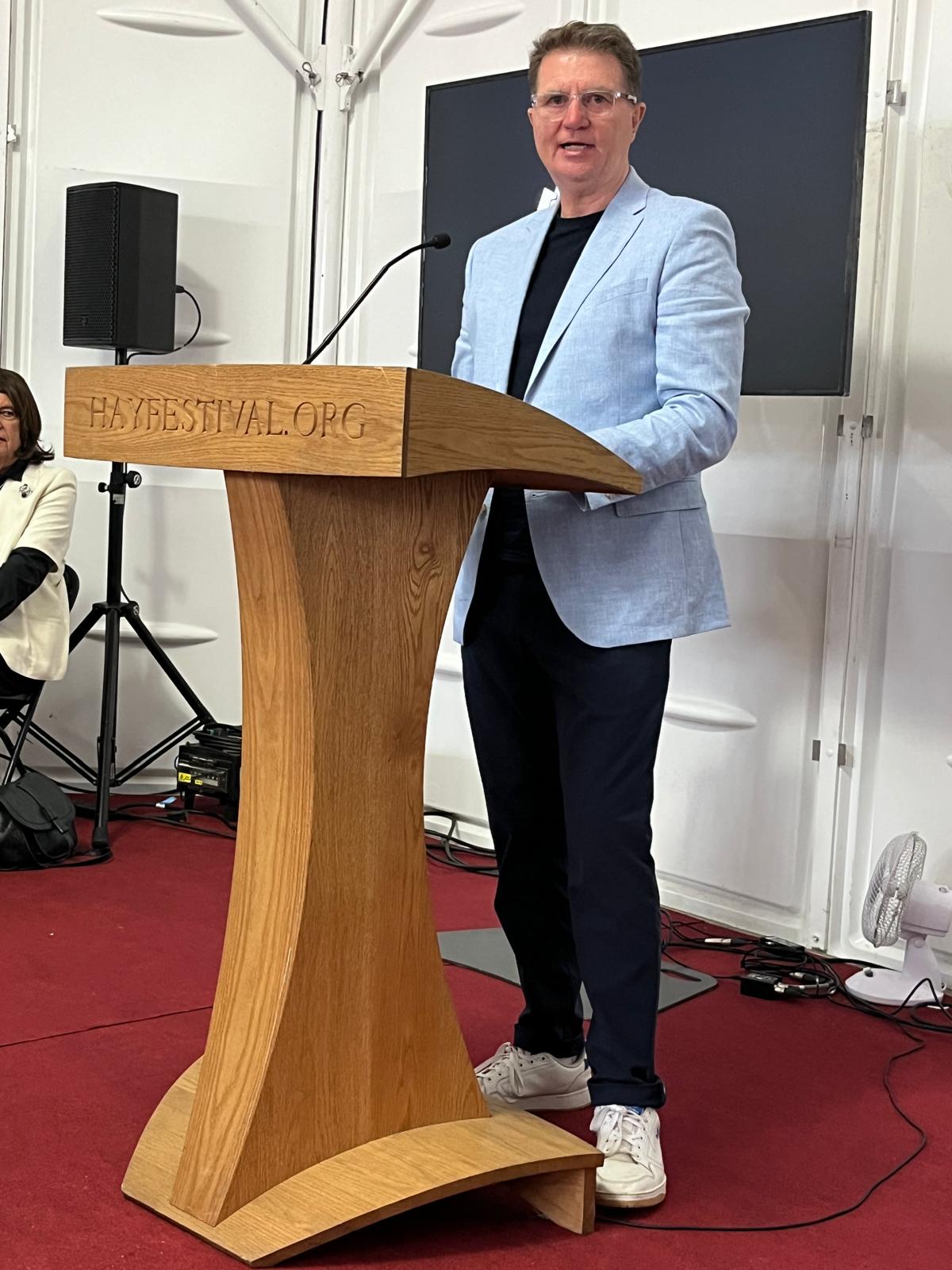
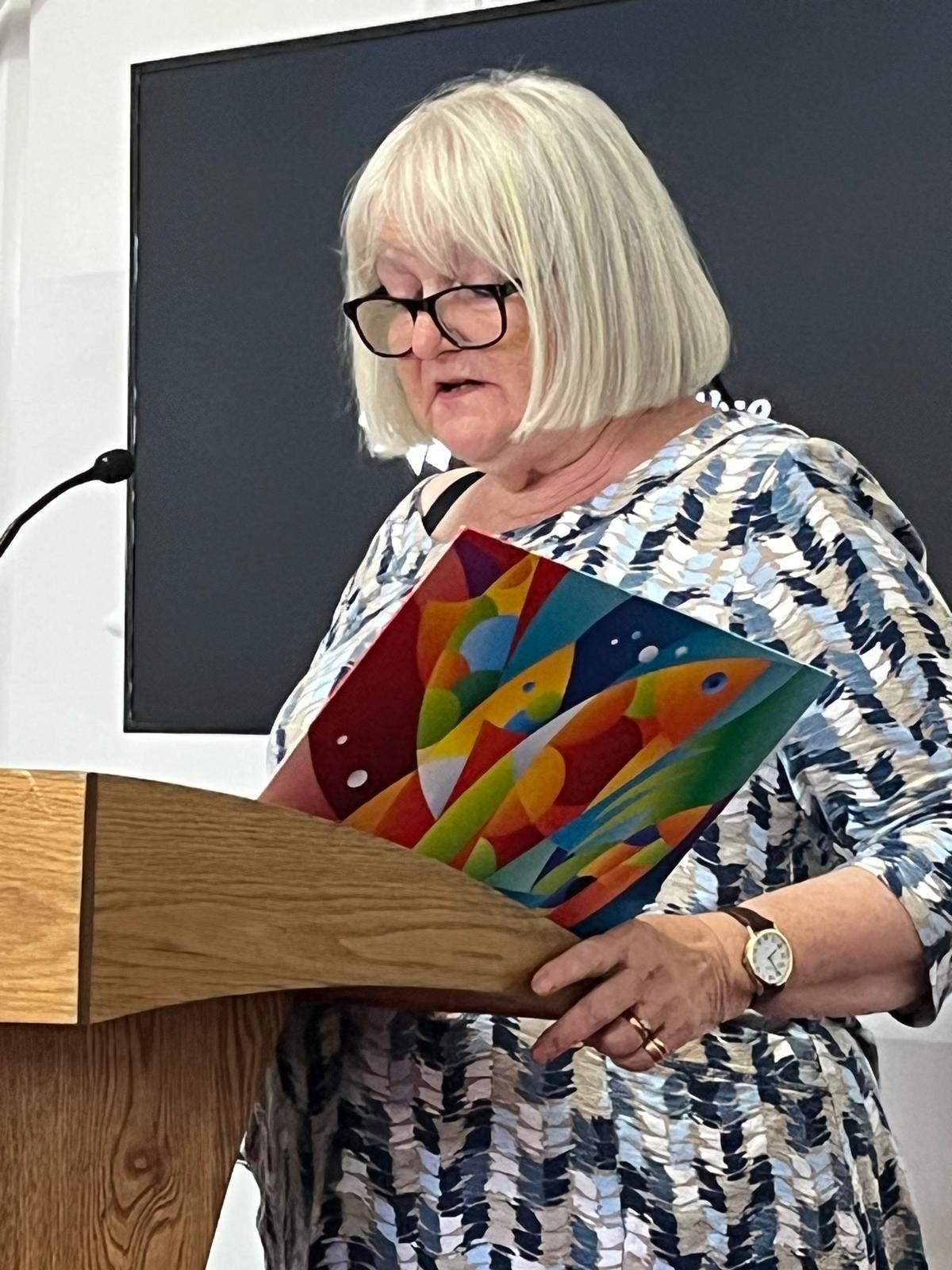
Hay Writers’ Live!took place on Saturday 24th May at 7pm. A huge thank you to everyone who came along and supported us, it was greatly appreciated. Many pieces in our varied programme were especially created for our Hay Festival event, some were prize winning pieces, others were examples of work composed at our twice-monthly meetings, or excerpts from in-progress novels.
It was a sold out event with a wonderfully attentive audience, many took the time to express their delight with positive feedback at the end. We are so glad you enjoyed our all our offerings and we hope to see you again in the future.
Hay Writers’ Circle is extremely grateful to the Hay Festival for it’s continued, unwavering support of our writing group and the amazing opportunity it gives us to share our writings with the festival crowd. We would like to extend a special “thank you” to Chris, Nia, Adrian, Stephen and all the behind the scenes team for your hard work, professionalism and diligence. You continue to be an amazing credit to this beloved festival. Thank you.
The Hay Writers Live! event was also recorded and is available to listen to again via Hay Festival Anytime subscription. Access audio & film from your favourite Hay Festival writers and thinkers for an amazing £20 per year.
CLICK HERE for Hay Writers Live! 2025 audio and enjoy our readings once again.
Stepping Out With An ‘E’, by Martine Smith
At the Hay Writers Live! event in 2024, Martine Smith read, Stepping Out With An ‘E’. It was so popular that Martine has agreed to share it here. We are very grateful and sincerely hope you enjoy this wonderful piece.
SOME THOUGHTS FROM MARTINE
Over the years people have asked me why I sometimes dress as a woman. My grandson who lives in Paris, a very cosmopolitan and lively City, asked me that question. I replied
“We all have a genetic structure that is unique. Some people have high testosterone levels and are mainly men but not always; others have hormones and will be women but not always. Nature in all its wonders deals out different substances and growth patterns to every human being.”
I did not carry on talking about this to Vincent who accepted my explanation that my genes are somewhere in between male and female and so for the last few decades I have flitted between the two genders. Last year HWC invited me to read “Stepping out with an E,” a brief account of my nurture as a child explaining partly my decision to be Martine not Martin sometimes.
Stepping Out with an ‘E’
It’s 1949.
A four-year old fatherless boy peers through a rain spattered window pane in his grandmother’s house which is also his home.
He waves his mother goodbye. As well as working in the week to provide for her “booty” (that’s her name for him) she works on a Saturday afternoon and evening. She needs the money.
In the week he will sit with his grandmother. He will hear her stories.
Later, he has his comics Beano,Tiger and Eagle and the Saturday morning visit to the Gaiety cinema, he dreams.
He takes his first life time risk. He explores unknown territory. Parkland and the lanes near his home. Around the corner of one lane a group of boys play. They are his age but go to a different school. He is a stranger on his own in their district. The herd instinct kicks in. They chase. The boy runs. The gang are well into the chase shouting and screaming. Their prey is nearly in reach.
Around a bend in the lane the boy stops and turns. He screams and stares at the gang. They stop in their tracks.
The boy is accepted into their territory. Several years of happiness ensue for the boy with his friends.
A life lesson. Confront your demons. Do not run.
Mother marries. Aged six he is introduced to the husband. The boy shouts excitedly with a toy car in his hand. The husband clips the boy around the ear. No hug, no cuddle.
The boy develops a shield of mental protection which helps to mask the pain from boys at school jeering because his ears stick out or that one day he shat his pants in the playground. The shield overcomes torments and places him in a kinder place.
Another life lesson. Men are not nice. Women are kind.
He wants to know who his real father is or was. His growing sensitivity tells him the question might upset his mother’s relationship with her husband so he never asks and his mother never says.
On visits to the husband’s parent’s house the little boy waits in the car parked outside. He is not accepted. The boy senses uneasiness and a lack of love from these people.
Years go by. Relationships soften but never really develop into love.
Grandmother, Mother, Stepfather’s parents and finally Stepfather depart this mortal world.
Now, no more shield, no suppressions.
Be who you are.
Natures creation nurtured by human experiences.
A child of the universe.
E for Explore. E for Enlightenment.
Martin steps out with an E and finds Martine.
They are on a journey of discovery stepping out with an E.
I started writing in my sixties but have always been a curious person and decided that it was daft not to find out what it is like to be a woman. Well yes, dear reader, you are correct, I have never menstruated nor borne children, but I do feel feminine and enjoy chatting and socialising as Martine. I have discovered the pleasure of smiles and compliments from ladies on the train or in Tescos or restaurants about my clothes, my hair and sometimes even males will want to talk. I consider myself blessed to have so many friends to socialise with and the HWC membership is special with such a variety of talented lovely people..
To keep up to date with all HWC news why not subscribe with your email address in the box below.




























 THE HAY WRITERS