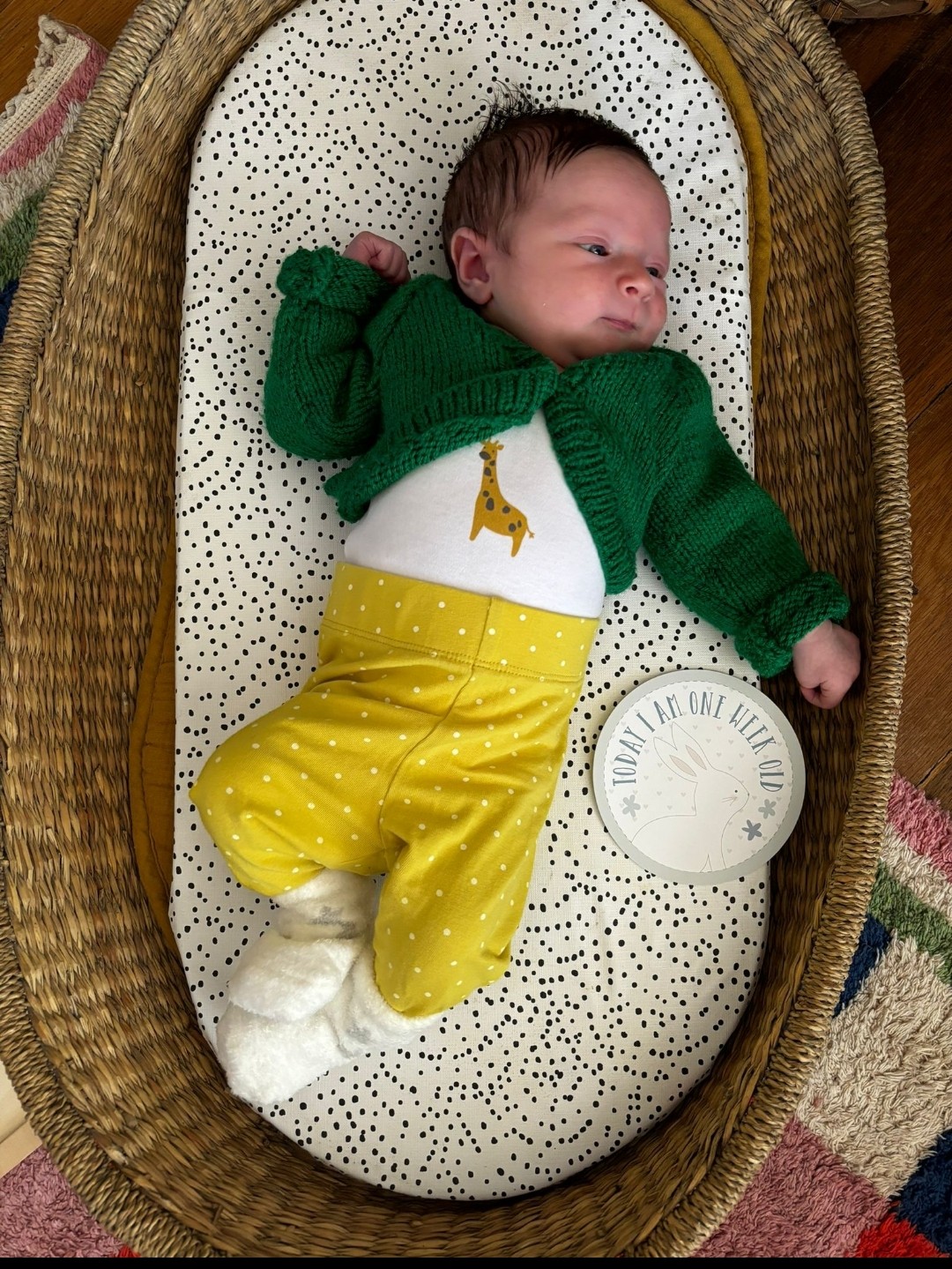
We are all delighted to announce the welcome arrival of baby Zephyr!
Many congratulations to his HWC mum, Lily, and all the family. xxx (Cheers and rapturous applause!)
ZephyrLily Rose King – Photo Credit: Billie Charity
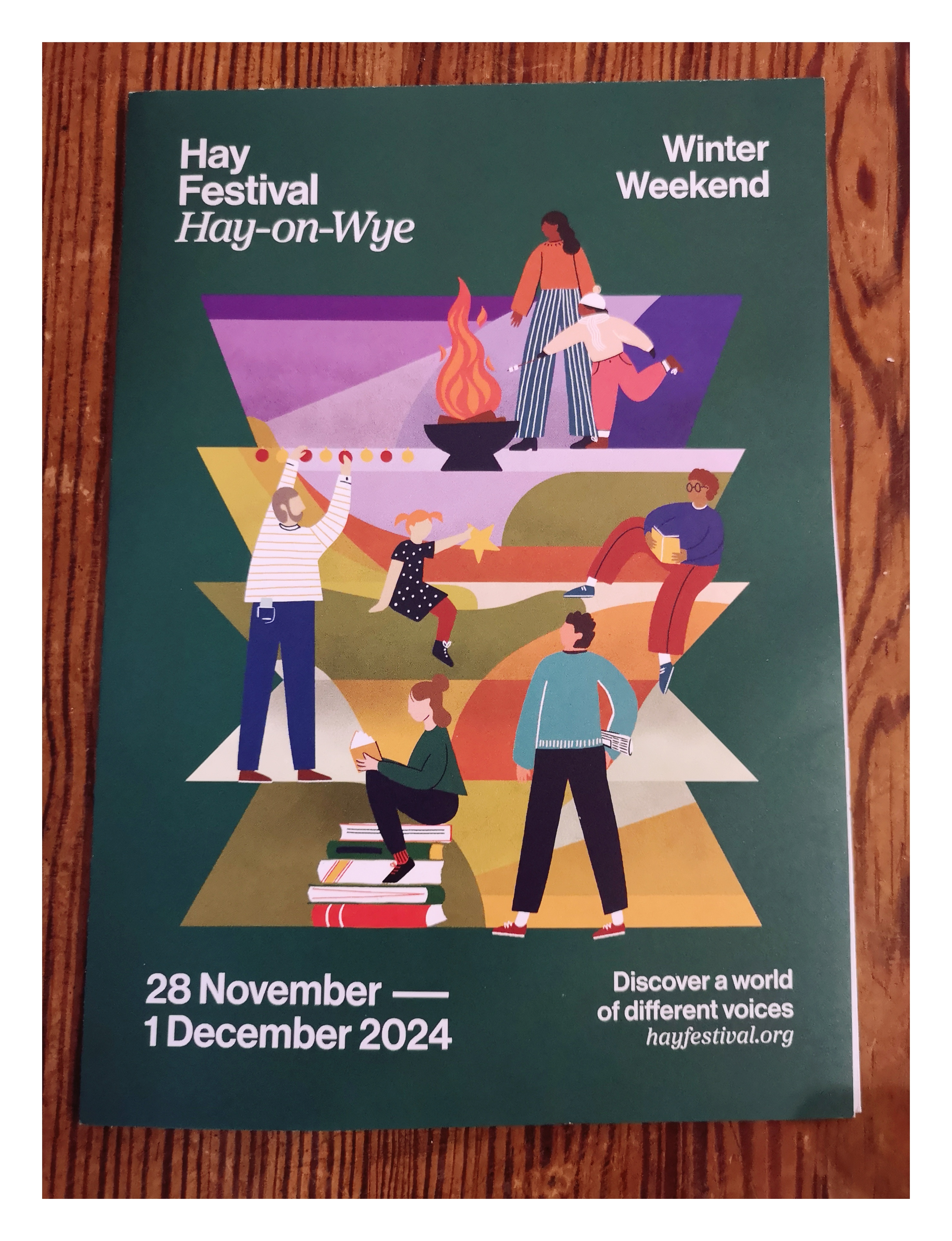
Hay Festival Winter Weekend
It’s less than a month to go before Hay Festival welcomes us all to it’s Winter Weekend, 28th November – 1st December 2024. It’s definitely something to brighten the darkening days and place us firmly on the road to seasonal celebrations ahead.
If you haven’t booked your tickets yet, please check out their website – CLICK HERE If getting to Hay is not possible, then there’s a great selection of digital events which you can access from the comfort of your laptop.
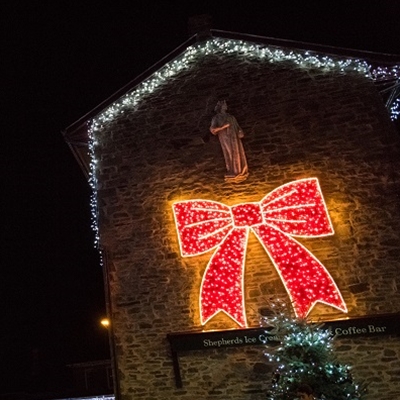
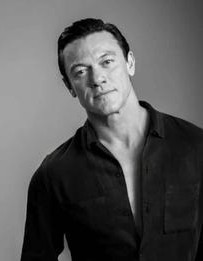
Those who can make the journey, don’t forget the Christmas Lights will be switched on by wonderful Welsh Actor and Singer, Luke Evans along with our soon to be announced Citizen Of The Year. Join the party atmosphere in the town square on Friday 29th November.
Luke Evans – photo credit : B&R 2024
More From The Richard Booth Prize for Non-Fiction 2024
Following on from our recent articles containing Dr Alwyn Marriage’s judge’s comments, coupled with the 1st, 2nd and 3rd prize winning pieces, we are delighted to share the Highly Commended entry from Ange Grunsell.
An Ethiopian Journey
It was hot: very hot. We had been travelling all day on the bus from Axum to Gondar in Ethiopia. It was 1970. The mountain scenery was spectacular in its scale and grandeur. The young driver of the ramshackle vehicle pulled slowly up each set of hairpin bends, swinging out over bottomless drops at each corner and hauling back up the steep incline, before holding hard down into the next precipitous section with great. We hung out over a mountain wilderness reaching to the distant skyline. The glare of the sun made it shimmer.
It was so hot: so hot. Eyefuls of dust blew in through the open windows of the sticky vehicle. There were three of us, each in different parts of the bus: Martin in his sunglasses and jeans, Rob in crumpled linen trousers and sweat stained white shirt and me, in sleeveless, knee length cotton dress and sandals, worn with the impervious arrogance of European women travellers of the time. A rucksack that held our combined possessions was squeezed between Rob’s knees. Rob dozed fitfully, his head lolling onto the shoulder of the man next to him. Smells of women’s hair oil mingled with sweat both stale and fresh: the sweat that trickles down backs and soaks underarms. For many miles I had been sitting next to a tall countryman who sat bolt upright, his staff between his legs, knees wide apart. Locks escaped from under the headdress wound round his head. He wore brown faded tunic and baggy shorts. He swung into me at each bend, thrown by its force. We didn’t speak. We had no shared language.
In the overwhelming heat, it was hard to keep awake, despite speakers blaring out Ethiopian pop music. Some passengers dozed, others talked or argued loudly, twice, blows were struck and once swords were drawn, by two men wobbling around in the centre aisle. The atmosphere was certainly an uneasy one and we were ignorant outsiders. In Asmara there had been stories of rebel violence, machine gunnings, even of buses thrown down hillsides, their passengers left stranded. Despite two of us having witnessed a bloody sword attack at close quarters and the third being far too unwell to embark on arduous travels, we had embarked with naive confidence on a foolhardy journey.
As we skirted the edge of ravines far below and wound our way between walls of cliff, twice, in one short stretch of road, the bus was stopped by army units. It only became clear later, that our journey had taken us through the active war zone, rumoured in Asmara, and that we had crossed the front line. We had been searched first by the Eritrean Liberation Front and then by the Ethiopian Army.
Every so often, apparently in the middle of nowhere, the bus would stop. Women and baskets of vegetables or firmly grasped chickens, even two goats, clambered on or off the crowded deck. But the sight of a youth grabbing an old man by the beard and violently shaking him, apparently just to take his place on the bus, increased our feelings of insecurity.
We stopped for part of the night in the hilltop village of Adi Arkay where we were put up in cubicles in a cluster of huts that only catered for bus passengers. A supper of injera and watt was ladled out for everyone. But Rob, still suffering from hepatitis, was unable to eat anything.
Back in the bus before dawn, from time to time bad tempered quarrels broke out between passengers and at one point there was a standing face – off with drawn knives as the bus lurched. Leaving the mountains behind, we travelled down through slopes covered with eucalyptus and pine. As we neared Gondar, coffee plantations bordered the road.
At last the bus rattled down the final long descent into the midday marketplace of Gondar. We climbed out and looked around us. Gathering our possessions, we discussed finding somewhere to stay. Some horses and carts were parked in the shade. Rob was too weak to walk any distance and so we gestured to the nearest driver who beckoned Rob to climb up beside him. Martin and I hoisted our rucksacks into the back and set off walking behind the cart. After half a mile or so the cart stopped outside a bar which evidently fronted a hotel. Inside the owner showed us two rooms up a short flight of stairs. We put Rob to bed, leaving him a portion of injera bread at his bedside. Over a coca cola Martin and I discussed what to do next. We had very little money left and Addis was still miles away, probably more than two days by bus. Although we were out of any war zone, Rob, who had been recovering from hepatitis before the journey, was clearly too weak to continue safely by road. What to do?
We had come to Gondar to visit the picturesque medieval churches shown in the guide books and indeed Gondar was well enough known on the tourist trail to boast a colonial hotel: a glimpse of cool white buildings, set amongst a green garden and watered shrubs, confirmed this. To get there from almost opposite our lodgings, a long flight of steps rose above a gate. Martin and I decided on a plan. Gondar had an airport. I had a classy English accent and a cheque book in the rucksack. I would walk up to the hotel and see whether I could find anyone prepared to give us enough cash to fly from Gondar to Addis on the strength of an untested UK bank account.
I climbed up to the hotel: it was a parallel universe, an altogether cooler planet. There, various English- speaking couples were sitting around sipping after lunch coffee in a comfortable lounge, its tall open windows showing a vista of garden and hills. I approached several groups with my request. One after the other, looked the other way or turned me down flat, politely. I had forgotten how westerners react in their reactions to uninvited demands.
Eventually at the end of the room, a couple let me tell the whole story of why we needed money, how Rob had been seriously ill in Asmara and was once again alarmingly weak, making further bus travel risky. Gloriously, these people had met my brother-in-law at Makerere hospital in Kampala a few years before. But still I was not home and dry. A little wary, they agreed to accept my English cheque and provide some money, if I could bring Rob up to the hotel to substantiate the story.
So I descended to our shabby lodgings once again. By now it was late afternoon. Along the corridor outside our bedroom door was a long queue of men who eyed me lazily. They were waiting to visit the upstairs rooms in the brothel where we were lodging. Worse as I walked into Rob’s room, a rat spotted the injera, jumped onto the floor beside his bed and flung itself out of the window.
Our good Samaritans trustingly gave us enough cash to cover a flight to Addis and the next morning fly we did. Gondar airport turned out to be a grass airstrip that came to an abrupt end where the mountainside dropped away, edged by a raised hillock to help bounce aircraft into the air. Our DC8 laboured up over each peak, sickeningly close to rocky outcrops. Rob observed oil trickling down the wing close to his window. But we arrived safely in Addis Ababa, a town of high-rise conference centres and international hotels, hot water and comfortable beds.
Coming soon …
Details of our Short Story Competition!
Don’t forget to subscribe for all our latest updates! Enter your email address in the box below.
Our October 2024 AGM brought a few changes to our Hay Writers’ Circle Committee. For the last two years Chairperson, Katharine Stones has steadfastly guided us. She has enabled the group to modernise, thrive and write well, and our current capacity membership is a testament to her hard work. Katy has bolstered our artistic confidence too, with regular writing workshops from guest authors and academics, as well as embracing new opportunities as they have arose.
As Katy steps back from being Chairperson, we extend our heartfelt gratitude for her years of hard work and service to the group.
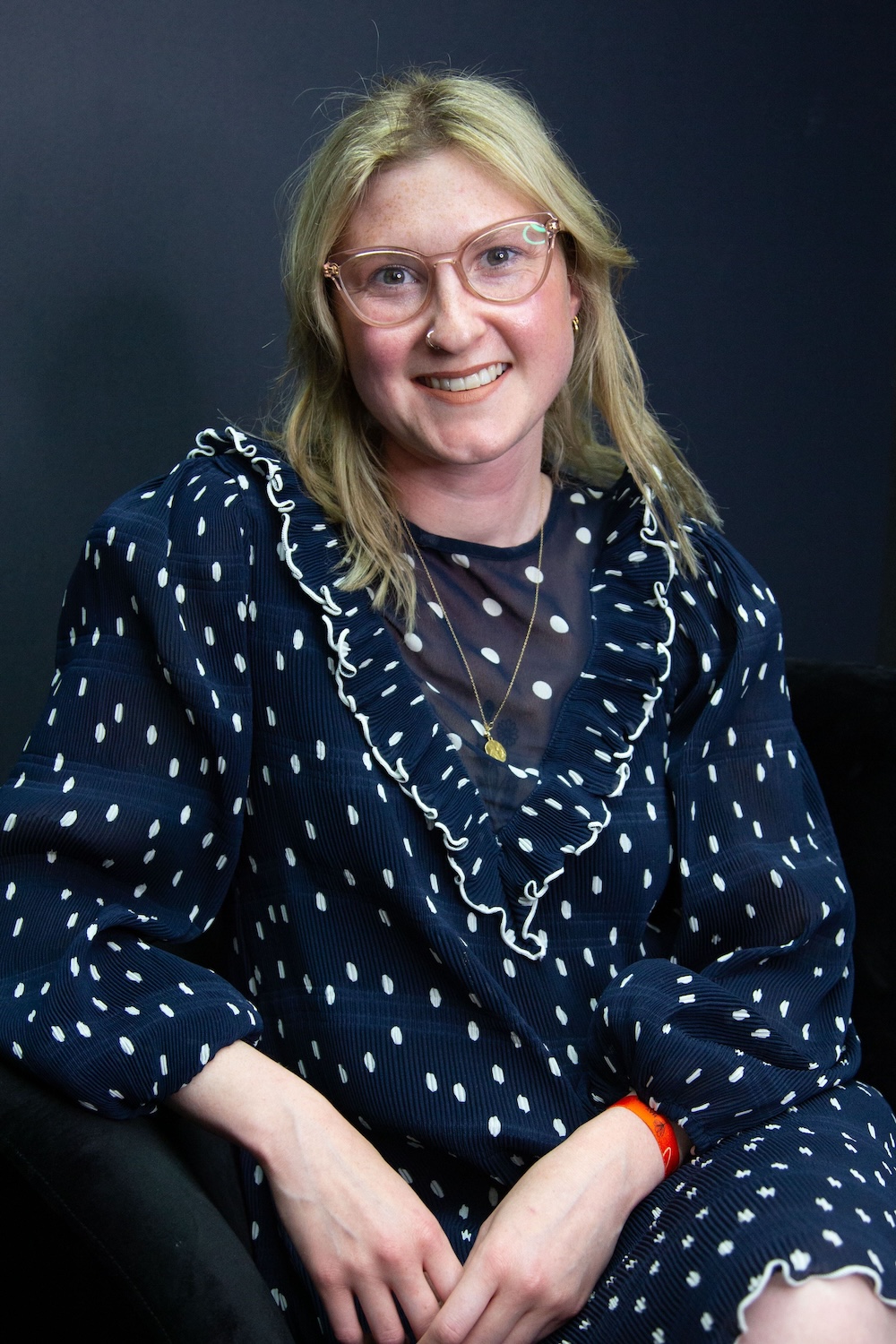
Katharine StonesLily Rose King
Also stepping down this year is Lily Rose King, who has been our Competitions Secretary for the last two years. Lily has been an absolute asset in her role, with deft organisational skills collating all the paperwork, managing correspondence and communicating with judges for all 3 of our yearly competitions. Each year our competitions have garnered more and more entries, and Lily has been absolutely fantastic. Thank you for all your hard work Lily.
Side stepping from her role as Treasurer, we welcome our newly elected Chairperson, Corinne Harris and wish her lots of good fortune and exciting opportunities over the coming years.
We also welcome Margaret Blake to the position of Competition’s Secretary and Martine Smith as Treasurer for Hay Writers’ Circle, wishing them both well in their new roles.
The other members of our committee remain the same with Helen Smith continuing in her role as Secretary, and Emma van Woerkom remaining as the Website and Social Media Manager.
Helen Smith – SecretaryEmma van Woerkom – Website and Social Media Manager
More From The Richard Booth Prize for Non-Fiction 2024
Following on from our last article containing Dr Alwyn Marriage’s judge’s comments, coupled with the 1st and 2nd prize winning pieces, we are delighted to share the 3rd prize entry from Margaret Blake.
3rd Prize – The Awakening by Margaret Blake
My eyelids fluttered open to a sea-green haze above me. I was puzzled. How come I’m underwater? I blinked. My mind cleared. Not water, but canvas, fluttered above me. I was lying on my air mattress, looking up at the roof of the tent I shared with my sister. She was still fast asleep. I waited impatiently, but there was no sign of her stirring. I wriggled uncomfortably. ‘Nature’ was calling.
I slipped out of my sleeping bag, slid carefully to the doorway and, fretting at my inept fumblings, unlaced the fastenings. (No posh zips in those days; leisure camping in 1955 was still in its infancy.) I pulled my wellies on and stepped into the new day. It was light, but I had no idea of the time. It must be very early. No one else is up yet. I headed off to the earth closet across the field. I enjoyed the feel of the long, dew-wet grass swishing against my legs as I walked towards the distant cubicle. I wrinkled my nose as I approached the planked shed. No wonder we’ve pitched camp well away from it. On exiting, I headed for the rusty pump in the middle of the field. The metal struck cold on my hands, but I swung on its handle with all the weight my six-year-old body could manage. It creaked and groaned before suddenly rewarding me with a gurgle of cleansing, icy water.
I looked around. What shall I do next? I was wide awake by now and eager for the day to begin. I wandered across the field to the stony lane that led to the lake. On either side, green trees soared skyward, with a multitude of birds fluttering and twittering amongst their leafy branches. The stones crunched under my feet, the air felt soft on my face, and I relished my aloneness. Before long, I saw the lakeside restaurant ahead: a simple, low structure. Across the yard, a huge glass-fronted tank reared above me; I paused to pay homage to the fish swimming around inside. Snatched from the lake, I knew that they were destined for customers’ dinner plates. The poor things. My heart went out to them. A pair of eels swam into view, their bodies undulating with their movements. I shuddered. Too much like snakes for me! I turned and continued swiftly along the lane.
I rounded a bend, and there it was: my favourite lake. I approached its sandy shore and stood, marvelling at its vast expanse. A wooden jetty stretched out into the water. The hire boats, held captive for the night with chains, bobbed peaceably on the rippling waters. Maybe, if I ask nicely, dad will take me sailing again today. I always thrilled to feel the movement of the boat through the water, the sound of little wavelets splashing against its side, and the wind blowing on my face. Most of all, I enjoyed those special moments with my father. Just him and me – no siblings wanting attention, no mother fretting over me. I loved it.
I strolled along the jetty, my wellie-clad feet sounding heavy on the rough planks. Still, no one was in sight. The world was mine alone. I smiled to myself as shoals of minnows, disturbed by the noise, darted out on either side of me. I moved slowly but, eventually, reached the end of the jetty. Now what? There’s nowhere else to go. I sat down, swinging my legs above the clear water, idly watching the fish below.
Gradually, I became aware of a subtle change in the light and looked up. First a shimmer, then a silvery glow, spread across the horizon. I watched entranced. I had never seen anything like it before. The sky became multi-coloured; red, orange, and yellow hues danced across the scene before me. As I watched, these were all subsumed into one glorious light as the sun appeared over the distant skyline. As it rose higher, increasing in size, it spilt rays of liquid gold across the surface of the lake. As they reached me, I felt warmth soak into my body. Stillness surrounded me. I felt at one with nature. Creation claimed me as one of its own.
I have no idea how long I sat there bewitched by the scene. Time seemed to still its relentless ticking. At length, however, my stomach reminded me of more mundane matters. Breakfast would be good. Even now, no one else was in sight. I wandered slowly back down the jetty, along the lane, and into the campsite, hugging that treasured moment to myself.
As I approached our little cluster of tents, my mother emerged from the tent next to mine. She gave me a surprised look. “What are you doing up so early?” I greeted her with a smile and mumbled something about needing to go to the toilet. I said nothing about my experience. It was far too precious to share with anyone else. While the world slept, I had encountered the beauty of the universe. It was a golden nugget I would treasure within me for the rest of my life.
I had experienced a great awakening. Creation spirituality had entered my soul. It would never leave me.
Coming Soon …
Details of our Short Story Competition!
Don’t forget to subscribe for all our latest updates! Enter your email address in the box below
We are delighted to showcase the top two entries as well as the judge’s comments of our most recent competition, The Richard Booth Prize for Non Fiction 2024.
Dr. Alwyn Marriage is a poet, lecturer and writer, a member of the Society of Authors, and Managing Editor of the publishing house, Oversteps Books. She is also a Research Fellow in the School of English and Languages of the University of Surrey.
Here are Dr Alwyn Marriage’s remarks.
“Thank you for inviting me to judge this competition.
I enjoyed reading all the entries. I am more used to judging poetry competitions, so had to consider what criteria would be appropriate for judging a non-fiction competition. In poetry, one has to consider both form and content; but non-fiction is also an art form, so in judging these short pieces, I was, similarly, looking for quality in both form and content.
Content
1. Interest. The piece of writing must attract attention, pique the reader’s interest. This might be either by the choice of subject matter or by the use of a striking image early on. However, while the degree of interest of the subject matter is obviously important, it is by no means the only necessary quality.
2. As part of that, the deft use of suspense can (though doesn’t necessarily) contribute to the interest. In some of these pieces, the writer played successfully with suspense (eg, Spooked, Only shaken). Suspense is fine and can be exciting, but in general it’s also good if there’s some resolution, rather than the reader being left unsatisfied or baffled at the end.
3. Description and detail. There were some very enjoyable vivid descriptions among these pieces. Sometimes I wanted a bit more. eg in Mountains I would have liked to read a little more about the writer’s time at the top of Mt Blanc. But on the other hand, too much detail can sometimes be distracting. Tiny points that excite the writer won’t necessarily appeal as much to the reader who hasn’t shared the experience. So, as ever, it’s a question of getting the balance right.
4. Good nature writing always goes down well, and there was some of that in, for example, Only shaken and in The Awakening.
Form and language
In general, people buy books for the content, but will be put off if the writing is poor, boring or careless. There are, however, books where the writing is so delightful that the content hardly matters. For example, I’m not a great fan of historical novels, but the quality of prose by someone like Maggie O’Farrell can tempt me to embark on journeys into the past with her.
1. You are aiming to produce a work of art, so attention should be paid to form and shape. as well as to content. Writing a piece like this is not just an invitation to reminisce. The first and second prizes both had pleasing shape, which pushed them up the stakes.
2. Language matters! So it’s worth taking great care over language, spelling and grammar. If necessary, get a fresh pair of eyes to look at a submission before sending it in. For example, either check spelling yourself or use a reliable (non-American) spellcheck. Micro-computer trolley was really interesting, but would have benefited from careful editing and a spellcheck. Also in Mountains, there was a surprising change of tense in the middle for no apparent reason, which stuck out like a sore thumb.
3. Awareness of tone. Aim for a consistent tone, except when you want a special effect. The winner almost got knocked off first place by one infelicitous interpolation. However, s/he was saved by the quality of the rest of writing.
4. Respect for potential readers. Avoid any hint of blasphemy, misogyny, homophobia, racism, etc.
5. Editing and polishing – Go over the piece more times than you think necessary and don’t allow any mistakes, omissions or rambling passages to survive. For a start, polish your first sentence until it shines. It’s got to grab attention and promise a satisfying read. However, having done that, it’s obviously important to maintain the initial impact right through to the last word. Speaking of which, endings can be tricky, so work at those, too. The piece shouldn’t just fade out as though you’d run out of energy or ideas.
6. What might help you to write better – It’s worth considering what the author does when embarking on a new non-fiction book (which I’ve just done!). At one level, she is keen to get her ideas out and share them with other people, so of course the content is of prime importance. But how does she also produce beautiful writing worth sharing? I think the answer to that must be by reading widely and writing regularly. I know that we are talking about prose writing, but I would also advocate that reading, enjoying and maybe occasionally writing poetry is likely to enhance enormously the quality of one’s prose writing. It will help develop a musical and graceful style which should overcome any reticence by a potential reader to engage with the subject matter.
In conclusion, thank you for entering the competition and for sharing your pieces with me. There was lots of variety in style and content, and I enjoyed reading them all.
I look forward to discovering what the gender distribution of the writers was, as I felt there were slightly more entries by men than by women. It will be interesting if I got that wrong!
Alwyn Marriage August 2024″
With the above comments in mind, here firstly, is the winning entry Five Photographs, by Jean O’Donoghue
Jean O’Donoghue – 2024 Winner
Five Photographs.
1. It’s the classic, kitschy baby photograph. I am lying on my fat little belly on a furry rug. My buttocks shine like a new moon. I am about six months old and have just conquered the art of holding myself up on my arms. My mum will later tell me that it took an hour for the photographer to get the picture. She had to spend that hour calming me down from my squealing objections to having my clothes taken off. My face betrays the fact that I am not happy, though the squealing has halted temporarily. My face is one of bemusement and disgust, a facial expression that will reappear later on in my future. I don’t remember the photo being taken!
2. Standing in front of a glittery Christmas tree. Age probably five, at Grandma’s house. My smile the widest possible, my hair caught with extravagantly large butterfly bows. My hands are holding outstretched the white bright net skirt of my fairy outfit. The photograph is black and white of course, captured by an uncle who has just mastered the skill of basic photography. Next to me is my baby brother, much smaller, wearing a cowboy suit too big for him. He smiles as well and put together we are a picture of innocence, joy and pride.
3. It is taken on a wide, wide beach in Bridlington or Scarborough or Mablethorpe. Myself, aged around eight, and my brother have created a motor boat out of the damp sand and we are seated together waving at our Dad. Our arms are getting tired as he fiddles about with an exposure meter and our faces come to look somewhat less joyful and relaxed. At last the shot is made. But there is another one from round that time of seaside holidays. It is a small, murky brown sliver of film encased in an ivory coloured cardboard frame. I remember this being taken. It was by a peripatetic photographer on the prom who promised to have the photograph produced instantly, for only ten bob. This is not the sort of thing that my parents would usually indulge in but maybe it was the whiff of invigorating ozone, or the exhilaration of holiday time that led them to say “yes”. It did seem like magic when the photographer produced the finished article and it was less brown and more decipherable then and portrayed the four of us, arms linked, advancing on the photographer with big smiles after he had chided “cheese!”
4. It is taken in our back garden at home, in colour this time! Maybe I am thirteen, and still the smile and the pride are there. I am wearing my full Girl Guides uniform and I am saluting as if at the start of the parade. We have been rehearsing for this parade for weeks. It is a big deal as Lady Olave Powell is coming. My belt is shining, as are my shoes and my guide badge has had an extra shining up as well. My sleeves are full of badges for laundress, for navigation and campfire lighting. My brother is not in the picture, but I sensed he was there just out of sight, making fun of me. He is no longer little but an impressive manlet of steely sinew. Also a persistent mocker.
5. Fifteen now, colour again. Girl Guides long gone. If it were thirty years later, I would be a Goth, but since they are not yet invented I have to content myself with a surly snarl that my baby photo presaged. I don’t want to be photographed and neither does my brother who I am holding in a not so sisterly grip around his neck. I know that he will get me back for this, and am already preparing to escape. I am wearing my grandmother’s pinstripe suit from the forties, which I had bullied my mother into customizing. On my feet are long boots from a charity shop even though this is July. On my head is a striking trilby. My mother cannot bear to be seen with me in town.
These five photographs are in a soft leather pouch that I found in her wardrobe when my mother died. I still have the trilby.
2nd Prize went to The Whole Truth, by Val Ormrod.
Val Ormrod – 2nd Place, 2024
The Whole Truth
If a writer chooses to write memoir, should we demand the whole truth and nothing but the truth? Should a reader expect a writer to reveal all in order to fully engage with the story, and does the author have any obligation to fulfil that expectation? How up close and personal does a writer have to allow the microscope?
In today’s culture where ‘no holds barred’ revelations are common and where the freedom of the internet has opened up an avenue for everyone to disclose details of their lives and express their views, however illogical, biased or even defamatory, do readers expect the same? Does a reader feels cheated if they think the narrator is withholding something from them or not being honest about their emotions? The public seem to have an almost insatiable appetite for other people’s stories, especially when they are celebrities.
In August 1929, Sigmund Freud scoffed at the notion that he would do anything as crass as write an autobiography. He maintained that a psychologically complete and honest confession of life, on the other hand, ‘would require so much indiscretion (on my part as well as on that of others) about family, friends, and enemies, most of them still alive, that it is simply out of the question. What makes all autobiographies worthless is, after all, their mendacity’.
But do some writers conceal as much as they reveal? Can anything be withheld, kept private?
This short essay does not attempt to answer any of these questions, rather it invites the reader to explore these more fully by reading this genre. Although there is insufficient space to examine them any more fully, it looks briefly at three memoirs, very different in style but all dealing with grief.
In H is for Hawk, Helen Macdonald deals with the pain from her father’s sudden death by undertaking the training of a goshawk.
In an interview prior to publication of her book, she was asked how she felt about having put so much of herself on the page. She confided that:
‘The only way I could write about grief was to be brutally honest about how it felt. I’m definitely nervous, now, about having put it all out there, but there wasn’t any other way to do it; when I tried to dissemble or hold back, the words wouldn’t come. But I’m not quite the person in the book any more, which makes it feel less exposing. I was so deep in grief back then I saw the world very differently.’
She describes the book as a depiction of ‘my own struggle with grief during the difficult process of the hawk’s taming, and my own untaming’. Her grief is never overplayed, nor is it sentimental, but is restrained and often understated – a self-awareness of what she is facing. When the book moves on to meeting the challenges of training the hawk, the author shows her vulnerability and is not afraid to admit her feelings of inadequacy.
In his memoir Do No Harm, Henry Marsh is unflinchingly honest about the emotions of the surgeon, the fear, the responsibility and the guilt when an operation is not successful, especially when a mistake has been responsible for the failure. Mistakes are made in any profession, but most do not involve the catastrophic results that neurosurgeons must face at these times. Marsh wrote the book towards the end of his career when, rather than feeling proud of his many successes, he is haunted by the failures that inevitably result from such intricate and dangerous microsurgery:
‘The more I thought about the past the more mistakes rose to the surface, like poisonous methane stirred up from a stagnant pond.’
The stated aim of the book is to reveal the conflicting qualities of detachment and compassion that a surgeon requires to be able to do their job, and the human difficulties that doctors face. He is aware of how much patients need to believe in the surgeons who are treating them, noting:
‘It is not surprising that we invest doctors with superhuman qualities as a way of overcoming our fears’.
He feels the heavy weight of that responsibility. Paradoxically, the more he needs to reassure a patient, the more anxious he becomes himself. He knows that if he dwells on the possibility of failure too much, he will not be able to do his job, because he needs to believe in himself too.
Marsh reveals himself as a sensitive man who suffers for his mistakes and is only too aware of the physical and psychological damage that can be inflicted on both patients and their families. Seeing patients that he has operated on now in a vegetative state, he is tormented by their faces:
‘the look of the damned in some medieval depiction of hell’.
In writing the book, Marsh is perhaps revealing the very things he has tried to conceal in his professional life when he needed to maintain detachment in order to carry out his surgery. In spite of his evident passion for this work, he exposes himself as a human being who suffers the same crises of confidence as any other mortal. With perhaps too much modesty he asserts:
‘I hope I am a good surgeon, but I am certainly not a great surgeon.’
The Iceberg by Marion Coutts begins with:
‘Something has happened. A piece of news. We have had a diagnosis that has the status of an event. The news makes a rupture with what went before: clean, complete.’
This passage sounds on the surface as if it is highly controlled, distanced from emotion. The contrast with what she is feeling could not be greater. The author goes on to reveal the story of the next few years with a poetic eloquence that is lyrical and intensely moving.
The scenes are presented to the reader as if through a camera lens, intense and zoomed in to the heart of the story. It is a profoundly moving depiction of the decline of art critic, Tom Lubbock and the effect this had on his wife and young son.
‘Ever so slowly we inch back to the barely functioning platform that is our life…Cancer scarcely allows you time to look at it, let alone get used to it. Tom’s is a high-speed disease with full, motorway pile-up repercussions.’
Other writers also feel the need to express their personal story but conceal it within thinly disguised ‘fiction’ and it has been suggested that many first novels by fiction writers relate closely to their own personal thoughts and experiences. This is a fine line and begs a number of further questions: What is reality anyway? How reliable is memory? How much of an experience is an individual’s own interpretation of events rather than a bald recounting of that experience?
Every time an anecdote is recalled and repeated, whether it involves an event or a conversation, there is the possibility of this being altered. This can be in subtle or obvious ways; the changes can be minor or substantial, completely altering the tone of it, like Chinese whispers. And in every one of us, no matter how honest we think we are being, there is the Russian doll syndrome – different versions of our lives that sit within us.
In conclusion, whichever way they are presented, stories continue to fascinate us. All of us who write must continue to be grateful for that.
Many congratulations to our 2024 winner, Jean O’Donoghue and our runner up, Val Ormrod for their fantastic pieces. Also, huge thanks to our judge, Dr Alwyn Marriage for her detailed comments, which I am sure we will all find useful going forward in our writing work.
Our annual Hay Writers’ Circle AGM takes place on Tuesday 1st October, a little later than usual so look out for updates in our next article, along with the 3rd prize and commended pieces from the Non Fiction competition too.
And Finally….. Hay Festival Winter Weekend!
The programme is out! Hooray!
For more information go to Hay Festival website, or if you are in Hay-on-Wye programmes are freely available at most places around town – so grab your copy today!
The rain may be lashing and the thunder rolling, but we are back at the beginning of another exciting writing year.
We are going to kick off our 45th year with announcing the results of our annual non-fiction competition.
This popular competition again received a good number of entries from both inside and outside Hay Writers’ Circle and we very much welcome external interest in all our writing competitions.
Our memorial prize, named in tribute to Richard Booth, the self-proclaimed “King of Hay”, who among many literary interests, was a keen supporter of the Hay Writers’ Circle. He sadly passed away in 2019, still in love with books, writers and his beautiful kingdom of Hay-on-Wye.
Dr. Alwyn Marriage is a poet, lecturer and writer, a member of the Society of Authors, and Managing Editor of the publishing house, Oversteps Books. She is also a Research Fellow in the School of English and Languages of the University of Surrey.
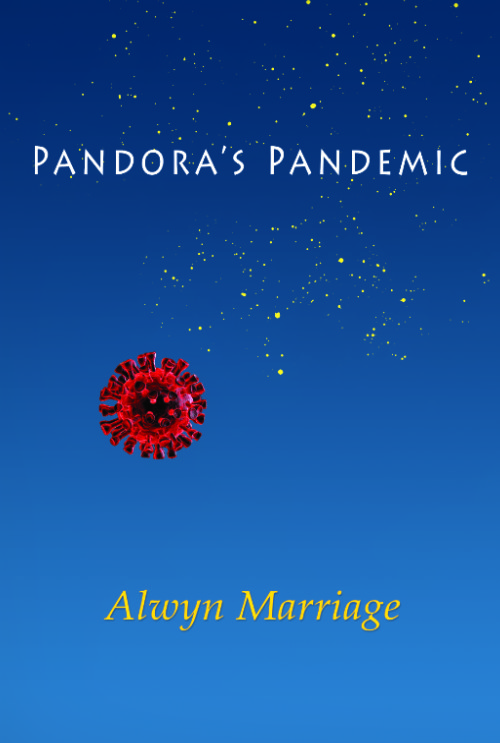
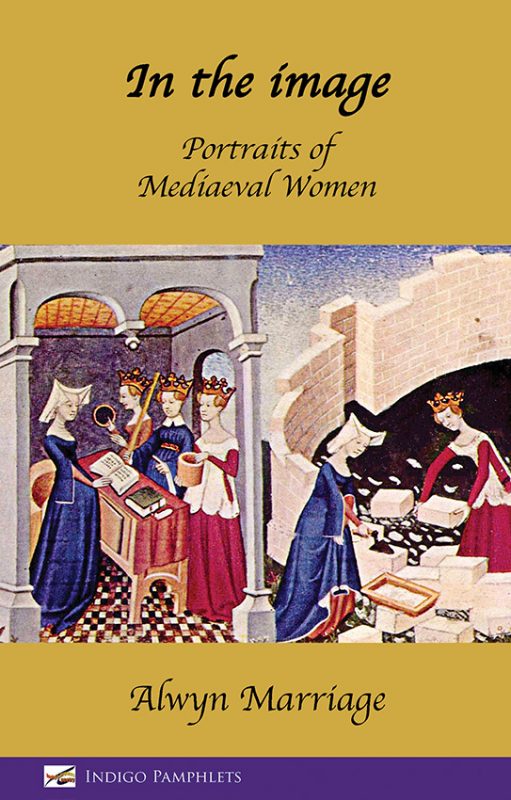
Alwyn is the author or editor of fifteen books, which include a number of poetry collections, a couple of non-fiction books, and two novels: Rapeseed and The Elder Race. Two recent poetry collections areIn the image: portraits of mediaeval women and Pandora’s Pandemic. Her latest collection, Possibly a pomegranate, was published in spring 2022 and her poetry, articles and reviews are published widely in newspapers, magazines, journals and on-line platforms.
Without further delay, here are the results :
The Richard Booth Prize for Non-Fiction Competition 2024
1st Prize – Five Photographs by Jean O’Donoghue
2nd Prize – The Whole Truth by Val Ormrod
3rd prize – The Awakening by Margaret Blake
Commended – An Ethiopean Journey by Angela Grunsell
2nd Place – Val Ormrod3rd Place – Margaret BlakeCommended – Ang GrunsellWinner of the Richard Booth Prize 2024 – Jean O’Donoghue
A full judge’s report and winning pieces to follow.
Congratulations once again to everyone who entered their work and a huge thank you to our judge, Dr. Alwyn Marriage.
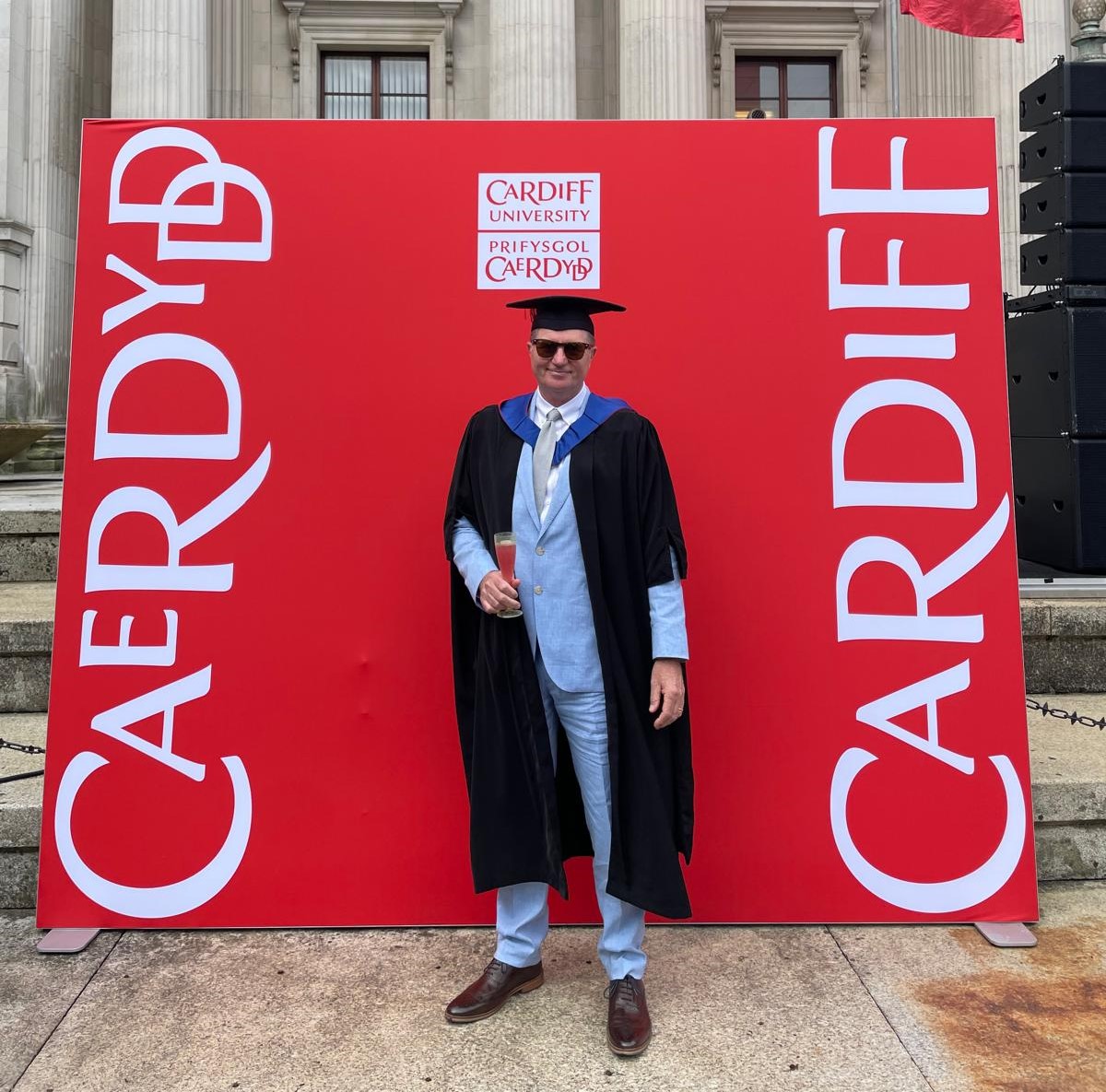
We start our update today in congratulatory spirits. Earlier this week one of our members, Mark Bayliss, graduated from Cardiff University with an M.A. in Creative Writing. We are thrilled for Mark and delighted his steadfast dedication to writing and learning as reaped such rewards.
As Mark says, “My writing journey continues”.
But we all take this moment to celebrate his worthy success. Well done Mark!
Mark Bayliss 2024
Deadline Fast Approaching
This weekend, don’t forget to send your submissions for the Richard Booth Prize for Non-Fiction, 2024.
The closing date for entries is midnight Monday 22nd July 2024.
Anyone can enter this competition and our judge, Dr Alwyn Marriage, is looking forward to reading a diverse array of subjects. Pieces of writing of between 500 to 1250 words can be submitted and the theme is entirely open. Head over to our Competitions page for full details and to download the entry form.
Summer Gathering 2024
On Tuesday 16th July there was a choice of three things to celebrate; World Snake Day, Fresh Spinach Day (tempting?!), or Hay Writers’ Circle Annual Summer Lunch. Naturally, we chose the latter. Many of our members, arms laden with delicious cakes, quiches plus other summery delights (thankfully not including snakes or spinach), congregated at Cusop Village Hall to mark the end our writing year.
It was a terrific opportunity to meet up and commemorate 12 months of both individual, and group achievements, as well as our creative hopes for the future.
HWC Summer Lunch 2024 Cusop Village Hall
Summer Break!
Hay Writers’ Circle now breaks for the month of August and returns in September when our writing group will celebrate it’s 45th Birthday. We will continue to post any updates on the website etc. In the mean time, may we wish all our followers, from all over the world, a wonderful month ahead, and together we look forward to an inspirational Autumn to come.
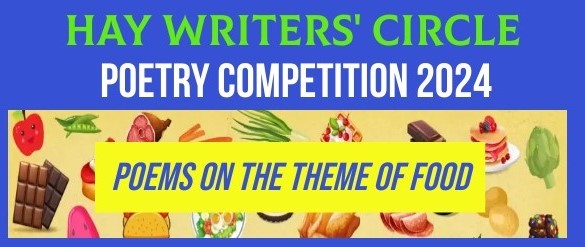
We are delighted to announce the results of the Hay Writers Circle Poetry Competition 2024. This popular competition again received a good number of entries from both inside and outside Hay Writers’ Circle and we very much welcome external interest in all our writing competitions.
We must primarily take a moment to thank our wonderful 2024 Poetry Judge, Susan Evans who single-handedly read all the poems, whittled them down into a long list, then short list, then our ultimate set of winning poems, with one highly commended entry.
Susan said, “It has been a real honour and a privilege to read and re-read such an inspired batch of food-themed poems on behalf of the Hay Writers’ Poetry Competition, 2024. As a classically trained chef, I enjoyed a generous helping of poems that tickled my taste buds! As a lover of food and travel, I was transported, through cuisine, all over the world! (And feel exhilarated and jet-lagged in equal measure). As an activist, a few pinches of protest poetry served as a reminder to continue to act! And finally, as a performance poet, I could see and hear and smell and taste and touch all the poems; elevated from page to stage — something I had the pleasure of playing with, during my well received, live, performance poetry masterclass in Hay, last May…
But now, blindfolded and alone with a folder of completely anonymous poems… How does one even begin to judge such diversity of literary talent? And only guess, on an intimate level, what each poem must mean to their respective authors? So I shall say this, congratulations to all poetry judges…! Seriously, HUGE congratulations to all Hay Writers’ 2024 Poetry Competition entrants:
Every.Single.Poem.Is.Worthy (I see a fabulous food-themed anthology!)
How I came to make my final winning selections; which wasn’t a breeze by any means, was mostly based on a combination of personal interests and feelings evoked; poems that provoked, tickled, transported, and aroused; poems that spoke to me, personally. Yep, it’s that subjective. Don’t hate me. Re-submit!”
Finalists each receive detailed feedback from, Susan (below) which maybe helpful for any writer going forward. Moreover, a mini-commentary from Susan, for all placed poems will follow in due course. Thank you, Susan for all your hard work, we are immensely grateful.
As with all good competitions, we are announcing in reverse order:
The Longlist:
A Last Supper – Sarah Leavesley Beans a la Tost – Tammy Allen Charlie’s yogurt – Angela Grunsell Chocolatiers – Christian Donovan Cream Tease – Barbie Wyard Flapjack – Michelle Pearce For All – Nigelle Baskerville Food Factory – Martine Smith It – Lily King Leftovers – Jean O’Donoghue Panning for gold – Nick Thomas Second Helpings – Heather Moulson Survival – Val Ormrod Take Away – Catherine Smedley The Milk Bottle – Martine Smith Through a Mother’s Eyes – Mark Bayliss Toaster Crumbs – Christian Donovan Unwrapped – Michelle Pearce War Child – Val Ormrod Orphan Diner – Sam Ashton
The Shortlist:
A Dainty Dish – Kathy Miles Cannon-fodder – Sam Ashton hot cross buns – Helen Smith I am not Raymond Blanc – Jill Munro night custard – Helen Smith Night Out – Val Ormrod ode to a glass teacup – Helen Smith ON SUNDAYS – Doug Devaney Only Cousin – Heather Moulson Pancake Day – Lily King Rhubarb Cake, Germany 1968 – Birgitta Claus The Fruit Stall, Wheeler Road, Bangalore – Jon Magidsohn There is a subtle change of light – Diana Sanders WILD SUPPER – Rosemary Firman
Hay Writers’ Circle Poetry Competition 2024 – Winners!
First Prize – Cannon-fodder by Sam Ashton Second Prize – WILD SUPPER by Rosemary Firman Third Prize – ode to a glass teacup by Helen Smith Highly Commended – The Fruit Stall, Wheeler Road, Bangalore by Jon Magidsohn
The Winning Poem
Judge’s comments :
“Cannon-fodder: a powerful and important protest poem for our times, that which I kept returning to — hard not to; aware of bombs dropping, as I’m sat poetry judging … As a foodie, I fantasised that the overall ‘winning’ food-themed poem would be more feast than famine, and it was close, but I couldn’t let ‘Cannon-fodder’ go. Firstly, the poem’s title: Cannon-fodder, slang for ‘expendable…’ Then the repetition of: ‘Gunpowder, gunpowder,’ within rhyming couplets; a sinister re-imagining, in my mind, of nursery rhyme: ‘Pat-A-Cake Pat-A-Cake.’ The haunting chant: ‘Gunpowder, gunpowder’ as ‘food for the gun’ to ‘gorge over Gaza…’ Such rich, culinary language and word play throughout the poem, for such dark subject matter. The poem also shines a light on wars in ‘near-total information blackout’: ‘You yowl in the Yemen’s blood thirsty stew/Chaotic Sudan is your meaty chew.’ A fine example of literary activism literally filling in gaps in mainstream media; gaps which may take the pressure off governments to act. We are also reminded of profit over people in war: “They’re rich, worry not they have done their sums”’ Within the final stanza: ‘Would you allow bread for those on the run?’ I imagined those wonderful “Chefs for the People” of “World Central Kitchen,” (WCK) baking bread for fleeing refugees, in make-shift tents, and the tragedy of their clearly marked aid convoy in the Gaza Strip being targeted last April … a clever thing about the poem, “Cannon-fodder,” is that as immediate and accessible as the poem comes across, there’s space for the reader to imagine; as I have … and sadly, too many universal atrocities to apply a plethora of scenarios to — a chilling and thought-provoking piece. There were several, well worthy war poem entries — what also struck about “Cannon-fodder,” from a performance poetry perspective, is that I hear ‘Cannon-fodder’ on stage/soapbox, loud and clear; sending a protest message to the establishment, just as the late, great poet, Benjamin Zephaniah, et al would — I hope I get to hear this poem read/performed by the author one day, and I hope it helps to promote world peace.” “Cannon-fodder” is a particularly timely poem in the run up to the UK General Elections, 4 July 2024: ‘Nuclear weapons are a profound and existential threat to humanity. Instead of investing in weapons of mass destruction, we should be investing in our schools, hospitals and housing to ensure everyone can lead a happy and healthy life. That is what real security means.’ — Jeremy Corbyn
The Winning Poem
Cannon-fodder by Sam Ashton
Cannon-fodder. Gunpowder, gunpowder food for the gun, You gorge over Gaza, blocking the sun, You yowl in the Yemen’s blood thirsty stew Chaotic Sudan is your meaty chew . Gunpowder, gunpowder food for the gun. “Yes, Congo’s my snack, a land others shun. Ukraine is the feast I always enjoy While drug barons’ greed is sweet to employ.” Gunpowder, gunpowder food for the gun, Whose filling your stomach, ton after ton? “They’re rich, worry not they have done their sums; I’ll never starve though the world weeps for crumbs.” Gunpowder, gunpowder food for the gun, Would you allow bread for those on the run? “No! Shooting it up is such tasty fun, But don’t you blame me…….. I’m only the gun.”
Second Prize
Judge’s comments :
“WILD SUPPER” is an enchanting poem: a taste of the “Good Life.” I smiled all the way through the poem’s wild nature trail … the opening stanza sets the scene: ‘The sparrow chirruped/Mine is the seed stolen from the hanging basket/in the garden.’ As “WILD SUPPER” progresses, the poem feels fable-like, in how each bird, within each finely-woven verse, “speaks” of how nature takes care of itself, and shows us the necessity and beauty of biodiversity within its landscape: ‘The Robin sang/Mine is the worm tugged from the turned earth near the field’s ridge.’ The seventh and final verse delivers a charming and tasty surprise — beautifully orchestrated! And the last, solitary line, continues the theme of co-existence: ‘for my friends,’ simply heart-warming …
WILD SUPPER by Rosemary Firman
The sparrow chirruped Mine is the seed stolen from the hanging basket in the garden.
The wren piped Mine is the spider captured from the tangled web against the fence.
The blackbird called Mine is the berry plucked from the holly bush by the blackthorn.
The kite mewed Mine is the vole snatched from the long grass at the stream’s edge.
The robin sang Mine is the worm tugged from the turned earth near the field’s ridge.
The dove cooed Mine is the crumb pecked from the rough gravel on the garden path.
And mine? Mine is the fresh loaf baked by my love eaten on the garden step
listening to the coo, the song, the mew, the call, the pipe, the chirrup. Tomorrow I will scatter the stale crumbs for my friends.
Third Prize
Judge’s comments :
“ode to a glass teacup” is an exceedingly sensual poem, and it knows what it wants: ‘I want your smooth round belly/warm earth-made/mineral/magic’ The poem’s pace and passion is palpable—the poem barely takes a breath—no line breaks, and just two commas: ‘my lip, your lip’ I was so enthralled, I momentarily forgot that this is an “ode to a glass teacup.” We are still talking about tea, aren’t we….? Beautiful imagery: ‘your curves/holding the elixir/so fragrant within your womb/a flower unfurling’ Here, I imagine ‘Flowering Tea,’ whereby hot water, poured over floral bulb, unfurls — which is magical! “ode to a teacup” for me, shows immense art appreciation, and a gratifying relationship between art and life. A delicious ‘show don’t tell’ lyric poem; economical and sensual in its use of language; tapping into all the senses; allowing the reader to simply drink it in …
Ode to a teacup by Helen Smith
ode to a glass teacup i want your smooth round belly warm earth-made mineral magic pressed under pressure now so firm yet so fragile between my fingers that caress your delicate edges your curves holding the elixir so fragrant within your womb a flower unfurling at your centre i have never felt such beauty as this, hot and wet against my lips your offering my softness, your hard rim my lip, your lip kissing the wild heat of your making i am burning at your touch i am melting liquid as a sigh, as the heat you bring to my skin, to my belly as i roll your gift across my tongue and drink until i’m done
Highly commended:
Judge’s comments :
“The Fruit Stall, Wheeler Road, Bangalore”’ ‘bursts out of brick and dust…’ What an entrance! This high-octane poem has a joyous energy and vibrancy, throughout: ‘brightest rainbow this side of KR flower market.’ This poem is full of spills and thrills; barely able to contain itself; capturing the essence of the bustling Bangalore marketplace: ‘Heads bobbing over the parapet of Papayas, passion fruit’ Lovely alliteration. ‘green oranges wobble’/good morning the ladies/ ‘ca-lip ca-lipping in their chap-pals’/‘fluttering saris of persimmon and pear.’ We must be in India! References to chap-pals (flip-flops) and ‘saris’ in ‘persimmon and pear.’ Fruits describe `The ladies’ silk dress in vibrant orange and green; matching the colours of the exotic fruits of “The Fruit Stall.” Stunning. And fourth stanza: ‘After a heavy rain, when the filter of dust flattens, midday’s cool air smells like every kind of lassi.’ Mouth-watering. The poem settles here for a moment, and I can almost taste ‘every kind of lassi.’ (I love a lassi). ‘Space for any vendor, an old woman parks her custard apple cart at the corner….’ I sense an easy, inter-generational, community warmth within this stanza. And a spectacular sense of market-trader theatre, too: ‘Father and son, one by one, machete the heads off coconuts…’ The final stanza: ‘…and sounds that wrinkle western ears…’ I found myself trying to wrinkle my ears! I’m curious, and wonder if said ‘western ears’ are not fully appreciating the local sounds? And then a salutation to the sun and the poem is suspended in ‘sweet harmony.’ “The Fruit Stall, Wheeler Road, Bangalore” for me, is a tremendously transporting and uplifting poem, with its high-energy narration, juicy word play and bursts of colour from Bangalore!
The Fruit Stall, Wheeler Road, Bangalore by Jon Magidsohn
bursts out of brick and dust between the tailor and the hot chip man, the brightest rainbow this side of K R flower market. Heads bobbing over the parapet of papayas, passion fruit and green oranges wobble and good-morning the ladies ca-lip, ca-lipping in their chappals, fluttering saris of persimmon and pear. Three men, moustaches and pink shirts, who crew the kiosk little larger than a rowboat, will tear the crown off a pineapple for you, tell you the brown bananas, thumb-sized and honeyed, are the sweetest, insist their tamarind surpasses all others. After a heavy rain, when the filter of dust flattens, midday’s cool air smells like every kind of lassi. Space for any vendor, an old woman parks her custard apple cart at the corner; her friend puts chilli powder in a cup for guavas. Father and son, one by one, machete the heads off coconuts piled shoulder high, present each with a straw. in April, when the mango kings, Badami and Banganapalli, march into their royal boxes, queues lengthen like a jackfruit’s sinewy flesh; yellow-stained fingers from canoodling yesterday’s pips fondle bristly lychees. And jamun and mangosteen and carambola and sounds that wrinkle western ears and colours that reflect off pale skin and greet the sun with sweet harmony.
Huge congratulations to our winner, Sam Ashton, all our placed poets and everyone who entered our competition. Well done all!
Don’t forget to stay up to date with all HWC news – subscribe with your email address in the box below.
Hay Writers’ Circle send many heartfelt congratulations to Kandance Siobhan Walker and Tom Bullough for their individual successes at the Wales Book of the Years Awards 2024 – English Language Books. Both have been competition judges for HWC in the past; Kandance was our judge for the Frances Copping Memorial Prize for Fiction 2020, and Tom was last years’ judge for the Richard Booth Prize for Non Fiction.
Literature Wales writes of Cowboy – “The poems in Cowboy are knowing, millennial, internet-sick, funny, but there are deeper undercurrents, too: of embodied and disembodied spiritualities; of the knowledge of animals; of familial mythologies; of grief and longing; of autism and navigating diagnoses; of early and enduring disappointment; of the wildness underneath the smooth glass-and-chrome surfaces of contemporary life.”
To order your copy of Cowboy, Kandace Siobhan Walker from Cheerio Publishing – CLICK HERE
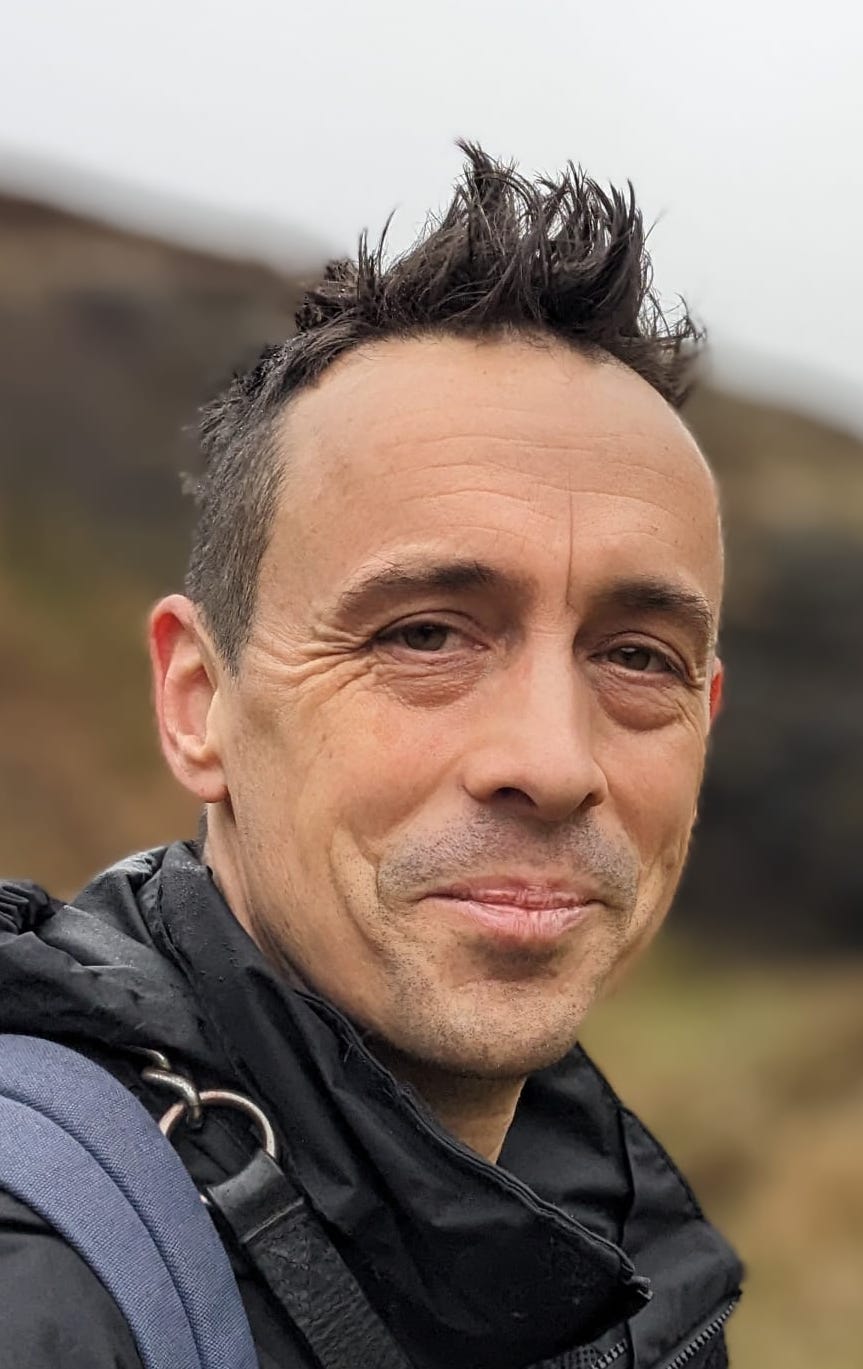
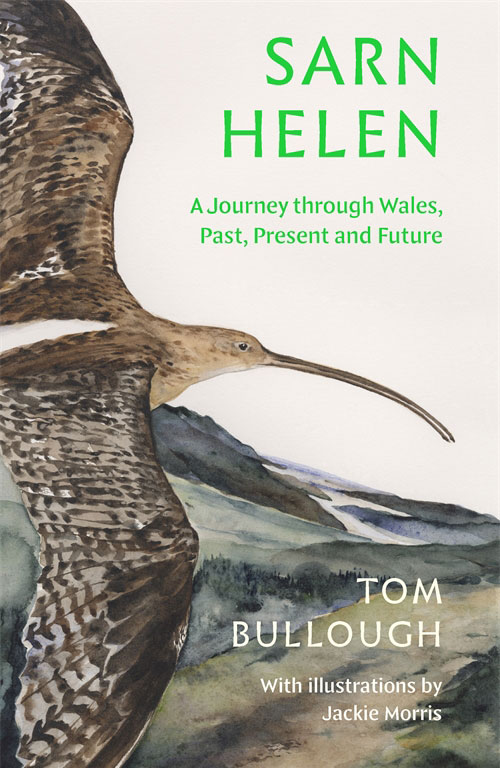
Tom Bullough“Sarn Helen”, Tom Bullough (Granta Books)
Winner: Overall Award & Creative Non-fiction Award
Sarn Helen, Tom Bullough (Granta Publications)
Literature Wales writes of Sarn Helen, “This is the account of Tom Bullough’s journey along Sarn Helen – Helen’s Causeway – the old Roman Road that runs from the south of Wales to the north. As Bullough walks the route, he explores the political, cultural and mythical history of this small country that has been divided by language and geography. Woven into this journey are conversations with climate scientists and the story of Tom’s engagement with the urgent issue of the climate crisis, showing us its likely impact on Wales, which is – in miniature – a vision of what lies ahead for us all.”
To order your copy of Sarn Helen, Tom Bullough from Granta Publications – CLICK HERE
To read more about Wales Book of the Year, their 2024 short lists and other 2024 wonderful winners in every category, please head over to the Literature Wales website – http://www.literaturewales.org
HWC are extremely grateful for all the time and effort each of our judges gives to our competitions. We remain constantly thankful for all their support and, like Kandace and Tom, wish them continued literary success.
Other News :
Excitement mounts as our 2024 Poetry Competition results are in! An announcement will be made on this website next week. Huge thank you to our judge, Susan Evans.
There’s Still Time …
… to enter our annual Non-Fiction Competition, The Richard Booth Prize 2024. This year we are thrilled to confirm that the judge for our Non-Fiction Competition is Dr. Alwyn Marriage.
Everyone is welcome to enter, the theme is entirely up to you and the closing date for submissions is 22nd July 2024.
For full competition guidelines and entry forms etc., please go to our Competitions page.
Don’t forget to stay up to date with all HWC news – subscribe with your email address in the box below.
Submissions are now invited for our annual Non-Fiction Competition, The Richard Booth Prize 2024, named after one of Hay-on-Wye’s most notable residents and it’s self proclaimed ‘King of Hay’. Richard was always a great supporter of books, Hay-on-Wye and of course, local writers.
Sadly, Richard passed away in 2019, but his name lives on everywhere in Hay, including this writing prize which he so graciously sponsored during his lifetime and we continue to honour in his memory.
Richard Booth (King of Hay) 1938-2019
This year we are thrilled to confirm that the judge for our Non-Fiction Competition is Dr. Alwyn Marriage.
Dr. Alwyn Marriage is a poet, lecturer and writer, a member of the Society of Authors, and Managing Editor of the publishing house, Oversteps Books. She is also a Research Fellow in the School of English and Languages of the University of Surrey.
Alwyn is the author or editor of fifteen books, which include a number of poetry collections, a couple of non-fiction books, and two novels: Rapeseed and The Elder Race. Two recent poetry collections areIn the image: portraits of mediaeval women and Pandora’s Pandemic. Her latest collection, Possibly a pomegranate, was published in spring 2022 and her poetry, articles and reviews are published widely in newspapers, magazines, journals and on-line platforms.
Dr Alwyn Marriage
Richard Booth Prize Non-Fiction Competition2024
Without further delay, here are the Non-Fiction Competition details :
This is an open competition meaning – ANYONE CAN ENTER
The closing date for entries is midnight Monday 22nd July 2024. Any entries received after this date will not be considered.
Criteria
· Entries must be entirely the work of the entrant and by submitting you are confirming that the work is your own. Any evidence to the contrary will result in immediate disqualification.
· Entries must not have been published, self-published, published on any website, blog, social media, or online forum, broadcast nor winning or placed (as in 2nd, 3rd, runner up etc.) in any other competition.
· If your entry has been long-listed or shortlisted in other competitions and provided it has not won a prize or been published, it is eligible.
· Simultaneous submissions are allowed but will become ineligible should they win a prize elsewhere or be published prior to the date of prize giving. Entry fees will not be refunded. You must inform us immediately should your entry be published or win a prize elsewhere.
· Entries submitted posthumously are not eligible.
· Entries must be a minimum of 500 words and a maximum of 1250 words. The theme is entirely open. Title is not included in the line count.
· We will disqualify entries if they are named or over the line limit. If you forget to add the title or line count your entry will NOT be disqualified.
· The closing date for entries is midnight on Monday 22nd July 2024. Any entries received after this date will not be considered.
Entries
· Please use a good-sized text (12pt preferred), and clear typeface (e.g., Times New Roman, Arial, Courier, or Comic Sans) as a courtesy to our judge, with single spacing between lines and double spacing between paragraphs.
· All entries are judged anonymously. Your name or any contact details must NOT appear on your entry. Please put your name, title, and contact details on the booking form only. Please do not include your name in the file name.
· Please put the title and word count at the beginning of your entry. Please number your pages and secure them together if you are submitting a hard copy.
· We would prefer entries via email but will also accept hard copies.
· Via email: Send your entry to haywriterscompetitions@outlook.com as a pdf attachment with a completed copy of the form overleaf attached. Please write ‘competition entry’ in the subject box.
· Via post: Send your printed entry to – The HWC Competition Secretary, 3 Crug View, Silver Street, Llanfaes, Brecon, Powys, LD3 8BL, with a completed copy of the form overleaf attached.
The entry form and full competition details can be downloaded here –
In April this year Spelt Magazine identified a placed piece of writing, from one of their annual competitions, had been submitted by an individual discovered to be a serial plagiarist. The news shocked and saddened the not only everyone at Spelt, but also rippled through the hard working, honest and conscientious multitudes connected to the writing and publishing industry.
As Wendy Pratt (Founder and Editor in Chief of Spelt Magazine) said, “it hurts me, personally, to know that we have platformed a writer who has built their reputation on the backs of other writer’s hard work.”
Hay Writers’ Circle completely acknowledges, supports and concurs with Spelt’s view on plagiarism. We thank them for their bravery in drawing this unpleasant subject to all our attentions and the professional way they have moved forward after it’s discovery.
Don’t forget to subscribe with your email address in the box below.
Wasn’t it fun! Didn’t we all have a great time, saw an array of interesting events and bought lots and lots of terrific books!
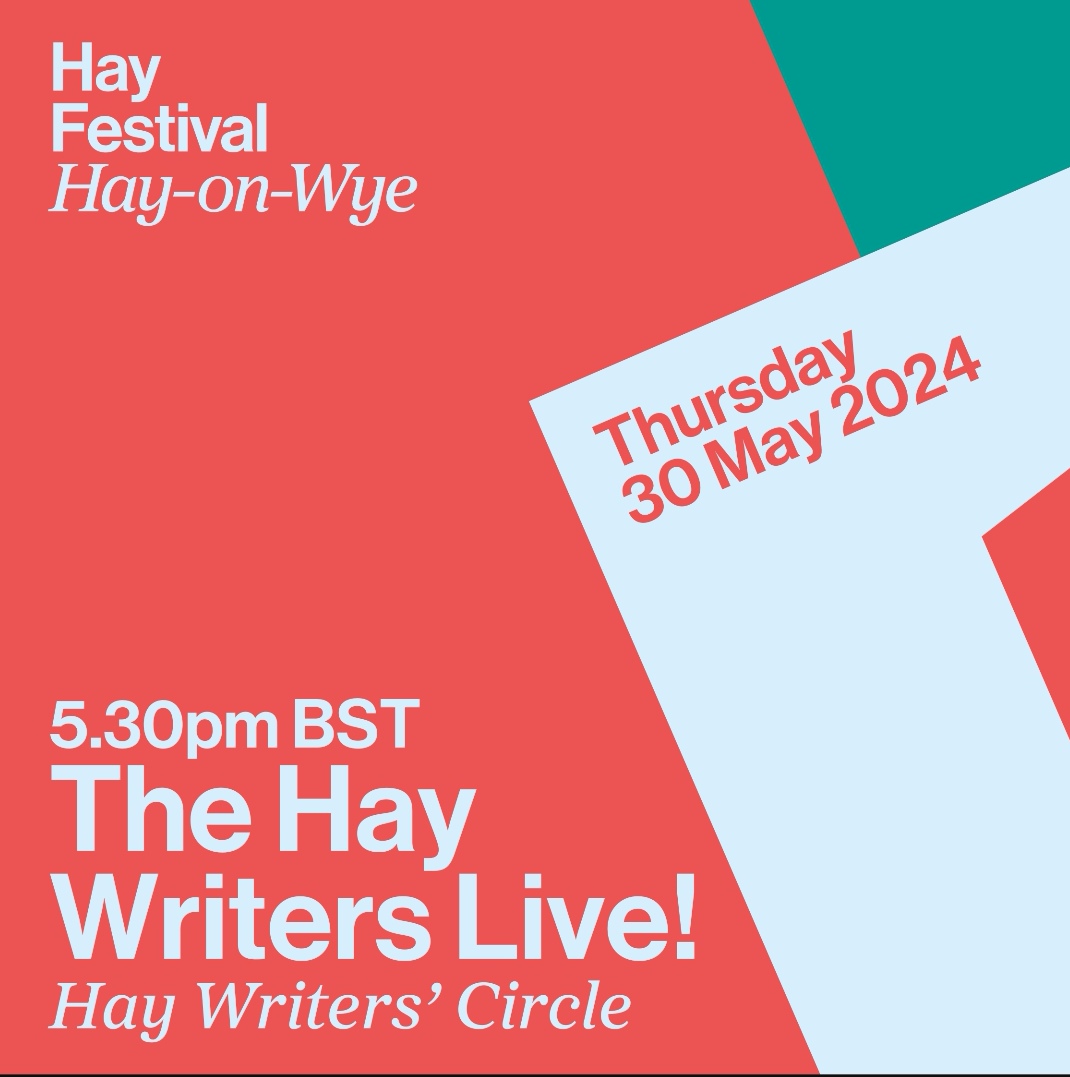
Our sell-out Hay Writers Live! event took place on Thursday 30th May. A varied programme containing new works, with an emphasis this year on writing inspired by the creative exercises we do at our meetings. Our eager, well travelled audience was engaged, attentive and very responsive. A huge thank you to everyone who came along and supported us, it was greatly appreciated and from the feed back, we are so glad you enjoyed our work.
Hay Writers’ Circle is extremely grateful to the Hay Festival for it’s continued, unwavering support of our writing group and the amazing opportunity it gives us to share our writings with the festival crowd. We would like to highlight the incredible work of Hay Festival Bookshop Manager Gareth Howell-Jones, our magical venue door crew, our online media creator Bethan Evans, photographer-supreme Billie Charity, Program Manager par excellence Heather Salisbury, and of course, Mr Media himself, Chris Bone; all are a credit to Hay Festival and we would like to extend a special “thank you”, for all your hard work, professionalism and diligence.
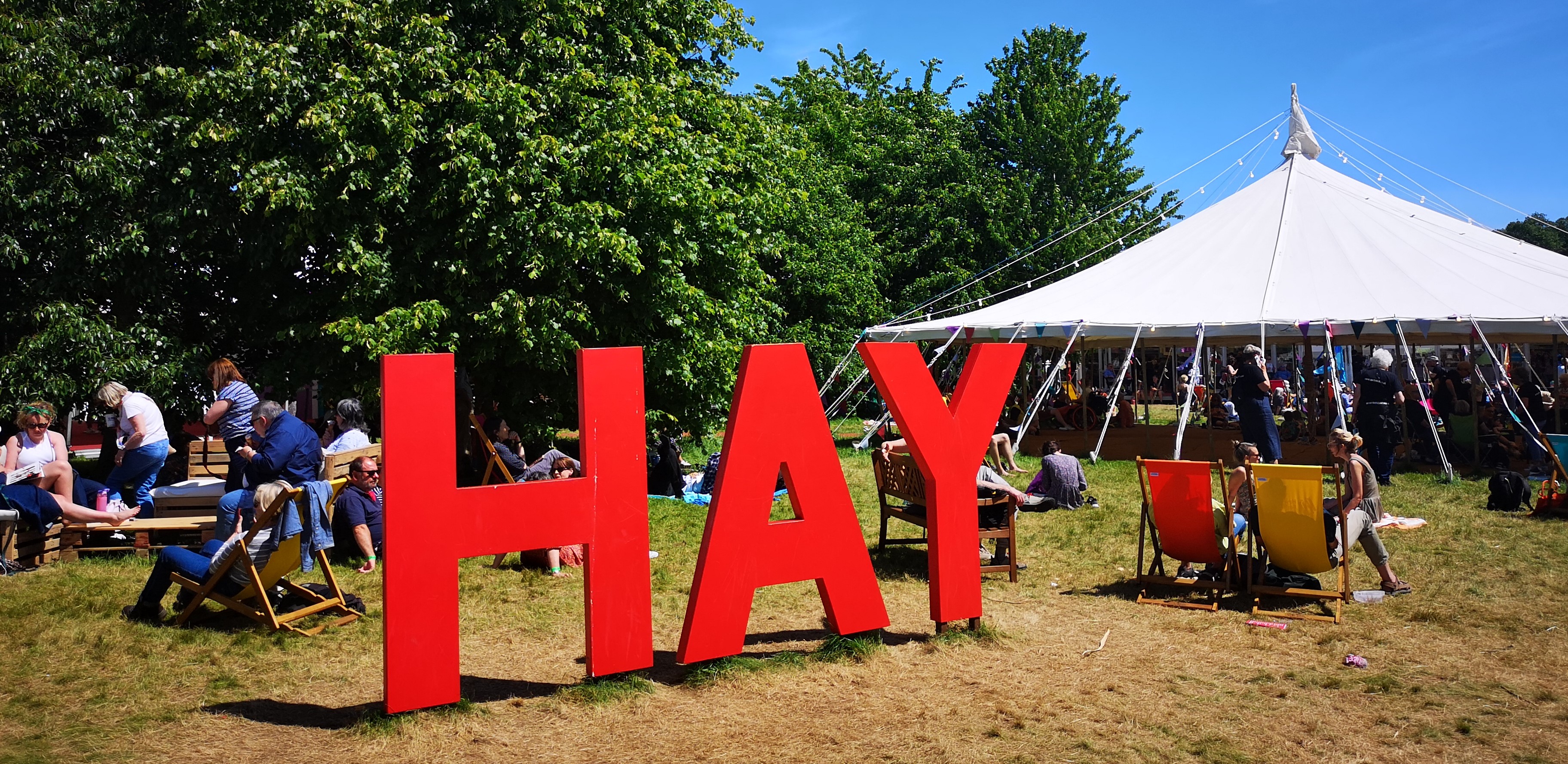
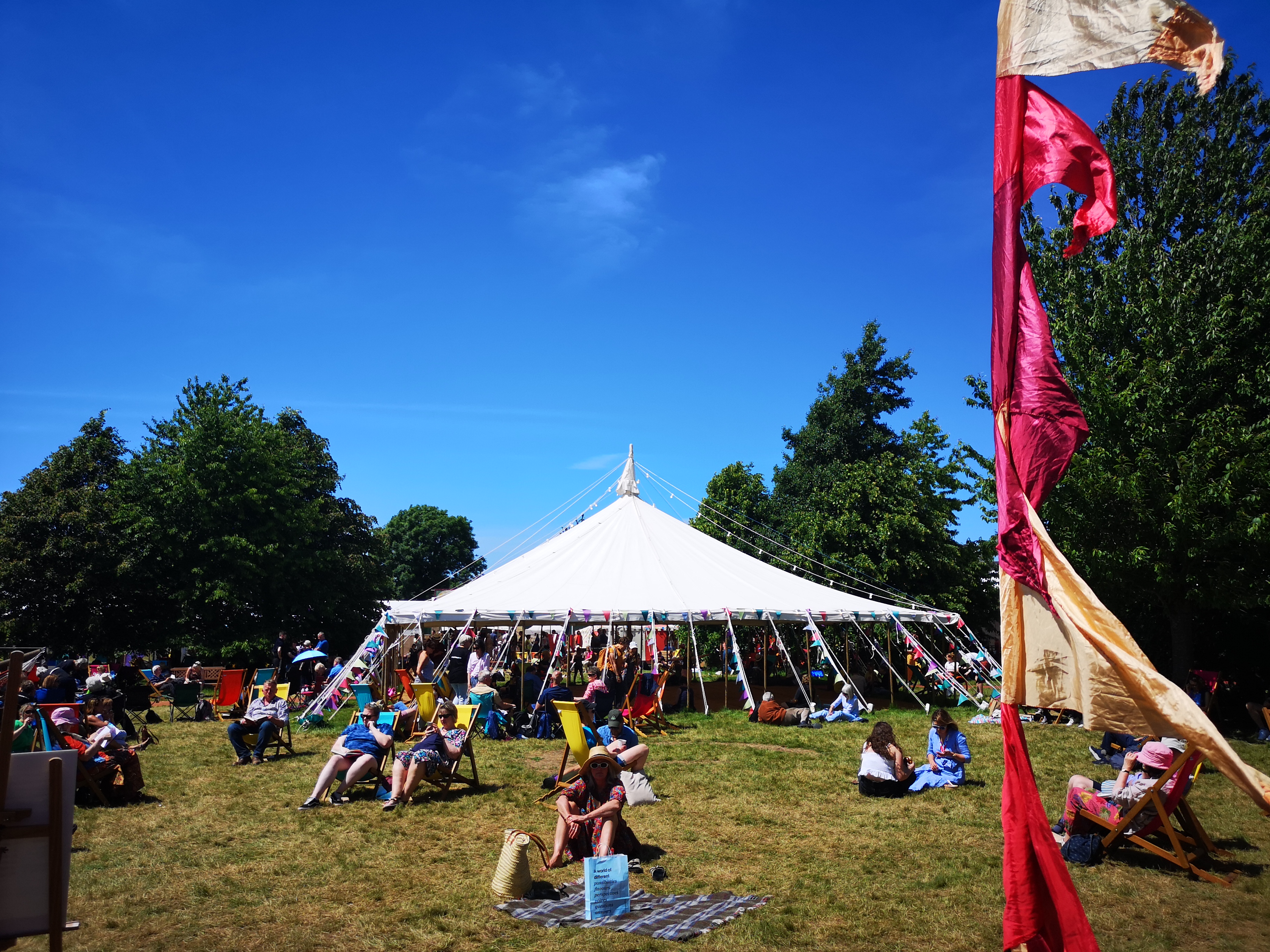
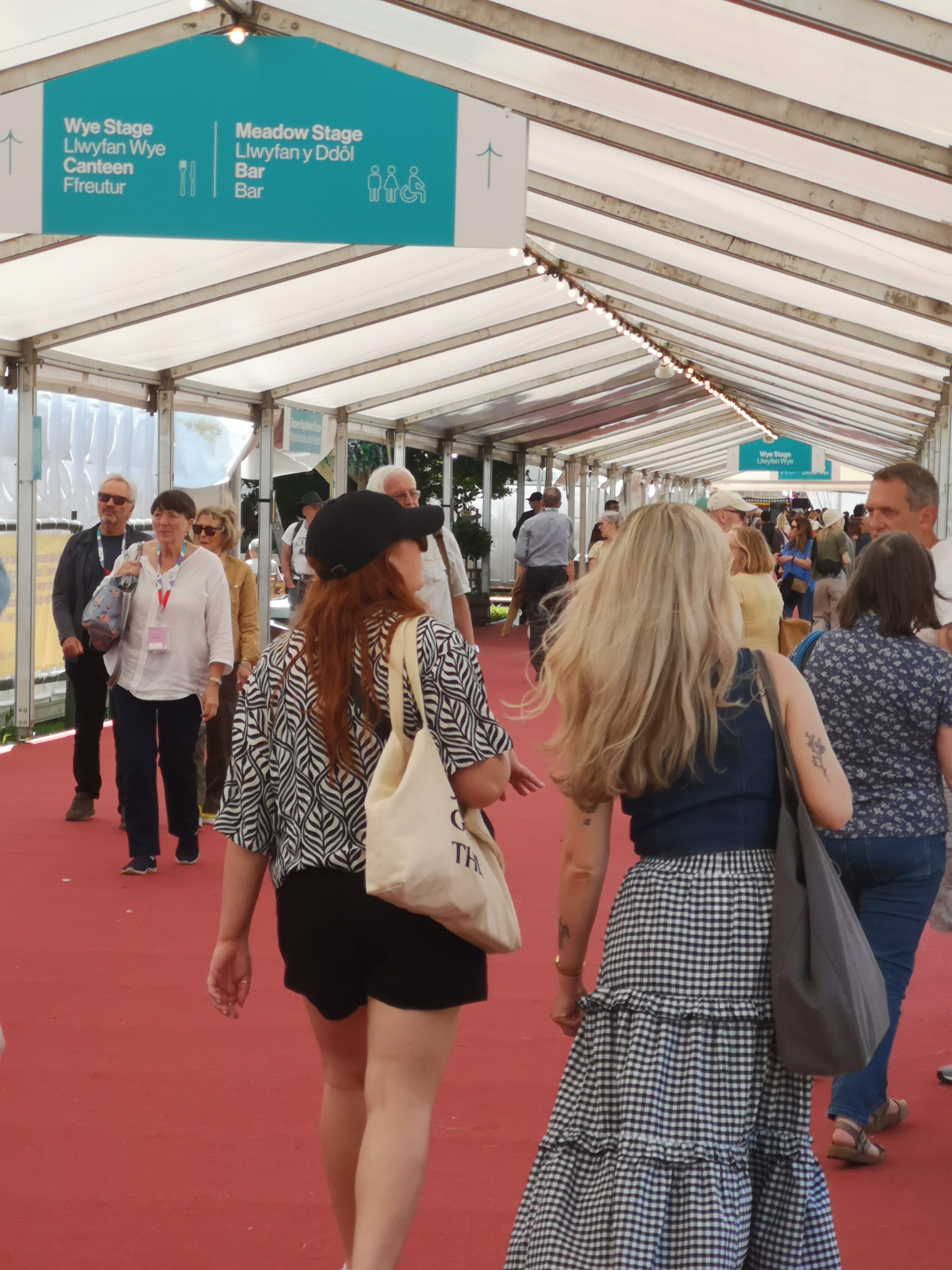
Hay Festival 2025 will take place Thursday 22 May to Sunday 1 June, with the Hay Festival Winter Weekend, 28 November–1 December 2024, but you can re-live online many of the highlights of Hay Festival 2024 and before, with Hay Festival Anytime – CLICK HERE
Remembering Lyn Webster Wilde (15th February 1950 – 28th April 2024)
by Emma van Woerkom
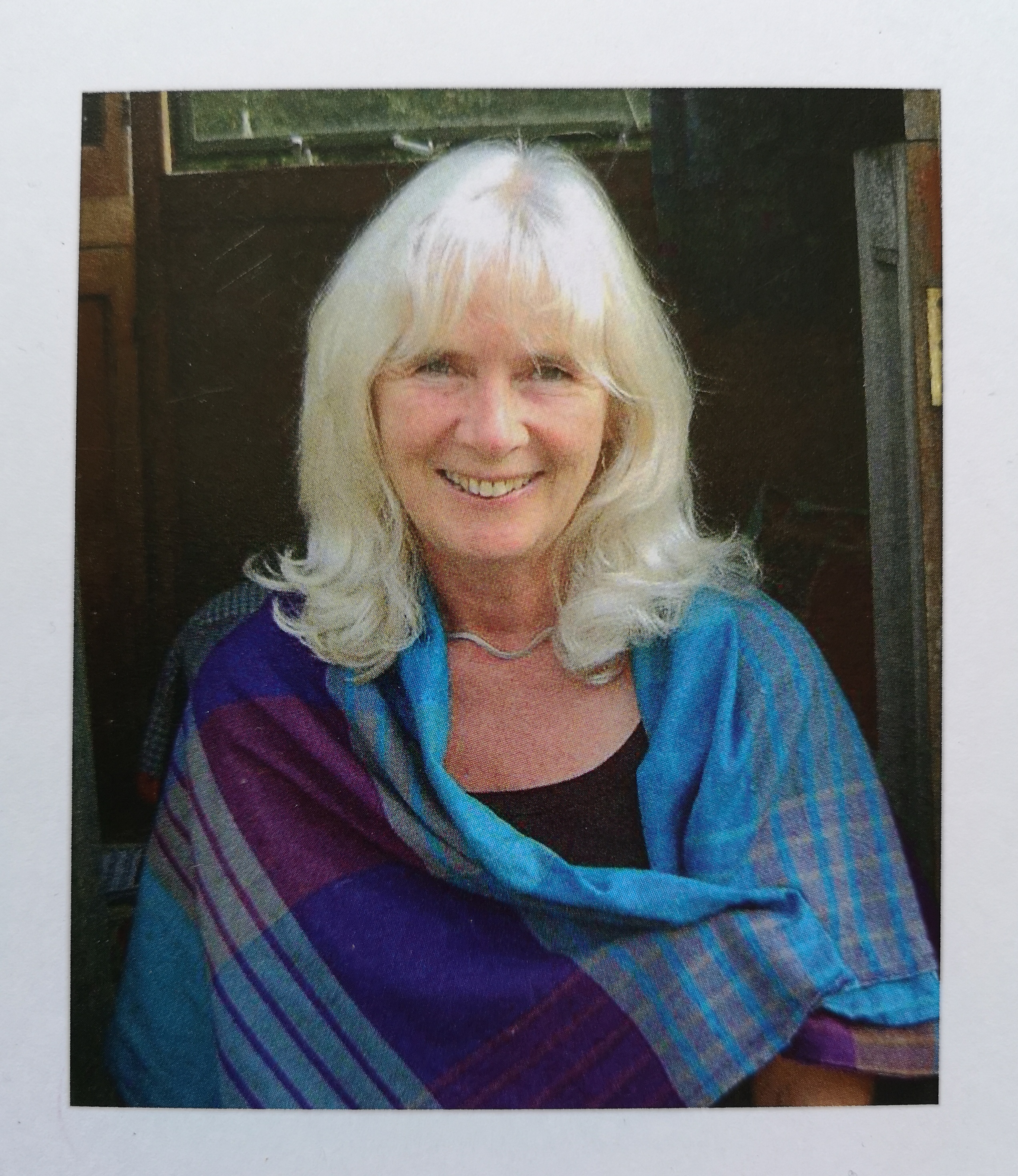
Lyn Webster Wilde
Over the years Hay Writers’ Circle has been fortunate to receive creative help and direction from exceptional individuals. Lyn Webster Wilde was one of those. Her notable career as a Senior Producer with the BBC on documentary series’ including Brass Tacks, as well as a television producer and director on the ground breaking comedy series Revolting Women.
Post BBC Lyn bought and converted an abandoned Welsh hill-chapel and published 2 books. Her entry on the Royal Literary Fund website describes,
“Lyn Webster Wilde writes non-fiction and fiction, and something that walks the line between the two.On the Trail of the Women Warriors(1999) asks whether the Amazons of Greek myth really existed, whileBecoming the Enchanter(2003), an account of her investigations into the hidden world of Britain’s native traditions, has become a cult among young seekers after truth… Lyn is a creative-writing tutor for the Open University and runs independent writing workshops in her chapel home, perched on a hillside in mid-Wales overlooking Brechfa pool and the Black mountains.”
It was at these all day workshops at Brechfa Chapel, often in good weather, sitting between gravestones as curlews flew overhead that HWC members crafted and pushed their writing under Lyn’s inspirational guidance. I never left without words of encouragement, a succinct critic, or a piece of writing that had a future. Lyn was always interesting and interested. She listened to ideas, she made us think harder, motivated our thought processes, always propelling us onwards for the better.
Her funeral service at St. Margaret’s Church, Newton St Margaret, at nearly 800ft above sea level and overlooking the landscape she loved, contained poems from Rumi, R.S. Thomas, T.S. Eliot and magnificent English and Welsh readings of The Englyns of Gwydion from the Fourth Branch of the Mabinogi.
I for one take this opportunity to celebrate the life of a truly remarkable warrior woman. Thank you Lyn.
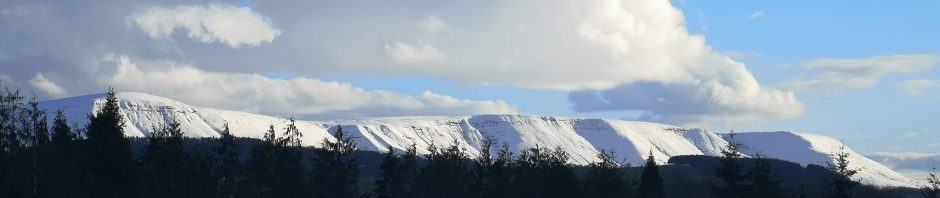
N.B. The landscape photograph heading this article is the view of Brechfa Pool Lyn’s Chapel overlooked. I took it in 2014 during a lunch break while at one of Lyn’s workshops.
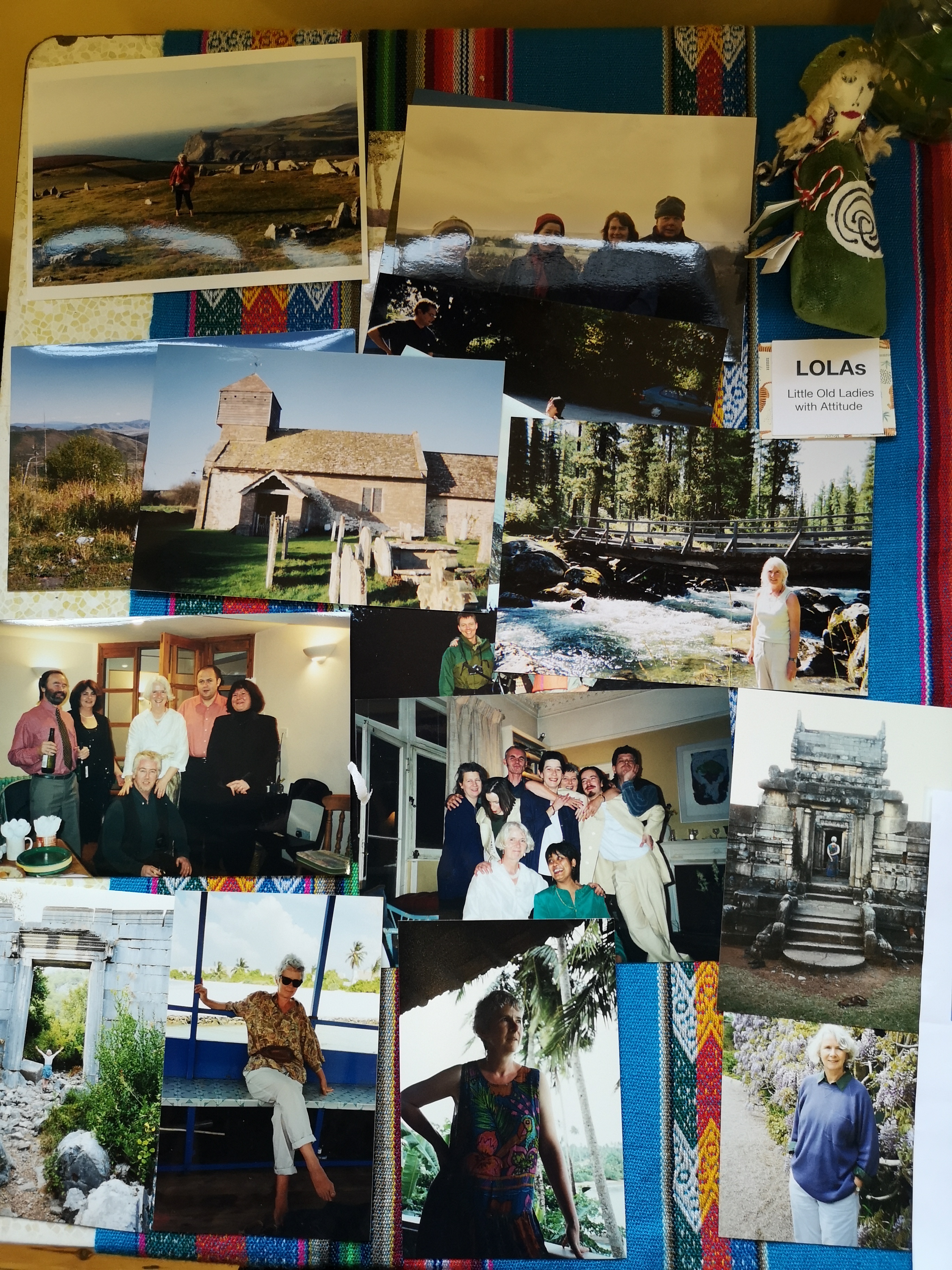
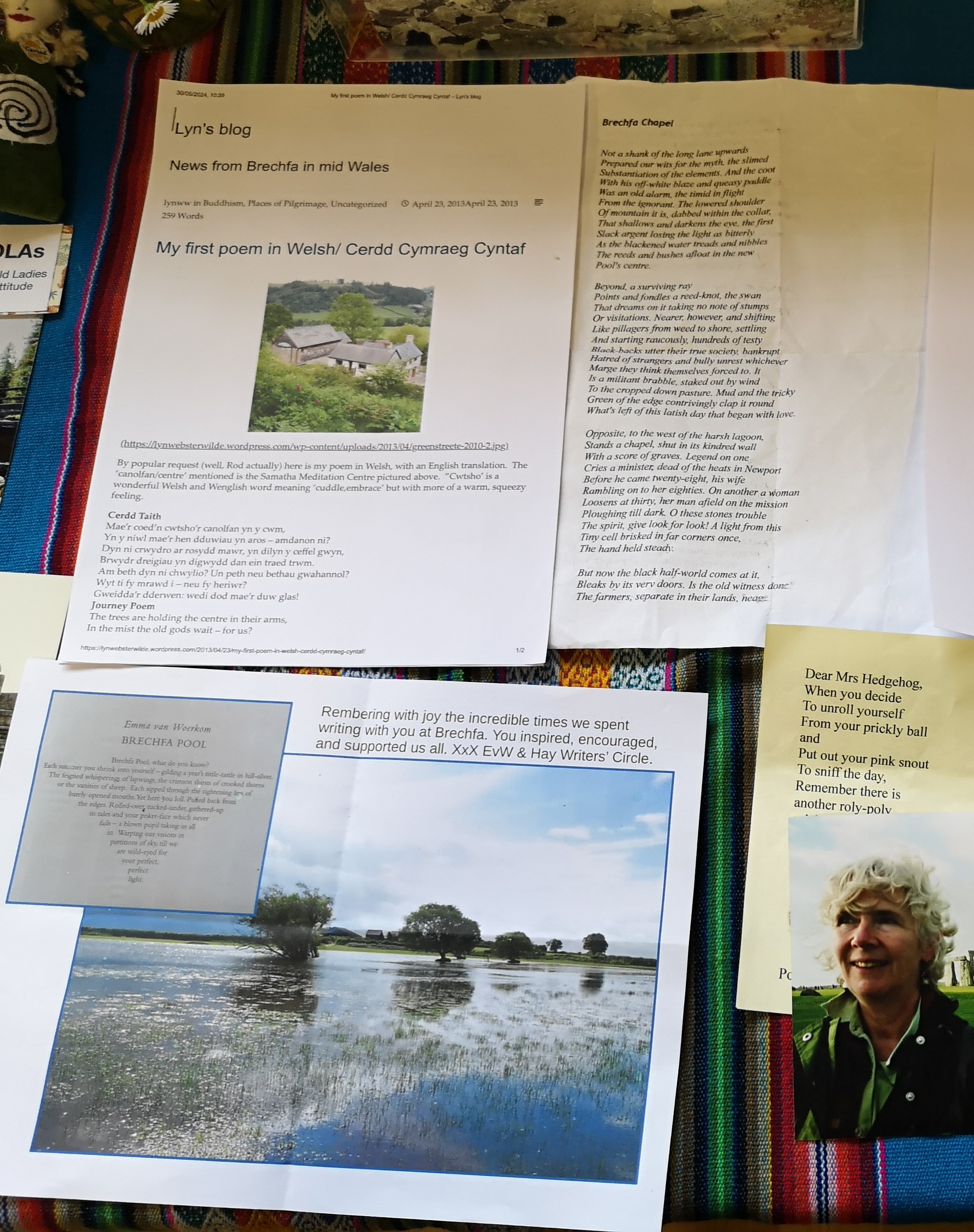
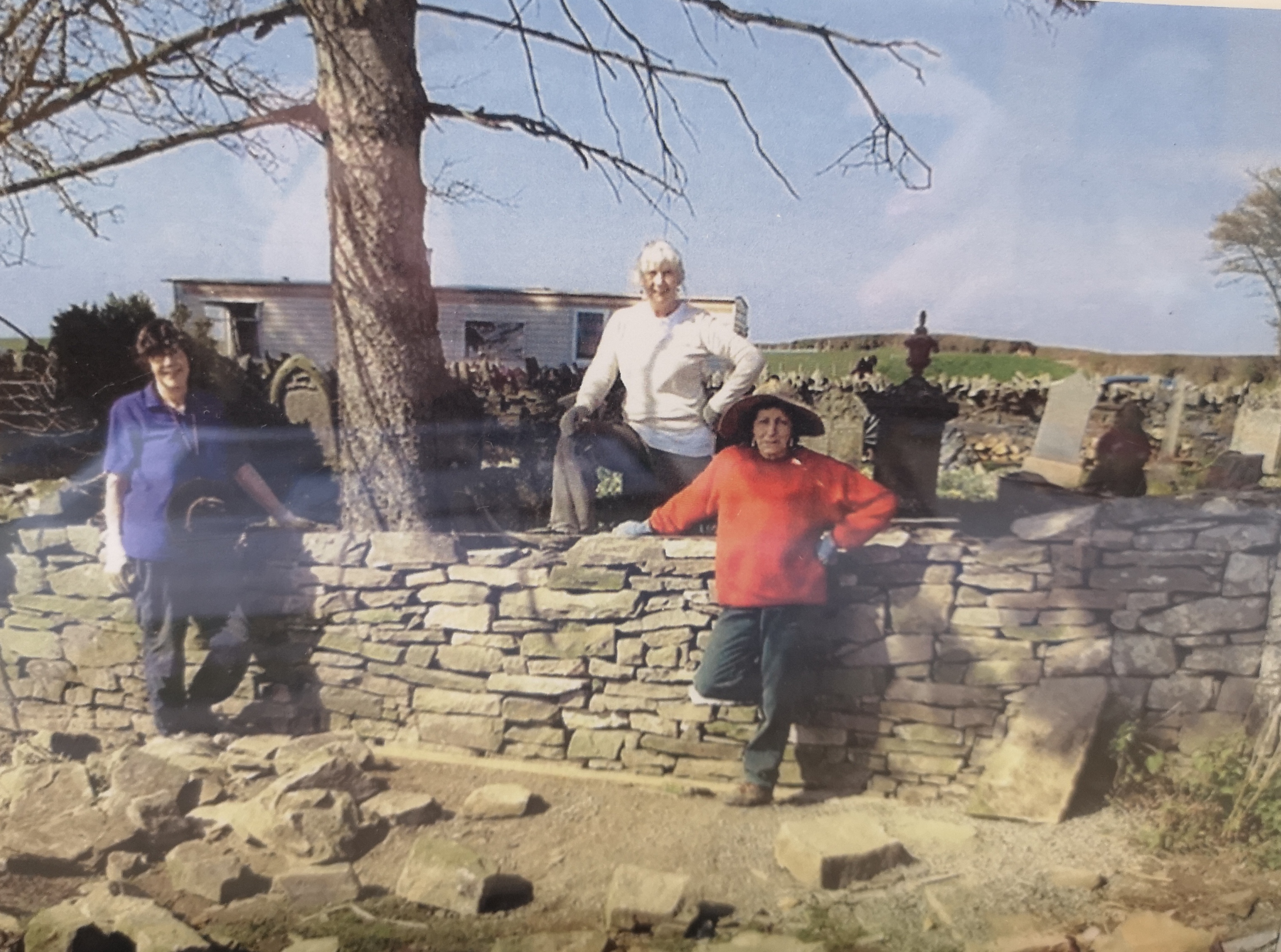
Images celebrating Lyn from family and friends.
Bella Bathhurst talks ‘Field Work‘
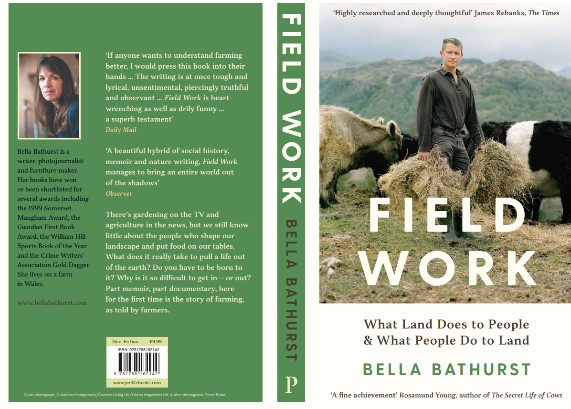
The Hay Writers are delighted to celebrate local authors and this month we will hear from Bella Bathurst about her recent publication, Field Work : What land does to people and what people do to land.
Bella is a writer who also makes furniture. Her books include The Lighthouse Stevensons, winner of the 1999 Somerset Maugham Award, The Wreckers, which became a BBC documentary and was shortlisted for the CWA Crime Writer’s Award, and Radio 4 Book of the Week Sound. Bella’s latest book, Field Work was published by Profile in April 2021.
Field Workby Bella Bathurst – “If the bureaucrats and the incomers saw this place horizontally then Bert saw it vertically. Down through the soil and deep through the generations. He saw the boundaries between his land and the next with the same us-and-them finality a Londoner might see the hidden borders of gang territories. This field here, this tree, this beast, was as intimate to him as family, but that field there belonging to his neighbour, that was foreign land, as far from him as the Arctic. This was home, that was away. For him, Rise wasn’t an income or a classification or a family or a business or a job. It was everything.”
For information about Bella, her books, furniture and more go to her website – CLICK HERE
To keep up to date with all our news why not subscribe with your email address in the box below.
You are warmly invited to a celebration of local writing as members of the Hay Writers’ Circle share some of their recent work. A smorgasbord of poetry, prose, vignettes and excerpts from longer works, this is a fabulous chance to enjoy readings and performances from some of Hay-on-Wye’s established writers and newest voices.
To find out more about the group do please come along to our performance and join us for a drink in the Festival Bar afterwards.
Thursday 30 May 2024, Event 255 – 5.30pm – (page 78 in the physical programme.) Writers at Work Hub – Hwb Awduron wrth eu Gwaith CLICK HEREto book your ticket.
Performance Poetry Masterclass with Susan Evans – Review
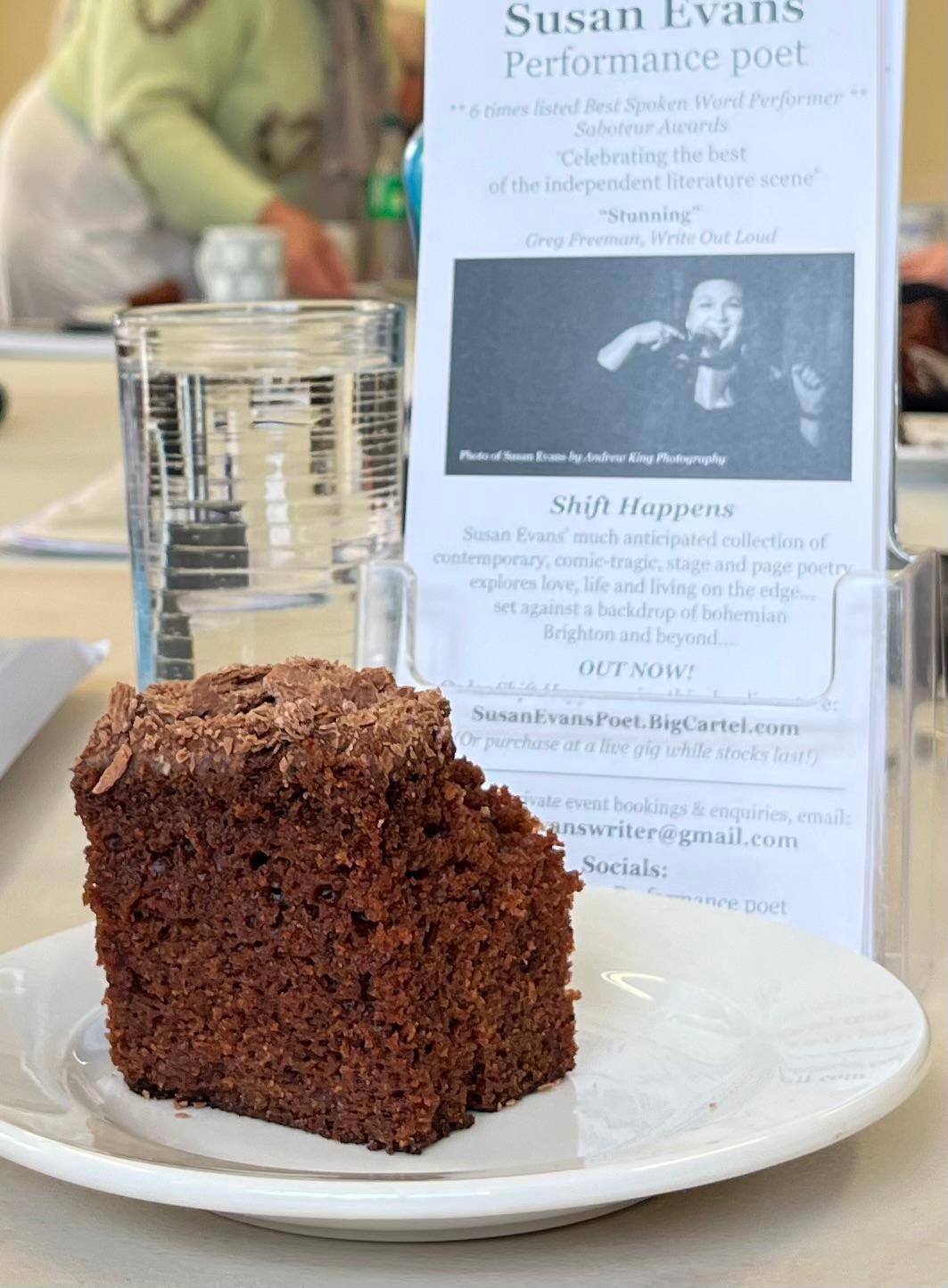
Corinne’s Chocolate cake!
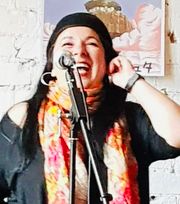
What can we say. She came, she saw, she conquered! Bravo to Susan for an energetic, inspiring workshop. We loved it!
A couple of the many reviews from those who attended below, but all of them were united in their opinion.
Katy wrote, “It’s no exaggeration to say that she smashed it. Susan exceeded all our expectations. She shot for the moon and we all got there..”
Hilary remarked, “What a wonderful afternoon with Susan Evans. Really enjoyed it and didn’t she get the best out of us!”
Martine Smith wrote, “On Tuesday 16th April 2024 Hay Writers and guests were privileged to have Susan Evans give an informative and interesting insight into the art of performing our works to a live audience.
Her infectious enthusiasm made us relax and enjoy the opportunity to turn our writings into drama. We had so much fun and with tea and a fantastic chocolate cake prepared by Corinne that time slipped away before we could receive critiques.
We agreed that another workshop from Susan in 2025 will be a great addition to our exciting programme of events.“
Susan Evans is a multi-award-winning, multi-disciplinary artist, poet, writer, author and educator from working-class East London, of Irish and anglo Indian parentage. She lives and writes in her spiritual home of Brighton, UK. Susan has a BA in Theatre with Visual Arts Practice, a Post Graduate Certificate in Education; both from the University of Brighton, and an MA in Arts Therapy (Drama) from the University of Roehampton. She is also a classically trained chef; a culinary artist of distinction from Brighton MET. Susan was employed full-time, for twenty-five years, within the fields of arts and well-being, largely within the charity sector, across London and the South-East, and was writer and editor on a variety of in-house publications. Susan won a number of awards for innovation in engaging ‘hard to reach’ individuals, groups and audiences, before venturing freelance in 2014; writing and touring from London to New York, as an acclaimed spoken word artist. A stage and page poet, Susan is widely anthologised and published in various, magazines and journals; nationally and internationally. Her poetry themes include food and travel, see Barcelona: CLICK HERE
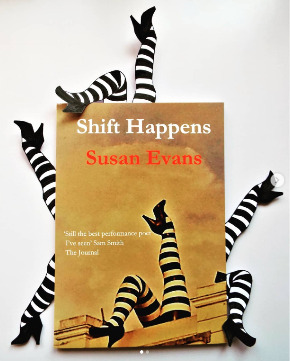
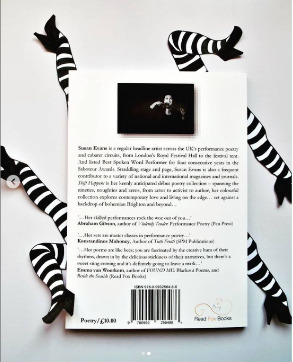
CLICK HERE for Susan Evans’ debut poetry collection, Shift Happens (2020)
For any group considering a Poetry Performance Workshop HWC would heartily recommend Susan. For more information, please contact Susan Evans direct.
To keep up to date with all our news why not subscribe with your email address in the box below.















 THE HAY WRITERS