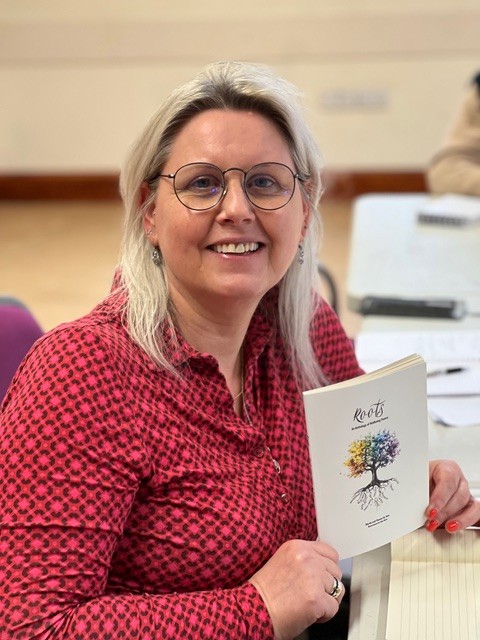
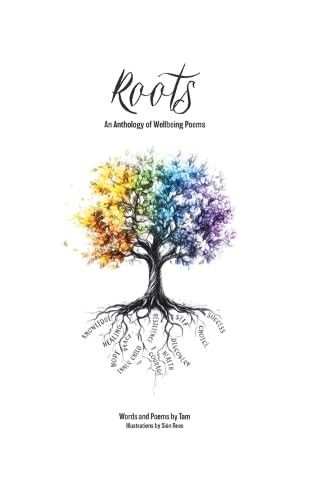
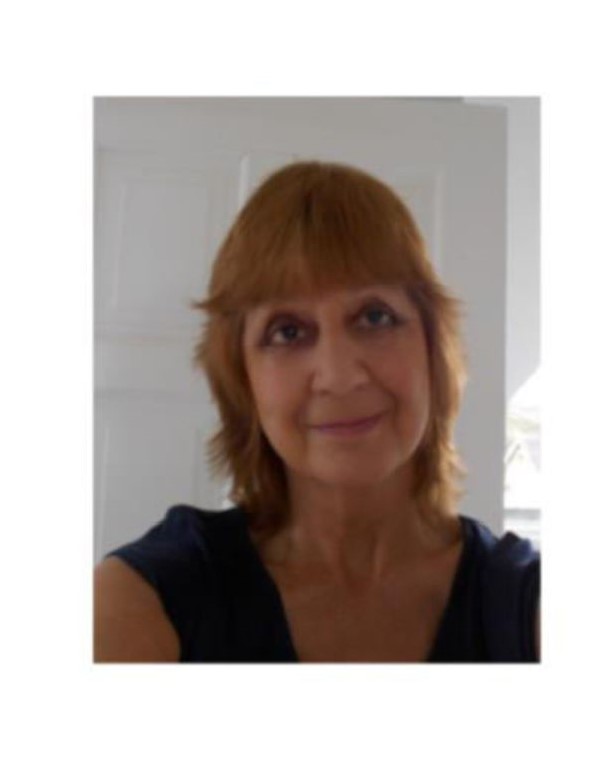
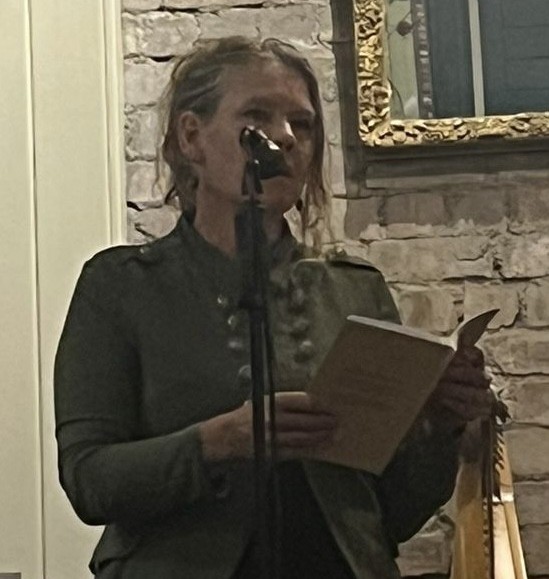
Recently we were delighted to welcome Tammy Allen to our group. Tam is a dedicated Mental Health Counsellor from the Swansea Valley. She has recently had a book of poems published by The Conrad Press. Tam’s poems deal with her own experiences of loss, grief, healing and the profound acceptance which comes from adversity. Each piece is beautifully illustrated by Sion Rees. Her poems celebrate the strength found in vulnerability and the courage to face the challenges life brings. They are heartfelt and deeply moving. Tam hopes that her words will help her readers to connect with their own stories and discover their innate resilience.
“Tam’s poetry delves into the voice of her inner child, bringing to light the struggles faced in unlit storms. This memoir is not about assigning blame; rather, it celebrates the strength found in vulnerability and the courage to confront the challenges that life presents.”
Roots by Tam Allen, published by The Conrad Press ISBN 978-1917673822 – is available to buy via online bookstores, including Amazon, Waterstones and Bookswagon #rootsbytam
HWC Poetry Competition 2026
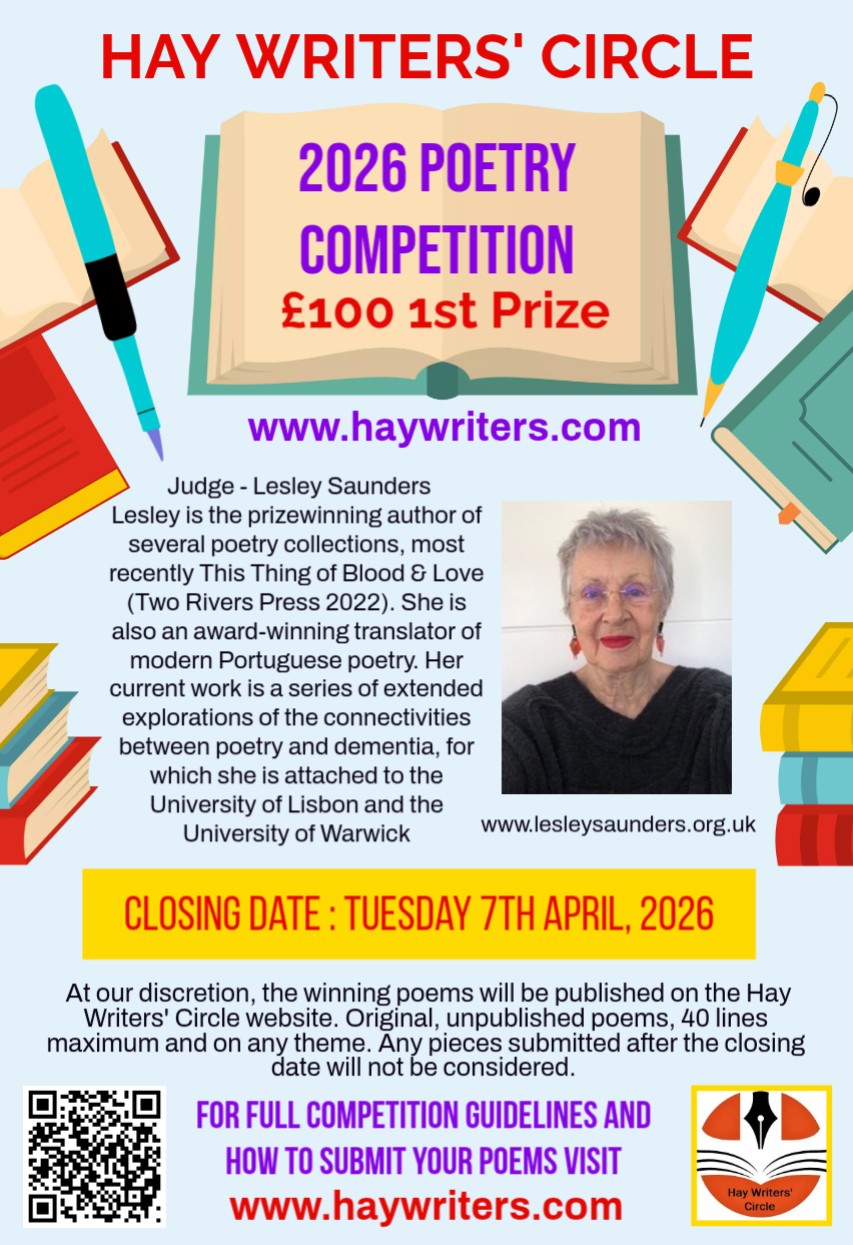
There’s still plenty of time to enter our 2026 Poetry Competition and we are thrilled that our judge is the wonderful, Lesley Saunders. The theme this year is entirely open and we hope to receive a wide variety of poems and poetry styles for this competition. The first prize winner will receive £100 prize money, with cash prizes for 2nd and 3rd placed poems.
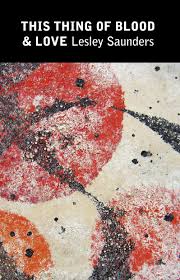
Lesley is the prizewinning author of several poetry collections, most recently This Thing of Blood & Love (Two Rivers Press 2022) and, with artist Rebecca Swainston, Days of Wonder (Hippocrates Press 2021), a poetic record of the first year of the Covid pandemic. She is also an award-winning translator of modern Portuguese poetry. Her current work is a series of extended explorations of the connectivities between poetry and dementia, for which she is attached to the University of Lisbon and the University of Warwick. See www.lesleysaunders.org.uk For a selection of Lesley’s publications, please CLICK HERE
Of the competition, Lesley says: ‘I want to read work that treats language as a medium like paint or music to make something new. I will be looking for poems that surprise as well as delight me, that show the poet exploring ideas and images with precision as well as imagination. I would like the poem to contain a swerve or leap just before it comes to an end – a poem that knows from the start how and where it will end is less likely to have surprised its writer and risks withholding a necessary pleasure from its readers. I have no preference for the form in which a poem is written – only in the skill with which the poet deploys the form s/he has chosen, including (or especially) free verse.’
Remember, anyone can enter this poetry competition, all details on our Competitions page, and we can’t wait to read your amazing poems.
Good luck!
Hay Festival 2026
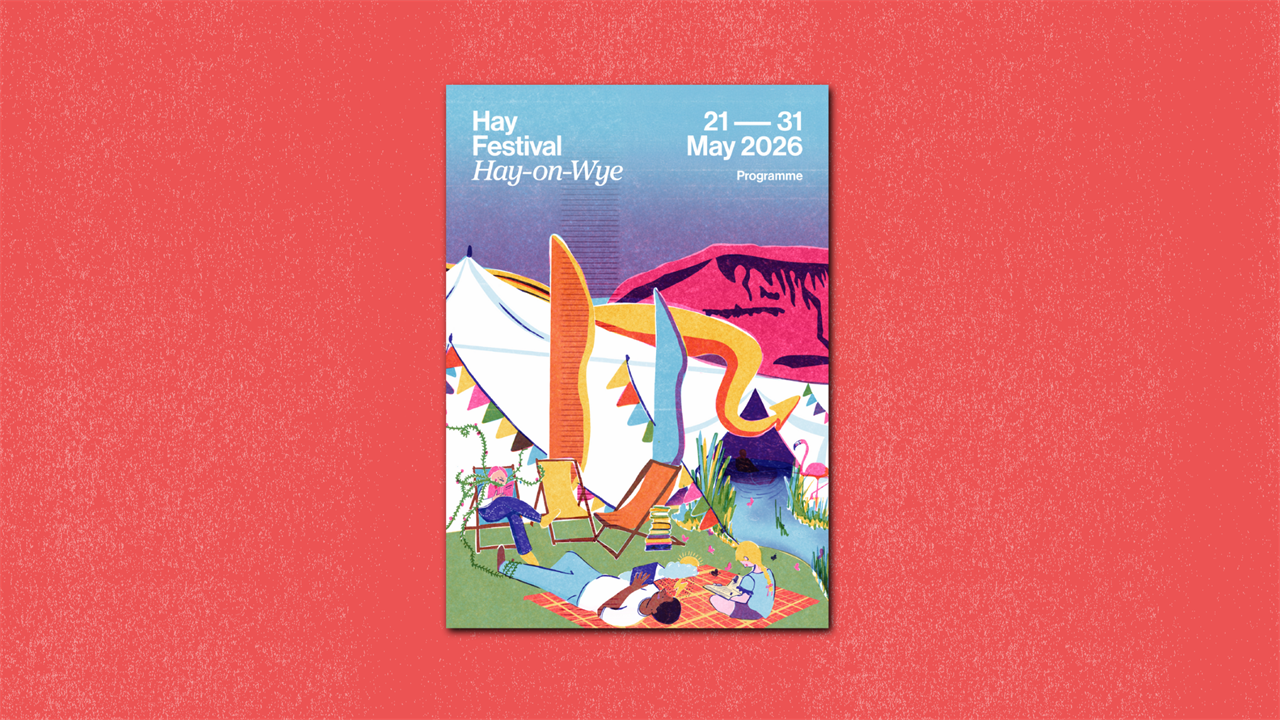
Join Hay Festival 2026, 21–31 May. The full programme is out 9 March.
Copyright – Hay Festival 2026
“Pre-order your Hay Festival 2026 print programme. Programmes are currently in production and will land on your doorsteps from mid-March onwards.
In line with our ongoing sustainable management agenda, we send full printed programmes only to those who order them. We ask you to pay a small postage and packing charge of £4 per programme.”
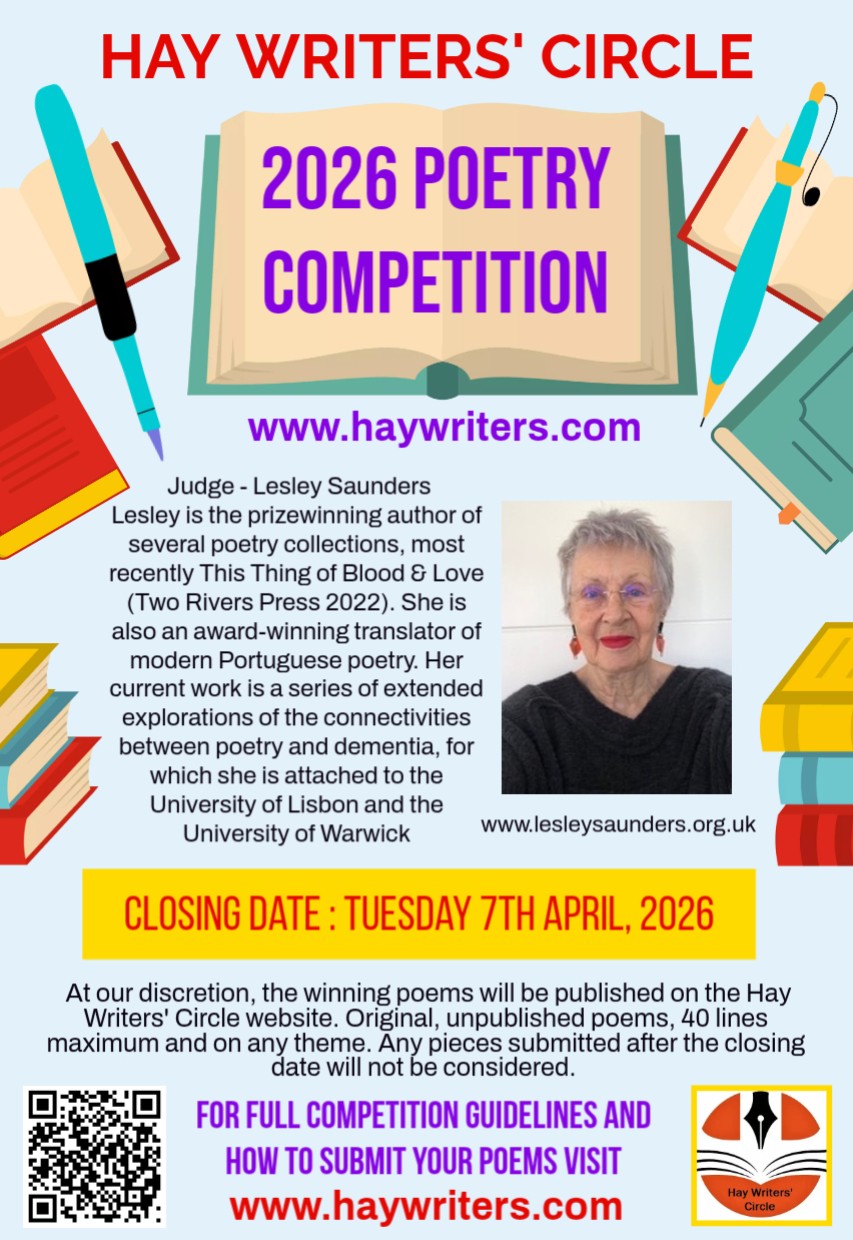
Submissions are now invited for the annual Hay Writers’ Circle Poetry Competition, and we are thrilled to announce the judge for 2026 is the wonderful Lesley Saunders. The theme this year is entirely open and we hope to receive a wide variety of poems and poetry styles for this competition. The first prize winner will receive £100 prize money, with cash prizes for 2nd and 3rd placed poems.
Lesley is the prizewinning author of several poetry collections, most recently This Thing of Blood & Love (Two Rivers Press 2022) and, with artist Rebecca Swainston, Days of Wonder (Hippocrates Press 2021), a poetic record of the first year of the Covid pandemic. She is also an award-winning translator of modern Portuguese poetry. Her current work is a series of extended explorations of the connectivities between poetry and dementia, for which she is attached to the University of Lisbon and the University of Warwick. See www.lesleysaunders.org.uk
(On This Thing of Blood and Love) – Saunders’ poetry skates on thin ice, stylishly, gracefully, aware of the risks’ — Jeremy Hooker
For a selection of Lesley’s other publications, please CLICK HERE
Of the competition, Lesley says: ‘I want to read work that treats language as a medium like paint or music to make something new. I will be looking for poems that surprise as well as delight me, that show the poet exploring ideas and images with precision as well as imagination. I would like the poem to contain a swerve or leap just before it comes to an end – a poem that knows from the start how and where it will end is less likely to have surprised its writer and risks withholding a necessary pleasure from its readers. I have no preference for the form in which a poem is written – only in the skill with which the poet deploys the form s/he has chosen, including (or especially) free verse.’
– HWC POETRY COMPETITION – FIRST PRIZE £100
The Hay Writer’s Circle Poetry Competition 2026 is open to everyone.
The first prize of £100 with additional cash prizes for 2nd and 3rd placed poems.
The closing date for entries is midnight Tuesday 7th April, 2026 Results will be announced in early May.
Original, unpublished poems of up to 40 lines maximum on any theme.
At our discretion, the winning poems will be published on the Hay Writer’s website. Publication may prevent eligibility for future competitions. All rights remain with the author.
For full competition guide lines and entry form please download the file below :
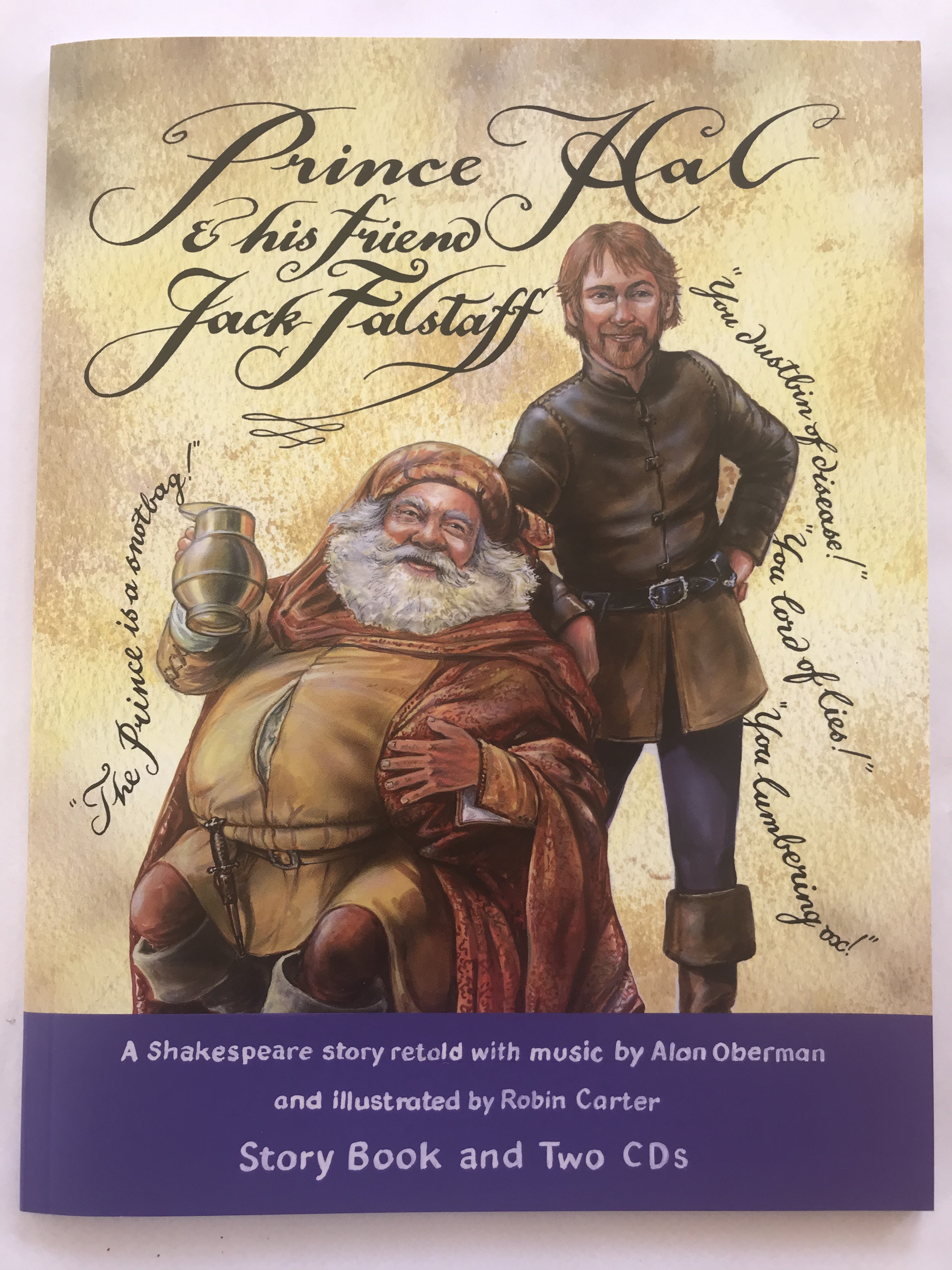
Hay Writers’ Circle Alumni, Alan Oberman, has enjoyed much success with his fine children’s Shakespearean adaptation, Prince Hal and his friend Falstaff. Aimed at Key Stage 3 pupils, this illustrated book is a superb gateway to Shakespeare for younger readers, and the publication comes with 2 CD’s of narration and music. “A real treat“, wrote Sir Richard Eyre.
The book can be purchased direct from Alan – please email : alan.oberman@gmail.com (Copies are freely available from some library authorities too, please ask at your local public library.)
Not one to sit on his laurels, Alan has recently re-written for children Pyramus and Thisby. A short play to be enjoyed in drama classes, or enacted at home for fun. Some of the more difficult language has been cut and some lines skilfully rewritten by Alan in iambic pentameter.
Alan has kindly published the play below for everyone to enjoy. Thank you Alan.
Duke Theseus of Athens is marrying the Princess Hippolyta. As part of the celebrations, there are singers and dancers performing to entertain the couple. A group of five workmen decide they would like to offer a play to entertain the Duke and his bride. They decide on the sad story of Pyramus and Thisby. Shakespeare has written a play called A Midsummer Night’s Dream, where the workmen rehearse the play and then perform it at the court. It’s a play inside a play.
In our Act One, the five workmen will be rehearsing the play, and in Act Two, performing the play to the Duke and his Court.
The story of Pyramus and Thisby
Pyramus and Tisby were two young people who lived next door to each other. They fell in love, but their parents wouldn’t allow them to marry or even be together. There was a small hole in the wall that separated their houses, and the two lovers secretly talked to each other through this hole. They decided they must marry, and the only way they could do that was to run away. Pyramus said, ‘Let’s meet at the tomb of King Ninus.’
Thisby put a veil over her head to hide her face and was the first to arrive at the tomb. As she waited for Pyramus, a lion came walking towards her. The lion had just killed a deer and had blood around its mouth. Thisby saw the lion and ran away as fast as she could. As she ran, her veil fell away from her head. The lion played with the veil, streaking it with blood.
Pyramus arrived at the tomb looking for Thisby. The lion had gone, but Pyramus saw the torn, bloodstained veil on the ground. He thought Thisby must have been killed and dragged away. Pyramus loved Thisby so much that he didn’t want to live without her. He pulled out his sword and stabbed himself, falling to the ground and dying. Thisby came back to the tomb and saw Pyramus. She, too, didn’t want to live without him, so she took his sword and, like Pyramus, she also killed herself.
The five workmen
Peter Quince, a Carpenter, directs the play.
Nick Bottom, a weaver (making cloth), plays the bold knight Pyramus.
Tom Snout, a tinker (selling saucepans), plays the wall with a hole in it where the two lovers talk to each other.
Snug, a joiner (making furniture), plays the lion.
Francis Flute, the bellows-mender, plays the young woman, Thisby, acted in Shakespeare’s day by a young man. Fun to be played by a dad.
The cast might like to paint posters, make programmes and sell tickets.
A wardrobe mistress, makeup artist and stage manager, music and lighting person might be useful.
It’s a tall order to ask the cast to memorise lines so, if needs be, read the parts.
The text of the play below is an adaptation of Shakespeare’s play, attempting to retain as much as possible of the original.
Peter Quince’s final words are taken from Puck’s final speech.
Most performances of Shakespeare’s comedies end with a dance.
THE PLAY
Act One takes place in Peter Quince’s house.
Saws and pieces of wood. Music – Mendelssohn?
Actors behind a screen
Peter Quince comes on first, carrying a file with parts to distribute, then the others one by one, chatting quietly to each other. Let the audience see your face but don’t look at the audience, as you must pretend they’re not there.
All go quiet looking at Peter Quince
PETER QUINCE
Is all our company here?
NICK BOTTOM
Best to call them, generally, man by man
PETER QUINCE (looks at Nick Bottom with a frown)
Here are the names chosen to be in our play
to be performed for the Duke and Duchess on their wedding day at night.
NICK BOTTOM
First Peter Quince say what the play treats on, then read the names of the actors.
PETER QUINCE (glares at Nick Bottom)
Marry, our play is The Most Lamentable Comedy, and Most Cruel Death of Pyramus and Thisbe.
NICK BOTTOM
And a very good play it is, and a merry. Now Peter Quince call out the names of the actors. Masters spread yourselves.
PETER QUINCE
Answer as I call you. Nick Bottom, the weaver.
NICK BOTTOM
Ready. Tell me what part I am and proceed.
PETER QUINCE
You, Nick Bottom, will play Pyramus.
NICK BOTTOM
What is Pyramus? A lover or a tyrant?
PETER QUINCE
A lover that kills himself for love.
NICK BOTTOM
I’d prefer to be a tyrant.
PETER QUINCE (ignoring Nick Bottom’s last remark)
Francis Flute, the bellows mender.
FRANCIS FLUTE
Here, Peter Quince.
PETER QUINCE
Flute, you take the part of Thisby.
FRANCIS FLUTE
What is Thisby? A might knight?
PETER QUINCE
It is the lady that Pyramus loves.
FRANCIS FLUTE
Please, let me not play a woman: I have a beard coming.
PETER QUINCE
You can play it in a mask and speak with a high voice.
NICK BOTTOM
If I can hide my face, let me play Thisby too. I’ll speak with a squeaky voice. ‘Ah Pyramus my dear lover.’
PETER QUINCE
No, no, you must play Pyramus; and Flute, you Thisby.
NICK BOTTOM
Alright, proceed.
PETER QUINCE
Snout, the tinker?
SNOUT
Here Peter Quince
PETER QUINCE
You will play the part of the wall that stands between the two lovers.
Snug, the joiner, you will play the part of the lion. And that’s everybody now.
SNUG
Have you got the lion’s part written down? If so, can I have it now because I’m slow to learn my part.
PETER QUINCE
You can do it how you like because it’s nothing but roaring.
NICK BOTTOM
Let me play the lion too. I will roar so they will love to hear me. And the Duke will say, ‘Let him roar again – let him roar again!’
PETER QUINCE
And you’ll do it terribly, frightening the Duchess and all the ladies.
NICK BOTTOM
I will aggravate my voice so that I will roar you as gently as any sucking dove: I will roar you like a nightingale.
PETER QUINCE
You can play no part but Pyramus: for Pyramus is a sweet-faced man; a most lovely gentleman-like man. So you must play Pyramus. Masters here are your parts, and I entreat you, request you and desire you to learn them by tomorrow night.
(The actors – except Peter Quince – go into a huddle, murmuring together)
NICK BOTTOM
Dear Peter Quince, please know there is no way
To learn our lines before the wedding day.
PETER QUINCE (ponders – then reluctantly)
So, if you cannot learn the words by heart,
Then take your lines on stage and read your part.
ACT 2
In the palace of Duke Theseus
The Duke and Duchess, together with the Court, make up the audience. You are performing to them, so look at them. The audience can ad lib comments about the acting.
PETER QUINCE
Gentles, for your delight, we act our play
Pyramus, and Thisby, who lived next door.
They hatched a secret plan to run away
And meet at Ninus Tomb. But now, no more
Because our first actor I now will call.
(Snout, Wall, doesn’t come – so repeat)
Because our first actor I now will call.
SNOUT (Wall)
I Snout by name present a wall
And my fingers make this hole you see
Through which the lovers whisper secretly.
DUKE
This is the best speaking wall I’ve ever heard.
DUCHESS
It’s such a very small wall, it hardly needs a chink at all.
NICK BOTTOM (Pyramus) (comes on)
We shall meet in the night when day is not
(looking around but can’t see Thisby)
I fear my Thisby’s promise is forgot
And thou O wall O sweet and lovely wall
That stands between her father’s ground and mine
Thou wall, O wall, O sweet and lovely wall,
Show me thy chink to blink through with mine eyne.
(Snout lifts up fingers to make the hole)
Thanks lovely wall whom Jove will surely bless
But what see I? No Thisby do I see
O wicked wall, to stop my happiness
Cursed be thy stones for thus deceiving me.
DUKE
Since the wall can speak, she should answer him back.
NICK BOTTOM (Pyramus) (speaking to Duke)
No, no, you see “deceiving me” is Thisby’s cue to come on.
(Francis Flute comes on)
FRANCIS FLUTE (Thisby)
O wall, full often hast thou heard my moans
For parting my fair Pyramus and me
My cherry lips have often kissed thy stones
Thy stones with lime and hair knit up in thee.
NICK BOTTOM (Pyramus)
I see a voice: now will I to the chink
To spy an I can hear my Thisby’s face.
Thisby?
FRANCIS FLUTE (Thisby)
My love! Thou art my love, I think.
NICK BOTTOM (Pyramus)
It is indeed your love who’s in this place.
O kiss me through the hole of this vile wall.
FRANCIS FLUTE (Thisby)
I kiss the wall’s hole, not your lips at all.
NICK BOTTOM (Pyramus)
Will thou at Ninny’s tomb meet me straightway?
FRANCIS FLUTE (Thisby)
‘Tide life, ‘tide death, I come without delay.
(Exit Nick Bottom (Pyramus) and Francis Flute (Thisby))
SNOUT (Wall)
I wall, having completed my part now
Have nothing more to do but take a bow.
(Exit Snout, (Wall))
DUCHESS
This is the silliest stuff that ever I heard.
(Enter Snug(Lion))
SNUG (Lion)
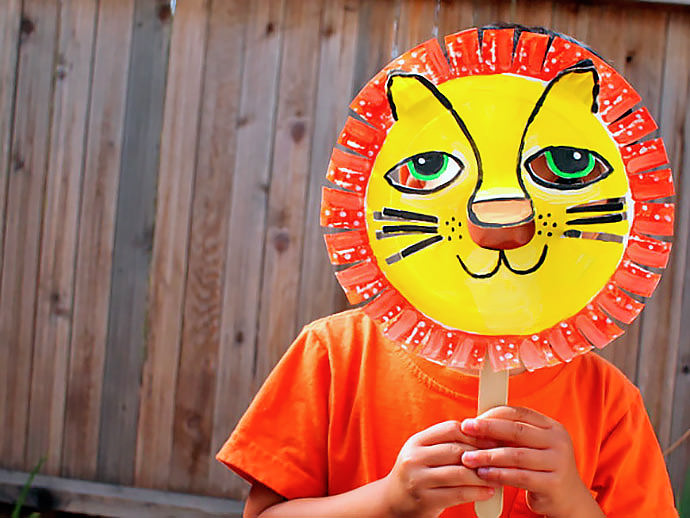
(Comes on with the lion mask, but takes it off to make this speech)
You ladies who are frightened and have fear
Of even the smallest mouse on the floor
May now perhaps both shake and tremble here
When lion rough in wildest rage doth roar
Then know that I am Snug the joiner here
Pretending to be lion so have no fear.
(Snug (Lion) puts the lion mask on again)
DUKE
This is a very gentle beast, a very caring lion.
(Enter Francis Flute (Thisby))
FRANCIS FLUTE (Thisby)
This is old Ninny’s tomb. Where is my love?
(Snug (Lion) roars. Francis Flute (Thisby) drops her veil and runs off. Snug (Lion) tears at the veil, leaving it red with blood, then leaves)
DUCHESS
Well roared lion
DUKE
Well run Thisby
(Enter Nick Bottom (Pyramus))
NICK BOTTOM (Pyramus)
Oh moon, now blazing, beaming, brilliant bright,
I thank thee moon for making all so clear
And with your gracious glittering golden light
Now guiding me to find my Thisby here.
All quiet in this empty place
But what’s this? A piece of lace.
Eyes do you see
How can it be?
Thisby’s veil she wore on her head
Torn and awfully bloody red
Does it mean my love is dead?
Oh no, no, no, Oh woe
What a blow!
It can’t be so.
DUKE
This passion would almost make one feel sad
NICK BOTTOM (Pyramus)
Why nature did you make a lion’s claws
To take my Thisby with it’s bloody jaws
Out sword, seek my heart
Pierce my breast like a dart
In the chest of Pyramus
Thus die I, Thus, thus, thus, thus.
(Nick Bottom (Pyramus) stabs himself)
Now I am dead
Now I am fled
My soul is in the sky
Now die, die, die, die, die.
DUKE
Who knows, with the help of a doctor, he might recover.
(Francis Flute (Thisby) comes on)
DUKE
Ah, here’s Thisby and with her passion comes the end of the play.
DUCHESS
I hope she doesn’t take as long about it as Pyramus.
(Francis Flute (Thisby) on seeing the dead Pyramus)
FRANCIS FLUTE (Thisby)
Asleep my love
What dead my dove
These lily lips
This cherry nose
These yellow cowslip cheeks
Are gone, are gone
Lovers make moan
His eyes were green as leeks
Tongue not a word
Come trusty sword
Come blade my breast imbrue
(Stabs herself)
And farewell friends
Thus Thisby ends
Adieu, adieu, adieu.
(Nick Bottom (Pyramus) and Francis Flute (Thisby) lie dead.)
DUKE
Oh dear, what a sad play.
DUCHESS
And this all upon our wedding day.
(Suddenly, Nick Bottom (Pyramus) gets up. Followed by Francis Flute (Thisby) more slowly)
NICK BOTTOM (Pyramus)
Gentles, don’t be so sad
You see we’re not really dead.
(Snug (Wall) and Snout (Lion) come on, followed by Peter Quince)
PETER QUINCE
If we shadows have offended,
Think but this and all is mended
That you have but slumbered here
While these visions did appear
And this weak and idle theme
No more yielding but a dream
And with your hands let us know
That you liked our little show
So Pyramus (Pyramusbows) Thisby (Thisbybows) Lion (Lionbows) and Wall (Wall bows)
Say goodnight unto you all.
ALL DANCE
Next Update – Details of our 2026 Poetry Competition.
If you want to read about all our up and coming news, events and competitions, don’t forget to subscribe with your email address in the box below
It’s 2026! Suddenly we are a dozen days into January, and perhaps still considering a multitude of New Year Writing Resolutions. What shall I write next? What old piece of writing shall I revisit and edit? What writing project will be finished this year?
Of course, if you are writing you must also be reading. In the UK there is a huge drive towards 2026 being the Year Of Reading. Government Departments, Schools, Libraries, Literary Agencies, Trusts and Foundations, as well as Literary Festivals are all doing their part to positively promote the written word, whether in printed or digital formats.
As writers, reading is perhaps our greatest tutor. It introduces us to a vast language, writing skills and styles, it broadens our imagination, we can research information, and best of all, it’s thoroughly enjoyable, rewarding for everyone and great for our well being too. So while you are jotting down your list of writing projects for 2026, don’t forget to add in a little reading around the subject. As author, Stephen King says, ‘If you don’t have time to read, you don’t have the time (or the tools) to write.’
News –2025 Fiction Competition Now Closed
A huge thank you to everyone who entered The Frances Copping Memorial Prize 2025 Fiction Competition. Our judge, Holly Müller, is currently working her way through the entries and we will announce the results in the weeks to come.
Writing Worth Reading
In this new section we will be sharing a piece of work written by a present or past member of Hay Writers’ Circle. For our first offering, HWC Chair, Corinne Harris begins with a poem. We hope you enjoy it.
“HUPEL” By Corinne Harris
I whisper to my big black cat,
into his twitching velvet ear.
I hold him close, upright, the way he likes,
his head on my shoulder.
He is thinner now.
The obsidian night of his coat is
scattered with snowy galaxies.
I remind him of his prime.
When he strode like Caesar down the road,
his tail a battle banner, ears alert for dissent.
I remind him of his might.
How he would cow the dog,
sitting magisterial in her bed whilst she cringed.
I tell him of his prowess in war.
Of his wounds proudly borne,
of his battle cry sounding plangent in the night.
I tell him he was a fine hunter,
sliding like satin through the night,
the lambent amber of his eyes turned to green searchlights.
Tracking, pouncing, biting –
feeling the crunch of tiny bones and the warm spurt of blood.
Slinking to my bed in the early hours,
with blood on his soul.
Breaking my sleep with triumphal purrs,
and kneading loamy paws.
I say, “thank you for staying with me.
Thank you for your warm-furred purry presence”.
I tell him he is my Panther Prince,
He is purring softly – it comforts us both.
Then the purrs cease and
he is taken gently from my arms.
On the steel of the vet’s table he is diminished.
I drop a last kiss
‘goodbye’.
If you want to read about all our up and coming news, events and competitions, don’t forget to subscribe with your email address in the box below.
The wonderful Hay-on-Wye Christmas Lights have been switch on and the whole of the town is illuminated with the bright lights of literature, imagination and ideas.
We’ve enjoyed animated discussions, art, storytelling, comedy, music, family workshops, seasonal markets, the splendid Hay Castle and of course, many many bookshops. We’ve queued in the cold, in the darkness, but always warmed by tales from our fellow adventuring companions, many of whom have travelled from afar just for a taste of our home town of Hay. We hope they all had the best time and look forward to seeing them again very soon.
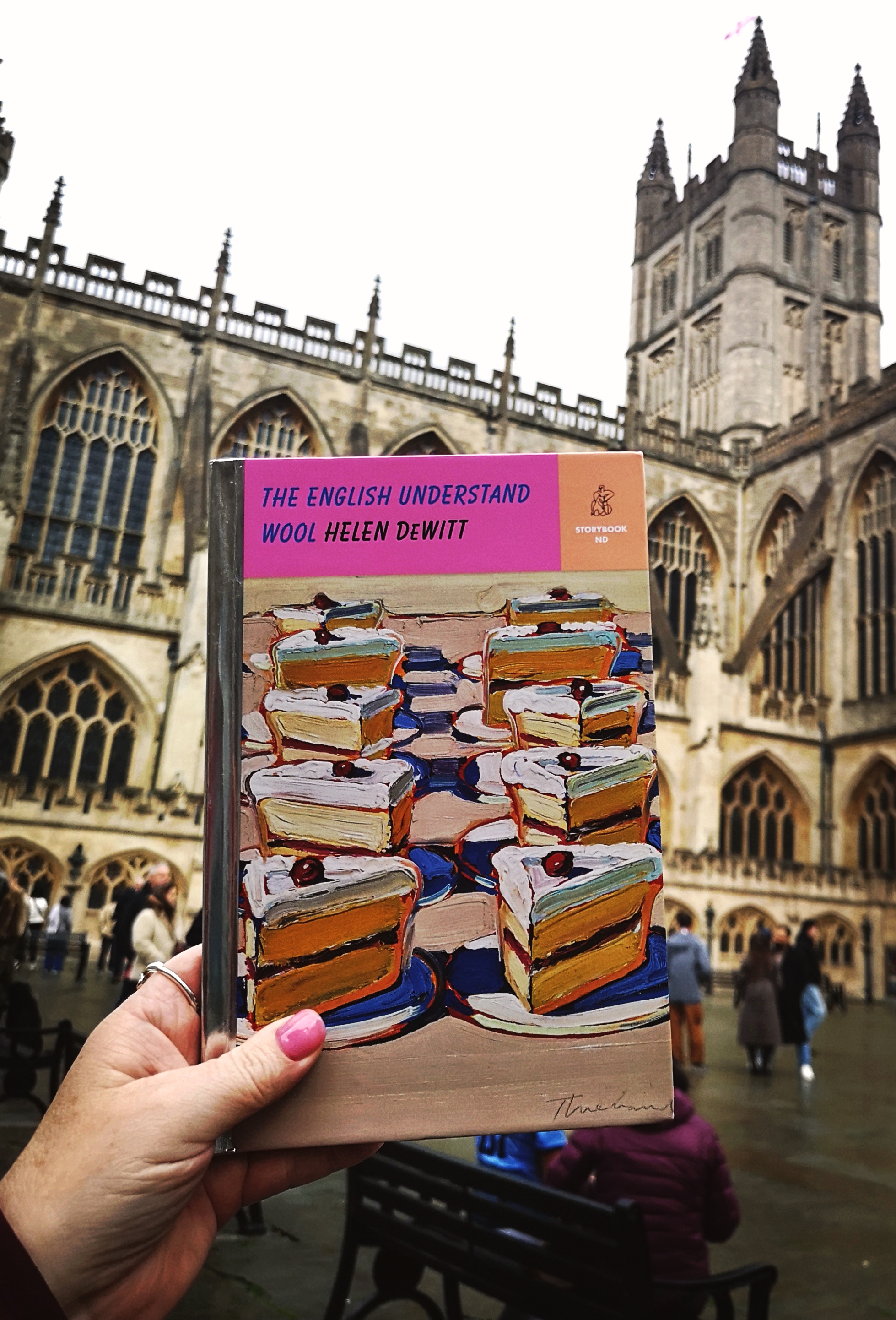
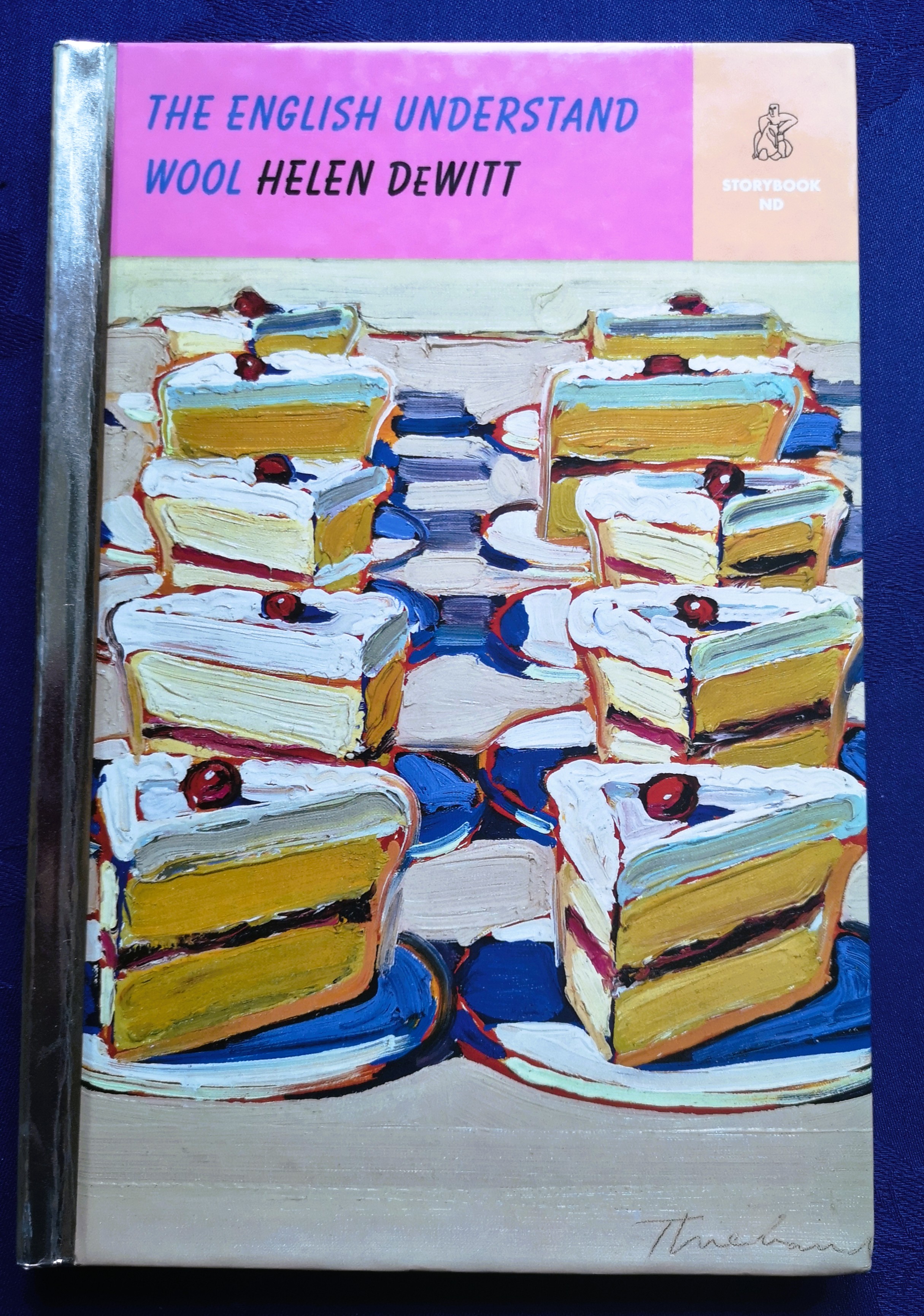
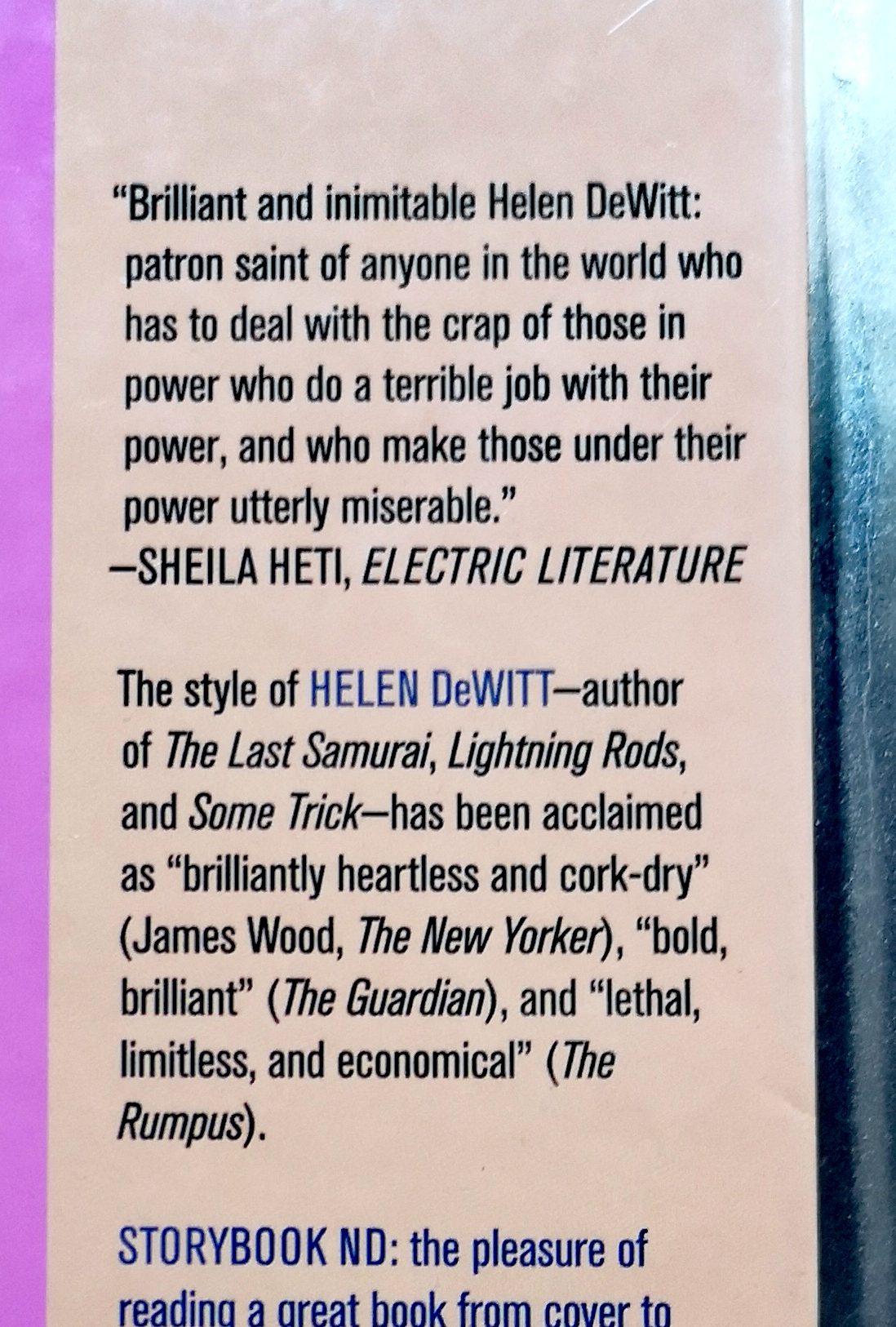
“Could you spare an hour?” A phrase we are often asked, but rarely does it involve reading the whole of a 64 page novel and immediately wanting to spend another hour re-reading it again.
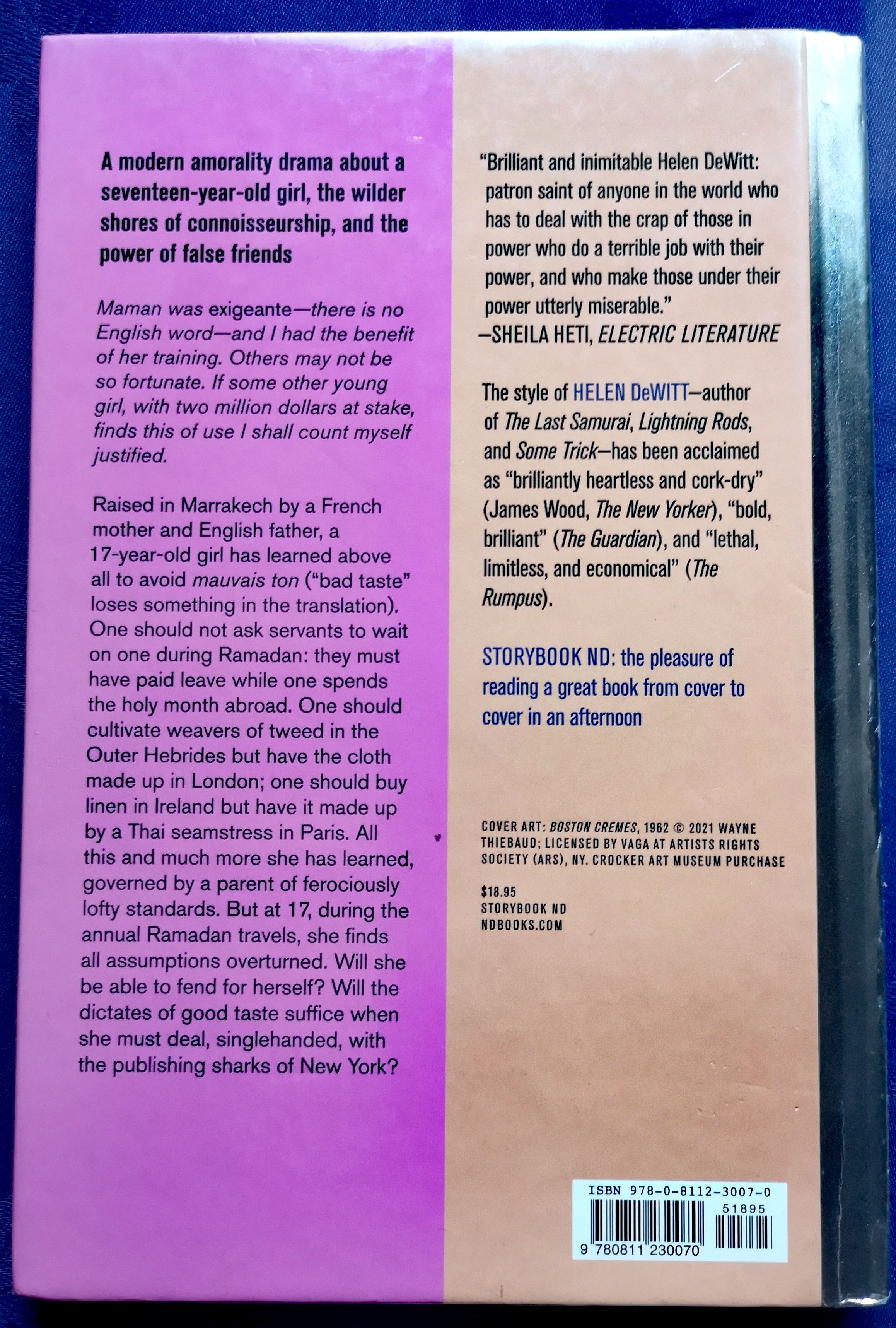
This is exactly where I found myself with The English Understand Wool by Helen Dewitt. It’s a superbly crafted, dark-humoured, satirical book. It subtly takes aim, among other things, at what is classed as ‘etiquette/connoisseurship’ or acting with ‘poor form’, (“mauvais ton”). It also takes a well-mannered swing at the commercial deeds/misdeeds of the publishing industry. The reader is constantly being asked, what is good or not good, what is legal or illegal, what makes a victim, and what does it mean to me victimised.
This story really does reward it’s reader with numerous exquisite twists. Each line of text is beautifully edited down to the essentials; words are precious and the author is succinct in their usage. Even our main character is refined in every way.
Are you beginning to see why this clever little book deserves more than a single glance?
As Heather Cass White, Times Literary Supplement wrote:
“It is a heist story, an ethical treatise, a send-up of media culture, a defence of education and an indelibly memorable character portrait. Its pages are rife with wicked pleasures. It incites and rewards re-reading.”
Although the quintessential review of this book (and perhaps modern life in general) is by Sheila Heti of Electric Literature, and is featured on the rear cover………I urge you to enjoy both!
– Reminder our 2025 Fiction Competition is now OPEN!
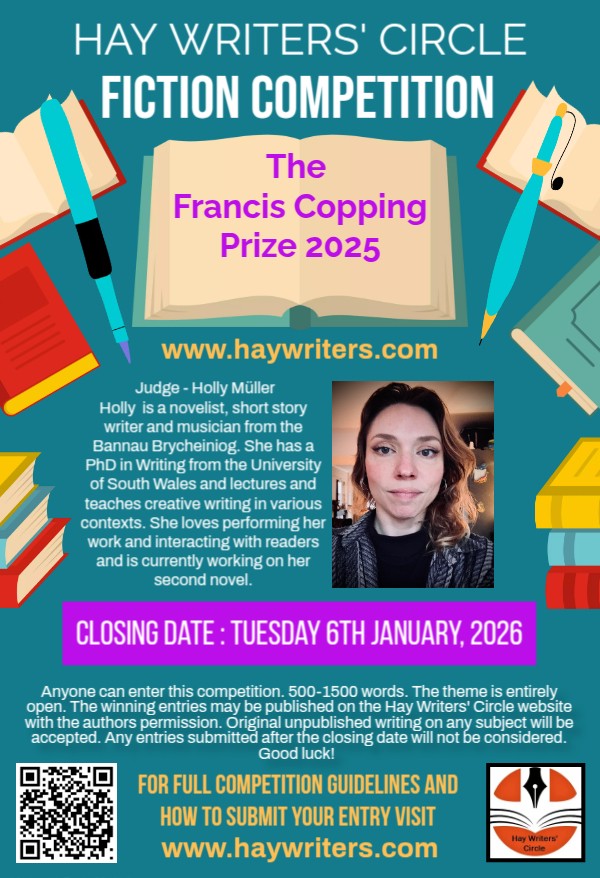
Submissions are now invited for our annual Fiction Competition, The Frances Copping Memorial Prize 2025, named in fond remembrance of our Lifetime President who sadly passed away in 2020.
The competition is open to everyone, members of Hay Writers’ Circle and non-members too. Pieces of 500-1500 words on any fiction theme are accepted. Closing date for entries is Tuesday 6th January 2026. Prizes are awarded for first, second and third place.
Please follow the guidelines listed on our COMPETITIONS page if you would like to enter.
You can contact writers4haycomp@gmail.com if you have any questions or queries.
Click on the link below to download the entry form :
Taking on the leadership of any community group, particularly such a well-respected and dynamic one as Hay Writers’ Circle (HWC), is not a task to be taken on lightly. It requires focus, commitment and no small amount of energy. Fortunately for happy foot soldiers like myself, there are those impressive souls who not only enjoy such a challenge but relish it.
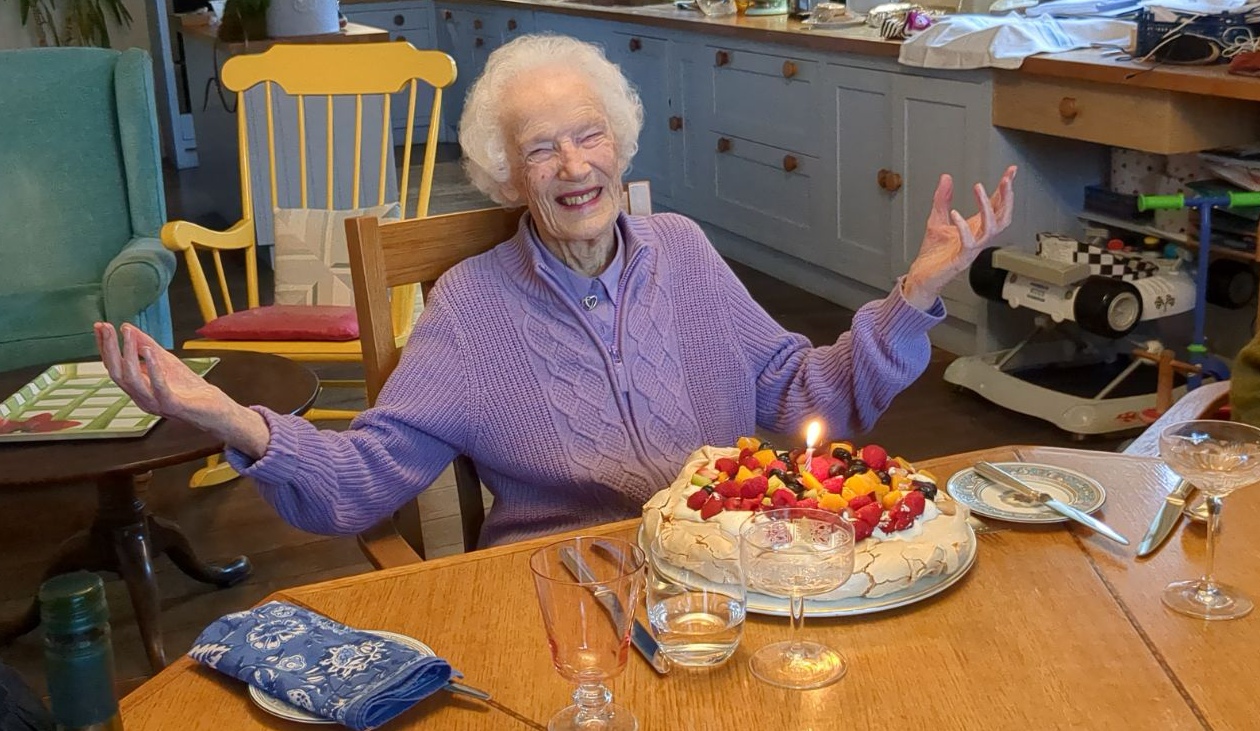
Early one afternoon in September 2025, I joined fellow member of the Hay Writers’ Circle, Emma van Woerkom, in Brecon town to meet such a person, someone who through a fusion of talent, strength of character and sense of purpose, has conjured up not just wonderful things for HWC but a rich and fulfilling life for herself. And all this from a rather inauspicious start.
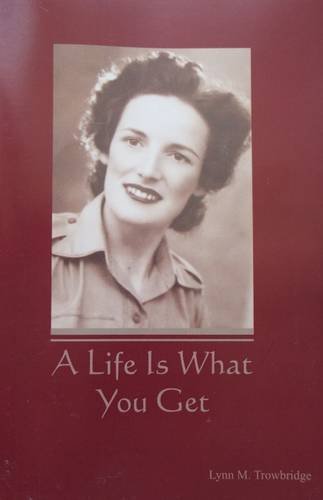
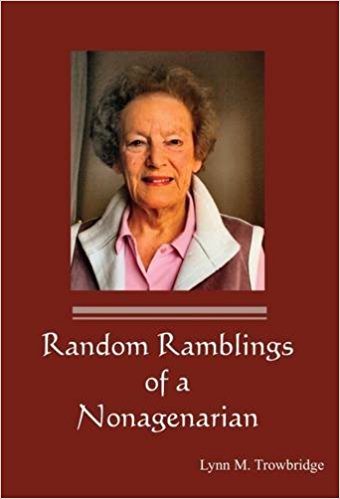
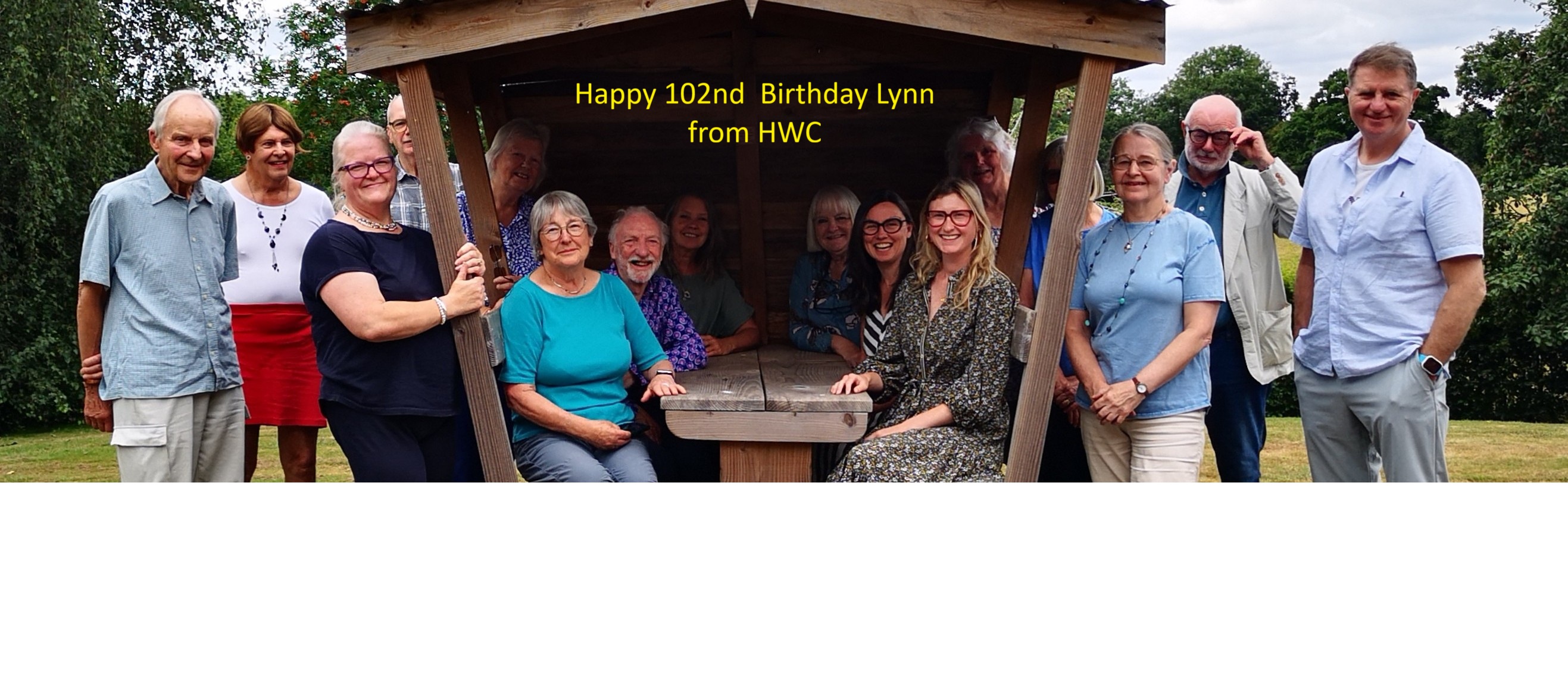
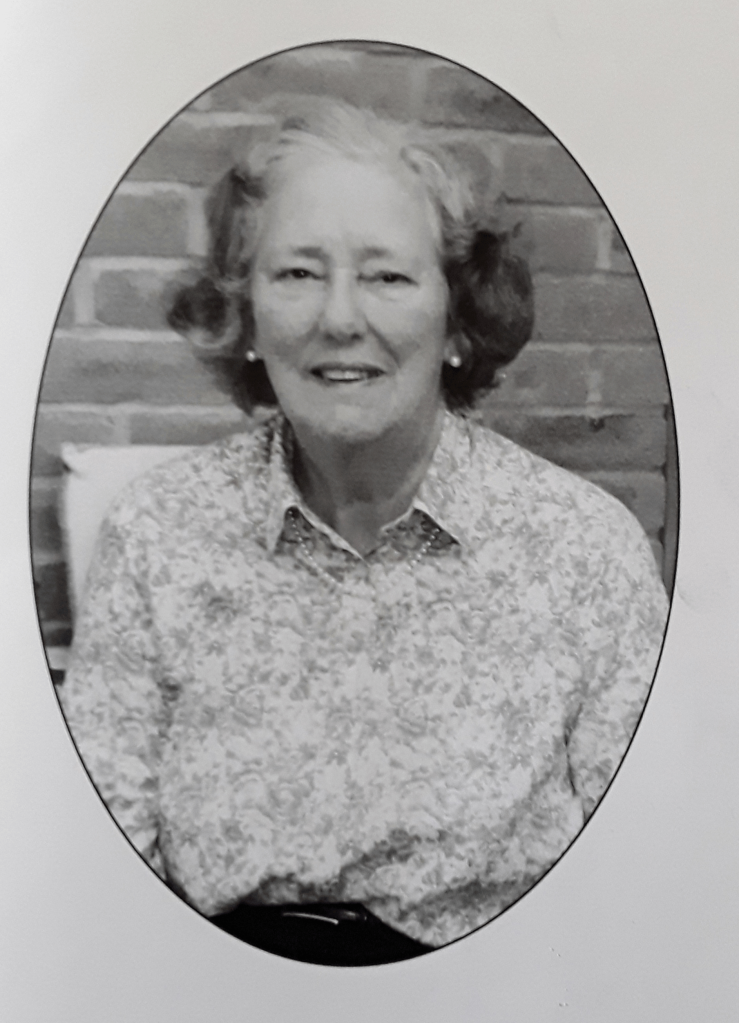
At the time of our get-together, Lynn Trowbridge is fast approaching her 102nd birthday. It would be easy to venerate her for this fact alone, but this would do her a great disservice. You only need to read her books ‘A Life is What You Get’ and ‘Random Ramblings of a Nonagenarian’ to recognise that at her core, this woman is a powerhouse. She may no longer be able to control a bolting horse nor use this same athletic prowess to fill her display cabinets with silverware, but given her mental acuity, I wouldn’t be at all surprised if – given the chance – she could, once again, win a car for her management skills.
As we talk, she outlines her HWC successes with honesty, wit and humour and is always quick to give those involved in each undertaking equal or sometimes greater billing – an approach very much reflected in her books.
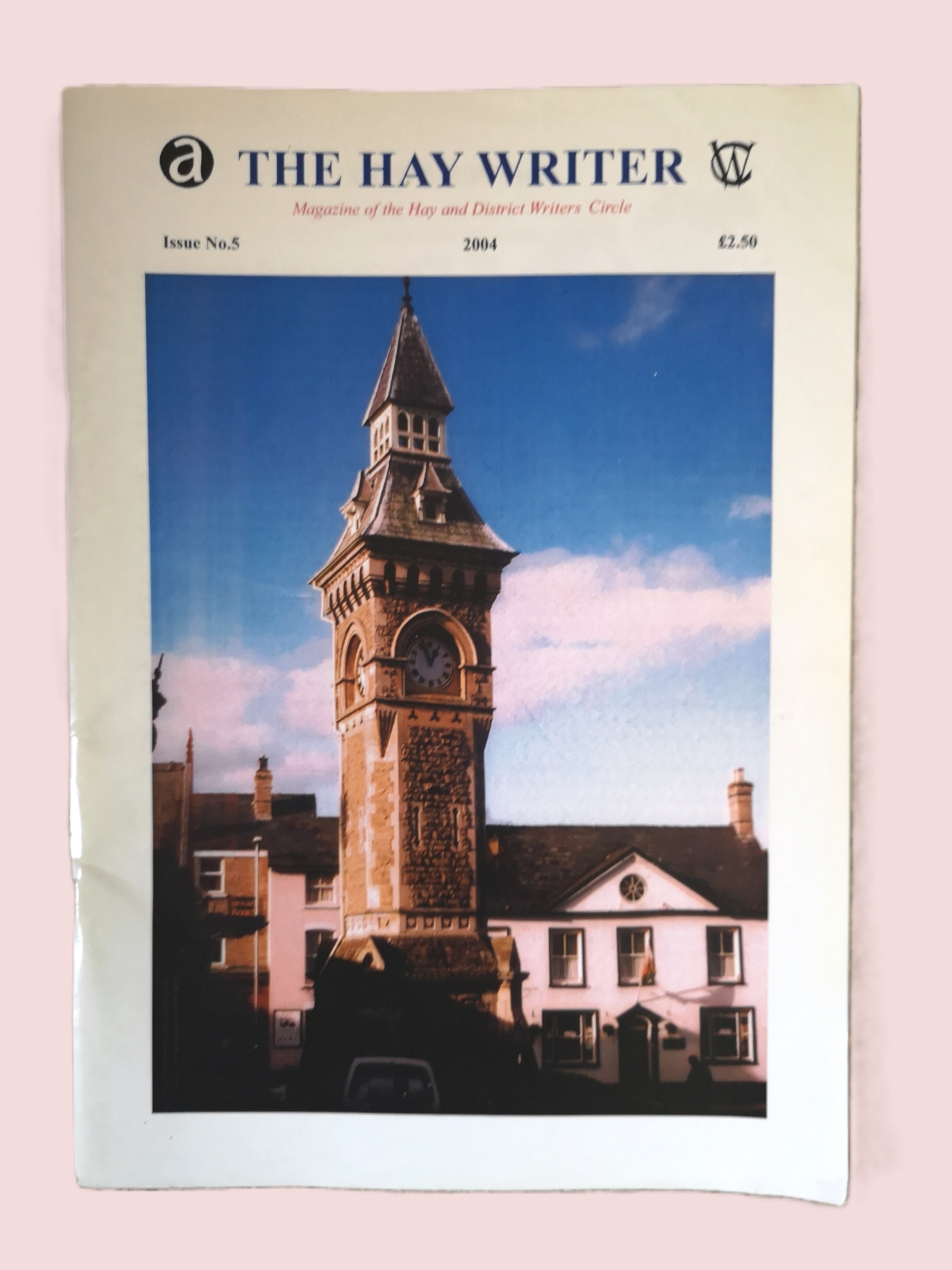
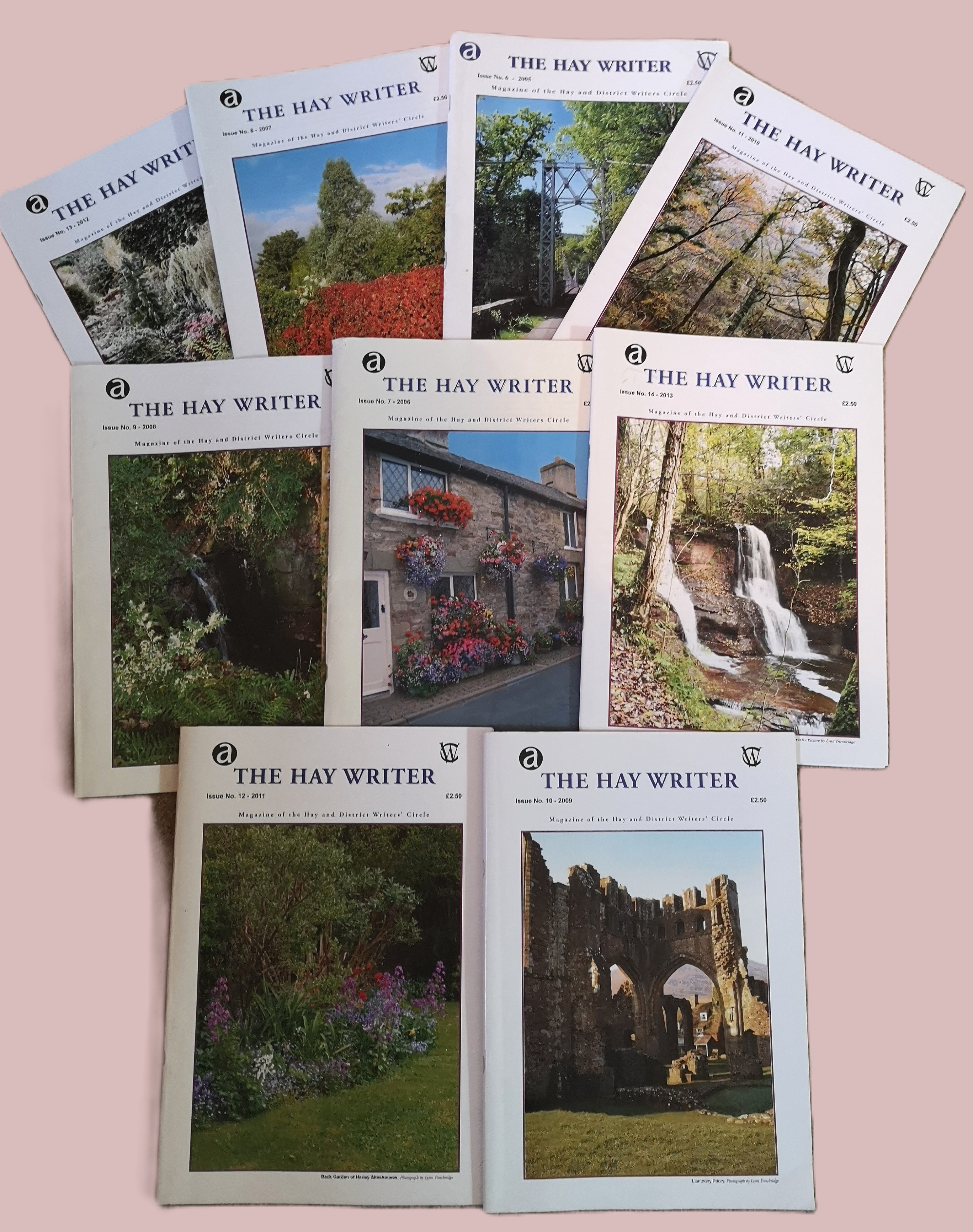
Lynn begins by telling us how from the outset it was obvious to her, given that within the group there were both published and unpublished writers, a new HWC focused print medium was required; one that served the needs of every member regardless of their publishing status or experience. It would also be best if this were not just a one-off, as had been produced before, but a year in, year out publication. There was only one contender: a magazine, an annual one, sustained and funded by advertising and sales.
Lynn took charge of its front cover, general layout and production (through a printer in Llandrindod Wells) while the then treasurer, Ann Riviere, (who sadly died last year) became very adept at selling advertising space to local businesses. This usually more than covered the printing costs. It went on sale at roughly £2.50 and featured members’ poetry, fiction and non-fiction – all fully illustrated by Joan Charleton, a well-known local artist and HWC member. The magazine was issued in time to greet the crowds attending the Hay Festival.
It was at this point Lynn inadvertently pulled off something of a coup. The magazine was proving popular with locals and festival goers alike, however, it was not yet offered for sale in the festival bookshop. To Lynn’s mind, this was a glaring oversight and one she tried to remedy. Unfortunately, her written request was turned down by those in charge of the bookshop who stated that, at that time, they could only stock the publications of those authors appearing at the festival.
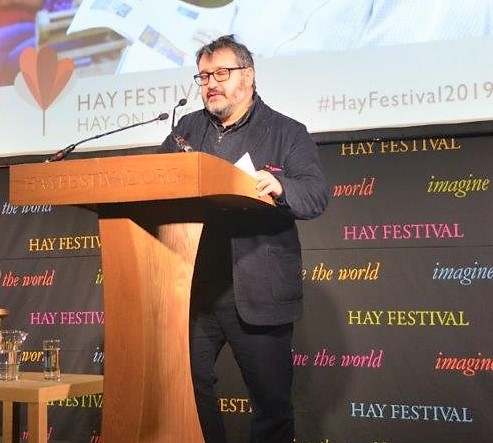
But all was not lost, for on hearing of this, Peter Florence, then director of the Hay Festival, came forward with an extraordinary offer, one no-one had asked for but he was happy to provide: a one hour slot at the next Hay Festival.
HWC Magazine Hay Clock Tower DetailHWC Magazines Group ImagePeter Florence Photo by Merv Newton 2019
And so began something else Lynn became famous for. At each HWC meeting members would, as they do now, read their work. If this received a favourable response from those attending, Lynn would request a copy which she then placed in a green folder. Over that first year and her succeeding ones, the contents of that green folder formed the backbone of the next performance. Not that being sandwiched between its folds granted automatic acceptance. To assure fairness and parity, the hour was shared out equally amongst those performing. No matter how good a particular piece was, if it were too long, Lynn would ask for it to be edited. This was a hard and fast rule.
These days, Lynn’s green folder is longer in existence but our slot at Hay Festival has become the highlight of the HWC calendar. Every year our members strive to produce a varied programme full of moment, poignancy and humour, and we are so grateful to Hay Festival for it’s continued support.
Lynn was in her nineties and had just suffered a heart attack when she stepped away from both the HWC chair and being a member. She had been in post for ten years. A decade which produced an era of sustained HWC publishing – ten magazines in all – which has never been matched since. Nor have the Hay Writers’ Circle’s coffers ever been so full. During her tenure, many writers not only saw their endeavours appear in print for the first time, but were also given the opportunity to perform their pieces to the public as part of the Hay Festival.
As the afternoon continued, Emma, a published poet, who joined during Lynn’s reign as a ‘youngster’ (Lynn’s words – Emma was forty), bears testament to all Lynn’s achievements. However, the easy rapport and mutual respect shown between these two friends of longstanding helps tell another story – and an important one. Lynn achieved what she did not just though obvious dynamism, but also through warmth, humanity and caring.
As a final accolade, in 2019, a year which marked the Hay Writers Circle’s fortieth anniversary, Peter Florence, opened our appearance at the festival with a speech in which he affirmed not only how important he felt writers were to any community, but also how the support of local writers lay at the very heart of the festival. Long may it be so.
AND long may it also be that we are graced with the presence of Miss Lynn M Trowbridge. A woman who spent much of her young life in a home for ‘waifs and strays’ only to spend the greater part of it motivating, inspiring and achieving.
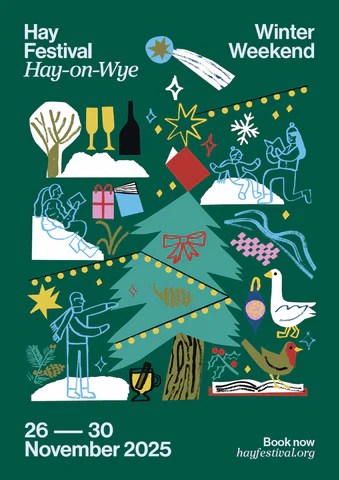
Hay Festival Winter Weekend 2025 programme is out now, promising a wonderland of ideas and inspiration, 26–30 November.
For more information on events and tickets etc – CLICK HERE
– 2025 Fiction Competition now open
Submissions are now invited for our annual Fiction Competition, The Frances Copping Memorial Prize 2025, named in fond remembrance of our Lifetime President who sadly passed away in 2020.
The competition is open to everyone, members of Hay Writers’ Circle and non-members too. Pieces of 500-1500 words on any fiction theme are accepted. Closing date for entries is Tuesday 6th January 2026. Prizes are awarded for first, second and third place.
Please follow the guidelines listed on our COMPETITIONS page if you would like to enter.
You can contact writers4haycomp@gmail.com if you have any questions or queries.
Click on the link below to download the entry form :
Submissions are now invited for our annual Fiction Competition, The Frances Copping Memorial Prize 2025, named in fond remembrance of our Lifetime President who sadly passed away in 2020.
The competition is open to everyone, members of Hay Writers’ Circle and non-members too. Pieces of 500-1500 words on any fiction theme are accepted. Closing date for entries is Tuesday 6th January 2026. Prizes are awarded for first, second and third place.
Frances Copping Holly Müller
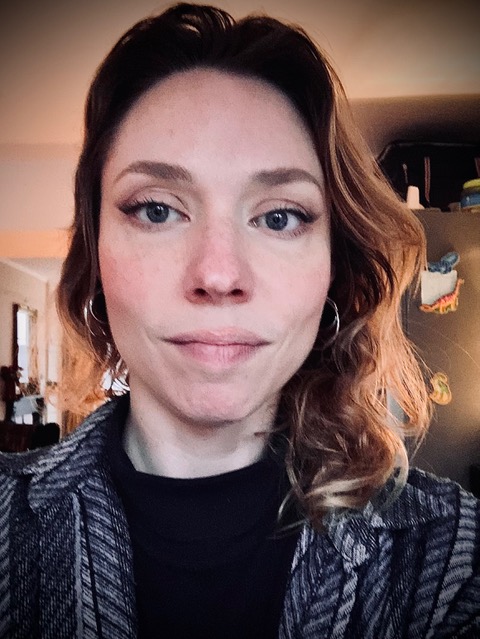
This year we are delighted to announce that our judge is the wonderful Holly Müller.
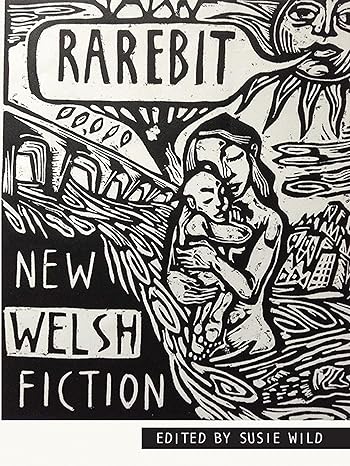
Holly Müller is a writer and musician living in the Bannau Brycheiniog. Her short stories are published in Rarebit (Parthian Books, 2013) and New Welsh Fiction (Seren Books, 2015). Her debut novel My Own Dear Brother (Bloomsbury, 2016) was Waterstones’ Book of the Month and garnered positive reviews in the Guardian, Independent, Sunday Times, Sydney Morning Herald and other international press. Holly achieved a 1:1 in Creative and Professional Writing at the University of South Wales (USW), winning the departmental prize for best creative submission, and completed USW’s Creative Writing PhD. Holly has written for the Guardian Observer, Independent, Sunday Times, Glamour Mag, Writers and Artists Yearbook, as well as prominent online publications, namely Strand Magazine, Female First, Bookish, Business Line New Delhi, and Literary Hub. Holly has performed at Cheltenham, Hay, Laugharne and Cardiff Literature Festivals. Holly taught creative writing at USW and ran Ty Newydd Writing Centre courses with Kate Hamer, as well as workshops at schools and festivals, before having a family.
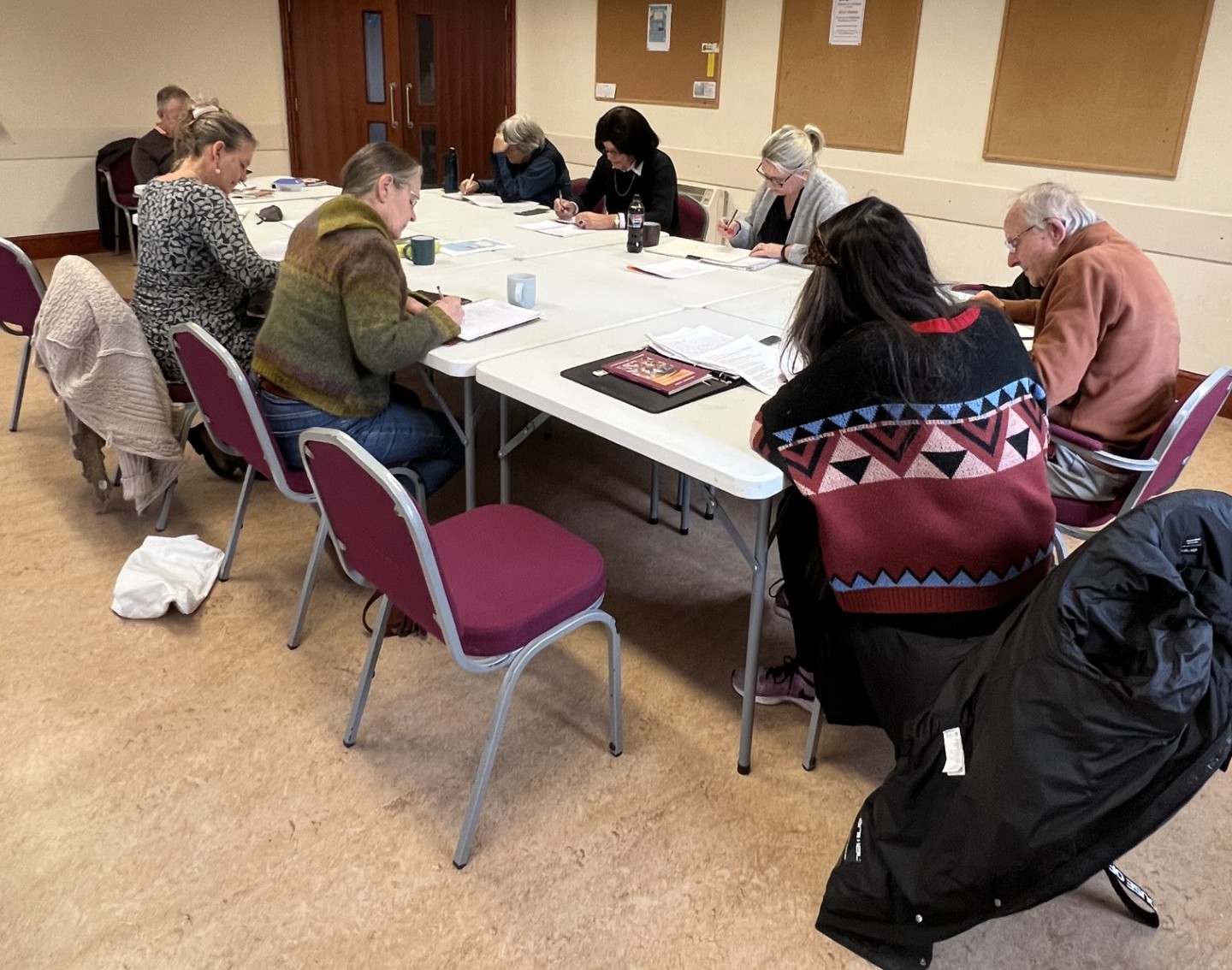
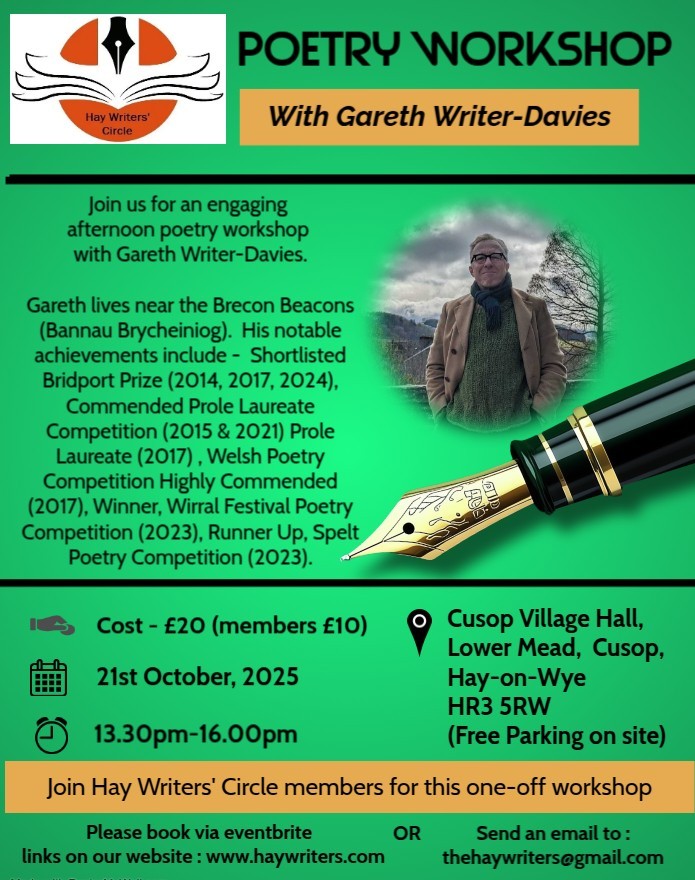
On 21st October we met at Cusop Village Hall for a workshop with Gareth Writer-Davies, who kindly judged our last poetry competition. Gareth is a local poet who lives near the Brecon Beacons (Bannau Brycheiniog). His notable achievements include –
Gareth gave us a very interesting and thought-provoking workshop. We discussed some poems which dealt with everyday life and then went on to write ourselves and to share our work. As a starting point we used William Stafford’s method for daily writing, which Gareth had introduced us to. Here it is, if you want to try it:
Get up early – if you can Write the date Write down an adage Write 2 lines about what you did yesterday Take a couple of minutes pause and the start to write your poem No pressure; if nothing flows then lower your standards.
This produced varied contributions, although there was a slight emphasis on gardening.
Gareth Writer-Davies
Many thanks to Gareth – we all really enjoyed the afternoon.
The One Didn’t Get Away!
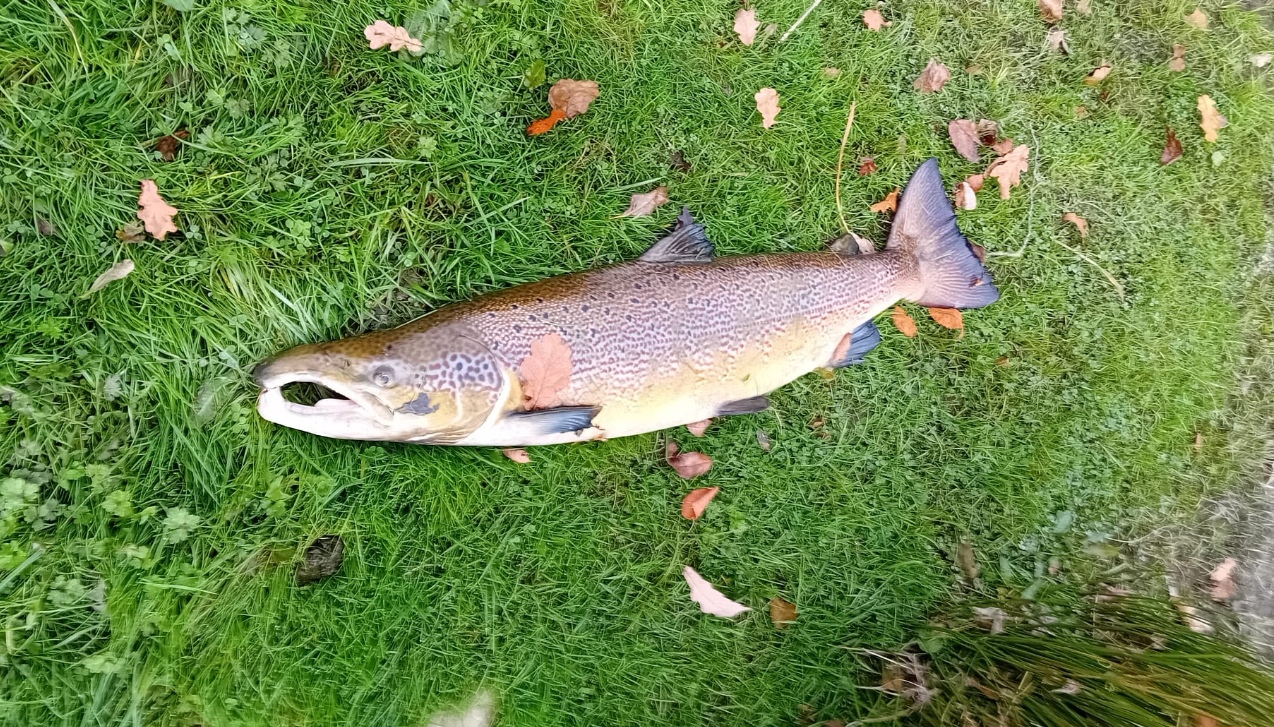
Recently, one of HWC managed to catch an absolutely superb wild Wye Salmon. To celebrate, here is the first act (prequel not included) inspired by that glorious event. Congratulations Nick!
“The one that didn’t get away” by Nick Thomas.
A one act play.
Featuring:
“Kipey” Henry, king of fish.
An oldish gentleman.
A rock, previous story refers.
A tree, ditto.
The Scene, a pool on the Wye, rock and tree face each other from opposite sides of the river.
Enter stage right, a salmon.
“Morning gentleman”, he says.
Tree grunts, Rock, who has seen it all before, ignores him.
“What’s up with him?” snorts Salmon.
“Oh, take no heed of him, he’s sulking about something that happened two hundred and four years ago”, says Tree.
“Oh”, says Salmon, “anyway let me introduce myself. I am Kipey Henry, an Atlantic salmon, king of fish. I’m just over 1 m long and weigh 26 pounds”.
“Well, well”, says Tree, “just passing through, are you?”
“Yes, but I must rest for a pesky otter, further downstream at the Turn Pool gave me such a fright, I’m lucky to be here at all.”
“Oh dear, rest there in the tail of the pool and wait for the water to rise in a few days’ time then you can continue your journey.”
“If you don’t mind me asking”, said the inquisitive Tree, “why Kipey?”
“Because of my large kipe, my lower jaw”, says Henry sticking out his lower jaw of which he was very proud.
And that was that, until:
Enter stage left, Nick, an elderly bearded gentleman. He is limping and using a stick but carrying a huge fishing rod. At least that’s what a lady taking her son to school just said as he unloaded it from his car.
“To catch a huge fish, hopefully”, he replied. Though, in truth he wasn’t very hopeful. For though the river was right and he had fished it proficiently for several days, casting well, not falling over, but to no avail.
He started casting at the head of the pool and moved slowly downstream going through the motions, but without a lot of hope.
He came out of the river, rounded a willow shrub, then continued towards the tail of the pool.
A decent cast swung round, he mended the line, then WHAM! Kipey had taken the fly, a red, black and yellow tube. Holy moly this woke the old bugger and Kipey up. Out of nowhere fight was joined.
I won’t bore you with all the cut and thrust, it took ten minutes or so. Old Nick had neglected to bring a net, so he was desperately looking for somewhere to either beach or tail the fish, that is grab it by the tail.
Kipey was having none of this. He was in and out, up and down, sometimes holding solidly still. Nick thought he had lost him at least twice but, today Man beat Fish. Kipey was up on the bank being photographed while expecting the worst.
But no, the next thing he knew he was being put back, held gently in the water for five minutes while he recovered from his ordeal.
It was with mixed feelings that the old man let him swim away. He took out his flask and took a sip of whisky to salute his good fortune for he had just returned the biggest salmon he’d ever caught in a lifetime of fishing.
Even Rock seemed pleased.
Curtain closes.
Wye Salmon caught by Nick Thomas, 2025
And Finally :
Less than a month to go until – Hay Festival Winter Weekend 2025
For more information on events and tickets etc – CLICK HERE
If you want to read about all our up and coming news, events and competitions, don’t forget to subscribe with your email address in the box below.
How quickly our writing year is up and running again! Our Annual General Meeting enjoyed not only many positive reports from its Committee, but also a number of exciting plans and adaptations for the coming year ahead. All thanks to everyone who brainstormed ideas during our summer blue-sky-meeting.
We are delighted that the following Committee Members have been re-appointed.
Chairperson – Corinne Harris
Treasurer – Nick Thomas
Competition Secretary – Margaret Blake
Social Media & Website Manager – Emma van Woerkom
Corinne Harris ChairpersonNick Thomas TreasurerMargaret Blake Competitions SecretaryEmma van Woerkom Social Media & Website Manager
A new appointment this year for the position of Secretary. We are happy to confirm that Michelle Pearce has kindly accepted this busy undertaking. Welcome aboard Michelle!
Michelle Pearce Secretary
Bon Voyage!
It’s never goodbye from the Hay Writers’ Circle, just a “bon voyage” for the continuing journey of life. We understand that as writers develop and move away from Hay, they cannot always stay with our group, and so this year the following members have left our intimate circle for pastures further afield. We thank them for their many years with us, plus the words and publications they have shared and we have loved. We all wish them the very best for the future, with resounding chants of good luck – ádh mór – guid luck! May their wonderful writings find large happy audiences, and willing rich publishers!
Alan ObermanHelen SmithMichael Eisele
Richard Booth Prize 2025 – 3rd Place – Val Ormod
We are delighted to showcase the 3rd place entry of our most recent competition, The Richard Booth Prize for Non Fiction 2025. Val Ormrod is no stranger to this competition attaining 2nd place in 2024. She is back on the podium this year with her entry, “Knives”, achieving a well deserved third place.
Many congratulations Val for another stand-out piece of writing.
Val Ormrod 3rd Place – Richard Booth Prize 2025
Knives
The morning shrieks awake. My body is the centre of the shrieking. I try a small movement and pain stabs my spine like a hot skewer. I need to empty my bladder and attempt to climb out of bed. Pain reclaims me, spins me in its jaws. A cry escapes my mouth, unbidden, refusing to be controlled. Defeated, I fall back to bed. I lie still, commanding my brain to bypass the pain. The ache in my bladder increases. I drift in and out of razor-lined sleep.
A slight breeze fidgets the curtains; a knife edge of sunlight chinks through the fabric, stabbing me into consciousness. The bladder keeps insisting too. Now it is impossible to ignore. I force myself to move. I ease one leg out of bed, force the scream back down my throat as I slide my body towards the edge, lower myself onto hands and knees. Each small movement is punctuated by gasps. Scorpions travel my leg. The cries leak out involuntarily.
I begin the marathon journey to the bathroom. From this close-up focus I observe every black speck on the carpet, every hair showing itself against the cream pile. I make myself concentrate, count every imperfection as I crawl with tortuous slowness, then study every tiny mark on the bathroom tiles until the white base of the loo looms in front of me. I grasp the side of the bath to pull myself up until I hover over the seat. Sitting is impossible but I manage to aim in the right direction. The relief is temporary: one pain quickly replaced by the other pain – the fireworks sparking in every nerve ending. I reverse the journey, my yelps piercing the room like the high-pitched cry of birds. What seems a lifetime later, I have hauled myself back into bed and lie exhausted.
I resign myself to another day inhabited by pain. It drags me down, any movement piercing my body like daggers. I struggle to do anything, move anywhere beyond this room. Seconds are leached from my minutes, minutes from my hours, and hours from my days. Life carries on around me while my own wasted days drain to despair. I vow to get through them somehow and get back to living.
At last, the day I have been waiting for arrives. I am wheeled on a trolley to a room of knives. I study the scalpels, the steel instruments that glint with menace, the syringes and tubes, the masks, the smell of chlorine and antiseptic. The deliverance man sharpens his weapons. Upside down faces hover above me. Mouths stretch taut over white teeth, my arm is stroked, soft as a cat. The one with the needle smiles and smiles and I silently urge him to hurry. The poison leaks into my blood. Smiles blur, voices recede, Picasso faces dissolve into mist. The tongues of fire grow quiet as I race to the end of the rainbow where there is no more pain.
I wake in a morphine maze of morning, my face drained and pale as chalk. The day hobbles by in grey flashes. Cocooned by night I surf the hours till dawn. This time a new morning light swallows the grey; the paintbox returns, colour unfurls. Blood red streaks melt to amber, to gold. Bright sun fills my world.
In that room of knives, a modern miracle has been performed. I pick up my bed and walk.
There are still a few places left at our Poetry Workshop on 21st October with Gareth Writer-Davies.
We are delighted to begin this week with the results of our annual non-fiction competition.
This popular competition again received a good number of entries from both inside and outside Hay Writers’ Circle and we very much welcome external interest in all our writing competitions.
Our memorial prize, named in tribute to Richard Booth, the self-proclaimed “King of Hay”, who among many literary interests, was a keen supporter of the Hay Writers’ Circle. He sadly passed away in 2019, still in love with books, writers and his beautiful kingdom of Hay-on-Wye.
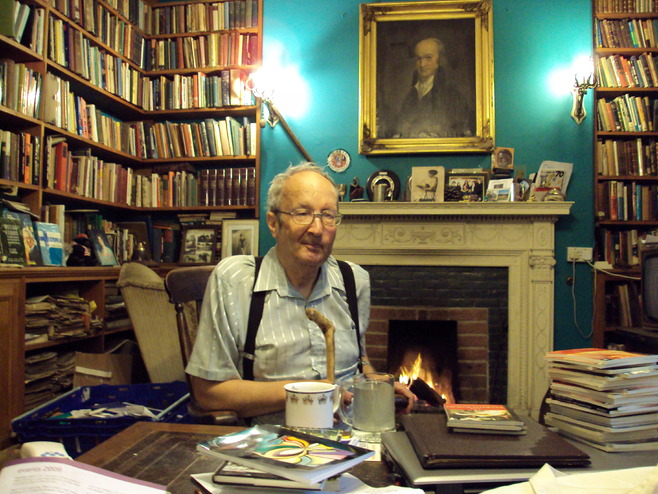
Richard Booth MBE2025 Judge -Dr Alan Bilton
We are extremely grateful to our judge, Dr Alan Bilton for his incredible efforts reading all the entries.
Dr Alan Bilton, “received his undergraduate degree in Literature and Film from Stirling University in 1991, and his PhD (for a study of Don DeLillo, an author with whom he has absolutely nothing in common in any way) from Manchester University in 1995. He then taught American Studies at Liverpool and Manchester, before taking up a post teaching literature, film and creative writing at Swansea University in 1996.
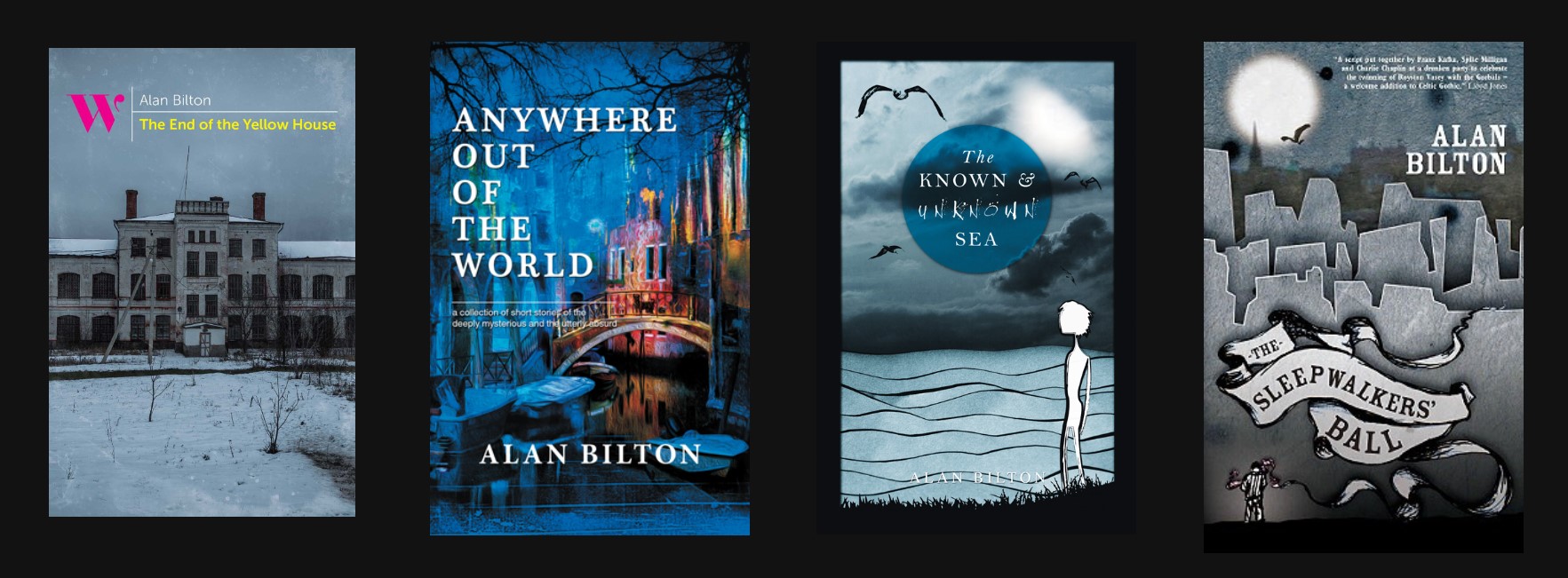
He is the author of three novels, his latest The End of the Yellow House(Watermark Press 2020), The Known and Unknown Sea (Cillian Press 2014), variously compared to Charlie and the Chocolate Factory, the 1902 movie, A Trip to the Moon, and Dante’s Inferno, and The Sleepwalkers’ Ball (Alcemi, 2009) which one critic described as “Franz Kafka meets Mary Poppins”. In Bilton’s Anywhere Out of the World (Cillian Press 2016), he dares us into a fantastical and strange alternative reality through a collection of short stories, into a labyrinth, a world of nocturnal cities, hapless slapstick and misadventures, lost souls and lost travellers.
As a writer, he is obviously a hard man to pin down. He is also the author of books on Silent Film Comedy (Silent Film Comedy and American Culture, Macmillan, 2013) Contemporary Fiction, (An Introduction to Contemporary American Fiction, Edinburgh University Press, 2002) and co-editor of America in the 1920s (Helm, 2004). His essays, reviews and fiction have appeared in the New Welsh Review, Planet, The Lonely Crowd, The Journal of American Studies, The F. Scott Fitzgerald Review and elsewhere, as well as the anthologies, Sing Sorrow Sorrow (Seren, 2010) and A Flock of Shadows (Parthian, 2013).”
Dr. Alan Bilton, offered the following comments which are applicable to all entries.
“Each of these very well crafted pieces seems to capture something vitally true and important about the authors’ lives – whether in thoughts, memories, or images. These short pieces managed to compress whole lives into a few hundred words – who am I to say which one is the most meaningful?
Nevertheless, the best, if I can put it like that, I think allow the reader to emotionally share in these moments by grounding events in specific images, sensations and scenes, moments when concrete things become meaningful symbols, feelings and moods are captured in tactile places and objects, and ideas seem indistinguishable from stories.
Many of these pieces seem to me to capture the uncanny strangeness of memory, the mystery of why some things persist, clear as day, whilst others vanish, mist-like into the void. The pieces are also blessed with unique, distinctive voices, giving the impression that the author is present in the room, swapping confidences, sharing their stories: ‘voice’ is nearly always the reason why we love one author more than another, and the work here is wonderfully idiosyncratic and individual.
Otherwise, what I took away from the exercise was a sense of honesty, authenticity, and truth – these pieces talk about important things (most specifically, life, death and the passing of time) in a sincere and emotionally direct way, and I was deeply impressed and moved by the candid way in which they explore the things that seem most important to the author – and then invite us, as readers, to find truth and meaning in them too.”
The Richard Booth Prize for Non-Fiction Competition 2025
RESULTS
1st Prize – Michelle Pearce with ‘My Textile Self.”
2nd Prize – Katy Stones with “The Shore I didn’t Choose.”
The judge’s comment on the winning piece reads as follows;
‘My Textile Self ‘ – the idea of framing life via an idiosyncratic history of the things we feel closest to our skin is a brilliantly off-kilter and original one, and the lyrical, poetic prose and steam of consciousness is wonderfully inventive, surprising and playful.
Michelle replied on hearing that she had won The Richard Booth Prize, 2025.
“I am particularly delighted to have won this prize – non-fiction is so dear to my heart – there is so much richness in what is true – ‘ you couldn’t make it up’ as they say – yes, delighted – thanks to the judge and special thanks to Hay Writers Circle for – well, for everything.” Michelle October 2025.
The nurse wraps me in a white cotton towel and hands me to my mother.
My mother is propped in a black metal bed, on starched hospital pillows, between starched hospital sheets, tightly tucked in with a thick woollen blanket. Cotton. Wool. Cotton wool.
The nurse tuts. To have a second daughter within two years is, in Hong Kong, February, 1969, bad luck. Very bad luck indeed. I should, of course, have been a boy.
The nurse marches off. My mother is alone with me for the very first time. She peels back my layers with her lovely hands. The towel, the cotton smock, the tiny woollen vest with its satin ties and then the great bolus of my nappy – a genius of folded cotton, stabbed with a pin, poppered plastic pants. The legs are so thin! The arms! The chest heaving with screams, those tiny fists reaching into the sudden emptiness of the world – ssshhhh little one – there there – I’ll be as quick as I can – ssshhhh – Cotton. Wool. Cotton wool.
Cotton. Wool. Cotton wool. Dresses (home)made bigger by the year – flimsy cotton shifts to be thrown aside – stripped down to nylon knickers for days and sweltering days on end, swimming the wet patio, drinking it, the gushing relief of the hose. Dresses, velvet with matching ribbons, for brief sub-tropical winter; deep red, royal blue, perhaps a little lace, knee-length socks, patent shoes with buckles, smiling crookedly at the camera – knock-kneed, freckled, a little awkward – good girl.
Cotton. Wool. Cotton wool. Leather – a new pair of sandals every year, bought from Clarkes on long-leave in England; rubber-soled, thick-strapped and lovely – running them in on the parquet floors, the tiled kitchen, the playroom’s bright lino – slap, slap, slap – so proud to wear them with my new yellow satchel, to school in the morning – cotton gingham sailor dress – blue or brown – zip up the front, so light, like wearing nothing at all, cooled overnight in front of the air conditioner, sliding in like a letter.
Getting older, here comes the miracle of flowery, worn-every-day, nylon shorts, long brown legs football-socked, and on the feet the wonder of longed-for adidas. Wrangler jeans with three lines of stitching up the thighs (important), high-waisted, flared, t-shirts with pictures – Coca-Cola, 7-UP, South China Morning Post.
Cotton. Wool. Cotton wool. New wool uniform – now there’s a way to scratch back the cold of my first English winter – chaffed by a green sweater – now there’s a way to subsume sub-tropical divorce – those socks crawling up my legs and that heavy duffle coat hiding my most urgent pupation. By spring I emerge, double-breasted, lipstick-ed, bleached, waistband of my skirt perfectly rolled up, socks perfectly rolled down and I shun those boys’ shoes (yes, Clarkes) and cripple myself in courts. I cut off my hair, blacken my eyes and when I am quite alone, I wipe it away all again – thank you, cotton wool. Cotton.
Wool. Cotton wool – maybe not. Ditch the wool, way too itchy. Cotton is strictly for pants, t-shirts and jeans. Now we have leather, lace, nylon, rayon, LYCRA, polyester, FLEECE – bring on the ‘80s – drain-pipes, crop-tops, leg warmers, stilettos, bat-winged jackets, pencil skirts, t-shirt dresses, sweatshirts – one eye in the mirror, one 1 Words: 924 eye on the high-street’s cheap parade – Is this OK? Does my bum look big in it? Will I fit in? Will it go? Will he fancy me? I’m not sure but I’m wearing it anyway.
Cotton. Wool. Cotton wool – the wedding dress is in a vintage shop hanging there all gauzy and gorgeous, and although he hasn’t asked, I slip it on, give him a twirl and the shop keeper says it’s perfect. Thirty quid it’s worth a whirl, and although my boobs are too small and my boots poke out beneath the hem like hard boiled eggs, the sequined straps cross my back perfectly, and the morning comes when I cross my heart and there they are, there those suited, booted, waist-coated folk smiling amongst the barley and the flowers dancing us to the marital bed.
Cotton. Wool. Cotton wool – it’s baby time again. Real nappies, organic cotton, baby-grows – so cute. Real lamb’s fleece to lie you on, pure wool blanket I made myself when you were inside me and even though I couldn’t knit when I started, I finished it and wrapped you in it and kissed your dearest skull and loved you.
But this is not all, this cotton. Wool. Cotton wool. Now we have man-made fibres, micro-plastics, child labour, sweatshops, pollution, cheap out-let stores, more clothes than any of us can wear – PRIMARK. It’s all getting complicated – piles of waste, give it away, upcycle, recycle, reduce, reuse, second-hand, car-boot, I’m finding it hard to BREATHE –
Ai yah!
Cotton. Wool. Cotton wool. I can deal with the itch, knit my own, meditate on colour, balance form, dream of crafting my whole wardrobe, and his, and theirs, sitting fire-side, blanketed, eating soup, writing books, walking for hours sheep-clad.
Yes, I have come full-circle – cotton, wool, cotton wool, a little leather, perhaps for the feet – cotton, wool, cotton wool – the very first fresh-from-the-womb touch of it, the primal itch of it, the memory is etched in my skin. And those hands, those lovely hands, my green-eyed mother – the touch of them too. Always the touch of them too.
And looking forwards? Perhaps, as the skin withers and wrinkles and becomes thinner than the paper I write upon, the as yet undiscovered mystery of silk.
Congratulations once again to our worthy winners. Thank you to everyone who entered work into this popular competition, and our wonderful judge, Dr Alan Bilton.
There are still a few places left at our Poetry Workshop on 21st October with Gareth Writer-Davies.
We are delighted to announce details of a one-off Poetry Workshop with Gareth Writer-Davies.
Date – Tuesday 21st October 13.30pm-16.00pm Venue – Cusop Village Hall – HR3 5RW (free on-site parking, facilities etc) Cost – £20.00 non members, £10.00 members Booking – Tickets via Eventbrite – CLICK HERE Or email thehaywriters@gmail.com
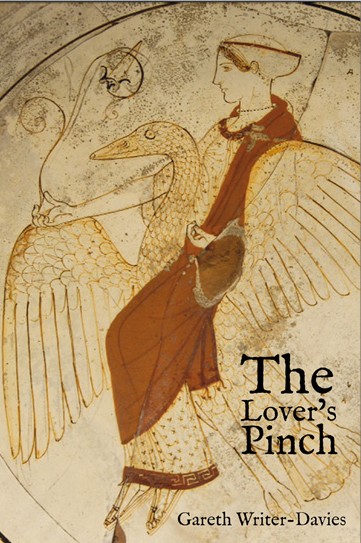
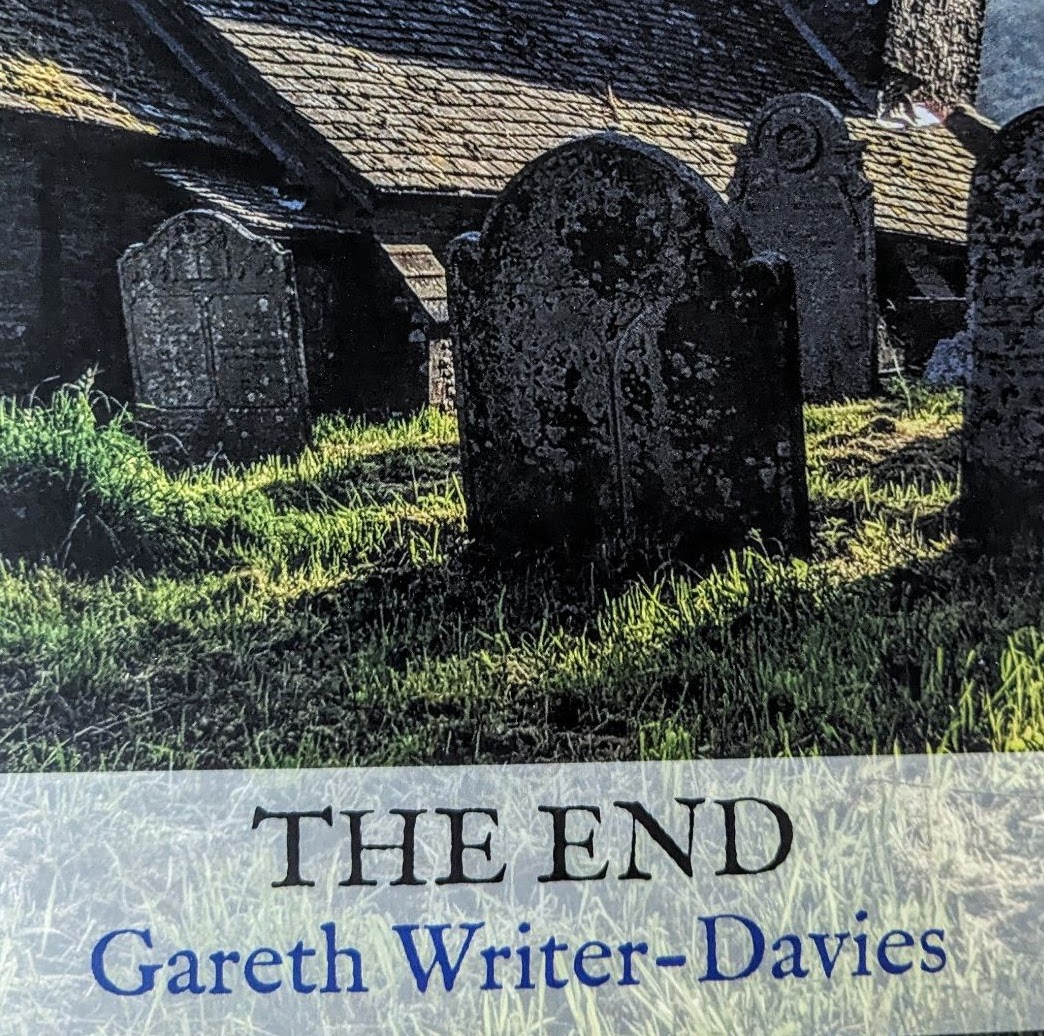
Gareth has written 5 collections, Bodies (2015), and Cry Baby (2017), published byIndigo Dreams.
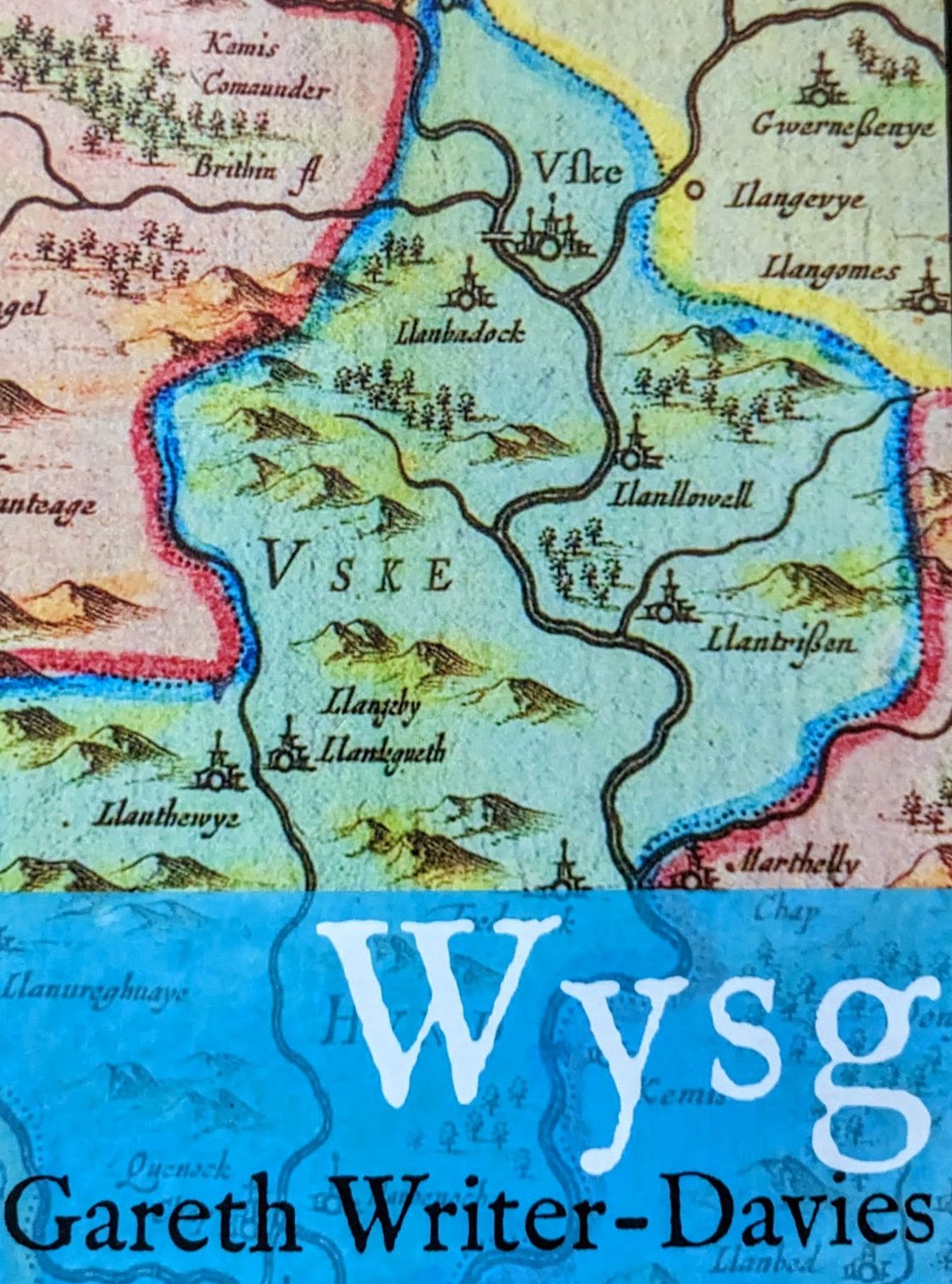
His latest book, WYSG (2022) is also published by Arenig Press.
In WYSG Gareth Writer-Davies is instantly recognisable, as he navigates the borderlands of Wales, seeking to bridge the new and the familiar; the streaming of our lives, our conflicts with nature, getting older and always, where we have been and where we are going?
“In these sharply-worked, elegant poems, Gareth Writer-Davies takes the reader on a voyage of mid Wales which invites us to see this landscape in a vivid light.” – Katherine Stansfield
NB. Workshop – Doors open at 1.15pm. Please bring a notebook, pen and your imagination, tea and cake provided.
We look forward to seeing your there.
Don’t forget to subscribe with your email address in the box below.


















 THE HAY WRITERS