Winner of the 2022 Frances Copping Memorial Prize for Fiction Announced

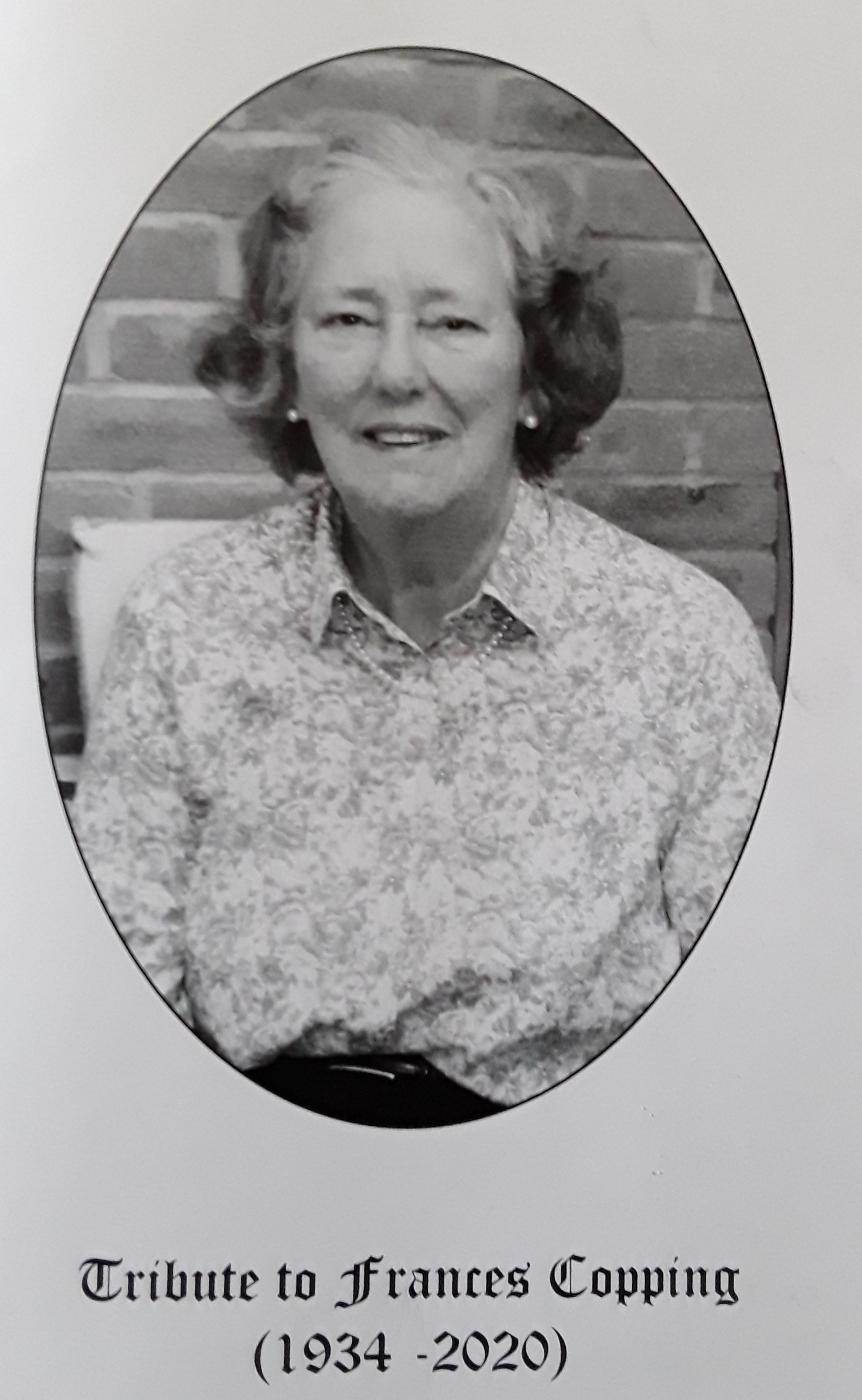
We are excited to announce the results of our 2022 Frances Copping Memorial Prize for Fiction Competition, named in fond remembrance of our Lifetime President who sadly passed away in 2020.

This popular competition again received a good number of entries from both inside and outside Hay Writers’ Circle and we very much welcome external interest in all our writing competitions.
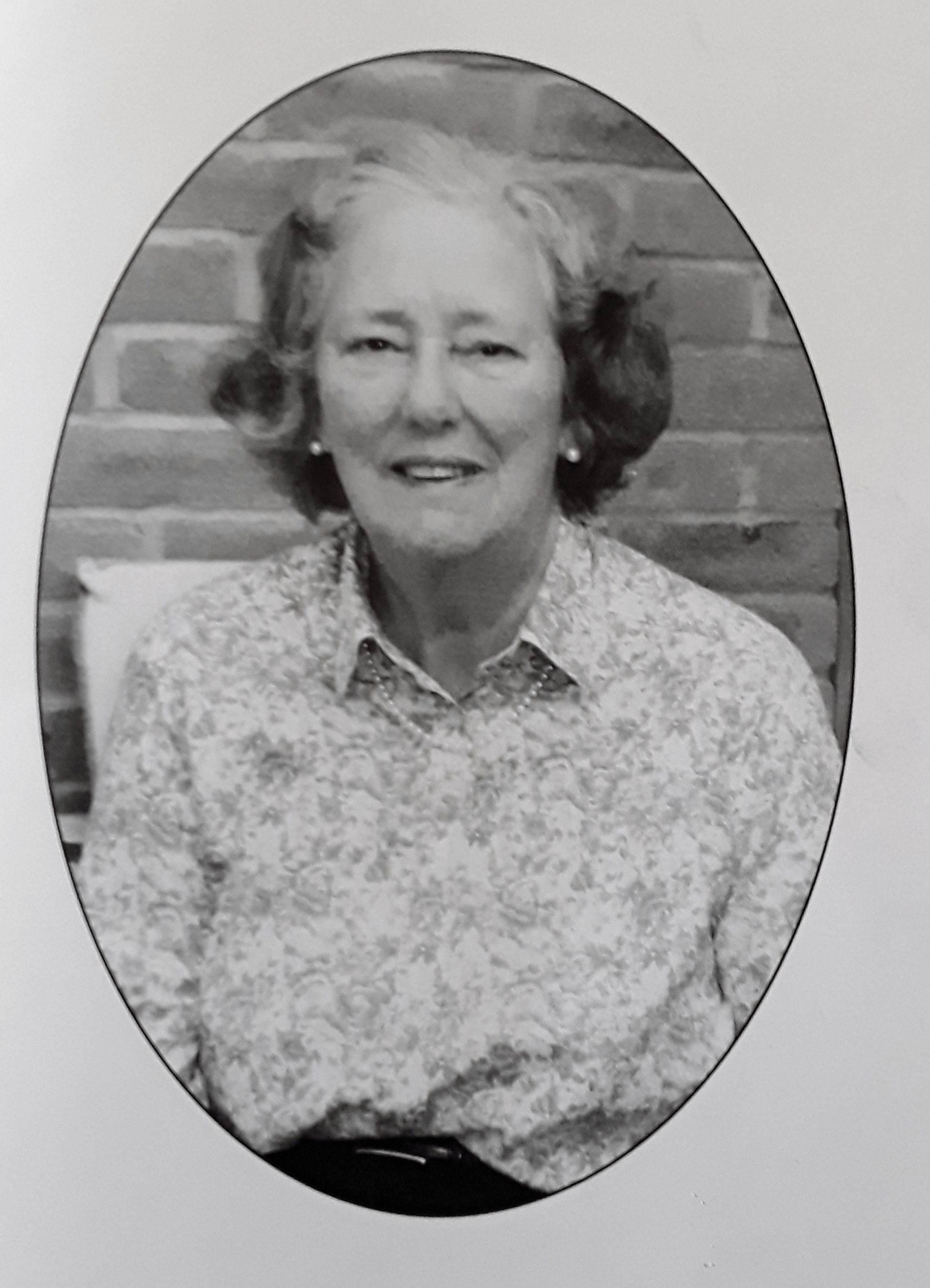

Our judge this year was the Dr. Alan Bilton. He commented that, “(he) really enjoyed all of the pieces and was extremely impressed by the high quality of the entries, and the demonstration of imaginative ambition on display throughout.”

We are extremely grateful to Alan for all his work judging this competition, including the written comments he made for every single entry – going forward, such useful comments can hone writing skills for the future.

Without further delay, here are the results!

First prize: Michelle Pearce with The Postman 

Second prize: Julie Ann Rees with The Sleeping Giant 

Third prize: Naomi Parsons with Neighbourhood Watch 

Judge’s Comments:

First Prize – The Postman

“Beautifully written and deeply moving, this is a subtle, understated study of loneliness and loss, observing human frailty through a kindly, yet beady set of eyes. The material is muted and low key, but paradoxically the emotion shines through all the more forcefully for this very reason, and the melancholy is never mawkish, but rather feels emotionally true and earned. A really polished, professional piece of work – well done.”

Second Prize – The Sleeping Giant

“Atmospheric, mysterious, and subtly strange, I really liked this piece. We are in the territory of folk horror here, but the menace is skilfully underplayed, and I admired the way in which you toy with the reader’s scepticism and lingering sense of dread. To be able to evoke such a powerful sense of strangeness in such a small space is testament to the quality of the writing – a very fine piece of work indeed.”

Third Prize – Neighbourhood Watch

“Funny, inventive, and constantly surprising, this is one of those tales where you’re never sure what is going to happen to next, but you’re more than happy to accompany the writer on the journey. A mixture of the magical and the mundane, the surreal and the humdrum, this has a truly distinctive voice, balancing beauty and cruelty with great skill. Perhaps the snow-plough keys are a little too neat an ending – a little more ambiguity might have helped open things up rather than close things down at the end.” 

We are delighted to showcase Michelle’s winning piece here.

The Postman

For all the things she had loved when young and had gone on to lose as she grew old, Sylive cherished Shakespeare still. She always kept a play or a sonnet beside her bed so she could read a little before she slept and allow the poetry to quietly eclipse the troubles of her day. By a process of quiet osmosis, her favourite speeches and stanzas had become instilled within her, learnt by heart without any deliberate intent, and these she would mutter to herself as she did the housework, the lift and lilt of the iambic pentameter somehow keeping her in line with the tasks, making them bearable even when the call rose within to open the door, step out and walk away. 

            Sylvie’s Shakespeare plays were lined up in order of composition in the spare room, clamped between thirty-five years of household accounts and the small metal safe which held their passports, emergency phone numbers, birth certificates, wills and the small series of letters she had received over the years. They were mostly from her children – Justin who lived some poor shadow of a life in a caravan in Cornwall and Angela with her smart job in the city who had troubles of her own but who still managed to visit a couple of times a year – sometimes with the children, occasionally with a new boyfriend just as unsuitable as the last. 

            “Morning!” 

The postman was a friendly chap and Sylvie often happened to be putting out the empties or lingering over her pots when he called by on his rounds. She liked to take her mail from him personally, delivery by hand seemed somehow important and she would try to think of something novel to say as he made his way up the steps to the front door.  

            “Lovely morning for it.”

Soft spring; the ornamental cherry tree in unashamed and blowsy bloom.

Or 

“Hold your hat!”

Wind cutting in off the sea, hitting hard against the brickwork.

Mail delivered Sylvie would raise her hand in a half-wave as he trotted off down the steps. When he reached the bottom, he would twist around, cock his head and send her up a slightly disjointed back-handed reply. Then off he would go, marching around the close like a man half his age, posting letters through boxes with beautiful efficiency and a decent measure of good cheer. Sometimes Jasmine from number 8 would be out with her pram, and he would bend down and coo at the baby she’d had with that funny fellow who came for a while in a blue van but who now seemed to have gone for good. 

            “Sylvia! 

That voice from upstairs, 

“Sylvia! Who’s there?”

falling down on her like stones.

            “No one’s there – I’m – Making – Tea – ” 

Sylvie went silently into the sitting room, drawing aside the nets just enough to see the postman service the houses opposite, lifting the flap, posting the letters and every now and then handing over a parcel. It always stung a little when he had a parcel for someone else but she only had to look at his smart red van parked outside her house to feel a warm rush of gratitude that every day she was chosen above all the others, and if she allowed herself the luxury it truly wasn’t hard to believe that he had just come home from work and was dropping in on a neighbour.

            “Sylvia!”

After lunch it went quiet upstairs and more often than not, Sylvie would sit at the telephone table in the hallway. It wasn’t that she was expecting a call, just that of all the places in the house she liked the hallway best. It had four doors leading off it to other places, stairs which went up – that seemed a positive thing – and the glass front door which led out onto the doorstep, the only place where she could see the sky without craning her neck and let her hair be lifted for a moment by the wind. 

The telephone itself was an old-fashioned thing with a curled wire connecting the handset to a stout cream base with their very first phone-number still clipped securely in the centre of the dial – Hastings 35051. The phone had seemed very modern when they had it installed in the Victorian terrace they rented on Manor Road, a rambling house set over four cold and inhospitable floors. But this was the place where she had brought up the children, and in spite of the lack of money, the plagues of flies in summer, mildew in winter – she was happiest there. Julian and Angela were small and vital, squirming and slippery when she washed them in the old basement bathtub then she’d set them down, clean and perfect in their pyjamas, smelling of soap, hair neatly combed, to watch Blue Peter before bed. It was her favourite time of day and unless he was home early, nothing could spoil it. She would make herself a last cup of tea and sit with them with the curtains drawn against the winter cold, against the sharp seaside sun of summer and dream of nothing more.

“Sylvia! Sylvia! Where are you?”

Sometimes the postman seemed to have a little more time. He would lean on the railings and linger longer than a bank statement truly warranted, and it was then, more than ever that Sylvie longed to invite him in for tea. Or coffee. Yes, perhaps he was more of a coffee-drinker. She had it all planned, how she would lay the occasional table by the French windows and sit him on one of the rattan chairs whilst she warmed the pot – or the cafetiere of course – and sprinkled a little cress on the sandwiches. Nothing posh just the usual ham and cucumber, cheese and tomato, tuna mayo, but bearing in mind it was a special occasion, a slice of cake wouldn’t be amiss. Of course, she would get out the trolly-cloths and use tea leaves rather than bags and if the conversation faltered, she would talk about the silver tea-strainer which had belonged once to her mother and had somehow survived the Blitz. How fascinating. Did he take sugar? Was that one lump or two?  

            “Sylvia!”

She can hear him lumbering about the bedroom, never a good sign – 

            “Sylvia!”

She opens the cutlery draw and sets the knife and fork neatly on the tray. The plate is warmed. A packet pie, a few peas, a small pile of mash on the side. 

            “Sylvia!”

He’s on the move. Blundering into furniture, wrenching at the door. 

            “It’s all part of the disease, sadly.” The dementia nurse had told her. “It’ll get worse with time.”

            “Sylvia!”

She carries the tray carefully upstairs, moving quietly towards the bellowing and the banging. 

            “Sylvia? Is that you?”

            With night the house becomes so quiet she can hear each tick of the clock and each of his breaths, heavy and steady in the bedroom above. These are her metronomes – the clock tells her she is alive and its punctual little chime cheers her up; his snoring says that he is asleep and that within these four walls and for just a little longer she is in some respects at least, free. She does some on-line shopping, not really minding what she buys so long as it come special delivery, that it will be there by morning. She reads a little Shakespeare, then switches off the light, drifting around in the resonant wake of the words, letting them roll through her like waves, softening the blows. Tomorrow she’ll be deadheading the petunias when the postman comes up the steps. He’ll have a parcel for her. They’ll stand on the doorstep, not three feet apart. They’ll talk a little most probably, but more important than that they will breathe. Breathe together. The same morning. The same moment. The self-same air. He will give her his pen and she will take her time and write her name on his screen. 

End

Posted in Uncategorized | Tagged , , , , , , , , , , , , , , , , , , | Leave a comment

Workshop – Simple Words to Moving Pictures: the art of the screenplay.

We are excited to announce details of a new workshop event taking place next month.

Date : Monday 6th March.
Time : 11am – 4pm (bring own packed lunch)
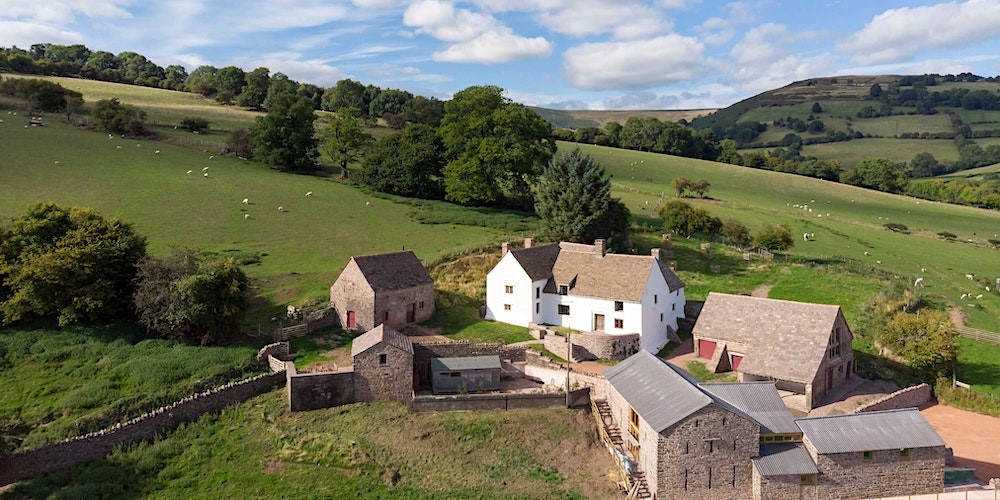
Location : Threshing Barn, Llwyn Celyn, NP7 7ND (Landmark Trust property)
Booking – Tickets available via Eventbrite – CLICK HERE
Cost : £10

Simple Words to Moving Pictures is a workshop from Shane Anderson exploring the art of the screenplay, how it differs from more literary forms and what writers who may have little or no knowledge of the medium might gain from such an investigation.

Film is not only a visual medium, but a highly collaborative one and as such makes very specific demands on those creating its blueprint: the screenplay. It is a spare, ‘less is more’, art form where the cinematic potential of its story must always be not only evident, but exposed with immediacy and momentum. Does this mean, however, that all opportunity for poetry, symbolism and articulacy is lost? Far from it.”

As to location (location, location!), we are thrilled that the Landmark Trust, Llwyn Celyn property will be our venue. Set in wondrous countryside, we will spend our time comfortably housed in the converted Threshing Barn. A light, bright and hopefully inspirational place to get the creative juices flowing.

Shane Anderson – Is an accomplished Writer, Director and Producer – Winner of numerous script writing awards since 2014 including, ScriptSlam and Sandalle 5 ’n’ 10 monologue/duologue. Devised, directed and storylined ’City Road’ and ‘Anamnesis 25:12’, the latter described by Wales Arts Review, “as one of the ‘stand-out pieces’ (of Mercury Theatre, Cardiff ) and ‘a hilarious farce’.

Some of Shane’s full length scripts have been longlisted by the BBC Writers’ Room, Papatango New Writing Prize and The Verity Bargate Award. In the same year 4 of his scripts were shortlisted for the London Screenwriters’ Festival’s, Create 50 ‘The Impact’ competition.

The short screenplay “Bronwyn Goes Dancing” was a semi-finalist in the L.A. based Bluecat (Short) Screenplay Awards, 2017; by 2021 this short film had been produced and showcased at the prestigious Lewes-based WOFF Festival (Women Over Fifty Film Festival) under the ‘Best of The Fest’ banner, as well as it’s partner festival ‘Leytonstone Loves Film’

2018 “Zip and the Fly Boys” reached the BBC Drama longlist and described Shane as ‘BBC Writer of Interest’. 2018 full-length radio play ‘A Cold Calling’ was shortlisted for the Irish national broadcaster RTE’s P. J. O’Connor Award.

You can view the short film, Bronwyn Goes Dancing by CLICKING HERE

Please note – workshop numbers are limited, to avoid disappointment please book your place via this eventbrite link – CLICK HERE

Hope to see you there.

Posted in Uncategorized | Tagged , , , , , , , , , , , , , , , , , , , , | Leave a comment

Year Starts on a High!

As we plough headlong into the third week of the new year, we are delighted to relay some news.

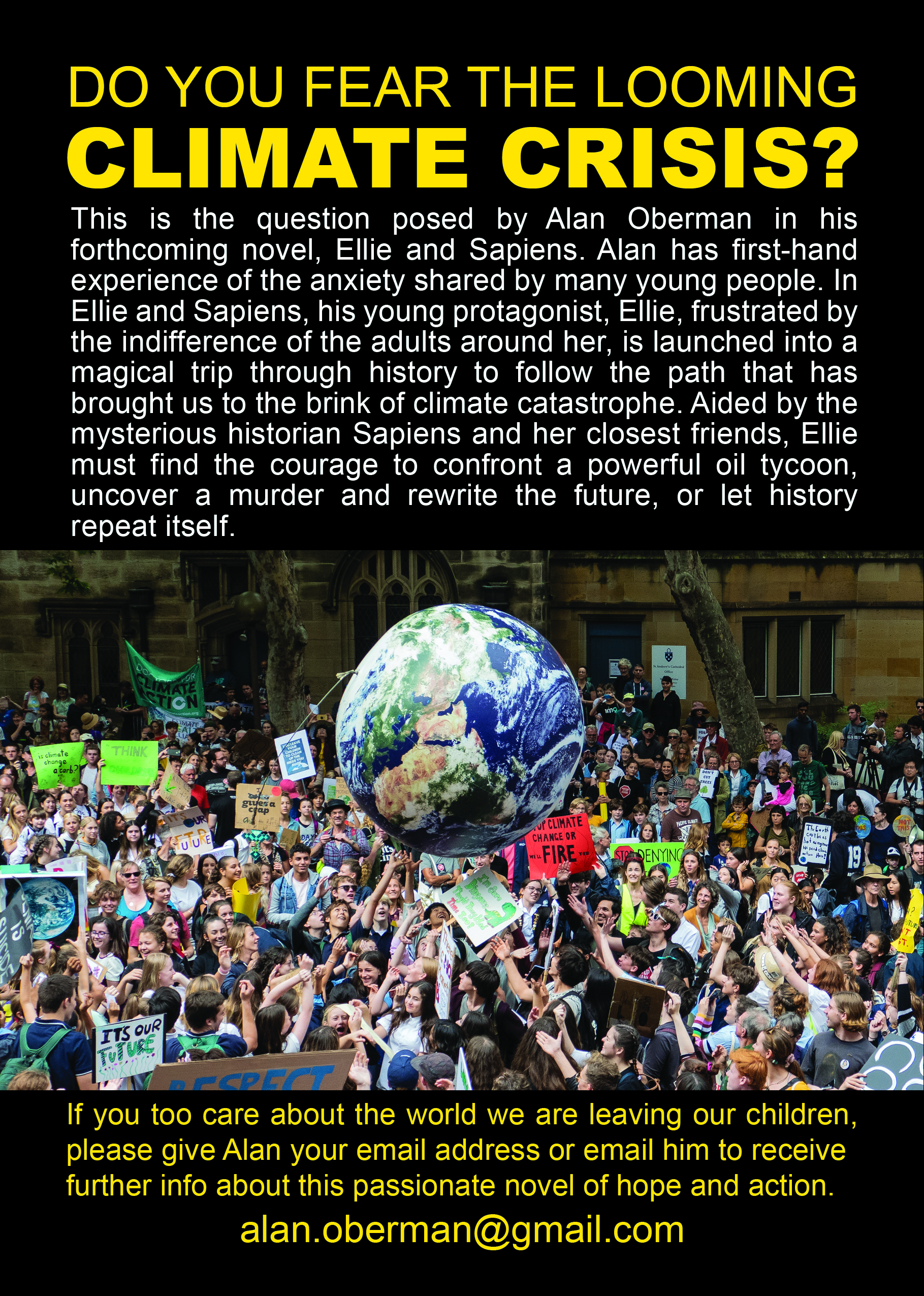
Hay Writers’ Circle member, Alan Oberman’s forth coming book, “Ellie and Sapiens“, has been accepted by Arkbound publishing. Arkbound specializes in supporting authors from disadvantaged backgrounds and works dealing with environmental and social issues. As you may have read from our previous article, Alan’s new book deals with climate anxiety in young people.

The book will be published next spring.

Huge and well deserved congratulations to Alan, and to the members of the Work In Progress group too. As Katy Stone, HWC Chairperson writes – “It’s testament … to the genius of the buddy system of our little Work in Progress Group, so a Brava! too for Marianne (Rosen’s) tenacious support and encouragement as well as dreaming up the group and buddy concept.”

CLICK HERE to read the previous HWC article on “Ellie and Sapiens“.

More Good News!

We are also delighted to reveal that another Hay Writers’ Circle member and winner of the 2022 Hay Poetry Prize, Michelle Pearce, has secured a commission of six poems for the Wildlife Trust of South and West Wales, in conjunction with it’s work with Green Connection Powys projects. Congratulations Michelle!

We will share more news on this exiting endeavour as it progresses.

In Other News …

Thank you to everyone who entered our Frances Copping Prize for Fiction Competition. Submissions are now closed for this year. All entries are currently with our judge, Alan Bilton, and we can expect news of the winning entries in due course.

And Finally …

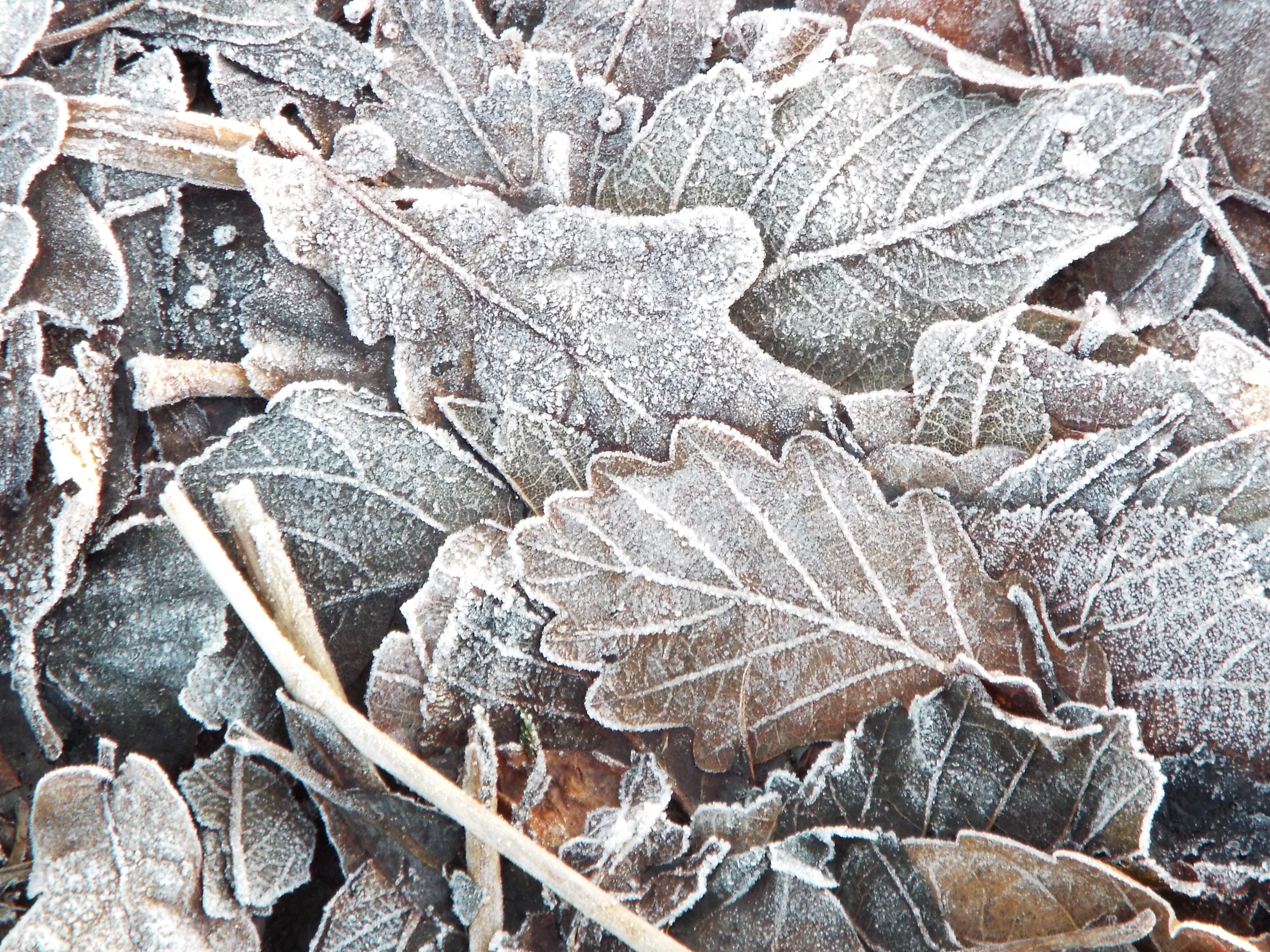
Photo by Emma van Woerkom

Happy Writing!

Posted in Uncategorized | Tagged , , , , , , , , , , , , , , , , , , , | Leave a comment

A Book, A Workshop and A Fiction Competition.

Ellie and Sapiens by Alan Oberman

Few climate-fiction novels feature those who benefit from wrecking the planet. Think of a young, Trump-like millionaire profiting from exploiting oil in Bolivia. Charismatic, dynamic, ruthless, that’s Muelo, the anti-hero of Alan Oberman’s forthcoming novel, Ellie and Sapiens. When Muelo makes a bid to become city mayor, a stepping stone to greater power, school-student Ellie must summon up the courage to oppose him. She’s supported by her friends Imran and Ava, and by the mysterious historian, Sapiens, who takes them on humankind’s journey to our present looming catastrophe. Would you deny the truth to achieve climate goals? That’s the agonising decision Ellie and her friends have to make in the thrilling climax to this novel of hope through activism. Ellie and Sapiens will be published in 2023. For a brief preview of Ellie and Sapiens on this website, click on ‘About Our Authors’ tab and then scroll down to Alan Oberman, clicking on the relevant link. Look out for further news of this exciting and extraordinary book.  

Dream Fiction and Magic Realism Workshop with Dr Alan Bilton

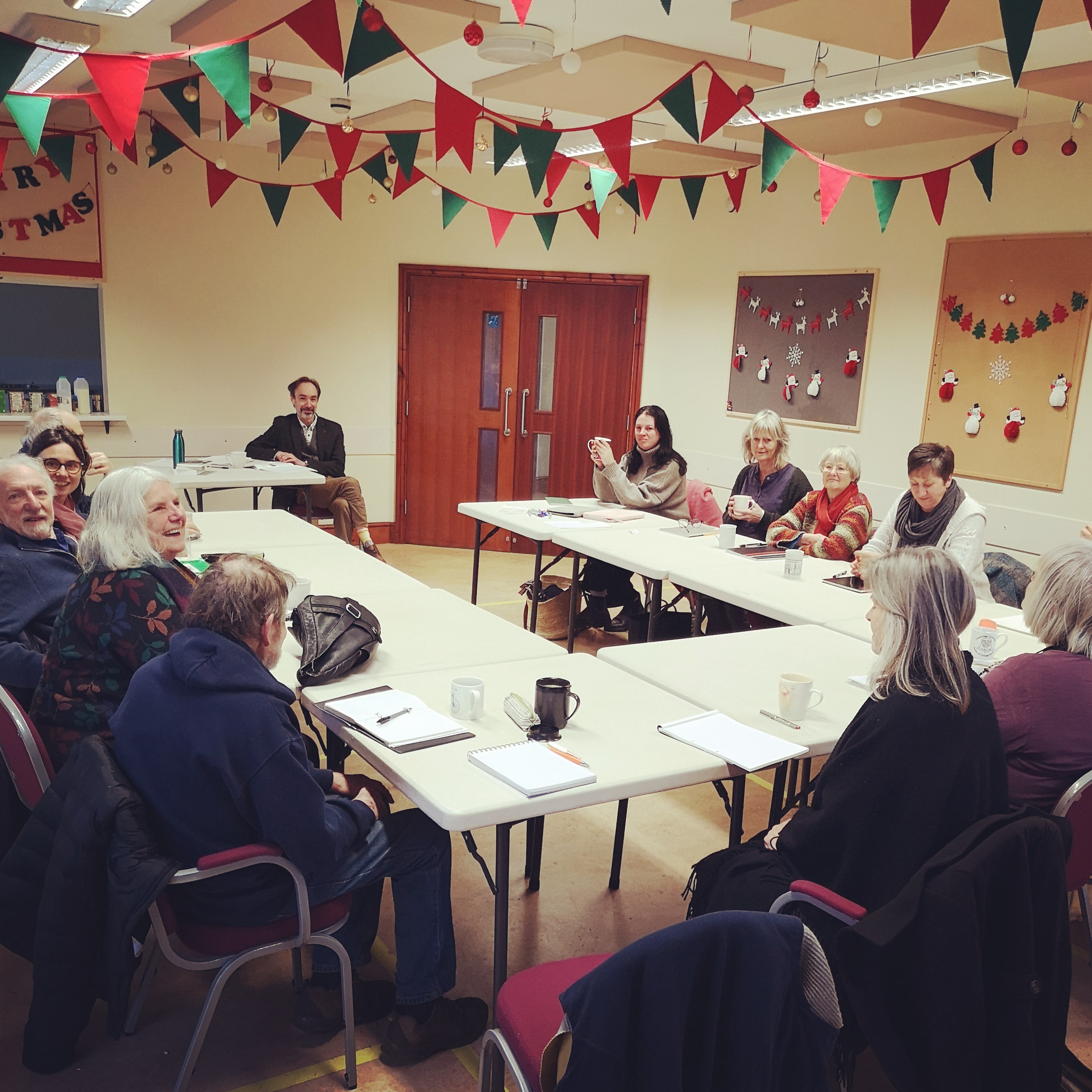
16 Writers Dreaming! What a great workshop on Magic Realism and Dream Fiction from Dr Alan Bilton , on Monday 5th December. The Hay Writers were joined by guests including past members and some very welcome members of the Marches Poetry Group – 16 of us plus Alan in total. We wrote while snug in Cusop Village Hall floating ideas, delving into our dreamy minds, slicing reality and listening to imaginative anecdotes. We left enthused, brains buzzing with possibilities and plots! Thank you Alan!🤩

Fiction Competition

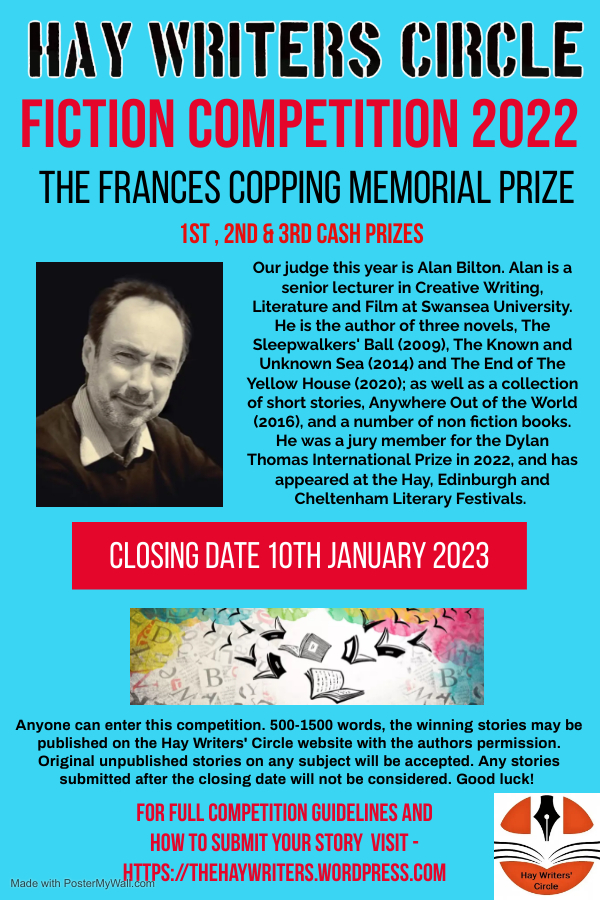
Don’t forget there’s still plenty of time to put your writerly pen to paper and enter the Frances Copping Memorial Prize for Fiction. 500-1500 words on any fictional theme by Tuesday 10th of January, 2023. Details on our Competitions page or download them by clicking the link below :-

Hay Writers’ Fiction Competition

Good luck!

Posted in Uncategorized | Tagged , , , , , , , , , , , , , , , , , , | 1 Comment

The Frances Copping Memorial Prize for Fiction 2022 – Judge Announced.

We are kicking off our new writing year with some exciting news!

Submissions are now invited for our annual Fiction Competition, The Frances Copping Memorial Prize 2022, named in fond remembrance of our Lifetime President who sadly passed away in 2020.

The competition is open to everyone, members of Hay Writers’ Circle and non-members too. Pieces of 500-1500 words on any fiction theme are accepted. Closing date for entries is Tuesday 10th January 2023. Prizes are awarded for first, second and third place.

This year we are delighted to announce that our judge is Alan Bilton. 

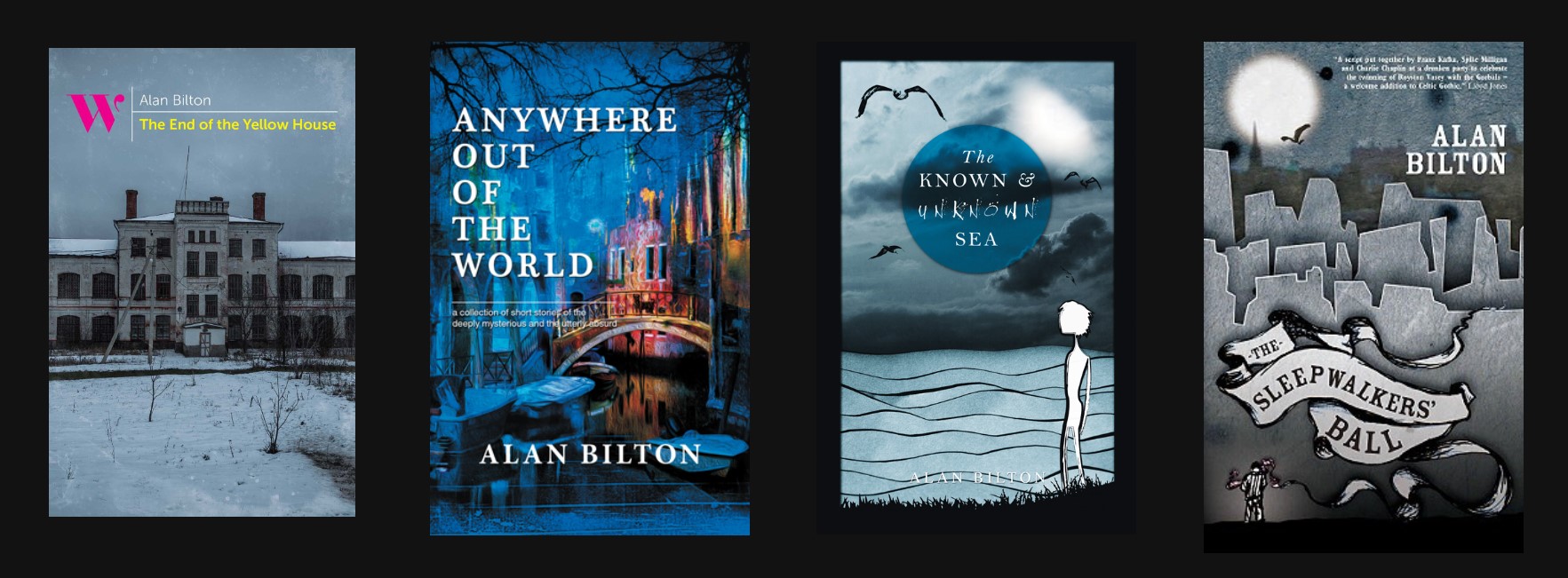
Alan teaches Creative Writing, Literature and Film at Swansea University. He is the author of three novels, The Sleepwalkers’ Ball (2009), The Known and Unknown Sea (2014) and The End of The Yellow House (2020), as well as a collection of short stories, Anywhere Out of the World (2016), and books on silent film, American fiction, and the 1920s. He was a jury member for the Dylan Thomas International Prize in 2022, and has appeared at the Hay, Edinburgh and Cheltenham Literary Festivals. 

Please follow the guidelines listed on our COMPETITIONS page if you would like to enter.
You can contact haywriterscompetitions@outlook.com if you have any questions or queries. 

Click of the following highlighted link to download the entry form :

hay-writers-circle-fiction-comp-1.docx- Download

Good Luck!

Posted in Uncategorized | Tagged , , , , , , , , , , , , , , , , , , , , | Leave a comment

Magic Realism & Dream Fiction Workshop with Dr Alan Bilton

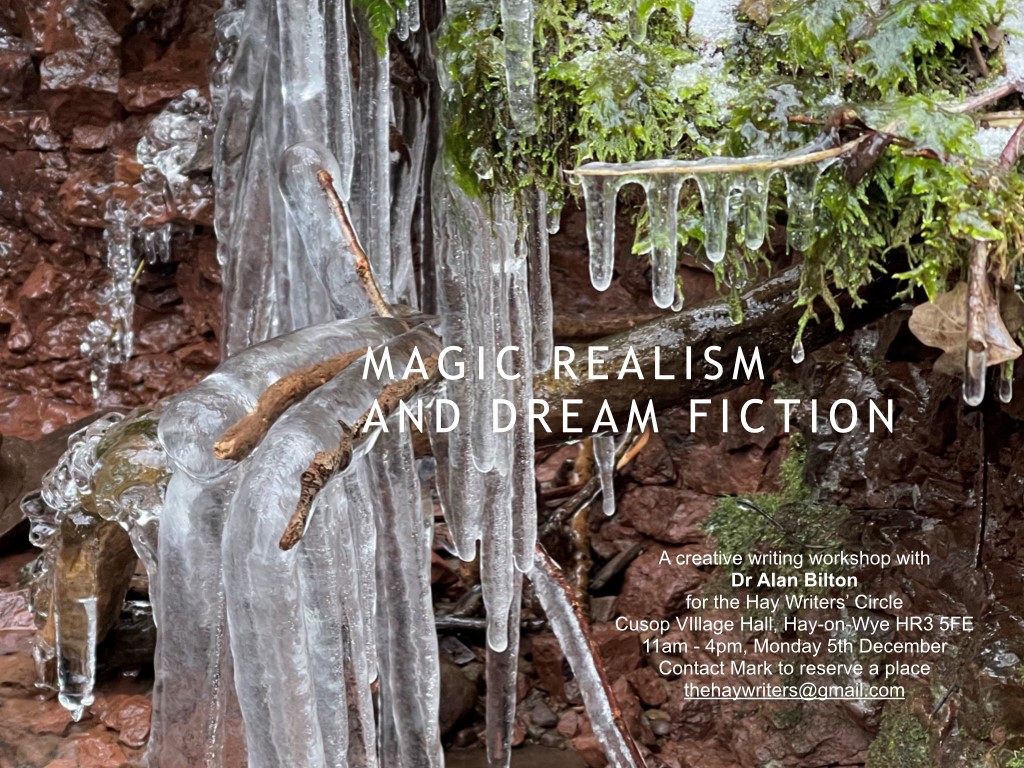
We are delighted to share details of an ‘open to all’ writing workshop lead by Dr Alan Bilton on Monday December 5th.

Dr Alan Bilton, “received his undergraduate degree in Literature and Film from Stirling University in 1991, and his PhD (for a study of Don DeLillo, an author with whom he has absolutely nothing in common in any way) from Manchester University in 1995. He then taught American Studies at Liverpool and Manchester, before taking up a post teaching literature, film and creative writing at Swansea University in 1996.

He is the author of three novels, his latest The End of the Yellow House (Watermark Press 2020),  The Known and Unknown Sea (Cillian Press 2014), variously compared to Charlie and the Chocolate Factory, the 1902 movie, A Trip to the Moon, and Dante’s Inferno, and The Sleepwalkers’ Ball (Alcemi, 2009) which one critic described as “Franz Kafka meets Mary Poppins”.  In Bilton’s Anywhere Out of the World (Cillian Press 2016), he dares us into a fantastical and strange alternative reality through a collection of short stories,  into a labyrinth, a world of nocturnal cities, hapless slapstick and misadventures, lost souls and lost travellers.

As a writer, he is obviously a hard man to pin down. He is also the author of books on Silent Film Comedy (Silent Film Comedy and American Culture, Macmillan, 2013)  Contemporary Fiction, (An Introduction to Contemporary American Fiction, Edinburgh University Press, 2002)  and co-editor of America in the 1920s (Helm, 2004). His essays, reviews and fiction have appeared in the New Welsh ReviewPlanetThe Lonely Crowd, The Journal of American Studies, The F. Scott Fitzgerald Review and elsewhere, as well as the anthologies, Sing Sorrow Sorrow (Seren, 2010) and A Flock of Shadows (Parthian, 2013).”

©Dr Alan Bilton

Details of the Workshop listed below :

Date : Monday 5th December 2022. 

Lead : Dr Alan Bilton – https://alanbilton.co.uk

Location : Cusop Village Hall, Hay-on-Wye, HR3 5FE (plenty of free car parking on site).

Time : 11am – 4pm – please bring a packed lunch – Tea and Coffee making facilities available.

Cost : Non Members – £10 per person, HWC Aluni – £7.50, HWC Members – donation.

Please contact HWC Secretary, Mark, at thehaywriters@gmail.com to reserve your place.

Payment : via BACS payment to:
Hay and District Writers’ Circle. Natwest Bank, Sort code 53-50-31, Account no 52557499. 
Put your name as the payment reference.

**Prior to payment, please confirm with the Secretary (Mark) that places are still available**

Posted in Uncategorized | Tagged , , , , , , , , , , , , , | Leave a comment

Words amongst Waterfalls 

Article by Lily Rose King

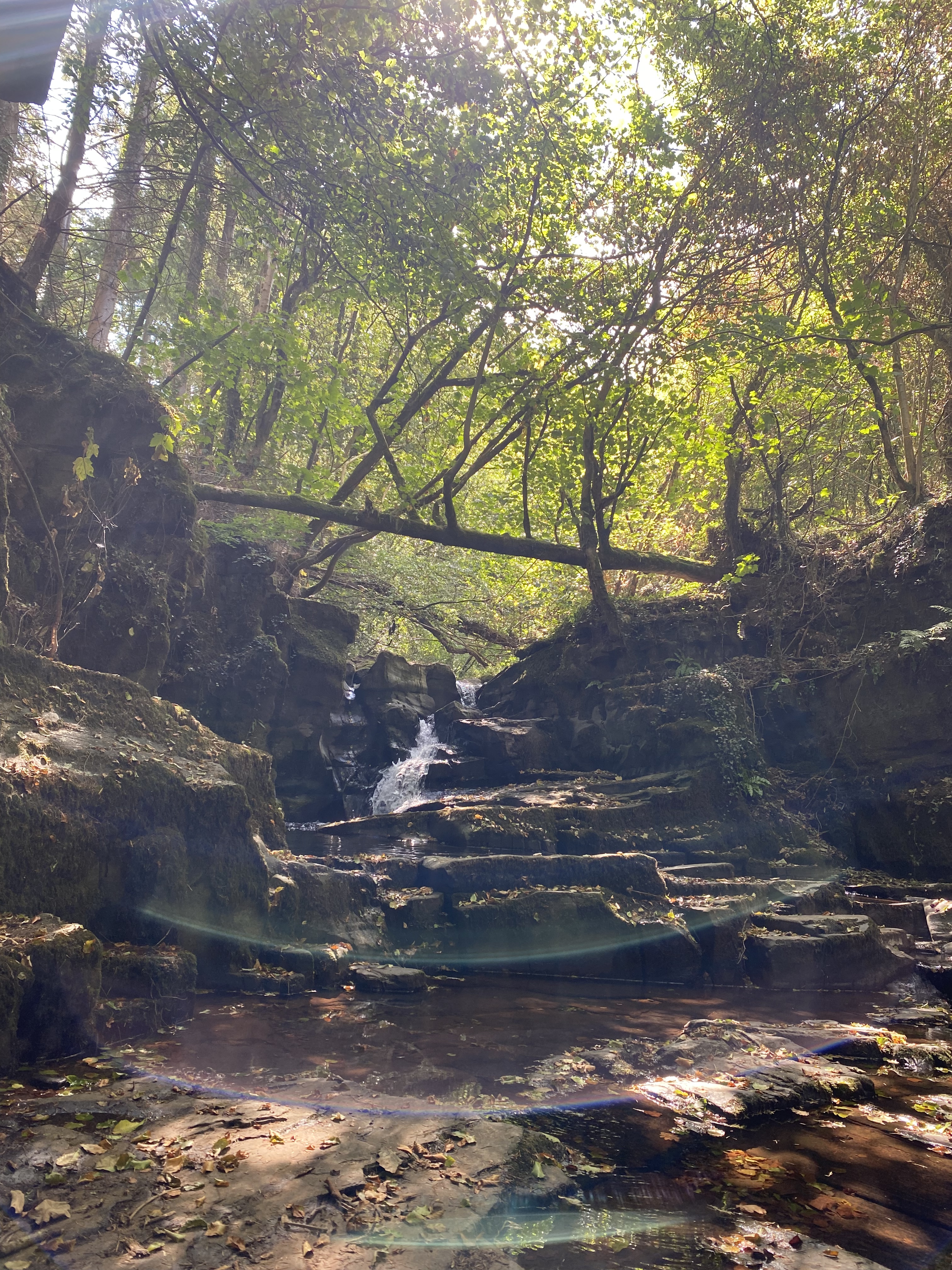
The Brecon Beacons are an abundant source of inspiration for any writer, with a secluded retreat into their magic bound to stir creativity.

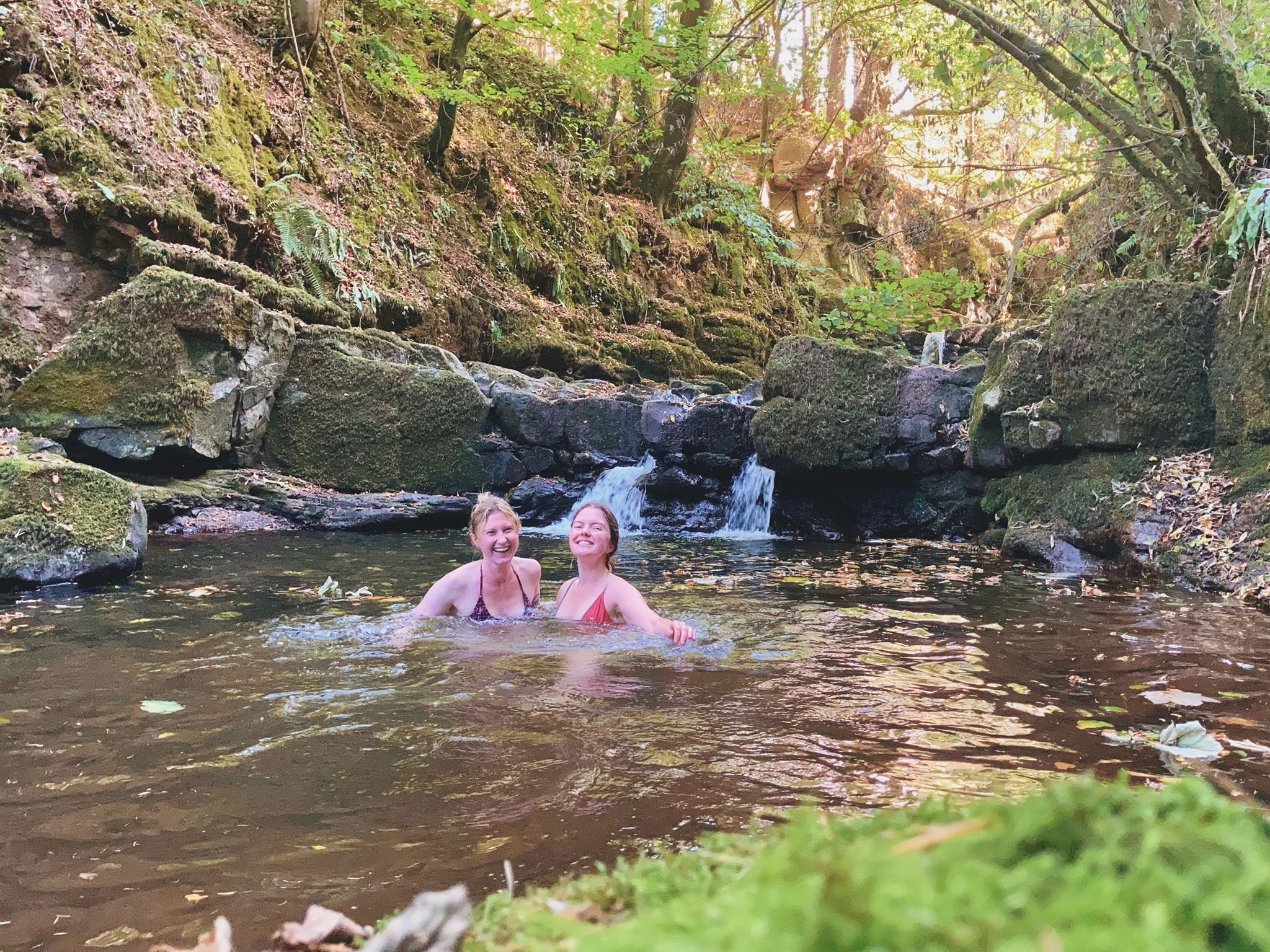
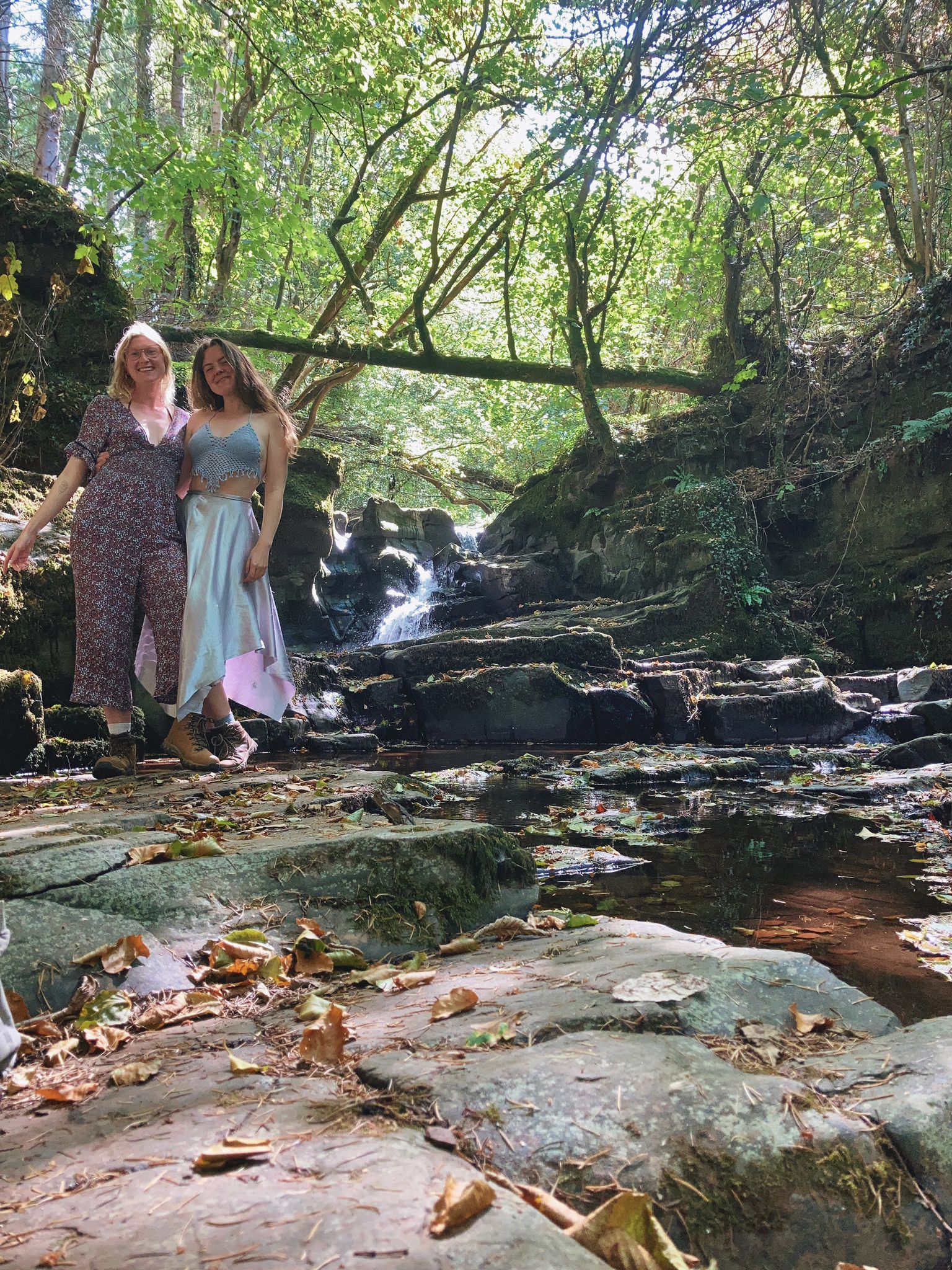
This was the outcome when fellow Hay writer, Beth Flynn, and myself, ventured to a nearby waterfall pool to immerse ourselves in nature and let our imaginations flow.

We walked from Brecon towards the Loggins at the foot of Pen y Fan, cutting off to a track by the side of a stone bridge and following the river up to a series of beautiful waterfall pools.

After enjoying a packed lunch and sharing some wine, we challenged each other with the five words game, an effective prompt for powerful poetry.

We each jotted down five words influenced by our picturesque surroundings, shared them, and set a timer for five minutes to individually craft a poem that weaved in all ten words.

After completing the task and reading our work aloud to each other, we went for a dip in the refreshing water.

Below are the words we selected and our resulting poems.

Reflection

Layers

Mossy

Rugged

Ancient

Moss

Stone

Crisp

Tangled

Flowing

Reflections

by Lily Rose King

time passes, moss on stone

yet her beauty remains crisp

the dark knots of her hair like tangled vines

flowing water chiselling her curves

inside she’s as rugged as the ancient landscape

but despite the layers her reflection never changes

soul howling through mossy undergrowth

to be free, to see light at last

Amongst the Moss 

by Beth Flynn 

Crisp is the memory of Spring beneath my step 

A reminder of who I was then 

Flowing beside pollen seed 

Amidst the newness.  

Somehow, I feel lighter here 

Where the air strokes stone 

Until she knits herself a mossy coat. 

I sleep amongst her tangled branches where ivy once smiled 

In a rugged blanket of browns and turning greens 

I observe my reflection, thick with all that was before 

Ancient beside all that is  

I listen 

I listen, biting the lip of her soil  

Until my coat of heavy flesh bleeds all I think I should be 

Planting layers of self in sediment 

We rest here 

Amongst the moss 

Posted in Uncategorized | Tagged , , , , , , , , , , , , , , , , , , , , , , , | Leave a comment

5 Books that Changed the Way I Think by Helen Smith

It’s fascinating to spend time thinking about books and the impact they have had on us. How a book has changed the way we think, impacted our perceptions or revolutionised how we ourselves write about the world we inhabit.

Hay Writers’ Circle member, Helen Smith, lists 5 miraculous volumes and discusses the lasting effect each has had on her.

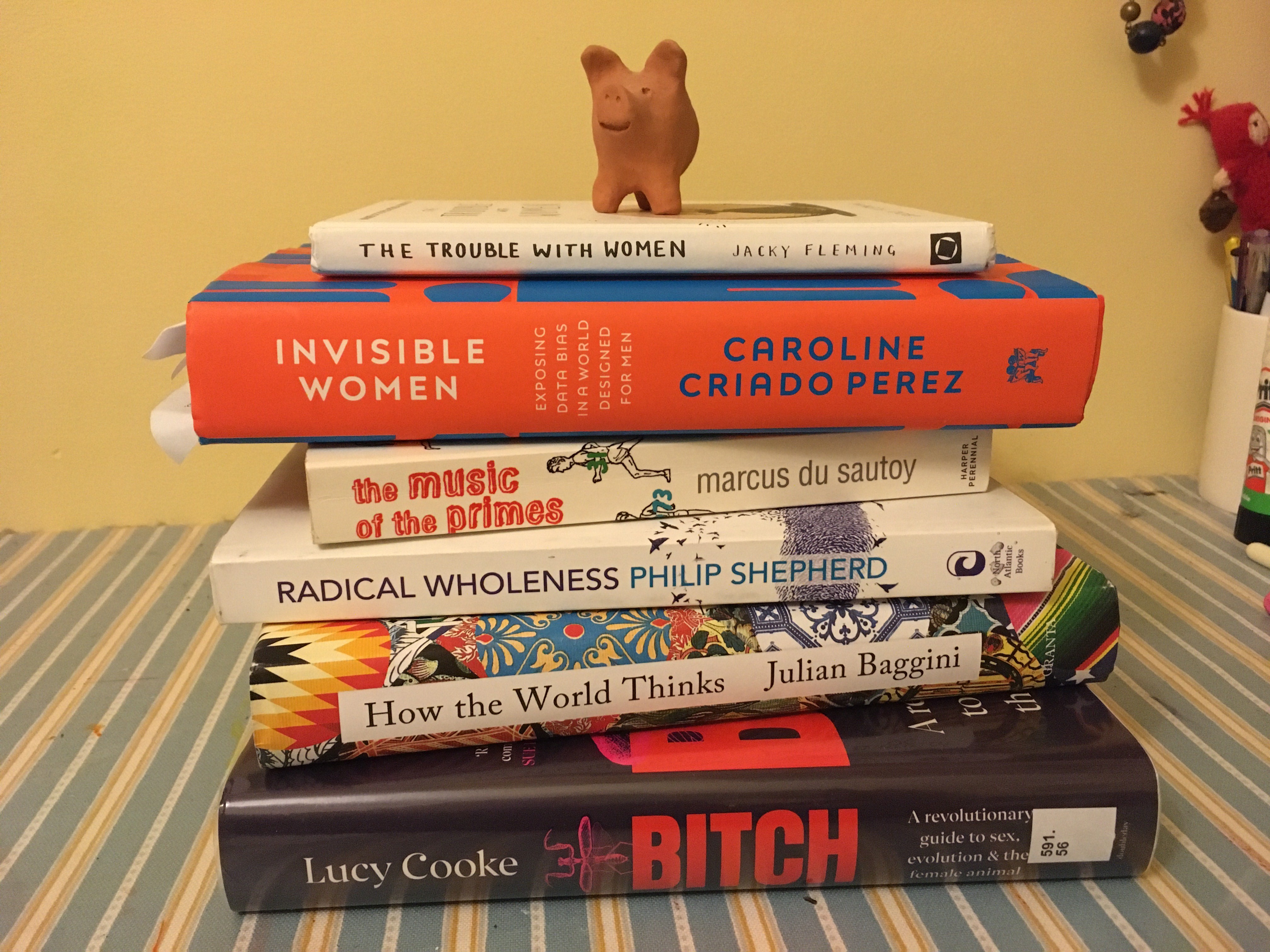
Radical Wholeness by Philip Shepherd

Most of the books on this list challenge assumptions or norms in one way or another, and this one is no exception. Have you ever questioned how we think with our heads, or perceive the world with the 5 senses? Having been so strongly socialised into these norms, it can be impossible to imagine how it feels to think with the belly, or to perceive the world with a different set of primary senses, but there are cultures out there that do. This book introduces new ways of relating to the world, challenging assumptions we never realised were just that – assumptions – and not the universal reality of human experience. By coming into a new kind of relationship to the world around us, we can heal the relationships we have with our own bodies, with each other, and with our planet.

Bitch by Lucy Cooke

As a zoology graduate, this book totally turned on its head so much of what I was taught. It made me aware of so much bias that was inherent in the theories and ‘facts’ I was given, and prompted a total re-examination of everything I thought I knew about animal biology. Not only that, but I’ve rarely had so much fun reading a book as I did with this one – there was something on almost every page that had me stopping to read out loud to friends and family, and then relaying in conversations for weeks afterwards. Talk to me about opossums, and you’ll never look at one in the same way again. Better still, read the book, and you’ll never look at the animal kingdom (including humans) in the same way again.

The Music of the Primes by Marcus du Sautoy

I was always good at maths, but what came naturally was learning and applying the rules – I have a harder time getting my head around the broader concepts that underlie them. Read over a summer in France, this book about the Riemann Hypothesis (an unsolved problems in mathematics, with a $1 million prize resting on its proof) brought it all alive in a new way. For the first time, I actually understood the background to the rules and formulas I’d learnt, and it opened up the world of maths into a rich, complex and fascinating landscape. Even if you think maths isn’t for you, this book might just change your mind.

How the World Thinks by Julian Baggini

Before I read this I had never enjoyed philosophy, considering it a subject based on old white men sitting around thinking and pontificating. But this book takes a much wider view, exploring the philosophies that societies from all corners of the world have been built on. It’s not just about the thoughts of philosophers and mystics, but the underlying cultural philosophies and beliefs of everyday citizens, and the way they’ve structured how people navigate and understand the world. From the Zen understanding of virtue to the Islamic and Australian Aboriginal concepts of time, this book really opened my eyes to how narrow our Western thinking and assumptions about the world actually are.

Invisible Women by Caroline Criado Perez / The Trouble With Women by Jackie Fleming

I couldn’t choose between these two, both of them tackling the same subject but in very different ways. Invisible Women made me angry. Very angry. But it really is incredibly important and I believe it should be required reading in schools. I knew the world was built for men, but I had no idea of just how deeply this went, or the severity of the consequences. Ever since I read it, I’ve been much more aware of all the little ways in which my life is impacted by these things, and I’m much less willing to just let it stand. I will question, and I will speak out. The Trouble With Women is a much lighter take on the subject, but no less impactful. Full of hilarious illustrations, it’s one of those books that makes you laugh out loud, and then makes you think. And you won’t view the world in the same way again.

Helen Smith
Posted in Uncategorized | Tagged , , , , , , , , , , , , , , , | Leave a comment

Richard Booth Prize Winner 2022, Lily Rose King.

We are delighted to showcase Lily Rose King’s 1st prize winning piece, “Angels” from this year’s Richard Booth Prize for Non Fiction.

We are extremely grateful to our wonderful judge, Gilly Smith for reading the entries and selecting such a worthy winner.

Gilly wrote of “Angels” –

This is such a beautifully poignant essay on life and death, motherhood and childhood, love and loss. I love the tiny detail – hours spent giggling over slow cigarettes – juxtaposed with the profound reflections on what life and love is really all about. The lack of names makes it a universal story while the detail, again shared by so many of us, makes it belong to the protagonist alone. It’s about everything that is important in life.

Angels
by Lily Rose King

Six children birthed and another one raised as her own. Twelve grandchildren smattered along a sliding scale of ages with the oldest tipping into adulthood, and now the thirteenth pressed into her arms, just two days old.

Her bones resemble memory foam as they recall how to hold him with a gentle ease that can only be gleaned from experience; nestling into the crook where so many babies before him have been cradled.

Three weeks from now her earth will shatter, bringing into focus the poignancy of this moment. But in her blissful unawareness she soaks up the endless magic that is summoned by the all-consuming presence of a newborn.

Memories engulf her and suddenly she is just turned sixteen again, clutching her firstborn like a doll and holding back tears as the nurses scoff at her naivety.

They begrudged her the help she so desperately needed, but pride and determination to do her best for her boy saw her forge her own path as a mother. Years later, she would teach her three daughters how to do the same; albeit under wildly different circumstances.

Born and raised on the very edges of Northwest London, she fell head over heels for trouble. They were married while her belly swelled, her father’s fierce disapproval subsiding the minute he laid eyes on his grandson for the first time. From then on, their bond was unshakeable.

The babies kept coming, and she found her heart continued expanding to make room for them all. With an army husband came the inevitable compromise to frequently move home, and she uprooted her flock ready for the next cycle to commence: new town, new friends, new start.

To her youngest children, separated from the older ones only by a large age gap and a different father, she would indulge repeated requests to recall tales of their mishaps and adventures, embroidering these years with a pattern of laughter and coating them with a sepia tone of nostalgia. Even though her reality was somewhat different, being a devoted working mother with an unfaithful spouse, it was evident her children had always been – and would always be – the light of her life.

When they were posted to the Brecon Beacons it induced an epiphany. Existing amongst the lush green of those valleys was like settling into cushions on a sofa: she finally felt they were home. Hours were spent giggling like schoolgirls over slow cigarettes with the neighbour who quickly won the occupation of her best friend. Her oldest daughter learnt to ride horses, and her youngest raced snails up the living room walls. The smallest of the boys set his status as the joker by unwittingly cracking hilarious one liners, which are reminisced about even to this day. The big brothers caused such mischief that it still proved legendary when the youngest children, not yet born, eventually attended the same school some thirty years later.

After moving back down south and remarrying, her tribe expanded again. Not only were her children growing up and starting their own families, but she also added two more babies to her brood. The daughter whose newborn she now held, and a son. Both premature and tiny as a result of preeclampsia.

Despite relishing as the nucleus of her clan, physically living at the centre of each member, and metaphorically being the one they gravitated towards, she felt something was missing. Years of studying and late nights had paid off as she became a qualified nurse and excelled in her job on a gynaecology ward, but she couldn’t shake the magnet that urged her towards the Brecon Beacons once again.

A successful application to a district nurse role saw the four that remained in the household pack up and relocate. For her, she knew it was the last time. Her body breathed a sigh of relief as soon as they arrived.

Her existence ebbed and flowed, meandered with the river, but she was solid in her decision to move. Whatever happened, it was easier to cope with here. The kids became adults, and the adults had more kids. No two were in the slightest the same, and neither were any two days.

She was their rock. Answering daily phone calls for advice, soothing teary teenage tempers, guiding through break ups and marriages. She thrived on it.

The baby stirs in her arms and summons her back to the present. She sits on the end of the new parents’ bed while they slouch against the headboard, ecstatic but exhausted.

The next few weeks are a bubble of bliss as much for her as for the mother; sleepy cuddles and squishy features evoking sentimental smiles. Although her nappy changing repertoire is extensive, the exercise takes a little getting used to again.

And then it comes. On an ordinary Saturday. The news from Africa that her firstborn is dead.

A heavy reminder that where there is life there is death.

Instantly she is caught up in the whirlwind process that no mother should have to endure. Panic. Sorrow. Anger. Fear. Followed by grief taking up its permanent residency in her body.

Like never before she collapses into the family she has built. They all experience the loss in unique ways, but none quite as destructive as hers. Yet the love is palpable. They come from their own homes, hours away, and sit together in hers.

And he is there. The baby. The only being detached from the emotion. But it is as if he knows his importance; understands his role as a shining beacon in the sea of their darkness. In his company they find the relief they seek, if only momentarily.
They admire his beauty and carry his weight, a tangible reminder of the fragility of life.

As he grows so does her anguish. Although she is comforted by his fleeting resemblance to her angel, born not forty-eight years ago. Those who say time travel is not real have never lost a child.

There are countless visitors, so many bouquets that her lounge resembles a florist shop, cards, and condolences. There are arrangements and a funeral. A plot is selected, and a headstone planted there. She visits to clean the marble and arrange fresh flowers.

One phrase embeds itself into her, from her late son’s girlfriend, who had somewhat of an outsider perspective when visiting them in the worst possible situation.

“There is so much love in this house.”

She already knows it is this love that will carry her through.

Photo by Pixabay on Pexels.com
Posted in Uncategorized | Tagged , , , , , , , , , , , , , , , , , , | Leave a comment

‘Grief Is The Price We Pay For Love’ Queen Elizabeth II

It’s often difficult to write when something is too emotionally close.

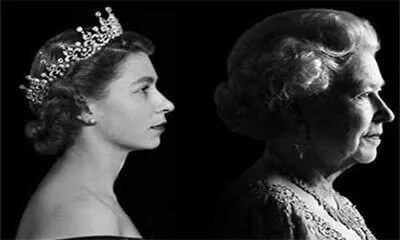
Today, as Queen Elizabeth II is laid to rest many of us reflect on the deep impression she had on our lives. Emotions run high – love and loss, grief and gratitude. We are incredibly thankful for her years of service and the promise she made over 70 years ago, which she kept. She was a remarkable lady who will very soon slip into history leaving her unique indelible mark on it’s pages.

Queen Elizabeth II

Our Writer’s Homework from our last meeting was to write on the subject of Her Majesty. Fortunately, one of our group managed to put pen to paper with this short piece.

   The Queen, God Bless Her

by Michael Eisele

Those of you who are indigenous to these Isles may think it bit cheeky for two recent immigrants (35 years as residents and counting) to be expressing a view on the late queen. In mitigation, let me remark that not everyone who emigrates to the UK does so after reading ‘The Mists of Avalon’ by Marion Zimmer Bradley.

I offer then a conversation, as well as I can remember it, between my wife and myself over the Breakfast table this Thursday morning , 15 September.

Me- You know, I doubt whether Charles III will get such a send off. Why do you suppose that is?

Wife- There’s something special, don’t you think, about a woman who has devoted her entire life to care for her subjects?

M- You mean as a mother, so to speak.

W- Exactly!  Men do care for their children, don’t get me wrong, but only a mother feels that special bond where she would unhesitatingly give her life to protect her young.

M- So you don’t think that thousands of people waiting in line all night to pay their respects is a little, well, extreme?

W- Not at all. Grief is one thing, but do you get the sense that those people feel abandoned? The processions, the flower tributes, it all has an air of, well, celebration. It’s like she’s been part of their lives and always will be.

M- Exactly how one feels about the passing of a beloved mother,  you’re saying

W- Yes. And here’s another thing. Have you noticed (mentions several family issues which seem to have magically been resolved)  It’s as if with her passing she took all the bad stuff that’s been happening with her. Don’t you get a sense of that from the people who have been interviewed on the news?

M- I begin to see where you’re going with this.  You know, what’s really strange is that fire ball everyone saw in Scotland.

W- You mean like how comets are regarded by many as portents of a new era? 

M- You have to wonder. The country could certainly use some optimism right now.

Posted in Uncategorized | Tagged , , , , , , , , , , , , | Leave a comment