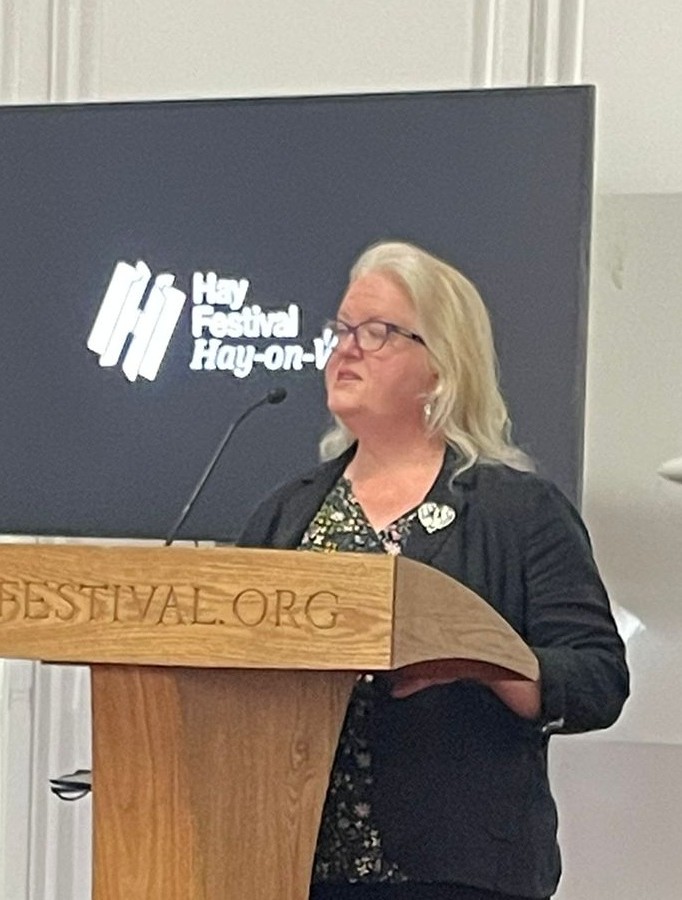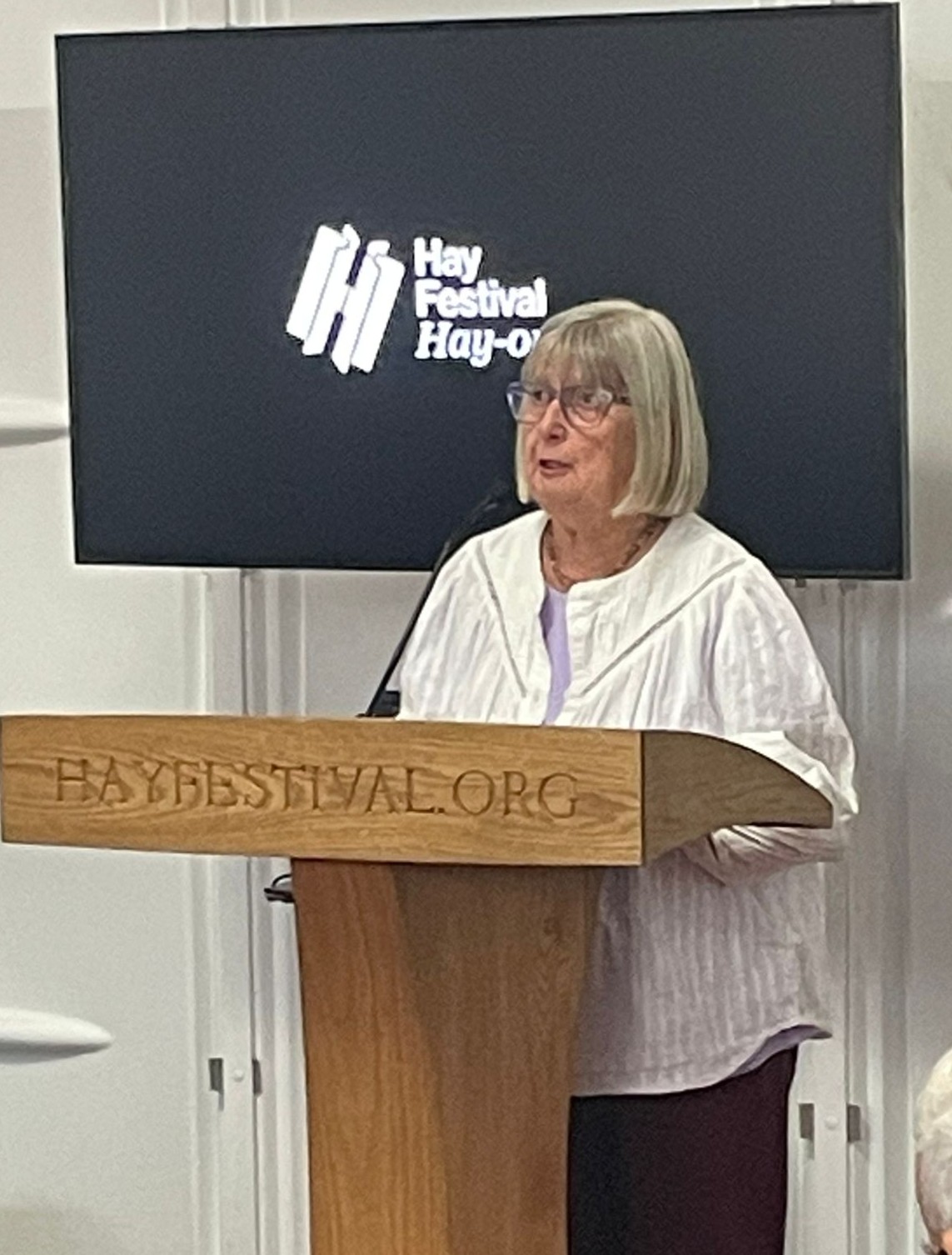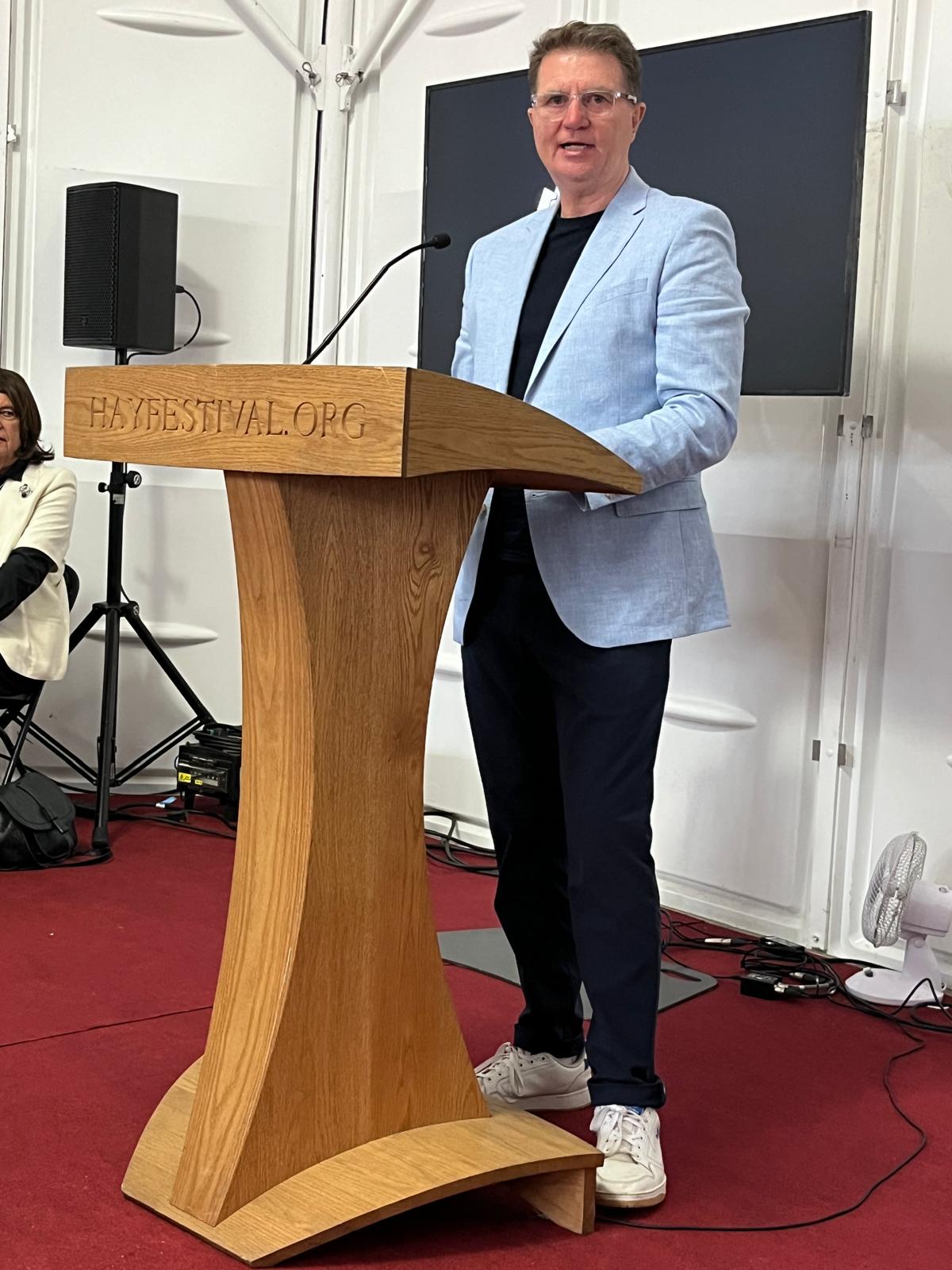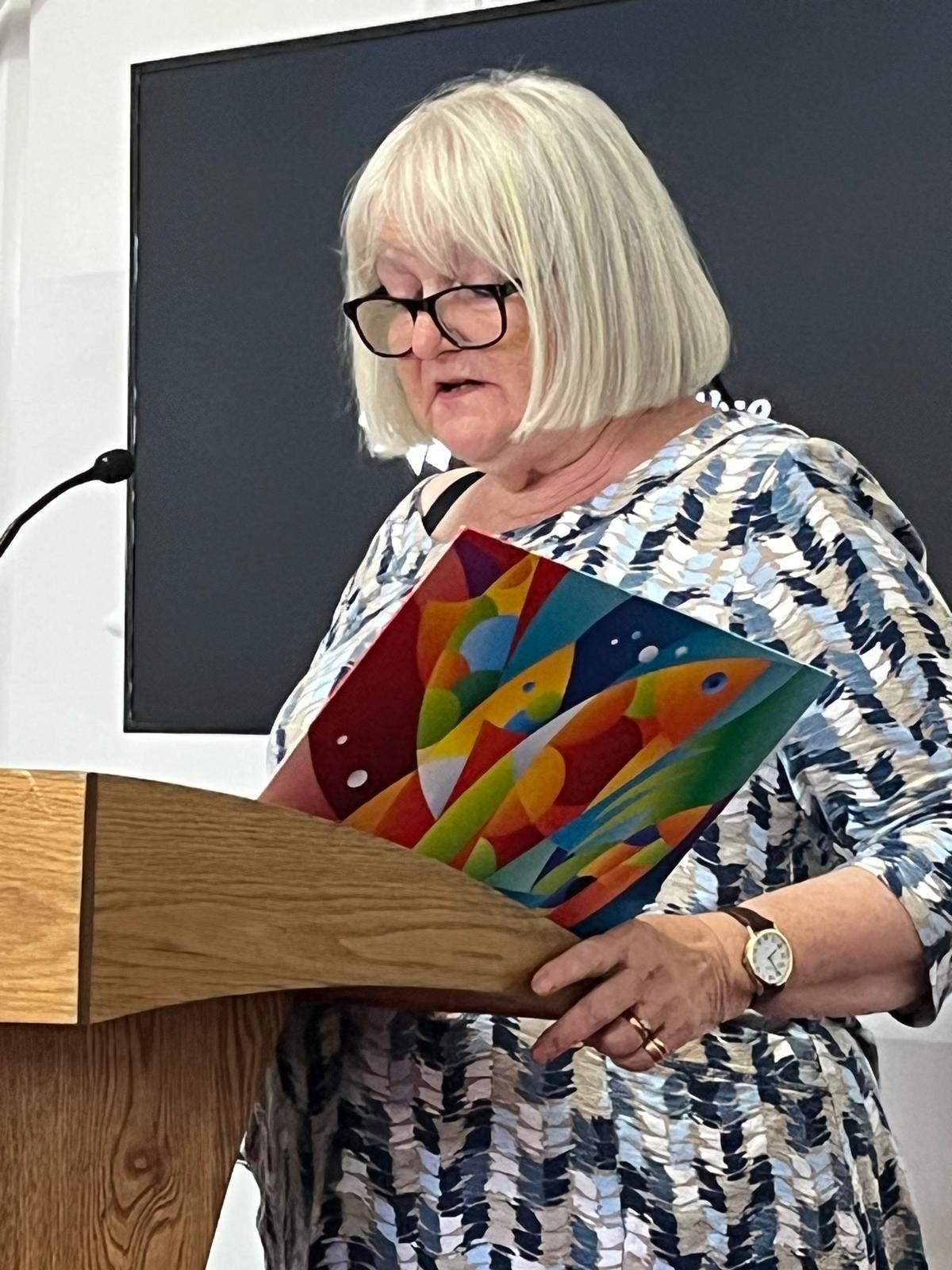

New Writing from Lily Rose King and Nick Thomas, Plus 2025 Richard Booth Prize for Non-Fiction – Competition now OPEN!

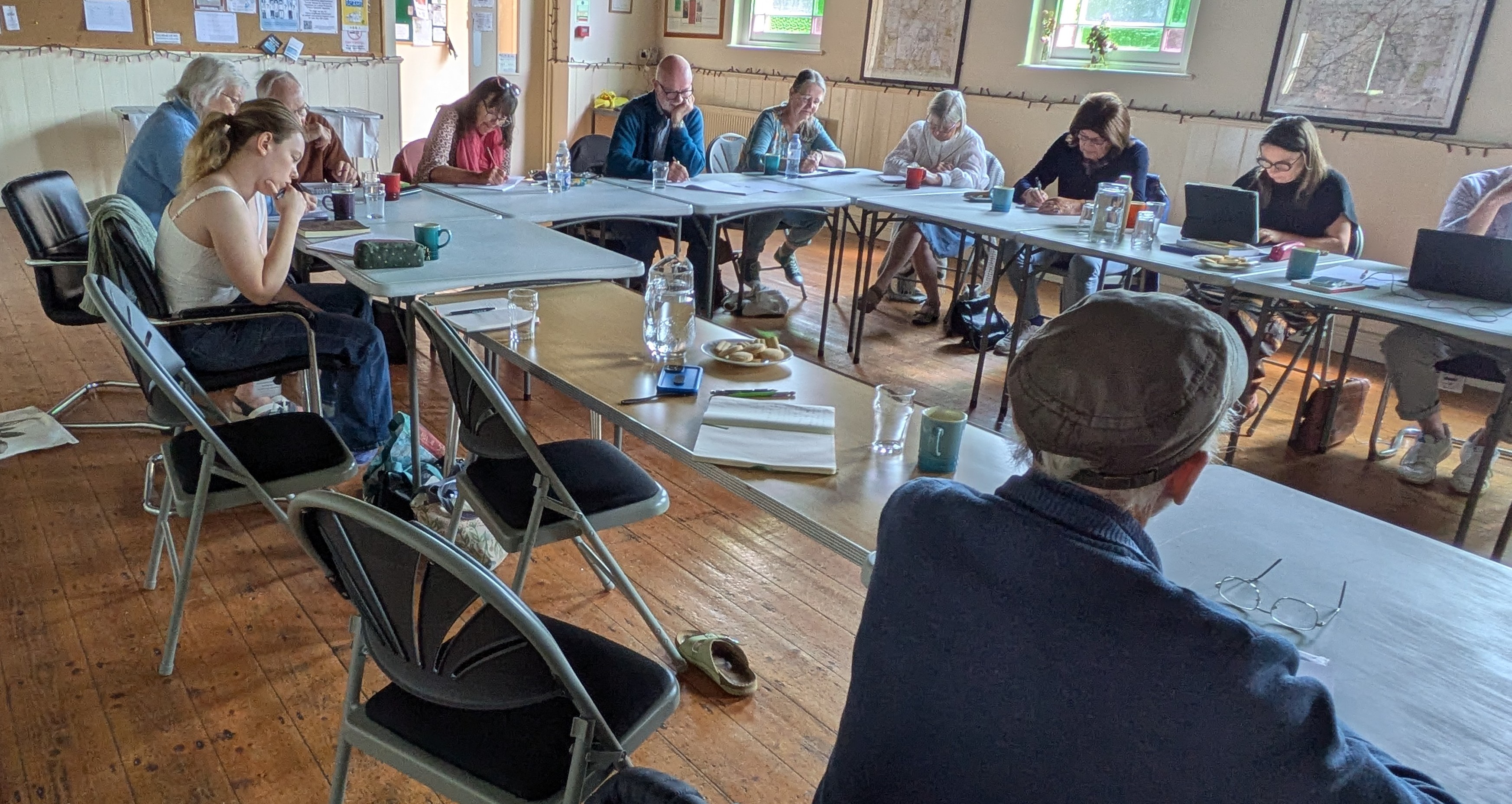
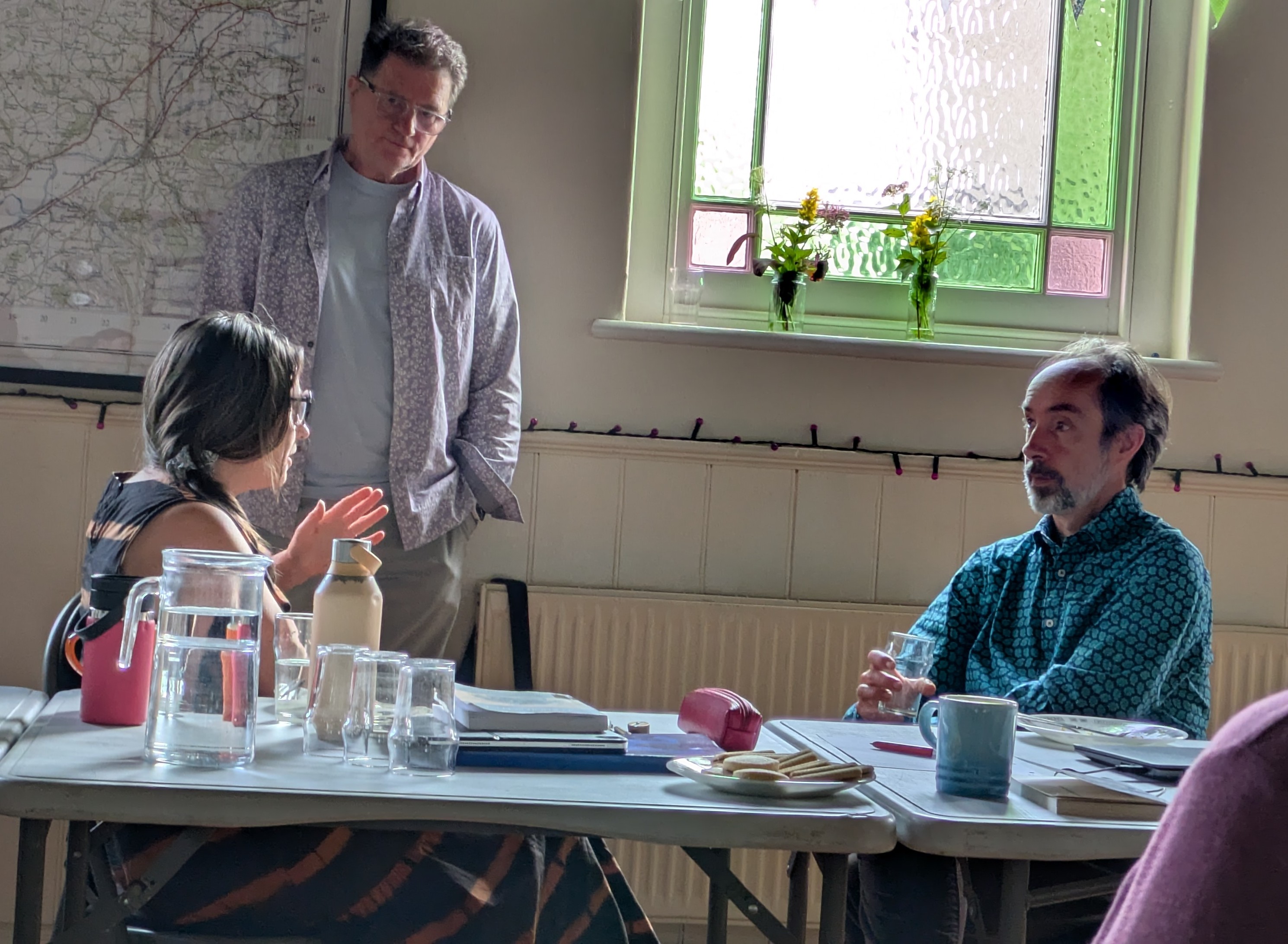
It’s always such a pleasure to begin this recent update with writing from members of Hay Writers’ Circle. This article contains work from both Lily Rose King and Nick Thomas.

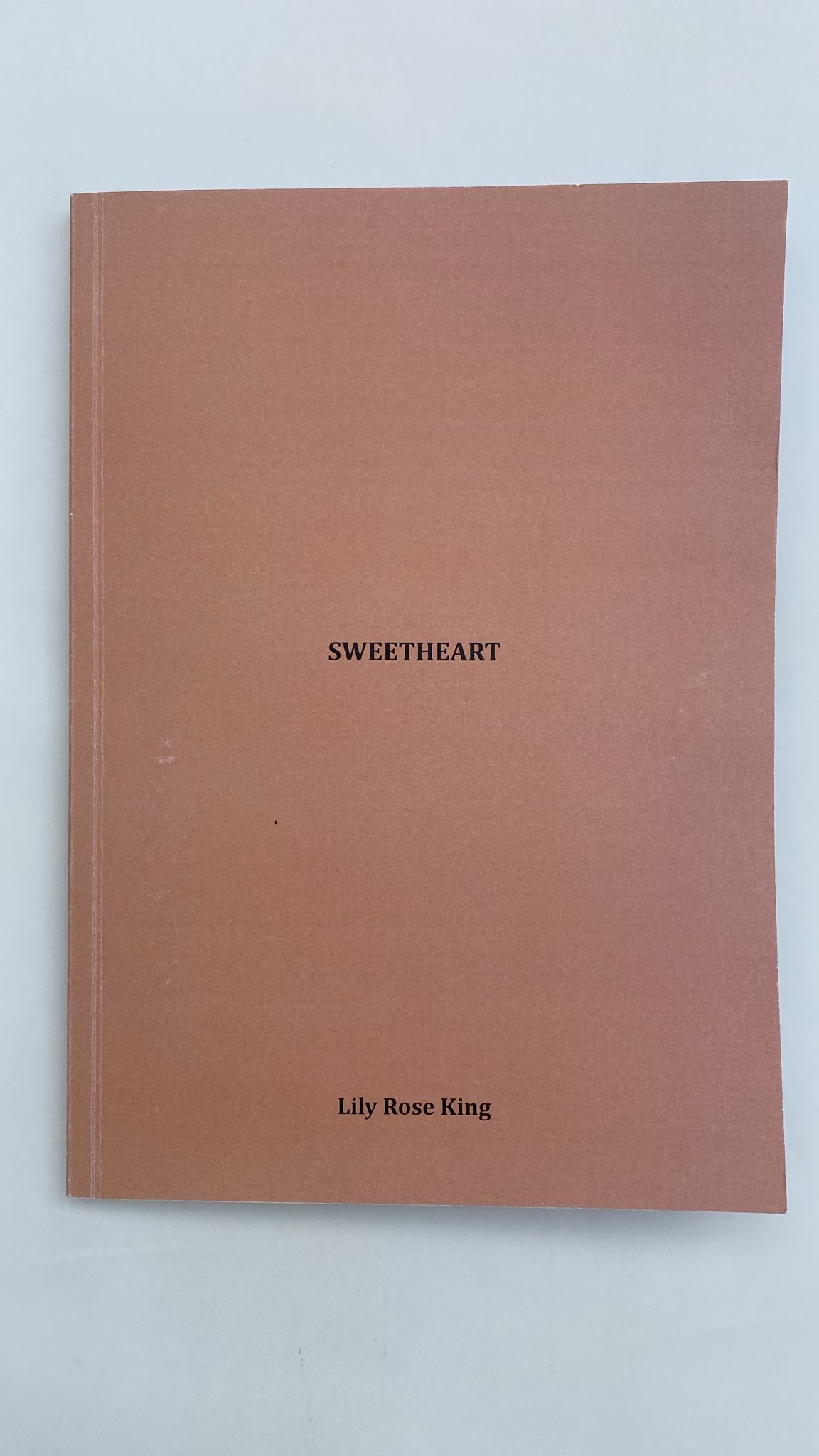
Lily Rose King published her first poetry pamphlet, “Sweet Heart” last year. She is currently working on her next pamphlet which is due to be published shortly. Her piece, Small Comforts, attained 3rd place in Hay Writers’ Circle Frances Copping Prize for Fiction 2024.

Small comforts.

On Oxford Street the lights twinkle, illuminating tourists posing on the glistening wet slick of pavement for photos to adorn their Facebook albums, baiting attention from friends and acquaintances collected through the years. Impatient crowds bustle in the midwinter dusk like locusts devastating crops, swarming shops for last-minute gifts, ravaging contents and leaving staff in a constant tidying battle, which they mostly lose. Bright red buses remain locked in conflict with neighbouring black cabs and stubborn cars, fighting for space and reluctantly giving way to the sleuth of pedestrians who display little care for the drivers or passengers they obstruct. The steady fall of cold, grey sleet distorts the scene, almost worthy of a glitter-coated Christmas card, into one of chaos.

Layla is shoved to and fro, eventually giving into the swell of bodies and allowing herself to be carried, like a fish in a stream, until she is spat out into a side alley. With soft-gloved hands, she smooths herself out, tightens her scarf and folds into her faux fur-lined parka a little more, hooks her black purse back over her shoulder, then recalibrates her location in her head. On realising an alternative route to her destination, she begins to pursue her current path, limping slightly on her bad knee.

On passing an intersection back to the main road, a department store strewn ostentatiously with brassy decorations comes into view. Huge, shiny red and gold baubles cascade down the building’s exterior, juxtaposed with garish festive figures looming from the windows – satanic snowmen and rebarbative reindeer. Layla grimaces at a line of children queuing up around the corner to see Santa, wide-eyed with cheeks glowing red from the cold. Turning her face back to the dark pavement Layla inches on, fingers compulsively caressing a small object in the right pocket of her coat.

Eventually, blunt automatic doors open up to the glaring strip lights of the local supermarket. Layla hobbles through and, gently peeling off her gloves, collects a metal basket from the fresh pile stacked by the tobacco counter, mentally recollecting her shopping list. Having long given up on the place stocking genuine traditional foods – she would need to venture further into town for that – she seeks out a bag of giant cous cous and lays it down in the basket, as if tucking a baby into its cot. Hummus, falafel, olive oil, chicken, eggs, dates, are gradually loaded to build a precious cargo of small comforts. As she weaves delicately to the checkout, Layla dreams of how she used to cook from scratch. How she longs to taste the authentic dishes from her homeland. Remembers watching her mother and grandmother moulding maftoul, learning how to make it for her own family, teaching her daughter. How she had hoped to teach her granddaughter, Dalia. How she wishes her arthritis would take a hike.

A bubbly trainee slides the items across the scanner and into a shopping bag, smiling overbearingly and inquiring about Layla’s Christmas plans. When Layla’s stony face remains unchanged and her lips do not part from their solid line, the girl rolls her eyes and starts sharing her own: how she’s going home to her parents’ house in Oxford and can’t wait to play board games and eat copious amounts of cheese with her family, but how she is worried about the drama that might ensue when her sister brings back her inappropriate boyfriend. She pauses only to tell Layla how much money is owed.   

After fishing out the right change from her wallet, Layla snaps her handbag shut and tsks. She picks up her load and mutters under her breath as she feels it drag her down towards the ground, like a weight grounding a helium balloon. The worker narrows her eyes and flicks her hair as she turns to serve the next customer, plastering her grin back on and hoping for a more reciprocal conversation.

Heat prickles Layla’s back, both anger and shame swallowing her as she shuffles around on her worn black boots to leave. She doesn’t mean to come across so cruelly, but her patience for ignorance and the ceaselessness of the holiday period has reached its limit.

Nearly half an hour later Layla approaches her flat, her knee on the verge of collapse, her hands red and sore, the burden leaving indentations in her skin. She sighs as the key wobbles in the lock until she manages to slide it in, giving the door a habitual kick so that it springs open and makes way for her to finally step inside.

The plastic grocery bags are dumped on the round, white table and her purse thumps down beside them. Pulling out a chair, she slumps into its weight. Inanimate objects have been the only thing to embrace her for some time now. Her small frame collapses in on itself as her shoulders round forward, palms enclose her leathery face, and she allows her wrinkled eyes to close. She knows no tears will fall today. After seventy-seven days, she has used them all up.

Layla checks her answer machine in case, by some miracle, they have managed to leave her a message. When it beeps stagnantly, she stretches across the table to grasp the television controller, sliding it towards her, succumbing to the desperation of catching a glimpse of them on the news.

After five minutes the red button is pressed wearily to switch the screen off again. Every bombed building resembles her childhood home. Every mangled street could be where they have just walked.

The numbing pain of reality swells from within her chest. Every child she sees on the streets of London reminds her of her beautiful Dalia. Every happy couple, of her beloved son and his wife.

The irony is not beyond her – how the people here are settling down for their cosy, indulgent Christmas. How can they let this happen? How can they sit to eat their turkey dinner with all the trimmings when some people will never see their family again?

When the birthplace of Jesus, who they claim to celebrate, is reduced to nothing but rubble. Where the nativity scene is not one of joy and peace, but fear and destruction.

Layla withdraws from her pocket the small woven bracelet that Dalia had made for her when she last visited. Fondly recalls the child’s toothy grin when she had held it up to her, pointing out the matching one on her wrist. Layla had tried to ask them to move, to get away while they could, but they did not want to leave. Did not want to abandon their home like she had.

Layla groans as she pushes herself to her feet. She eats despite the bulge of nausea in her abdomen that has been gradually growing for the last few weeks. She manages half a falafel before giving up and distributing her purchases into their relevant storage compartments.

When there is nothing left to do but go to bed, Layla drags herself into the bathroom, brushes her teeth and washes her face. She stares into the mirror and, as always, is mildly surprised to see an old woman looking back. Her smooth, blue eyes shine out like beacons, as if to remind her that the feisty, adventurous, tenacious young lady is still in there somewhere.

In the bedroom, she sits on the bed to undress, before tugging on a nightshirt and shuffling under the covers. Her bedside table hosts a framed photograph, a pillbox and a stale glass of water, which she drains to wash down her tablets for the evening. Layla removes her thin black watch and places it on the nightstand, rubbing the slightly lighter strip it reveals amid her freckled olive skin. She brings the picture – a portrait of two couples, one elderly and the other middle-aged, sat with a young girl on the front steps of a house – to her lips and kisses it, then switches off her lamp. The darkness consumes her at last.

Nick Thomas is one of the newer members of Hay Writers’ Circle, being with us for a little over a year. His current work-in-progress is “Heartbreak“; an exciting collection of work from fellow writers. The aim is to publish an anthology and sell, with the proceeds raising money for a hunger charity. We will keep you posted on further updates.

His poem “The Lark”, is a tribute to a writer friend.

The Lark

Hark,

A lark.

We stop, look up

But don’t always see

Where these sweet sounds arise.

No matter, we hear

Those notes so clear and full of cheer.

Despite lark’s burden.

They always make you smile

And lift our hearts

Every time, over and over.

What do they mean?

Hope for the future, I think.

Composers all have different views,

None of them wrong.

Lark sings on.

Her song borne on the wind

To all who wish to listen.

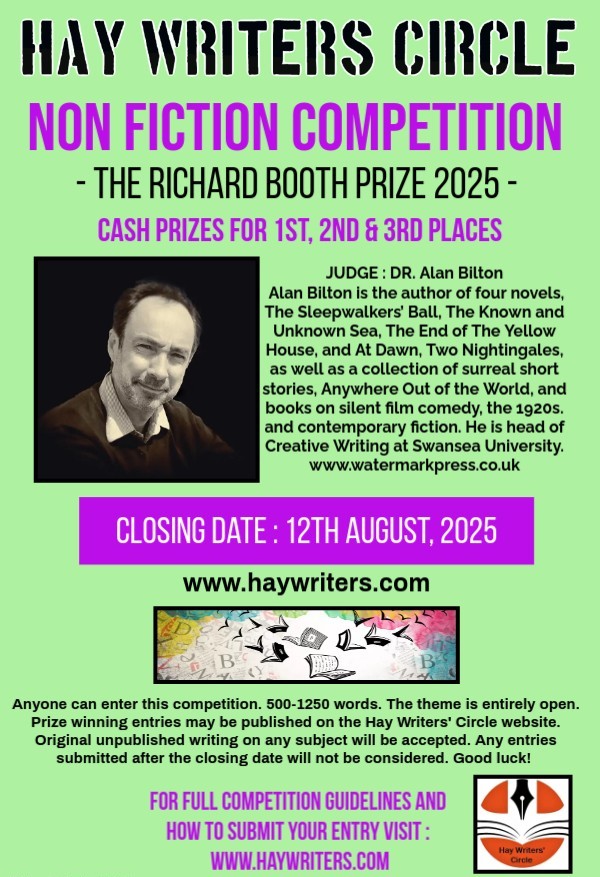
Richard Booth Prize for Non-Fiction 2025 – Submissions Accepted!

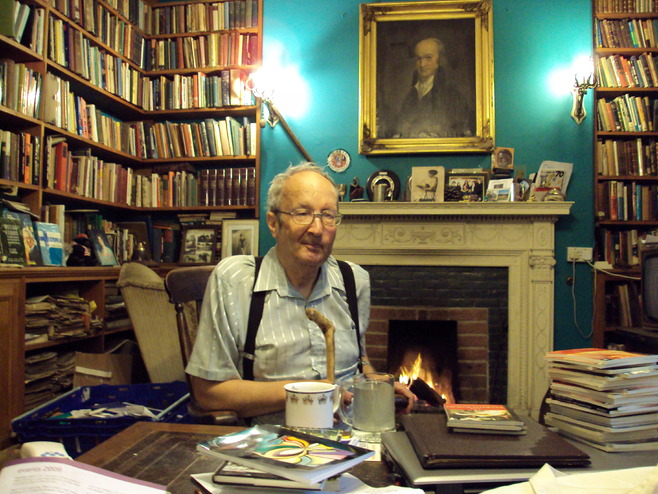
Submissions are now invited for our annual Non-Fiction Competition, The Richard Booth Prize 2025, named after one of Hay-on-Wye’s most notable residents and it’s self proclaimed ‘King of Hay’. Richard was always a great supporter of books, Hay-on-Wye and of course, local writers.

Sadly, Richard passed away in 2019, but his name lives on everywhere in Hay, including this writing prize which he so graciously sponsored during his lifetime and we continue to honour in his memory.

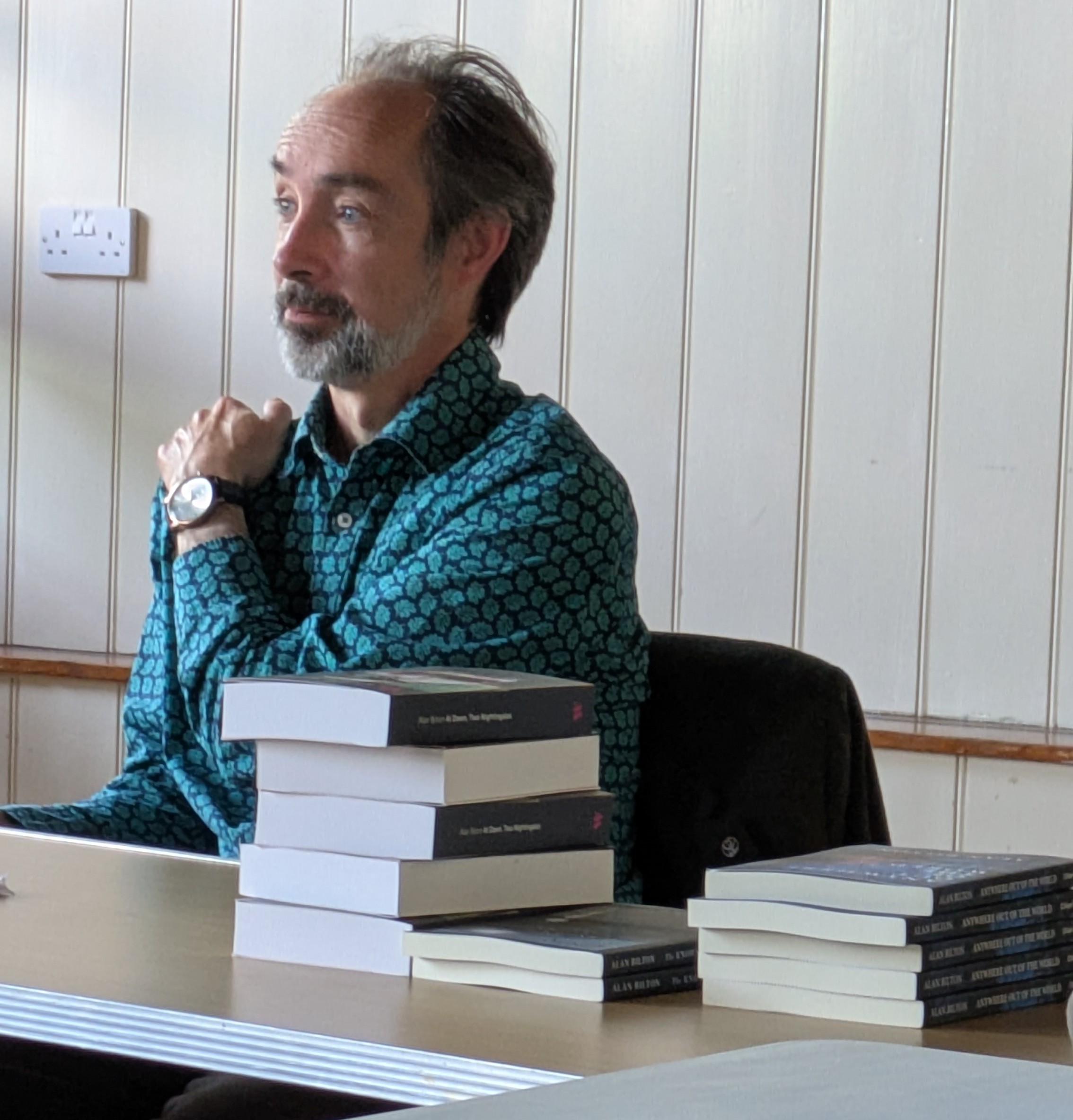
This year we are thrilled to confirm that the judge for our Non-Fiction Competition is Alan Bilton.

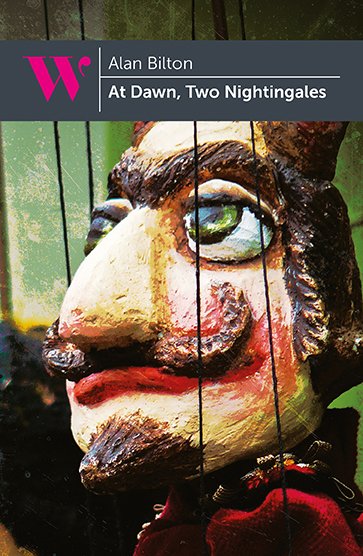
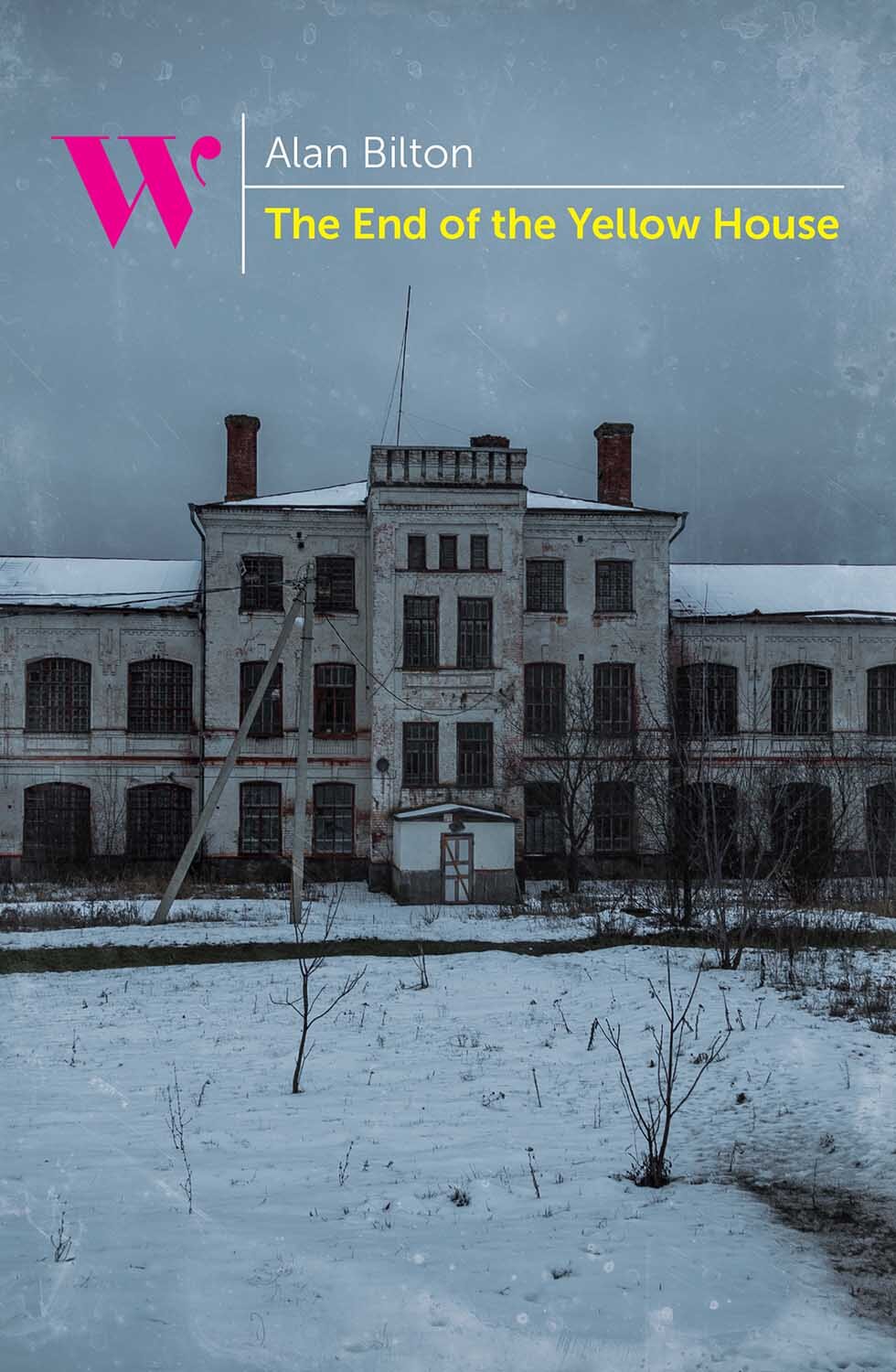
Alan Bilton is the author of four novels, The Sleepwalkers’ Ball, The Known and Unknown Sea, The End of The Yellow House, and At Dawn, Two Nightingales, as well as a collection of surreal short stories, Anywhere Out of the World, and books on silent film comedy, the 1920s. and contemporary fiction. He is head of Creative Writing at Swansea University.

Richard Booth Prize Non-Fiction Competition 2025

This is an open competition meaning – ANYONE CAN ENTER

For full competition details, criteria and an entry form, please go to our COMPETITIONS page.

Closing date for entrees is Tuesday 12th August, 2025.

 Time get writing! Good luck!

Don’t forget to subscribe with your email address in the box below.

Posted in Uncategorized | Tagged , , , , , , , , , , , , , , , , , , , , | Leave a comment

More Prize Winning Poems, plus Hay Writers Live! Anytime

Showcasing inspiring writing has always been at the heart of Hay Writers’ Circle, so we are delighted to reveal the 2nd and 3rd placed poets and poems from our recent 2025 Poetry Competition.

Thank you to our amazing 2025 Poetry Judge, Gareth Writer-Davies whose comments on the prize winning pieces are printed below. Also, congratulations once again to our 2025 winner, David Shields whose poem, “Old Mortality”, accompanied by the judge’s feedback is featured in our previous online article – HERE. Well done!

SECOND PLACE

Collector Sahib’s Distractions“, by Pushkar Mankar

Pushkar Mankar is a writer and photographer from India, currently pursuing an MA in Creative Writing at the University of Birmingham. He is primarily prose writer of sci-fi and historical fiction, but recently branched out into poetry. Pushkar is currently working on his first collection, and hopes to publish soon.

Judge’s Comments: COLLECTOR SAHIB’S DISTRACTIONS

An extremely intriguing poem. It has enough tension in it to keep it together even as it risks faltering, which is perhaps a style choice for this tale. Is the collector one of stories or impressions or distracting new technologies that take him from his true purpose? This is not clear but this is part of the poem’s beauty “Not unlike the imprints of sahib’s mother’s hands/ On the gates of the ghat by the river…” shapes of suggestion that will not last beyond the next flood.

Collector Sahib’s Distractions 

Collector sahib squaks at the moon
In the hopes that it might impress Artie Shaw
Even though he does not understand English
But understands perfectly the carried subsound
Of needle scratching against the vinyl
A white noise language of clear thought 

The radio static is interrupted by an address
From the King, breaking Collector sahib’s sleep
Out on the verandah the sweeper curls his lip
Sticks a finger on like a mustache and pretends
To be a person who pretends to have a point
Important enough to talk over natural degradation

A tube and a phosphorescent curved screen
Traps the Collector Sahib in a Platonic cave
Attempting to project some coherent thought
Stitching together moments unstuck in time
Not unlike the imprints of sahib’s mother’s hands
On the gates of the ghat by the river, whose foam
Speaks the same dialect as the fuzz on the TV
When the distraction of programming goes away 

THIRD PLACE

Ines“, by Corinne Harris

Corinne Harris is the current Chairperson of Hay Writers’ Circle since October 2024, prior to this she was the group’s Treasurer. Corinne’s pantoum poem, “Golden Rose Synagogue, Lviv” won first prize in our 2018 Poetry Competition as judged by Libby Houston.

Judge’s Comments: INES

A poem of near universal experience, touching in its gradual acceptance of love for a small, defenceless newborn. This is a conversational poem that starts off confined and then undoes itself through small sensory gradations and then sudden visceral episodes  of “…startling eructations and vomit on my shoulder” A poem of the ordinary but also of the extraordinary connections which surprise us. This is a well written poem that does not shout but murmurs its message.

Ines

It wasn’t there at first
Not in the curtained confines of the ward
In its overheated clinical air.
I smiled, cooed, posed for photos
Holding the small unresponsive bundle.
Seeing the marks of labour,
Blood rimmed ears, white waxed creases.
Breathing in the smell of birth – blood and amnion.
I watched my son, his face soft with love and pride
And wondered at myself.

No, it wasn’t there at first.
It came with baby tasks –
Bottles, nappies, texts to her anxious mum.
It came as I watched her dark unfocussed eyes,
Tiny hand grasping my finger.
Feeling her soft skin, her delicate limbs,
Breathing in her baby scent – milk, urine, baby hair.

It came with her frantic rooting, her eager sucking,
Little grunts and sweet squeaks.
Her startling eructations and vomit on my shoulder.
Then the sudden warm heaviness
As she slept on my chest.

Watching her face, lips pursing with milky dreams,
I realised it was there.
It had crept in when I wasn’t looking.

If you didn’t get a chance to get to Hay Festival this year then you can relive all the best bits from the comfort of home via Hay Festival Anytime. The 2025 Hay Writers Live! event was recorded and is available to listen to again via Hay Festival Anytime subscription. You can access audio & film from your favourite Hay Festival writers and thinkers for an amazing £20 per year.

CLICK HERE for Hay Writers Live! 2025 audio and enjoy our readings once again. Enjoy!

To keep up to date with all HWC news why not subscribe with your email address in the box below.

Posted in Uncategorized | Tagged , , , , , , , , , , , , , , , , , , , , | Leave a comment

We Have A Winner! Hay Writers’ Circle Poetry Prize 2025 – The Results.

We are delighted to announce the results of the Hay Writers Circle Poetry Competition 2025.

This every popular competition received a good number of entries from both inside and outside Hay Writers’ Circle and we very much welcome all external interest in our writing competitions.

We must firstly take a moment to thank our amazing 2025 Poetry Judge, Gareth Writer-Davies who single-handedly read all the poems and whittled them down to our ultimate set of three prize winning poems.

Gareth wrote,

First of all, many thanks to all those who entered: it was a pleasure to read all the entries, which were judged anonymously and read many times.

Competitions are always great opportunities to test out both new and perhaps re-edited  work. I always emphasise the usefulness of running one’s eyes several times over material, stepping away for a while and then giving one final polish before submitting.

The winning poems stood out for their undercurrents of meaning that brought nuance to the words, and showed special skills. However, judging is always a careful balance of objectivity and subjectivity, and these three poems spoke to me beyond mere technical facility.

Nature, climate change and politics were subjects that kept coming up, which was perhaps to be expected. To those who did not place this time, “I say take a chance, surprise the judge by taking a risk!

Thank you Gareth.

Hay Writers’ Circle Poetry Competition 2025 – Winners!

First Prize – Old Mortality by David Shields

Second Prize –  Collector Sahib’s Distractions by Pushkar Mankar

Third Prize – Ines by Corinne Harris

The Winner

David Shields works at Brecon Library, where he runs poetry and reading groups and a monthly series of talks and readings.

He has an MA in Writing from Sheffield Hallam University, and has contributed poems, essays and reviews to numerous publications.

He has been commended in the Frogmore Papers Poetry Competition, and is a multiple winner of the Spectator writing competition.

He is the editor of A Good Shift: a Seventieth Birthday Festschrift for Christopher Meredith, and has published two collections of light verse, with a third due shortly.

The Winning Poem

Judge’s comments :

This tightly controlled villanelle stood out not only because this was one of the few poems to take on the challenge of classical form, but also because the form is not heavily worn like a winter overcoat, but capaciously, like a light jacket.

The subject is classic and perhaps Tennysonian, but expressed with freshness; glass blowing, maths and music are striking analogies as “we sail towards the great unknown” and “age ties flesh to a mast of bone” A deserving winner.

Old Mortality by David Shields

We sail towards the great unknown

Where life’s an algebraic phrase.

Age ties flesh to a mast of bone.

Through thin rods of breath a world is blown,

Milky, marbled with flaw and craze.

We sail towards the great unknown.

Or shall we, like the autumn sun, disown

The morning’s heritage of fret and haze,

Age tie flesh to a mast of bone?

The middle music strains its thrum and drone,

Counterpointing lamentation, praise,

As on we sail towards the great unknown.

Voices fading by the semitone –

Still the echo, still the memory stays.

Age ties flesh to a mast of bone.

Gaunt elegy, anathema of stone

Are all against the fall of flesh we raise.

We sail towards the great unknown.

Age ties flesh to a mast of bone.

We will be sharing the other placed poems, their judge’s comments and author bio’s later in the week.

In the mean time, huge congratulations to our winner, David, all our placed poets and to everyone who entered our competition. Well done all!

To keep up to date with all HWC news why not subscribe with your email address in the box below.

Posted in Uncategorized | Tagged , , , , , , , , , , , , , , , , , , , , | 1 Comment

Hay Festival Sell-Out Success, and “Stepping Out With an ‘E’ ” from Martine Smith

Isn’t it fun! Aren’t we all have the greatest time, seeing loads of interesting events and buying lots, and lots, and lots of books!  If, like me, your answer is a resounding YES! then you will already be heading back over to the Hay Festival website to buy more tickets – we’ve got days and days still to enjoy!
CLICK HERE for tickets.

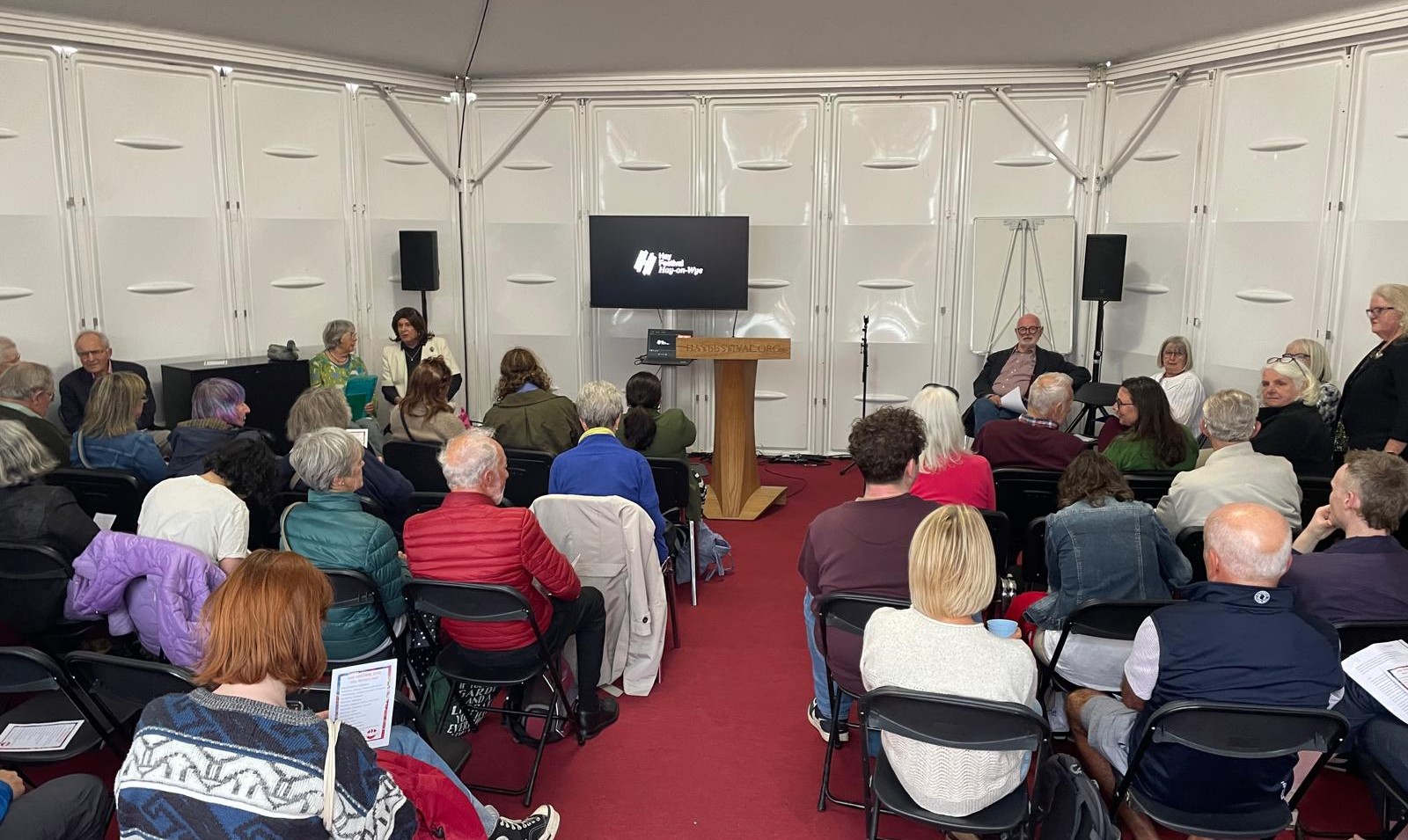
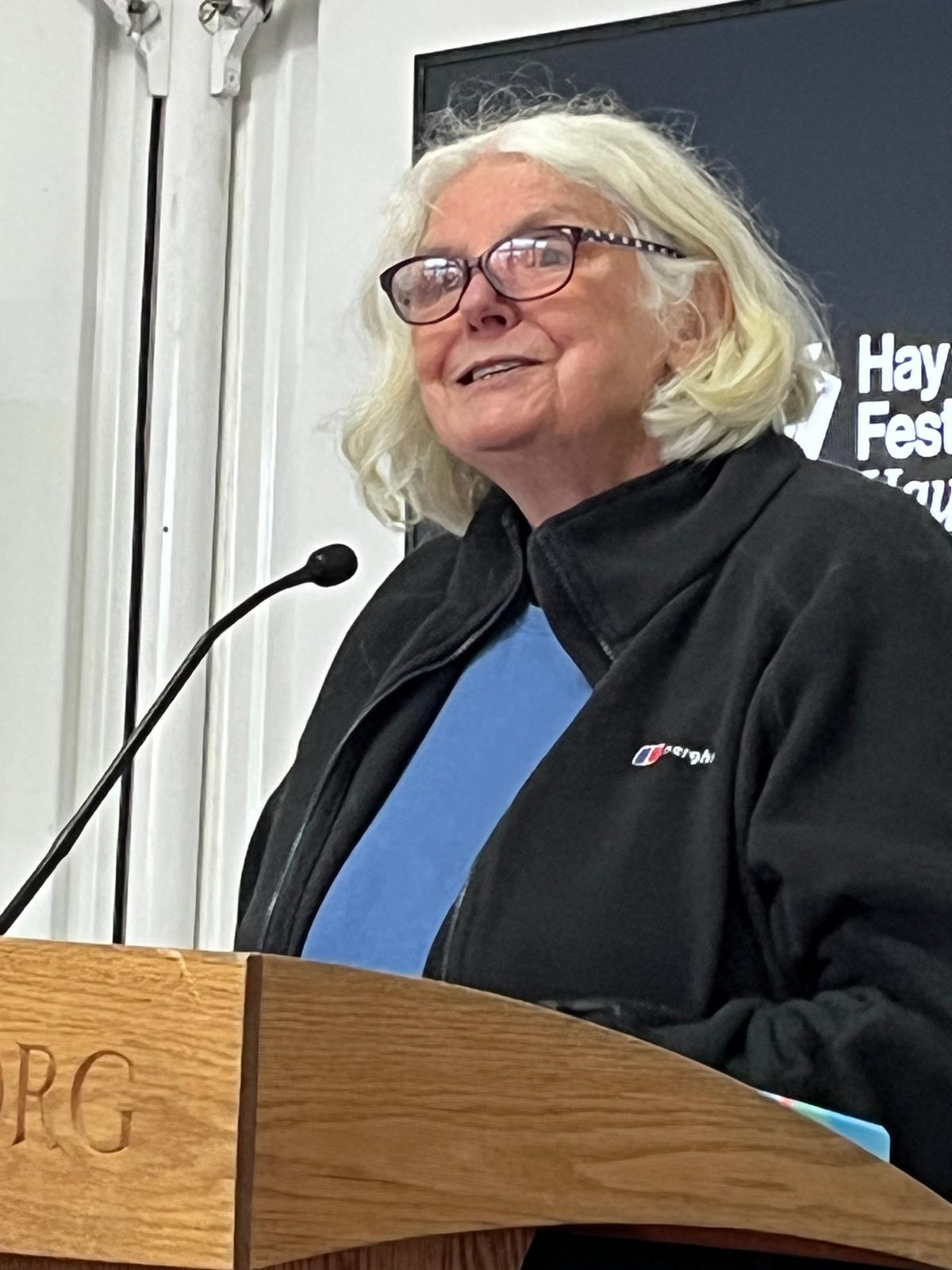
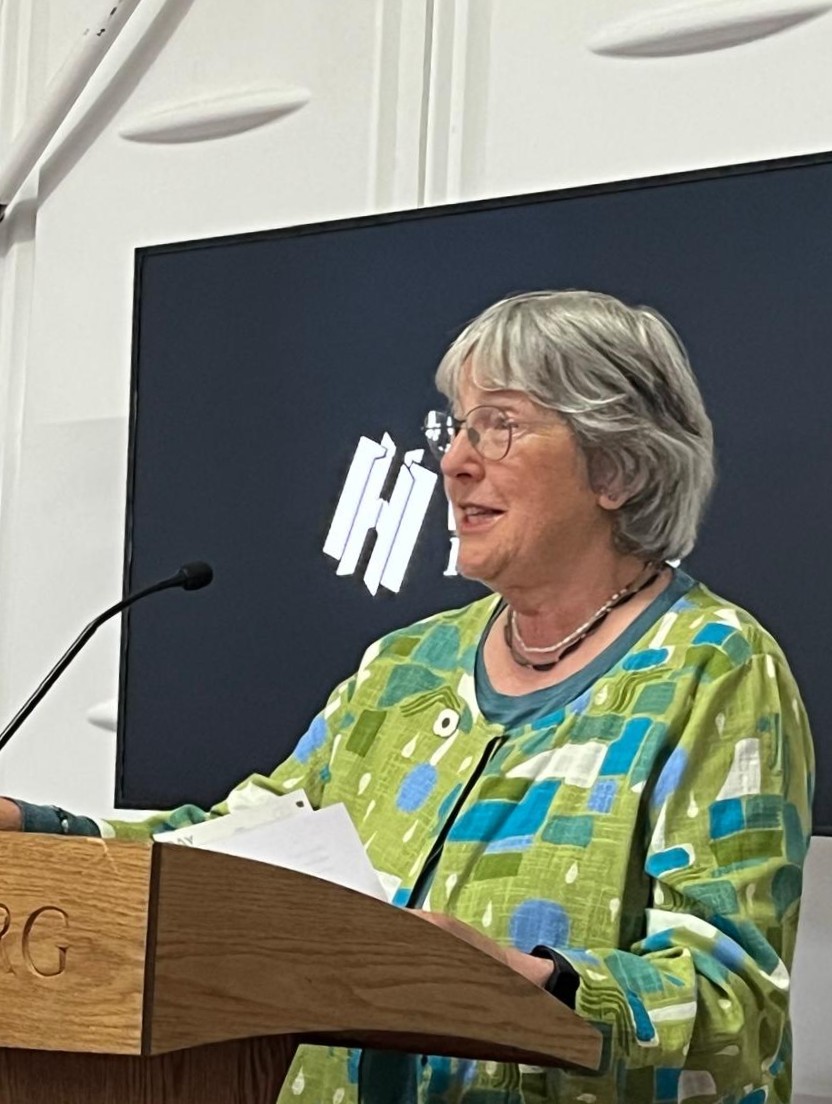
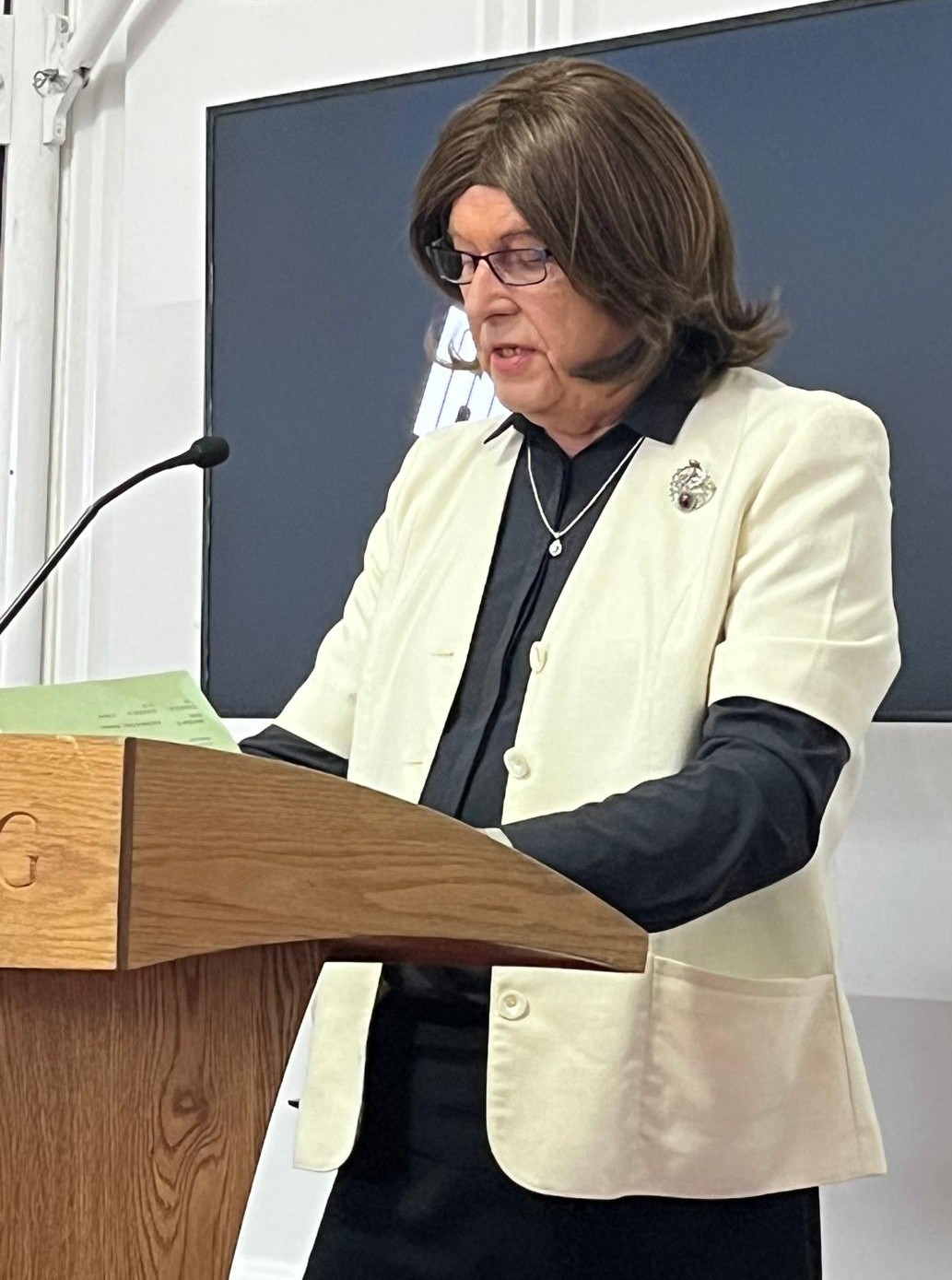
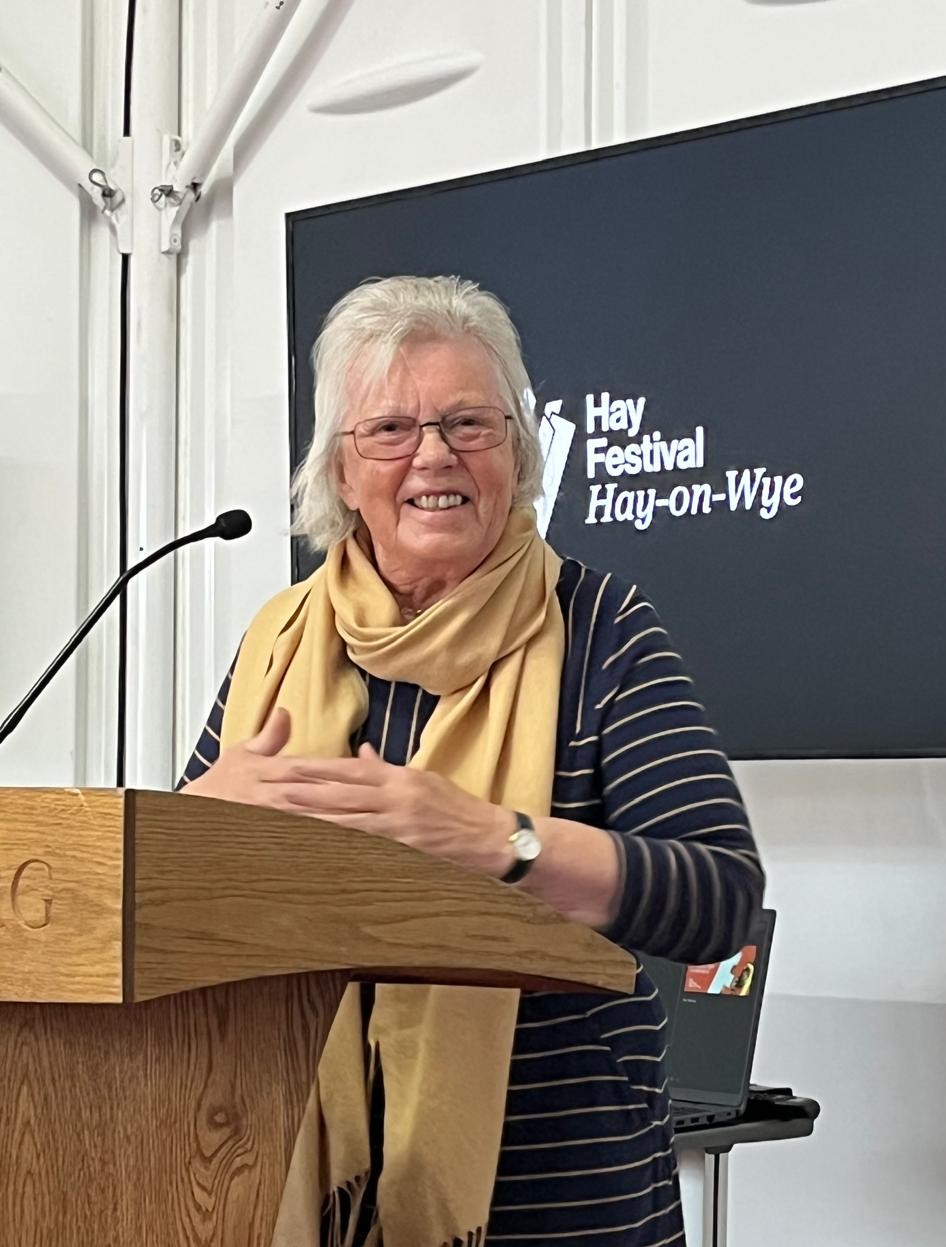
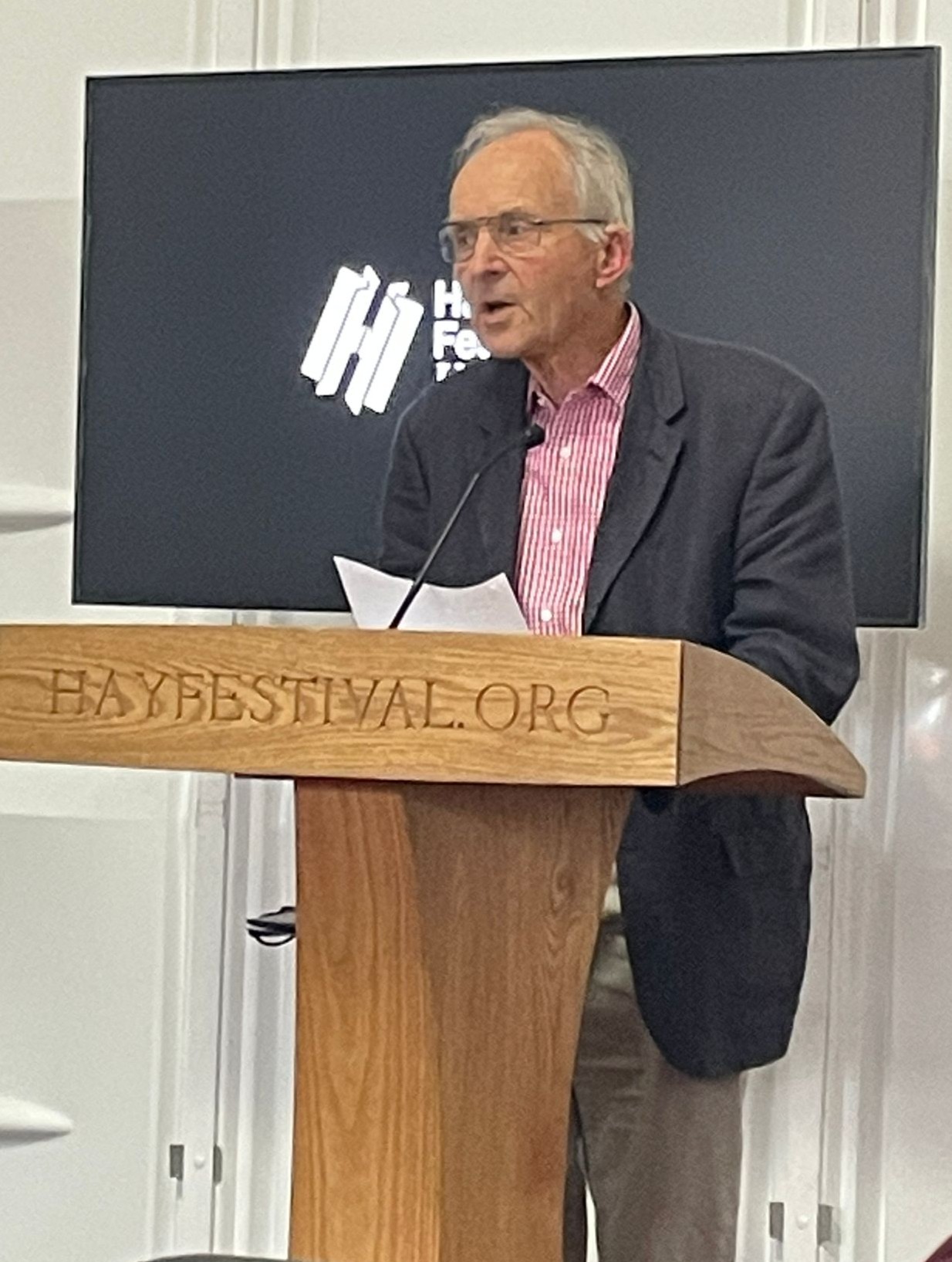
Hay Writers’ Live! took place on Saturday 24th May at 7pm. A huge thank you to everyone who came along and supported us, it was greatly appreciated. Many pieces in our varied programme were especially created for our Hay Festival event, some were prize winning pieces, others were examples of work composed at our twice-monthly meetings, or excerpts from in-progress novels.

photo credit – ©M & A Bayliss 2025

It was a sold out event with a wonderfully attentive audience, many took the time to express their delight with positive feedback at the end. We are so glad you enjoyed our all our offerings and we hope to see you again in the future.

Hay Writers’ Circle is extremely grateful to the Hay Festival for it’s continued, unwavering support of our writing group and the amazing opportunity it gives us to share our writings with the festival crowd. We would like to extend a special “thank you” to Chris, Nia, Adrian, Stephen and all the behind the scenes team for your hard work, professionalism and diligence. You continue to be an amazing credit to this beloved festival. Thank you.

The Hay Writers Live! event was also recorded and is available to listen to again via Hay Festival Anytime subscription. Access audio & film from your favourite Hay Festival writers and thinkers for an amazing £20 per year.

CLICK HERE for Hay Writers Live! 2025 audio and enjoy our readings once again.

Stepping Out With An ‘E’, by Martine Smith

At the Hay Writers Live! event in 2024, Martine Smith read, Stepping Out With An ‘E’. It was so popular that Martine has agreed to share it here. We are very grateful and sincerely hope you enjoy this wonderful piece.

SOME THOUGHTS FROM MARTINE

Over the years people have asked me why I sometimes dress as a woman. My grandson who lives in Paris, a very cosmopolitan and lively City, asked me that question. I replied

 “We all have a genetic structure that is unique. Some people have high testosterone levels and are mainly men but not always; others have hormones and will be women but not always. Nature in all its wonders deals out different substances and growth patterns to every human being.”

I did not carry on talking about this to Vincent who accepted my explanation that my genes are somewhere in between male and female and so for the last few decades I have flitted between the two genders. Last year HWC invited me to read “Stepping out with an E,” a brief account of my nurture as a child explaining partly my decision to be Martine not Martin sometimes.

Stepping Out with an ‘E’

It’s 1949.

A four-year old fatherless boy peers through a rain spattered window pane in his grandmother’s house which is also his home.

He waves his mother goodbye. As well as working in the week to provide for her “booty” (that’s her name for him) she works on a Saturday afternoon and evening. She needs the money.

In the week he will sit with his grandmother. He will hear her stories.

 Later, he has his comics Beano,Tiger and Eagle and the Saturday morning visit to the Gaiety cinema, he dreams.

He takes his first life time risk. He explores unknown territory. Parkland and the lanes near his home. Around the corner of one lane a group of boys play. They are his age but go to a different school. He is a stranger on his own in their district. The herd instinct kicks in.  They chase. The boy runs. The gang are well into the chase shouting and screaming. Their prey is nearly in reach.

Around a bend in the lane the boy stops and turns. He screams and stares at the gang. They stop in their tracks.

The boy is accepted into their territory. Several years of happiness ensue for the boy with his friends.

A life lesson. Confront your demons. Do not run. 
Mother marries. Aged six he is introduced to the husband. The boy shouts excitedly with a toy car in his hand. The husband clips the boy around the ear. No hug, no cuddle.

The boy develops a shield of mental protection which helps to mask the pain from boys at school jeering because his ears stick out or that one day he shat his pants in the playground. The shield overcomes torments and places him in a kinder place.

Another life lesson. Men are not nice. Women are kind.

He wants to know who his real father is or was. His growing sensitivity tells him the question might upset his mother’s relationship with her husband so he never asks and his mother never says. 

On visits to the husband’s parent’s house the little boy waits in the car parked outside. He is not accepted. The boy senses uneasiness and a lack of love from these people.

Years go by. Relationships soften but never really develop into love.

Grandmother, Mother, Stepfather’s parents and finally Stepfather depart this mortal world.

Now, no more shield, no suppressions.

Be who you are.

Natures creation nurtured by human experiences.

A child of the universe.

E for Explore. E for Enlightenment.

Martin steps out with an E and finds Martine.

They are on a journey of discovery stepping out with an E.

I started writing in my sixties but have always been a curious person and decided that it was daft not to find out what it is like to be a woman. Well yes, dear reader, you are correct, I have never menstruated nor borne children, but I do feel feminine and enjoy chatting and socialising as Martine. I have discovered the pleasure of smiles and compliments from ladies on the train or in Tescos or restaurants about my clothes, my hair and sometimes even males will want to talk. I consider myself blessed to have so many friends to socialise with and the HWC membership is special with such a variety of talented lovely people..

To keep up to date with all HWC news why not subscribe with your email address in the box below.

Posted in Uncategorized | Tagged , , , , , , , , , , , , , , , , , , , , , , , | Leave a comment

Alan Oberman – Author Interview, and Hay Writers’ Live Program at Hay Festival 2025

An interview with Alan Oberman – exclusive for Hay Writers’ Website

Alan is writing an account of British Prime Minister, Neville Chamberlain’s life between September 1938 and September 1939. In an exclusive for the Hay Writers’ Website, Alan Oberman is interviewed by himself on the progress of his book.

Oberman: Is your book a work of fiction or non-fiction?

Alan: There are over a hundred non-fiction history books examining Chamberlain’s actions in the year prior to the Second World War. Historians tend to join one of two contentious camps that can crudely be labelled by two questions: if Chamberlain had stood firm against Hitler in 1938 could the Second World War have been prevented? Alternatively, by appeasing Hitler and delaying the outbreak of war by a year, did Chamberlain ensure an allied victory?

I have no desire to jump into this historiographical bear pit. My intent is to bring to life the quandaries Chamberlain faced in his day-to-day decision-making. I imagine him living in Number Ten, I imagine his conversations with his wife, I imagine his dialogue with colleagues and adversaries. So, to the extent I’m surmising the words that might have been said, my writing is fiction. I endeavour, however, to keep as close as possible to the primary historical records.

Oberman: So are you writing him in the first person?

Alan: I did consider that, but I wanted the freedom to express his thoughts, and this is more easily achieved in the third person. The historian will tell you of a meeting between Chamberlain and Hitler. I do that, keeping as close to the historic record as possible, but then go beyond that, building on my understanding of Chamberlain, to imagine what he’s feeling at the receiving end of a Hitler tirade. I hope thereby to deepen the reader’s engagement.

Oberman: Chamberlain was elderly, white, traditionally-conservative with an unexceptional private life. Seemingly, a rather colourless politician. Not, one would think, an immediate choice for your protagonist.

Alan: I was led to Chamberlain indirectly. I was intrigued by how, in five months, British public opinion could swing round 180°. In September 1938, opinion was almost universally against becoming involved in another European war. By March 1939, the British people accepted that a stand had to be made even if it were to lead to war. My interest is the process by which that sea-change in opinion came about. Chamberlain was no populist politician, slavishly pandering to public opinion. To the contrary, he was rigid in the certainty of his opinions, but he too, in parallel with public opinion, was blown by the events of winter ’38 into a new direction for foreign policy. We can see the process of this change most clearly through his eyes.

It’s true his personality lacked the colour of, say, Winston Churchill, but the vision of a kindly, non-belligerent man battling with all his might to prevent a war which he believes would kill and maim millions, is, I think, compelling.

Oberman: If you tie yourself strictly to the biographical details of chamberlain’s life, are you not foregoing a narrative arc? You could end up with narrating one thing after another, saying this happened and then that happened, and so relinquishing a satisfying plot with its sense of beginning, middle and conclusion. Or, to ask the question in a different way, are you not tempted to bend, reshape the facts, to make for a more satisfying story?

Alan: When I first began writing this novel, I thought I had a built-in narrative arc – a person’s fall from the height of success to the deepest failure. In September 1938, Chamberlain was universally acclaimed as the man who had single-handedly saved the world from a devastating war. The declaration of war on the 3rd September 1939, proved to many that he had seemingly failed the pragmatic test. As the author of a policy that did lead to war, he was widely lambasted.

However, that was not how Chamberlain himself saw it. He believed, to the end of his life, that at each twist and turn of fate, he took the only sensible course available to him. To him, his story is not one of failure but tenacity – holding to his course of peace until there was no alternative but war. It’s the plot of many films – The Magnificent Seven to name but one – the farmers appeasing the bandits until there’s no other way but to pick up the gun. Aware of his increasingly belligerent detractors, Chamberlain believed that history would vindicate him. That to me is a satisfying narrative arc.

Oberman: And what is your conclusion? Do you vindicate him?

Alan: I do not wish to judge Chamberlain. I would rather the reader view the world through his eyes and come to their own conclusion. I will have succeeded if I divide my readers, some thinking him dangerously naive while others praising him for his wisdom and sound judgement.

Oberman: Does Chamberlain’s story have any relevance for us in today’s world? I’m particularly thinking of the war in Ukraine.

Alan: It would be most imprudent to attempt a forecast of the outcome of dealing with Putin based upon what happened in 1938/39, our world is so very different. But what is striking is the similarity in discourse today with that of 1938. How do you deal with a powerful aggressive dictator? Should we accept reality and make a deal with Putin to end a tragic war and save lives? Or will offering him territories of Eastern Ukraine serve to increase his appetite for further military adventures? This mirrors the dilemma faced by those in 1938 in how to deal with Hitler.

Oberman: I imagine writing such a novel as yours must involve a lot of research.

Alan: Research provides the materials from which to construct the novel, decorate it, and fill it with the furnishings of the period as well as peer into the minds of the people who inhabited it. Research is the pleasant downhill part of the writing journey before turning uphill to actually write the story. One is looking for the details of colour that historians leave out. Literally in my case. Historian Robert Self achieved remarkable success in publishing the hundreds of letters Chamberlain wrote to his sisters. He must have spent an excruciating number of hours transcribing Chamberlain’s illegible handwriting into print. However, Self left out what he called ephemera – family gossip of little interest to the historian. But it’s precisely this ephemera that’s important to me. So I spent a week in the Chamberlain Archive, housed in Birmingham University, examining Chamberlain’s letters to make notes of the bits that Self left out.

Oberman: And when do you think you will put the final full stop to your novel? Does it have a title?

Alan: It has taken me a year to move two weeks forward in Chamberlain’s year. Hopefully, my pace will speed up in this coming year.

As to the title, at the moment I’m toying with a choice of:

  • Neville Chamberlain: striving for peace
  • Neville and Anne Chamberlain: the year before war
  • Neville Chamberlain: dear God let there not be another war.
  • Chamberlain – Facing Hitler

Oberman: Thank you so much for this interview and best wishes for the completion of your novel.

Alan: Thank you. It’s been a pleasure.

Program: Hay Writers Live! at Hay Festival 2025

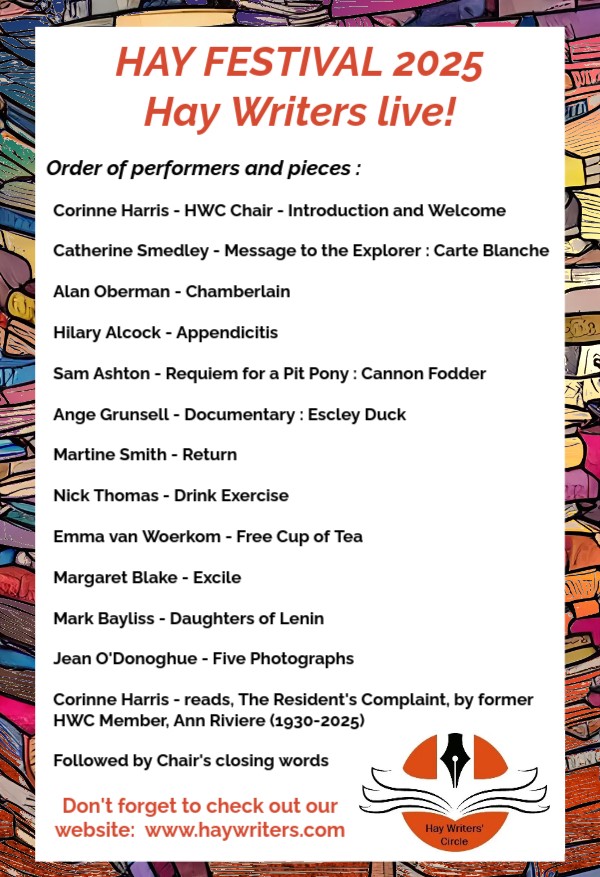
It’s full steam ahead for rehearsals for our Hay Writers Live! event at Hay Festival 2025. As we continue to hone our performance, we are delighted to release the full program of readers and pieces. All are new works enjoying their first public airing. We will be showcasing a variety of pieces including competition winners, novel extracts, poetry, short stories and more!

We are extremely grateful to Hay Festival for their enormous support of writers.
Thank you.

**At time of posting – tickets are limited with just a handful remaining.**

The Hay Writers Live! – Event 71

Date – Saturday 24 May 2025 Time – 7pm   
Location – Writers at Work Hub – Hwb Awduron wrth eu Gwaith

Come and hear the writers share and discuss some of their recent work. The Hay Writers’ Circle is a dynamic group, active in Hay for more than 40 years. It offers three competitions annually for poetry, fiction and non-fiction, each of which is open to both members and non-members. There is an active work in progress group for those working on longer projects. The Circle has an ongoing, productive relationship with a local primary school.

Price: £5.00 – CLICK HERE for tickets

We hope to see you there!

Posted in Uncategorized | Tagged , , , , , , , , , , , , , , , , , , , , , , , , , , | Leave a comment

Count Down to Hay Festival, a New Fiction Workshop & a Prize Winning Short Story.

Hay Festival – 22nd May – 1st June, 2025
Tickets Now Available – CLICK HERE

Come and hear the writers share and discuss some of their recent work. The Hay Writers’ Circle is a dynamic group, active in Hay for more than 40 years. It offers three competitions annually for poetry, fiction and non-fiction, each of which is open to both members and non-members. There is an active work in progress group for those working on longer projects. The Circle has an ongoing, productive relationship with a local primary school.

The Hay Writers Live! – Event 71

Date – Saturday 24 May 2025  Time – 7pm   
Location – Writers at Work Hub – Hwb Awduron wrth eu Gwaith

Price: £5.00 – CLICK HERE for tickets
We hope to see you there!

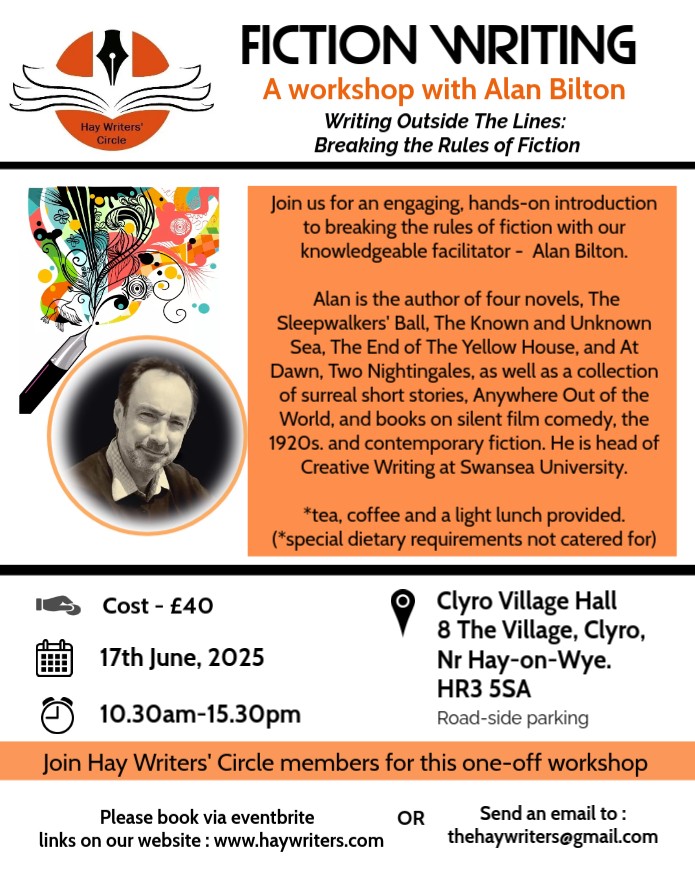
New Fiction Workshop

We are delighted to announce the details of a new Fiction workshop with the popular, Alan Bilton. Open to everyone

Writing Outside The Lines: Breaking the Rules of Fiction

What happens if the usual rules of realism don’t apply, gravity is suspended, and you allow your imagination to float free? Join us for an engaging, hands on introduction to breaking the rules of fiction.

From metafiction to anti-fiction, dream fiction to parody and the absurd, participants will find something to inspire, animate, embolden and disturb.

Tickets available via Eventbrite – CLICK HERE

Alan Bilton is the author of four novels, The Sleepwalkers’ Ball, The Known and Unknown Sea, The End of The Yellow House, and At Dawn, Two Nightingales, as well as a collection of surreal short stories, Anywhere Out of the World, and books on silent film comedy, the 1920s. and contemporary fiction. He is head of Creative Writing at Swansea University.

Short Story

2nd Place in our recent Frances Copping Prize for Fiction 2025 is Corinne Harris’ piece.

Our judge, Adele Evershed wrote, “This is a rich and compelling story. It captured both the magic of a safari holiday and the internal conflict of a troubled marriage… “

Well done Corinne!


African Nights’ by Corinne Harris

An African night: the foam of the Milky Way bisecting the sky, the newly risen moon not diminishing the glory of the stars but adding its own mystery.  They had been summoned with the news that a leopard had made a kill.  Roaring and jolting in the open topped Land Rover they reached a tree with a carcass abandoned in the fork of its branches.

‘She’s been chased away poor thing, what will she do?’  Jane felt like a boorish intruder into this silent world.  

Martin was impatient, ‘it’s nature’.

‘No, It’s not, it’s us.’

Now, with the hard moonlight transforming the rock and bushes into shadowy indigo, they tracked her, the harsh spotlight picking up the intricate whorls of her coat in the blue night. She moved smoothly, pregnant belly swaying, ears back. Jane was seized by compunction: ‘Leave her, turn off the light.’  Martin huffed, but the others murmured agreement and the guide turned off the light and veered away.

Later in the camp bar, Martin recounted the event, with much ensuing hilarity at her squeamishness.  He boasted about their forthcoming trip to the Kalahari. 

‘Have to take everything in – water, food, fuel – the lot. Camping in the wild, no mod cons – the real Africa.’ 

The Americans were impressed, ‘In a tent?’

‘Yes, just a sheet of nylon between us and the wilderness’. 

She hated the bar, with its red-faced customers, the ‘Big Five’ scoreboard, its unsubtle tourist rivalries.

Yet Jane was in love with Africa.  She loved the sunsets, watching the great orb of the sun falling through the sky, streaking the turquoise with pinks and yellows, seeming to accelerate as it neared the horizon.  Cicadas, the gentle splash of the river, heat still rising from the earth, and then, tentatively, the first few stars emerging.  Getting up at night to the toilet, which was open to the sky, she had marvelled at the lavish unfamiliar stars. She had heard the distant roar of a lion and the scampering of night creatures and had gone back to bed enchanted. 

She had hoped it would be a holiday to heal a marriage scarred by long held resentments.  Three weeks in Botswana: a week of luxury in a safari hotel, a few days glamping, then wild camping in the Kalahari, with a hotel stay in Gaberone to recover.  ‘The holiday of a lifetime’ – and it had certainly been expensive enough.  Predictably, Martin had drunk too much and been surly in the mornings, but up until now it had been a qualified success. Now, she found she was dreading the next stage when it would be just the two of them; a long drive and wild camping in a two-man tent.

As it happened, they both enjoyed the drive, but the Kalahari campsite was a surprise.  It was a stretch of sandy soil, with the yellow haze of dry scrubby grass in the distance, and a nearby group of thorn trees tortured into right angles. There was V -shaped wooden canopy on a concrete base and a large fire pit   A hundred yards away curved mud walls enclosed a long drop toilet.  It was deserted, and the dusty silence of the afternoon felt oppressive.  ‘Where is everyone else?’ she wondered as they began to set up camp.  It was with mutual relief that they heard an approaching car.  Four cheerful khaki-clad South Africans appeared.  They laughed at the notion that they would be camping anywhere near them: 

‘No, it’s all yours, we are a mile down the road’

They stayed for a beer and were pleasant companions, although Jane suspected that some of their more hair-raising stories about the local wildlife were exaggerated.

It was late when they left and there was just enough light left to set up the tent under the thorn trees.  Whilst Martin lit a fire, she hastily prepared a meal.  The flames brought welcome light and warmth but also winged insects astounding in their size and variety.  Martin had lost his earlier bonhomie and slumped in a camp chair drinking his way steadily through a wine box.  The moon had not yet risen, and she felt the darkness as a physical presence, that would enfold and engulf her with its black wings if she moved out of the fire’s light.  She asked Martin to come to the tent with her.  This led to a sudden squall of an argument.

‘I’m so fed up with this holiday,’ he snarled.

‘You wanted to come.’

‘I did want to visit Africa but not with you.   I hate being with you. It’s bad enough sharing a bedroom with you lumbering around, but a tent is insupportable.’

‘I suppose you think you’ve been a great companion this holiday – drunk every night, sulking every morning.’

His anger, fuelled by red wine, reached a crescendo, ‘I’m leaving you.’

‘I suppose you’re planning to go off with your latest floozy, she’s only after your money, she’ll leave you when she discovers you don’t have any’

 ‘I’ll have plenty when I divorce you and sell the house.’

She was appalled ‘That house was given to me by my parents, you have no moral claim to it. 

‘It’s in my name as well’

I did that to protect you and the kids if I died. Why should you have anything from me?’

‘Why should you have more just because you’re a doctor?’ he demanded.

‘Something to do with going through the training and doing the work’ she suggested mildly.

‘You couldn’t have done it without me, all the support I gave you, you couldn’t have managed with the children.’

This outrageous claim had the effect of silencing Jane. She reflected bitterly on the procession of nannies and au pairs she had desperately tried to placate in the face of Martin’s failure to let them leave on time.  She remembered his angry refusals when, exhausted by being called out at night, she had begged him to get up for the baby in the morning.

Anger had conquered her fear – she walked off to the tent and got into her sleeping bag.  She remained resolutely on her side and unresponsive when Martin crawled in later.

‘Jane, Jane, look, I’m sorry, I didn’t mean it.  I love you.’ 

She was unmoved.  He must have remembered that all the property was tied up in a deed of trust which divided it according to how much each had contributed to the joint account.  Martin, confident of his future earning power, had insisted it be drawn up before they were married.  He had made no contribution to their finances for years, but she had kept the joint account as insurance.

Waking later to a cold bright light she thought at first, drowsily, that it was headlights.  Unzipping the tent, she saw that the moon had risen.  Suddenly a memory of Martin, his head bent tenderly over a sleeping baby, assailed her. She wept silently – for lost love, for a wasted life, for the marriage she should have had.  Then an unexpected sound reached her – lapping?  She peered out of the tent door.  A hyena, slope- backed, brindled with moon shadows, was drinking from their water bowl.   She licked the bowl clean, picked it up by the rim and trotted purposefully away.  Jane was reminded of their collie who would present them with her food bowl at supper time.  Smiling, she slept.

She awoke early, before the sun’s rays had had time to warm the land.  When she came out of the toilet enclosure the hyena was sitting peacefully a few yards away, head lifted, teated belly drooping.  She was self-contained, dignified.   Jane felt no fear, ‘Good morning.  Where are your babies?’  The eyes that gazed on her were she felt, rather disdainful. ‘I bet your husband wouldn’t dare to talk to you like that.’  How silly she was being.  The hyena clearly agreed and left without a backward glance. 

The resolve which had been building up over a night spent in unwelcome proximity to Martin, crystallised.   When he emerged, blinking bloodshot eyes, she told him briskly to get packed.

 ‘We’re leaving now.’

‘We can’t, we’ve paid for it.’

‘I paid for it and I will spend no more time with you.  You can catch a bus from Francistown.  I’ve had it with this marriage.’

Unaffected by his tearful apologies and promises, she found herself faltering when these were replaced by uncertainty and fear.  ‘Think hyena,’ she told herself. 

‘You can leave with me or you’ll be stranded here.’  By the time they reached Francistown his abject mood had changed to rage. As he stormed out of the car he shouted, ‘You ball-breaking cow.  You will never get another man.  You will live on your own and die on your own.’  It sounded like a biblical curse and for a moment she was shaken.  But, as he walked off, she felt the first tendrils of optimism. She was free!  She was on the holiday of a lifetime.

To keep up to date with all our news why not subscribe with your email address in the box below.

Posted in Uncategorized | Tagged , , , , , , , , , , , , , , , , , , , , | Leave a comment

Frances Copping Memorial Prize – Winner Announced!

We are excited to announce the results of our 2025 Frances Copping Memorial Prize for Fiction Competition, named in fond remembrance of our Lifetime President who sadly passed away in 2020.

This popular competition again received a good number of entries from both inside and outside Hay Writers’ Circle and we very much welcome external interest in all our writing competitions.

We were honoured that our judge this year was Welsh writer, Adele Evershed. Apart from several published books and Adele is one of the editors for a new lit mag, Thin Skin, which looks to give older writers an opportunity to be published. 

We are extremely grateful to Adele for all her work judging this competition, including the written comments – going forward, such useful comments can hone writing skills for the future. Thank you Adele.

Without further delay, here are Adele’s comments and the Results!

Adele writes:
“I was thrilled to be asked and excited to read all the wonderful stories. When Katherine first asked me, I was equally honored and apprehensive as I know from judging other writing competitions that the sheer scope of the subjects tackled and the number of different genres can be vast. The entries for the Francis Copping Prize did not disappoint. I was blown away by the quality of the writing and the diversity of subjects, from a reimagining of the Arabian Nights to long-held family secrets, from ruminations on a dysfunctional family to murder. I found an engaging nugget in each story each time I reread them. So, I’d like to state the obvious: judging writing is subjective; a different judge would most certainly have chosen a different winner. That said, I’m now going to jump right.”

Highly Commended:

Beckett’s Wood

“In Beckett’s Wood, I loved how the writer conjured up a feeling of nostalgia and melancholy. I was rooting for Maureen, and I found her yearning for a life that might have been so relatable. I also appreciated that the ending was not wrapped in a fairytale-like bow.”

Fast Food

“In Fast Food, I thought the writer did a great job creating Catherine’s character, dropping in details about her concern with her outward appearance while giving the reader privy to her internal conflict during her working day. Her real hunger mirrors her hunger for success at work and creates a great tension that propels the reader along with Catherine as she goes about her day. By the end, I was itching to make the poor girl a sandwich.”

Third Place

Business Jargon

“This story was quirky, funny, and very clever. The way the writer used surreal imagery to critique modern corporate culture is so inventive. I love how words and letters are described as physical, living things—creeping, skittering, and attaching themselves to people. The descriptions were so visceral they made me want to scratch, such as, “I’d be spending the next hour under the hot flow of the office shower, combing them, teasing them, out from where hair met scalp, picking them from their hiding places under armpits, between thighs.”

This was a unique story that I enjoyed reading for its clever use of metaphor and inventiveness—my favorite phrases were, ‘past the word salad at the foot of the coffee machine,’ and ‘the draught excluder of small talk.’ I’d also like to give a shout-out to the title—short but effective.”

Second Place

African Nights

“This is a rich and compelling story. It captured both the magic of a safari holiday and the internal conflict of a troubled marriage. The setting is vividly described, and the writer uses the landscape and the animals as metaphors for the emotional journey of the protagonist, Jane. The African setting is beautifully illustrated from the ‘foam of the Milky Way bisecting the sky’ to ‘the shadowy indigo’ of the bushes in the moonlight. It also sets up a contrast between what Jane is seeing and what she is feeling about her husband. How the natural world intertwines with Jane’s emotional state adds extra layers; her interaction with the hyaena highlights her own ambivalence about her marriage and was skillfully done. The way this encounter firms up her resolve to leave her unhappy marriage is a cathartic moment. “She was free! She was on the holiday of a lifetime.” I almost cheered.”

First Place

The Dance

“I was hooked from the first paragraph. The writer skillfully takes us from a day full of sunshine and warmth to the sudden dark presence of Papi, whose whole demeanor casts a dark shadow over the family. The voice of the narrator, a twelve-year-old girl, is vulnerable and illustrates her naivety about a situation she is struggling to understand, making it very effective at packing an emotional punch.

The powerful symbolism of the family dynamic described as a dance where each member knows their place and moves around in a certain way to avoid confrontation works so well. The repetition of this dance—dodging Papi’s anger, calming his moods—gives a sense of a tragic routine. One of the things that makes a story successful is pacing, and in The Dance, the pacing is strong. The flip from a lovely, gentle day to the gathering darkness brought about by Papi’s appearance through to the violence creates a buildup of tension, which is why the thrown potato feels so cathartic, shocking the characters and the reader out of the pattern of the dance. Then, the ending is haunting and heartbreaking as the narrator realizes her mother will not support her in reporting the father’. The writer did an excellent job of capturing the struggle of a child caught in the cycle of abuse in a world that is difficult for most people to understand and even more challenging to confront. Bravo!”

Many congratulations to the following :

1st Place: ‘The Dance’ by Diane Williams

2nd Place: ‘African Nights’ by Corinne Harris

3rd Place: ‘Business Jargon’ By Helen Smith

Highly Commended – ‘Becketts Wood’ by Alan Oberman, and ‘Fast Food’ by Jean O’Donoghue.

2025 Frances Copping Memorial Prize for Fiction Winner – Diane Williams

Special congratulations to our worthy winner Diane Williams.

“Writing has always been an important part of Diane Williams’ life. She considers it a good friend. Diane comes originally from the South Wales Valleys but relocated twenty years ago to the Hay on Wye area. Most of her career was spent in Nursing and Education and she now works part time in an art gallery in Hay on Wye.

This is Diane’s first prize for fiction, though she has been writing for many years, covering a range of styles and genres. She feels that the prize is a welcome validation of her work and a step in the right direction towards publication for a wider audience.”

The Dance

By Diane Williams

It had been a beautiful Spring day. Mama and I had opened all the windows and let the outside in. We spent the whole time in the sunshine, moving between garden, woods and house, collecting odds and ends to create a fun, natural sculpture. We hung some bird feeders on it and sat on the door step, drinking tea and watching the birds. Mama and I glowed with the feeling of this shared day and lightness filled the cottage. Later, as dusk gathered, we settled ourselves in the kitchen preparing our supper. I was peeling potatoes and Mama was drying a pile of dishes.

   
We were chatting about the music we loved and laughing, as we tried to sing some of our favourites. So, we missed the car’s lights, as it drove up to the house and didn’t hear Papi walking up to the back door. That must have been when we were choosing a Kate Bush CD from the living room. There was some discussion, as Mama wanted The Dreaming, I wanted Ariel. I won of course! We were back in the kitchen, fiddling with the CD player when Papi arrived, dragging a lead cloak of misery behind him. I watched Mama quietly put down the CD. She stiffened and all the light left her. She was extinguished. I felt the muscles across my upper back tighten. We all stood facing each other in the now cold, still kitchen and with a heavy heart, I thought “Let the dance begin.”

  
A smile and Hi! from Mama, silence from Papi. He lowers his looming bulk solidly onto the kitchen chair. I watch Mama relax. She thinks it’s going to be ok. She starts talking about the CDs we’ve chosen and the casserole she’s got out of the freezer and could I peel a few extra potatoes please? Papi sighs and gets up, walks to the sink, fills the kettle, switches it on and returns to the sink. Still no words from him. He steps closer to Mama, so close that she can’t put her arm down, she’s stuck there holding a white bowl, now leaning slightly back against the draining board. Papi looks down at Mama’s head and says quietly, slowly, something like it’s not enough to rub his nose in her recent success. Now she feels the need to show her abilities in his field of work too.

  
I laugh out loud! Does he mean our bird feeder? Was that such a good sculpture that it matched his work?! On it’s way to the Tate any day!! Is he mad?! They’re so engrossed in the dance that I am ignored. Mama steps away, making light of it and busying herself. I don’t think I’ve ever seen Papi so angry, fizzing like a firework before it launches. I try to calm things and ask him, in as normal a way as possible, how his day has been. He still ignores me and again moves closer to Mama. I am the silent observer. I am well practiced. In this moment, nothing else exists, other than Mama and Papi and what happens next. This time he grabs her arm and starts asking her questions about some man she’s supposed to know. Mama is shaking her head, trying to move away. He wants her to look at him but she’s trying really hard not to. Frozen to the spot, I look at my parents and feel sorry for them. Mama is gripping that cotton tea towel she bought on our visit to the Eden Project, two years ago, like some floral shield.  I see that Papi still bites his nails. How many times has he tried to stop?

  
But this bad stuff, the way he behaves, is old ground. Mama and I have seen it all before and manage to dance around it quite frequently, calming him, dodging him, staying invisible. Amazingly, we’ve never done this together before. Caught in this moment, I vaguely realise how liberating it is! No more avoiding the issue, no more pretending. It feels to me like we’ve been three separate people playing at being a family. Just dancing around this issue. Not anymore. I watch his hand move slowly from her arm to her throat, the potato and knife still in my hand, though I’ve forgotten about the peeling.  A strange sound comes from Mama’s throat and I’m suddenly back in the room. She’s struggling for breath! Her knees are buckling and I notice a faint smirk form on Papi’s face. His power is once again absolute. Breathe in, arm swings back, aim, breathe out as I throw. So simple. The large potato rockets through the kitchen and explodes across his forehead. Papi’s face is pasted in potato. I’m impressed with myself. What an aim! Two things happen quickly: He drops Mama like a rag doll, her body folding onto the floor as she gasps for air and Papi covers the length of the kitchen in a millisecond. He pins me to the wall and punches me in the head. That’s all I remember for a while.

 
The following morning, I heard Papi singing in the shower as usual. I go to find Mama. I wanted to speak to her about the night before. She was in her studio, chatting and laughing on her mobile to her friend. I took the opportunity to look at the beginnings of bruises on her throat, arms and cheek. She ended the call and I told her I was going to ring the police about charging Papi with assault. Mama sat down and just looked at me, like she was shocked, then she started shaking her head, saying No a lot. These are the reasons she gave for me not to ring the police: 1. He didn’t mean it. 2. The family wouldn’t like it, they’d see you as a trouble maker. 3. Papi is stressed at the moment with his new exhibition coming up. We don’t  want to upset him. 4. Do you want to break up the family? What would happen to you? 5. You shouldn’t have provoked him. And 6. I won’t support you. You’re on your own.


That sort of broke my heart.

   
As with all good dancers, Papi’s timing was excellent because he then appeared, all smiles, saying he’d made coffee and was hoping we’d join him, his two best women. But the thing is, you see, I’m not a woman. I’m only twelve. A twelve -year- old who dances alone.

Poetry Competition – Deadline Looms.

Just a couple more days left to enter our 2025 Poetry Competition with £100 first Prize! Anyone can enter a poem on any theme – maximum limit of 40 lines – for full details go to our Competitions page.

Good Luck!

And finally, Wishing Everyone a very Happy Easter Holiday.

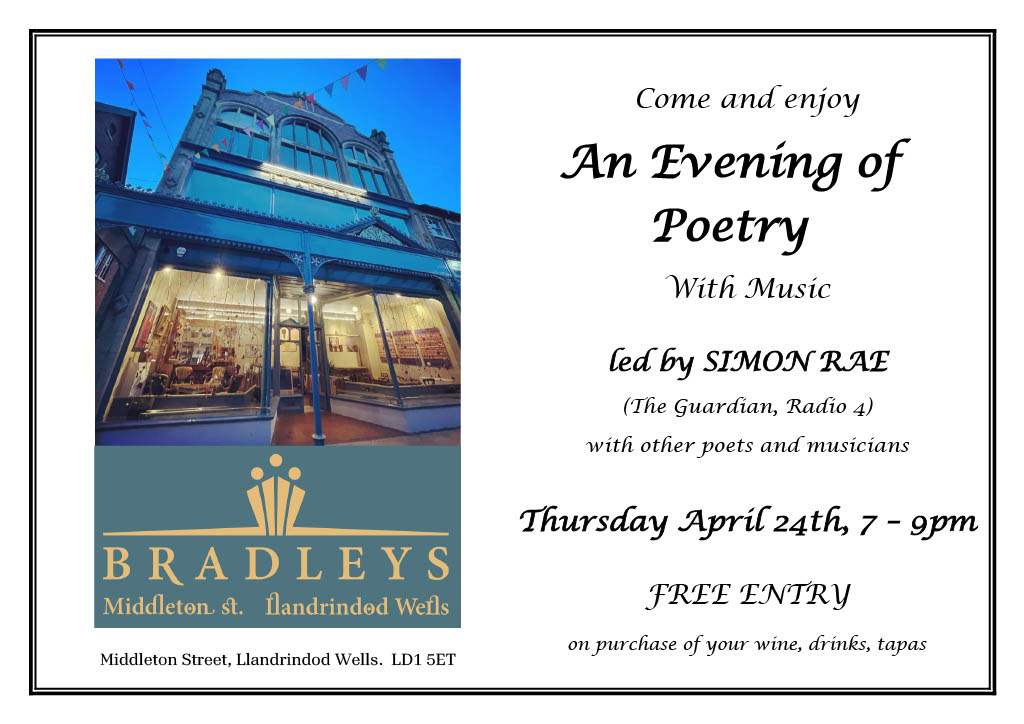
If you are in the neighbourhood this week don’t miss out on this
stunning event in Llandrindod!

An Evening of Poetry with Music – Thursday 24th April

To keep up to date with all our news why not subscribe with your email address in the box below.

Posted in Uncategorized | Tagged , , , , , , , , , , , , , , , , , , , , , , , , , | Leave a comment

Competition, Poems and Hay Festival 2025.

While we await a few confirmations before announcing the winners of our recent Fiction Competition, there’s still time to enter our 2025 Poetry Competition. The judge this year is a talented Gareth Writer-Davies and the closing date for poems up to 40 lines long on any theme is midnight, Tuesday 22nd April. Anyone can submit poems and we look forward to reading your exciting creations.

For full competition details and to download your entry form, please head over to our Competitions page.

To inspire and keep the poetical theme going here’s a couple of poems by HWC members, Jean O’Donoghue and Emma van Woerkom. We sincerely hope you enjoy them.

CIRCUS 
By Jean O’Donoghue

Stretching out, the high wire is like my nerves
Alert and vulnerable
My eyes look out for the limit of the stretch
A wobble comes. It gets bigger until its shaky parabola
Signals to me that I had better get down.

Next are the garish gaudy unfunny stupid clowns
One of them looks a lot like me.
And then the poor dumb huge beasts
Their eyes vacant with defeat.

And the ringmaster! Looking a little like my father
A little like my absent husband. He
Fruitlessly twitches his impotent whip.
I hope that the lions revolt and eat him
And that the sea lions refuse to clap

I mount the rope ladder again and face
My partner on the flying trapeze.
Can you trust a man wearing a spangled cod piece
And spray on tights?
We start slow – just a few innocuous passes.
The tension mounts as we fake a stumbled catch
But then it’s the major play
Shall I? Can I? Will I?
The safety of the net is almost irresistible ….

Photo by Gabriel Mendes on Pexels.com

April by the Wye
by Emma van Woerkom

Ever seen the green leaves shimmer?
Water cascade all a -glimmer?
Twisting, arcing feathered gambol
Swallow swoop on darting damsel.

Ever viewed hill clouds grow fatter?
Spots on slabs slap, pitter-patter.
A fine bronze rainbow rise to bite
The Iron Blue in maiden flight.

Soft stirring in bright brindled beds
Vestal violets raise their heads.
The changing tune of Winter’s King
Now just a wren at end of Spring.

Cold chimney with it’s feathered guest
Mad lambs all leaping four abreast,
Blue-black flies sill-spinning for sun
Sly spider silk on blossom spun.

Skyward wheeling sleet-winged hawks
Circling squalls on thermal’d torques.
Ever seen this land un-wasting?
Thirsty, greedy for the tasting.

I do not think this month so cruel,
Less I am judged an April Fool.

(NB – an Iron Blue is a fishing fly used for catching brown trout.)

Photo credit – Fly Fishing the Wye – by Emma van Woerkom ©2025

Reminder – Hay Festival
22nd May – 1st June, 2025
Tickets Now Available – CLICK HERE

The Hay Writers Live! – Event 71

Date – Saturday 24 May 2025 Time – 7pm   
Location – Writers at Work Hub – Hwb Awduron wrth eu Gwaith

Come and hear the writers share and discuss some of their recent work. The Hay Writers’ Circle is a dynamic group, active in Hay for more than 40 years. It offers three competitions annually for poetry, fiction and non-fiction, each of which is open to both members and non-members. There is an active work in progress group for those working on longer projects. The Circle has an ongoing, productive relationship with a local primary school.

Price: £5.00 – CLICK HERE for tickets

We hope to see you there!

To keep up to date with all our news why not subscribe with your email address in the box below.

Posted in Uncategorized | Tagged , , , , , , , , , , , , , , , , , , | Leave a comment

**STOP PRESS** 2025 HWC Poetry Competition now OPEN and Judge Announced

Submissions are now invited for the annual Hay Writers’ Circle Poetry Competition, and we are delighted to announce the judge for 2025 is the remarkable, Gareth Writer-Davies. The theme this year is entirely open and we hope to receive a wide variety of poems and poetry styles for this competition.

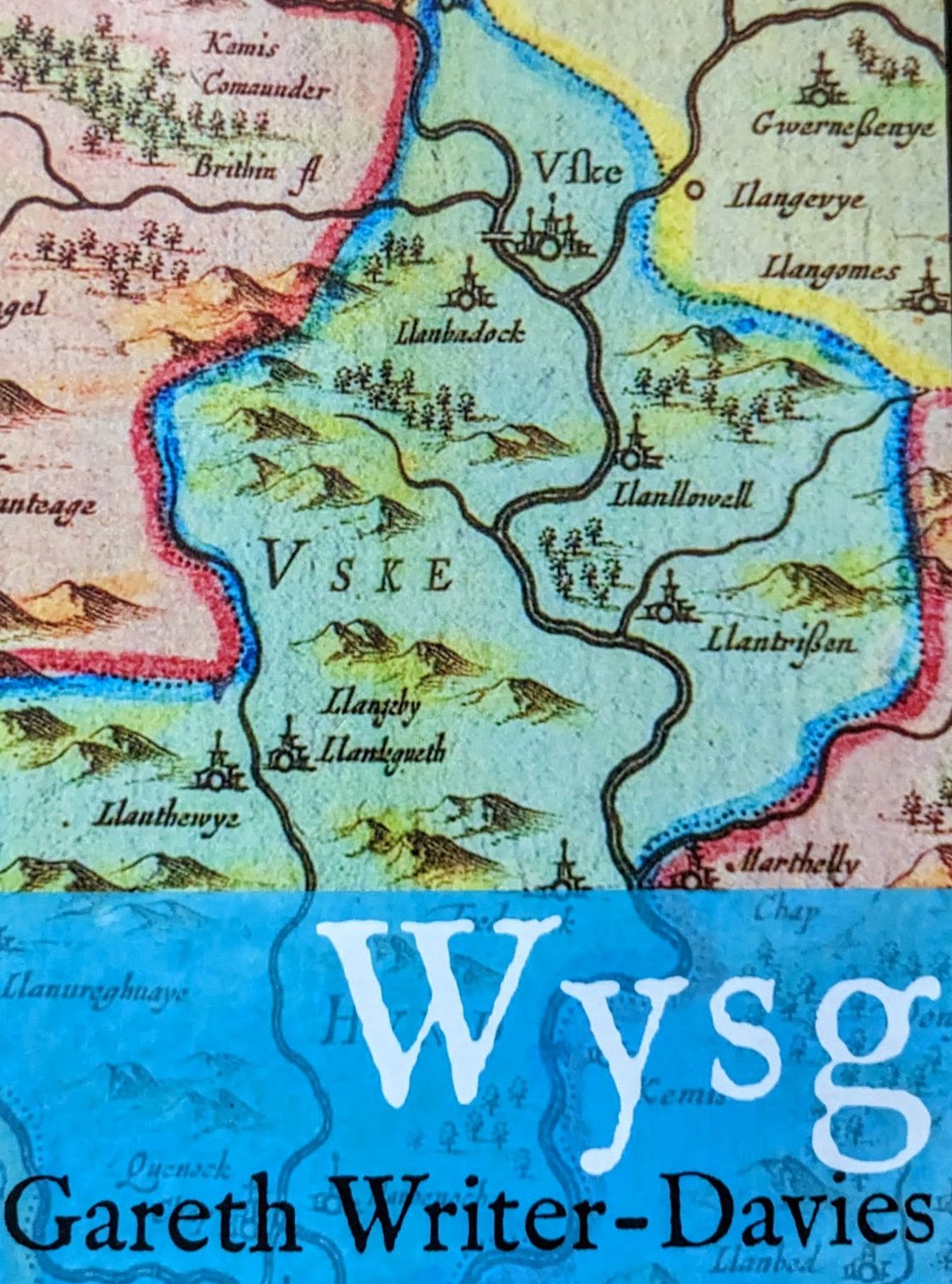
Gareth Writer-Davies lives near the Brecon Beacons (Bannau Brycheiniog) and takes his writing inspiration from the beautiful Welsh mountains and rivers of his home. His notable achievements include – Shortlisted Bridport Prize (2014, 2017, 2024), Commended Prole Laureate Competition (2015 & 2021) Prole Laureate (2017) , Welsh Poetry Competition Highly Commended (2017), Winner, Wirral Festival Poetry Competition (2023), Runner Up, Spelt Poetry Competition (2023). His publications are: “Cry Baby” (2017), “Bodies” (2015) , “Wysg” (2022) “The End” (2019) “The Lover’s Pinch” (2018). He was a Hawthornden Fellow (2019)

Gareth has written 5 collections, Bodies (2015), and Cry Baby (2017), published by Indigo Dreams.

Featured above, The Lover’s Pinch (2018), and The End (2019), published by Arenig Press.

His latest book, WYSG (2022) is also published by Arenig Press.

In WYSG Gareth Writer-Davies is instantly recognisable, as he navigates the borderlands of Wales, seeking to bridge the new and the familiar; the streaming of our lives, our conflicts with nature, getting older and always, where we have been and where we are going?

“In these sharply-worked, elegant poems, Gareth Writer-Davies takes the reader on a voyage of mid Wales which invites us to see this landscape in a vivid light.” – Katherine Stansfield

– HWC POETRY COMPETITION –
FIRST PRIZE £100

The Hay Writer’s Circle Poetry Competition 2025 is open to everyone.

The first prize of £100 with additional cash prizes for 2nd and 3rd placed poems.

The closing date for entries is midnight Tuesday 22nd April, 2025
Results will be announced mid May.

Original, unpublished poems of up to 40 lines maximum on any theme.

At our discretion, the winning poems will be published on the Hay Writer’s website. Publication may prevent eligibility for future competitions. All rights remain with the author.

For full competition guide lines and entry form please download the file below :


… or head on over to our Competitions page and read it there too.

Remember, anyone can enter this poetry competition and we can’t wait to read your amazing poems.

Good luck!

To keep up to date with all our news why not subscribe with your email address in the box below.

Posted in Uncategorized | Tagged , , , , , , , , , , , , , , , , , , | Leave a comment

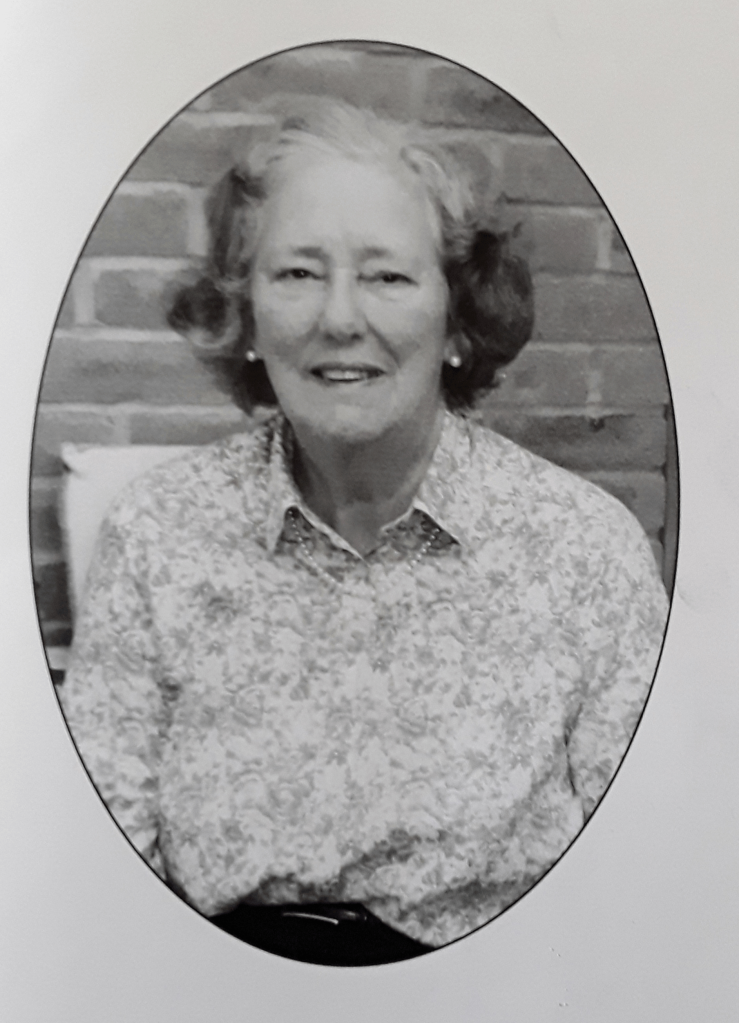
Hay Writers’ Circle Remembers Ann Riviere

Ann Riviere @ Hay Festival

It was with great sadness that we recently learned Ann Riviere, a Hay Writers’ Circle alumni and stalwart supporter of the group had passed away.

Ann was a highly valued member for almost 2 decades and served as HWC Treasurer for many of them. In an era when the Circle sold a yearly magazine to generate funs, Ann would be out and about the town of Hay, selling magazine advertising space to many of the local businesses, (“on the streets plying her trade” as she often joked!). In her role as Treasurer she also wrote annually to Literature Wales in the hope that the group might get support, and although we never received any funding, she never gave up hoping.

Ann’s writing speciality was short stories. Her well observed people and places, dialogue and plot twists coupled with superb timing, pace and snippy interjections could only be matched by her Hay Festival performances; it was then Ann’s writing truly came alive and she delighted audiences over the years with both comic vignettes and atmospheric thrillers.

When asked where she found the ideas for her work, Anne replied that, “staring at a blank sheet of A4 and praying for inspiration usually did the trick.” Her A4 paper was always set ready for use in an aged electronic typewriter. In her mid eighties and under great duress, it was finally superseded by a laptop when failing eyesight got the better of her.

By her mid nineties, physically frail but still independent, with a mind as keen as ever, Ann enjoyed being kept up to date with all HWC news. She could often be lured down the road to former HWC Chair, Lynn Trowbridge’s House when any of the writers called. She would laugh, reminisce and generally put the world to rights!

Thank you to Emma van Woerkom for the above tribute to Ann.

Ann Riviere – 2015 Book Launch for Pick and Mix Anthology at Booth’s Books, Hay-on-Wye.

Below is one of Ann’s short stories which appeared in the 2015 anthology, Pick and Mix: An assortment of new work by the Hay Writers’ Circle.

THE ANNIVERSARY
by Ann Riviere

Ursula had known for years of Robert’s infidelities. She never knew if there
were a number of women or just one. His attractive Personal Assistant was
a likely candidate. Hurtful though it was, apart from his philandering, he
was a generous, thoughtful husband and a loving, caring father. As far as
the girls were concerned, however busy he was at work, he always found
time to attend school plays, sports and parents’ days. During annual
holidays, when they were small, he was the perfect Daddy, making sand
castles, and as they grew up, driving them to and from parties and dances.
He would also sit in the freezing cold on Saturday mornings at the riding
school, watching with pride as they showed off how well they could control
their ponies.


Oh yes, she had been fortunate in her marriage, but he had spoilt it
for her. Hard as she had tried, she could not help the stabs of jealousy each
time she suspected him of being unfaithful. It would have to end. She had
thought hard and long of how and when she would tell him of her decision.
The time had to be right. Their 21st wedding anniversary was soon. Janie
was already twenty and Georgia would be nineteen in a couple of weeks and
would be off to join her sister at university. They would be two independent
young women no longer needing to be mothered.


Never having forgotten their anniversaries, Robert would certainly not
forget their 21st. He would bring home a huge bunch of peach-coloured
roses, her favourite, and then, probably, they would go out to dinner. She
would tell him then. In the meantime, she would give some thought as to
what she might do after the separation. Take a cruise to some sunny spot,
lie in the warmth and consider her options.


On the morning of the anniversary, as he left for the office, Robert said
‘As it’s such a special day, I’ve reserved seats for the Oscar Wilde play and
booked a table at The Savoy for dinner.’


Returning home on the dot of six, armed with the roses, he was
smiling happily. For a moment she wondered if she was doing the right
thing.


The Importance of Being Earnest was a favourite play and the dinner
afterwards was superb. Ursula drew her breath, but before she could say a
word, Robert took a small box from his breast pocket. Inside was a ring of
diamonds and sapphires. It was quite beautiful.


‘This is for putting up with me for all these years and for never having
reproached me about anything. Whatever you may think, I want you to
know that I love you more than I can say and pray you will never leave me.’


Ursula sat staring at him. You are good-looking, charming and clever.
Isn’t that enough? Why do you have to be so nice as well? He slipped the
ring onto her finger.


In the car on the way home, she thought as she twisted the ring
round, gazing at it. Not this year. Perhaps our next anniversary would be a
better time.

Posted in Uncategorized | Tagged , , , , , , , , , , , , , , , , , | Leave a comment